October Apples

Oro Cas's avatarOro Cas Reflects

 Prologue

It was easy to tell when it was time to start preparing for the annual Apple Butter making ritual. The leaves would start to show a hint of color as the nights got cooler. Soon the first hard freeze would bring out Autumn in all it’s colorful beauty. Labor Day weekend was a distant memory as the calendar stated it was time to prepare for Halloween. The second week of October was usually unseasonably warm during the day with cold nights which was perfect weather to put the finishing touches on the apple orchards and their bounty.

I grew up in a family that believed in things like planting a big garden every year so there would be plenty of food to be preserved by either freezing or canning. There was also hunting to be done during this time of year for rabbits, squirrels, wild turkey, and deer. The…

View original post 4,135 more words

The vision of technocracy ~ Jon Rappoport

by Jon Rappoport

“Well, boys, we’ve got this strange thing called THE INDIVIDUAL. Could somebody tell me what he is? He’s not conforming to our algorithms. He’s all over the place. And while we’re at it, what the hell is this IMAGINATION? It keeps slipping out of our grasp, it doesn’t fit the plan…”

PART ONE

—Technocrats say they want to wipe out poverty, war, and inequality. But in order to achieve these lofty goals (or pretend to), they need to re-program humans—

Technocracy is the basic agenda and plan for ruling global society from above, so we need to understand it from several angles.

Consider a group of enthusiastic forward-looking engineers in the early 20th century. They work for a company that has a contract to manufacture a locomotive.

This is a highly complex piece of equipment.

On one level, workers are required to make the components to spec. Then they must put them all together. These tasks are formidable.

On another level, various departments of the company must coordinate their efforts. This is also viewed as a technological job. Organizing is considered a technology.

When the locomotive is finished and delivered, and when it runs on its tracks and pulls a train, a great and inspiring victory is won.

And then…the engineers begin to think about the implications. Suppose the locomotive was society itself? Suppose society was the finished product? Couldn’t society be put together in a coordinated fashion? And couldn’t the “technology of organizing things” be utilized for the job?

Why bother with endlessly arguing and lying politicians? Why should they be in charge? Isn’t that an obvious losing proposition? Of course it is.

Engineers could lay out and build a future society that would benefit all people. Disease and poverty could be wiped out. Eliminating them would be part of the blueprint.

This “insight” hit engineers and technicians like a ton of bricks. Of course! All societies had been failures for the same reason: the wrong people were in charge.

Armed with this new understanding, engineers of every stripe began to see what was needed. A revolution in thinking about societal organization. Science was the new king. And science would rule.

Of course, for an engineered world to work, certain decisions would have to be made about the role of the individual. Every individual. You couldn’t have an air-tight plan if every human were free to pursue his own objectives. Too many variables. Too much confusion. Too much conflict. Well, that problem could be solved. The individual’s actions would be tailored to fit the coordinated operations of the planned society.

The individual would be “one of the components of the locomotive.” His life would be connected to other lives to produce an exemplary shape.

Yes, this could imply a few problems, but those problems could be worked out. They would have to be worked out, because the overriding goal was the forming of a world organization. What would you do if one bolt (an individual human) in one wheel of a locomotive was the wrong size? You would go back and correct the error. You would re-make the bolt.

Among technocrats, the overall vision superseded the glaring need to “remake” individuals who would fit in. It was perfectly all right to re-program the individual.

Other people entered the game. High-echelon Globalists saw technocracy as a system they could use to control the population.

Essentially, an already-misguided vision of a future technocratic utopia was hijacked. Something bad was made much worse.

In a nutshell, this is the history of technocracy.

A locomotive is a society? No. That was the first fatally flawed idea. Everything that followed was increasingly bizarre.

Unfortunately, many people in our world believe in Globalism, if you could call a partial vague view a legitimate belief. They dreamily float on all the propaganda cover stories—greatest good for the greatest number of people; no more poverty; equality of sharing; reducing the carbon footprint; a green economy; “sustainable development”; international cooperation; engineering production and consumption of goods and services for the betterment of everyone; and all of this delivered from a central platform of altruistic guidance.

If you track down the specifics that sit under these cover stories, you discover a warped system of planning that expresses control over the global population.

The collective utopia turns out to be a sham.

Waking up is hard to do? Breaking up is hard to do? They must be done.

A workable technological fix is a very nice achievement when the project is a machine. But transferring that glow of victory to the whole of society is an illusion. Anything that calls itself education would tackle the illusion as the first order of business.

Engineering society requires engineering humans.

That is the fatal flaw.

It’s called mind control.

PART TWO

Continue reading “The vision of technocracy ~ Jon Rappoport”

Wild horse trained as therapy horse in running for international award | Straight from the Horse’s Heart

SOURCE:  postregister.com

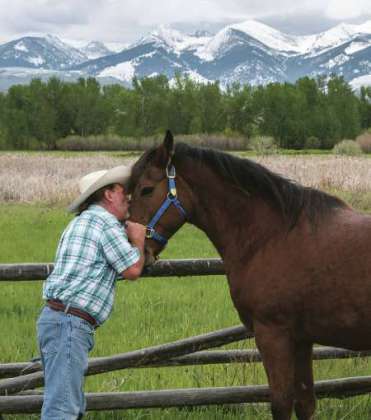
Steve Drippon displays affection to Rooster; loving a special horse. Jerry Slagle / for the Post Register

SALMON — A horse named Rooster is an equine without equal if you ask the volunteers and staff at Whitewater Therapeutic and Recreational Riding Association.

The Salmon-based association offers horseback experiences to riders of all ages whose challenges can include everything from a physical disability to a psychological trauma.

In the decades since the accredited nonprofit was founded, dozens of horses have been either selected or donated for the purpose of providing equine therapy but few have gained the profile and elicited the adoration of Rooster.

Whitewater workers say Rooster has all the mannerisms of a courtly gentleman even though he once was a wild horse from the Challis area before adoption through a U.S. Bureau of Land Management program.

“I’ve dealt with a lot of good horses but Rooster has a special place in my heart,” said Joyce Scott, Whitewater’s executive director. “He’s an elegant and powerful horse who personifies peace and calmness. Everyone who rides him falls a little bit in love with him.”

In a first for Whitewater, Rooster has been nominated in the regional round of a contest for therapy horse of the year with the Professional Association of Therapeutic Horsemanship International.

Read the rest of this article HERE.

Source: Wild horse trained as therapy horse in running for international award | Straight from the Horse’s Heart

Would the government let Jesus cure cancer? « Jon Rappoport’s Blog

By Jon Rappoport

As I’ve been telling you for years, it’s easy to keep the public on your side if you regularly tout medical “breakthroughs” in the press. The latest innovation. The promise of a cure around the corner. The maybe-could-be discovery that will change the course of disease treatment forever.

In this case, a start-up called Tilos has one of those, for cancer. They say it’s an antibody their researchers came across while looking for a cure for MS. They stumbled on to it by accident. Aha.

Somehow, this antibody helps the immune system to recognize and wipe out cancer cells. It produces “a memory” in immune-system cells, and they are ready to go to war when cancer arrives. Or something. It’s hard to say.

The people at Tilos are, naturally, very enthusiastic.

So forthwith, I give you an assignment. Keep track of stories about this amazing antibody as time passes, and see whether it ever a) becomes a real cancer treatment, and b) does any good. Or c) disappears down the memory hole, never to be heard from again. I’m betting on c. Why? Because I’ve watched a number of these flashes dim out quickly and recede into nowhere land. And because, in this case, the company is very far from being able to fashion the antibody into a ground-level treatment. Of course, it’s possible that, on the basis of the recent gaudy announcement, Tilos could pick up some investor funding, but funding isn’t a disease treatment the last time I looked.

On the other hand, if a non-pharmaceutical company or researcher actually makes a promising discovery in cancer treatment (read about the troubles of Dr. Stan Burzynski, Dr. Willam Koch, Royal Rife, etc.), all hell breaks loose. The press immediately pounces on the researcher as if he’s working on an H-bomb in his basement. He must be an outright quack and charlatan, “because they all are.”

Corporate drug outfit=potential breakthrough.

Independent non-pharmaceutical researcher=Dr. Nazi.

Good press vs. bad press comes down to: how much can you pay; who do you know; how much advertising can you afford to buy; what official expert can you bring on board to vouch for you; is your product a drug rather than a detested natural non-patentable substance; can you do officially recognized clinical trials; are you connected with a favored group (university, research foundation, federal facility, pharma lab) who can obtain publication in a well-known medical journal.

Or are you a dreaded INDEPENDENT?

In the 1990s, I watched a federal trial in a Los Angeles courtroom. The defendant was charged with selling medical drugs without a license to practice medicine.

The defendant was prepared to argue that a) the substance he was selling was naturally produced in the body and b) it was effective.

The prosecution moved to exclude such testimony, on the grounds that it was irrelevant.

The judge agreed. Therefore, the trial was nasty, brutish, and short. The defendant was found guilty and sentenced to prison for several years.

This is how the federal bureaucracy operates. “Do you have a government-issued license to heal? No? You’re a criminal.”

I believe that if Jesus of Nazareth were walking the Earth today, in the United States, he would be arrested on the same grounds.

This would be particularly so if he were curing cancer.

Imagine this extreme case: in a stadium packed with 50,000 people who have been diagnosed with cancer, Jesus of Nazareth waves his hand and cures all of them in a few seconds.

Now he is threatening the profits of many companies, to say nothing of the power of the government, which backs the chemo-radiation-surgery monopoly to the hilt.

So he is arrested. He is put on trial. He opts to defend himself without an attorney. He tells the court that curing cancer is no crime.

The prosecuting attorney objects. “Your Honor,” he says, “whether or not this man has cured cancer is beside the point. He has no license to practice medicine. That is why we are here today. We are simply establishing that a) he was practicing medicine and b) he has no government-issued license. That is the scope of this proceeding.”

The judge agrees. The verdict is issued. Guilty.

Of course, on another front, the major media, who depend for their existence on pharmaceutical advertising, take the ball and run with it. The networks and major newspapers seek out “experts,” who emphatically state that what Jesus of Nazareth “performed” in the stadium was mere hypnotism. It was all a placebo effect. Whatever sudden “remissions” may have occurred are just temporary. Tragically, the cancers will return.

Not only that, these 50,000 people have effectively been sidetracked and diverted from seeking “real care from real doctors.” With chemo, with radiation, with surgery, they would have stood a chance of surviving and living long normal lives.

Other media pundits send up this flag: “Many of those present in the stadium were bitter clingers to their religion. They refuse to accept science. They are living in the past. They favor superstition over real medical care. In fact, they are threatening the whole basis of healthcare, since other confused and deluded Americans may now turn away from doctors and seek snake-oil salesmen and preachers for healing.”

From the highest perches of political power in this country, the word quietly goes out to the media: don’t follow up on those people who were in the stadium; don’t try to track them; don’t compile statistics on their survival rates; move on to other stories (distractions); let this whole madness die down.

But among the citizenry, an awareness spreads: the government is controlling healing through its issuance of licenses. That’s how the government is essentially protecting one form of “healing” and enabling it to become an all-encompassing cartel.

What would be the alternative or the adjunct to licenses?

Contracts.

Contracts are agreements entered into by consenting adults, who assume responsibility for the outcomes. In the case of healing, a contract would specify that people have a right to be wrong.

Let’s say two consenting adults, Jim and Frank, agree to allow Frank to treat Jim for his arthritis with water from a well on Frank’s land.

The two men acknowledge that no liability will be attached to the outcome. In other words, whether Jim get better or gets worse, no one is going file a suit. No one is going to go to the government for redress of wrongs.

The well water may be wonderful or it may be completely useless. Both men understand and acknowledge that. But they assert a right to try the treatment, because they are free.

Immediately people say, “This is ridiculous. Water can’t cure arthritis. Frank is cheating Jim. Jim is a victim. He needs to see a doctor. He needs to go on arthritis drugs.”

No, Jim doesn’t have to do anything. He is free.

To put it another way, Jim has the right to be right or wrong. It’s his decision, which is beyond the scope of any authority.

If government tries to remove that right from all of us, it is essentially saying it knows what is correct, it knows what is true, it knows what we need and require, and it’s going to give it to us even if it has to shove it down our throats. Does that sound like freedom to you?

If Jesus of Nazareth lived in the United States today, and if he went around curing cancer, he would be arrested. He wouldn’t be charged with blasphemy or treason. He would be charged with something much simpler and more mundane: practicing medicine without a license.

And he would be convicted and sentenced.

Because then and now, the government, in its throne of corruption, wants to protect its proprietary and illegal interests.

Source: Would the government let Jesus cure cancer? « Jon Rappoport’s Blog

Answers in art « Outside the Reality Machine

By Jon Rappoport


“Logic is a mirror of how the physical world operates.  It is a vital tool.  Imagination is the capacity to make new and different worlds, an unlimited number of them, which can operate on no particular basis at all.”  (The Magician Awakes, Jon Rappoport)

Here is an interesting statement from Dane Rudhyar (1895-1985), about his painting.  Rudhyar was a world-famous astrologer, and also a philosopher, painter, and composer.

“It does not seem important to me that people seeing my paintings should know what I felt, why and how I produced them. The essential thing is the viewers’ response — what the paintings do to them, what arises in them as a result of their seeing the paintings, of their relationship with the painting. It is, I believe, a matter of relationship: ‘something’ in the painting meets ‘something’ in the spectator; what is important is the character and quality of this meeting.”

“…These youths are also often greatly impressed by my paintings, yet at the same time they are puzzled by them. I am repeatedly asked what the paintings mean, how the evident symbols in them are to be understood…”
“When facing my paintings, a person’s reaction is often that I must have used such geometrical or biologically suggestive symbols deliberately, knowing exactly why I used them. People frequently are shocked when I tell them that I did not have precise intentions and did not think of traditional meanings. Then they often want to speak of ‘the Unconscious’ — my personal unconscious or the ‘collective Unconscious’…”

“They are even more puzzled if I tell them that they should forget the traditional system of knowledge and simply try to experience the drawing and allow it to speak to them and communicate a ‘mystery’ which perhaps transcends or has meaning besides the traditional knowledge.”

“Nearly twenty years ago while in Paris, I attended meetings and lectures at a well-publicized Congrés du symbolisme in the elegant and ultramodern UNESCO Building. At the close of the sessions I vividly realized that the lecturers always spoke of symbols in the past, referring almost exclusively to ancient cultural epochs and traditions. A very intelligent woman I had met who was enthusiastic about all that had taken place asked about my reaction to the Congress. I expressed my deep interest in the proceedings, but added that I felt the talks had been almost entirely, about the past. She looked at me with a puzzled expression and said, ‘But the past is all we know. We do not know the future!’ To which I replied, ‘Of course we do not know the future, but we are creating it!’ The lady gave me a strange look; she could not grasp the meaning of what I had said, and our conversation ended very soon.”

If you say the voyage of imagination is spiritual, people immediately want to know which spiritual system you are talking about, or which principles.  They want art and creation to be an expression of that which is already understood.

But art is not a descriptive sign hanging on the entrance to the cosmos.

Every piece of art is its own cosmos.

It needs no myth structure or origin-story or cultural precedent.

Art is the great exception to every rule of the universe.

If this isn’t magic, nothing is.

Source: Answers in art « Outside the Reality Machine

A Festival of Books – Natalie J Case

I have a confession to make.  I have never been to a book festival or convention or other celebration of books.  Not as a reader, certainly not as a writer.  Some of the reasons for this are fundamental issues of who I am, namely the agoraphobic part of who I am.  Large crowds, even mediocre crowds in small spaces make me sweat, palpitate, hyperventilate and ultimately need to leave quickly unless I do an awful lot of prep work first.

So, when I show up on Sunday, June 4th at Civic Center Park in Berkeley, California, I will be attending my first event.

babf_logo The Bay Area Book Festival is in it’s third year, and while I’d love to be able to attend some of the talks and such on Saturday, I have other obligations.  But come Sunday morning, I will load up my cart with books and a table cloth (reminder to self, get a tablecloth), my tablet and credit cart doohicky plus a bunch of water and snacks for the day, and I will BART myself into Berkeley and find my assigned place in the park for the day.
Of course, I hope to sell enough books to break even on the day, but beyond that, my hope is that I can keep my agoraphobic anxiety down and that I get to meet new folks, talk about my books and other books.  I’d love to meet readers who are passionate about what they read and love.  I’d also love to meet fellow authors who are passionate about what they write and love.

If it isn’t too much to hope for, I’m going to hope that some of my friends and family come out to see me too.  It isn’t every day an author gets to do their first event like this…and if I’m being truthful, maybe having someone watch my table for a bit while I look around would be awesome too.

So, if you’re somewhere in the San Francisco Bay area and fancy some book loving come Sunday, June 4th, you should hope on BART and take yourself to the Berkeley Civic Center station.  The park is just a short walk away.

I won’t be too hard to find.  I’ll be the author with green hair, probably wearing a fedora or other hat, and possibly a Star Wars shirt, depending on my mood.  Come Say HI!

Source: a festival of books – Natalie J Case

Team Reach Out Worldwide in Arkansas

unnamed

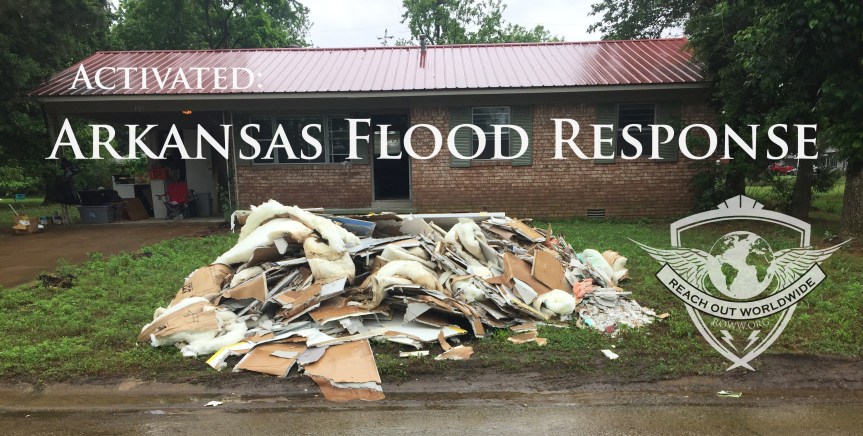
Reach Out WorldWide has sent a team to assist homeowners and residents with clean up efforts after record flooding has inundated the mid-south. After a flood overwhelms a home, residents are often left with nothing. All of their belongings are contaminated, mold begins growing everywhere, and the bones of the home begin rotting. For most, the scene is impossible; it’s too intimidating to even know where to start. That’s where ROWW comes in. We help remove the home’s ruined contents, help sort what is salvageable, remove flooring, drywall, and all flood-damaged contents so that the drying process begins as quickly as possible and mold is abated. Typically, because of the severe damage and risk of mold, homes are required to be taken down all the way to the studs. Once the “muck and gut” is complete, the rebuilding process can begin. Your donation will help equip our team of qualified volunteers with the tools and resources we need to muck and gut flood damaged homes and get residents started on their path to recovery. Even $1 makes a difference.

Donate to Support the Flood Victims in Arkansas

“We were all told it was a 100-year flood and it won’t happen again,” says Nelda Cooper, another flood victim. Inside her house the floodwaters reached 4 1/2 feet.

“It’s devastating,” she says, adding that there are a lot of elderly people in the neighborhood. “When their insurance tripled, they had no other option but to drop it,” she says.

Now, many people are left wondering how to move forward.

Donate today to help victims like Mrs. Cooper get back in their homes.

Huge organic farm under threat; County will invade and spray Roundup « Jon Rappoport’s Blog

By Jon Rappoport

“I have a great idea. We’re the Sherman County government. We have power. Let’s claim Azure Farms can’t control their weeds. Let’s come in and invade them with Roundup and other toxic chemicals. Let’s destroy their organic farm. We know the spraying won’t wipe out the weeds—it’ll make the situation worse. But who cares? Let’s open up ourselves to massive lawsuits. I’m sure Monsanto will give us some legal help. We can set a fantastic precedent. No organic farm is safe. No organic farmer has the right to protect his land from the government. Isn’t that a terrific idea?”

Government trespass, invasion?

So far, I have seen no coverage of this issue in Oregon newspapers. Why not? Also, I find nothing on the Sherman County, Oregon, government website about a massive spraying program.

A local government is going to decimate a huge organic farm with herbicide?

Azure Farms, a 2000-acre organic farm in Oregon, states it is under threat from the local Sherman County government. Why? Because Sherman County officials are re-interpreting a law concerning the “control of noxious weeds,” so it means “eradication.”

These weeds can be controlled on an organic farm, but the only way they can be eliminated (according to conventional “science”) is by spraying. And that means Roundup and other toxic chemicals. That would decimate the organic nature of the farm. That would decertify it as an organic farm.

Further, according to Azure, Sherman County plans to put a lien on the farm, forcing it to pay for the spraying.

The deadline for expressing opposition is May 22. A better deadline is May 17.

Here is the complete press release from Azure Farms and the ways to register your concern:

Azure Farms is a working, certified organic farm located in Moro, central Oregon, in Sherman County. It has been certified organic for about 18 years. The farm produces almost all the organic wheat, field peas, barley, Einkorn, and beef for Azure Standard.

Sherman County is changing the interpretation of its statutory code from controlling noxious weeds to eradicating noxious weeds. These weeds include Morning Glory, Canada Thistle, and Whitetop, all of which have been on the farm for many years, but that only toxic chemicals will eradicate.

Organic farming methods – at least as far as we know today – can only control noxious weeds—it is very difficult to eradicate them.

Sherman County may be issuing a Court Order on May 22, 2017 to quarantine Azure Farms and possibly to spray the whole farm with poisonous herbicides, contaminating them with Milestone, Escort and Roundup herbicides.

This will destroy all the efforts Azure Farms has made for years to produce the very cleanest and healthiest food humanly possible. About 2,000 organic acres would be impacted; that is about 1.5 times the size of the city center of Philadelphia that is about to be sprayed with noxious, toxic, polluting herbicides.

The county would then put a lien on the farm to pay for the expense of the labor and chemicals used.

Contact Sherman County Court before May 17 when the next court discussion will be held.
Contact info:
1. Via email at lhernandez@co.sherman.or.us or
2. Call Lauren at 541-565-3416.

Show Sherman County that people care about their food NOT containing toxic chemicals.

Overwhelm the Sherman County representatives with your voices!

—end of Azure Farms statement—

Continue reading “Huge organic farm under threat; County will invade and spray Roundup « Jon Rappoport’s Blog”

Wild Horses Misinformation and Bad Science: Corrupt Government Agency and Non-Profits ~ Photojournalist ~ Journalist

By John Cox

john-cliffs-blog-post

“The fact that we live at the bottom of a deep gravity well, on the surface of a gas covered planet going around a nuclear fireball 90 million miles away and think this to be normal is obviously some indication of how skewed our perspective tends to be.” ― Douglas Adams, The Salmon of Doubt: Hitchhiking the Galaxy One Last Time

Why do we take issue at the lack of good science data with what is called today, Pesticide PZP? Because subjectivity and science remain two separate situations. The dynamics of each very different. Many of us find Pesticide PZP nothing more than subjective rhetoric – the results on our Public Lands of this endeavor remains quite negative, with no good potential results foreseen in the future. Wild Horses are going extinct! False science, misinformation, ignoring of Ecological demands, and corruption the reasons why . . .

The wild horses on America’s Public Lands is falling victim to what many of us simply refer to as bad, and incompetent white-paper gibberish. As history shows us time and again, government agencies seem to attract this type of research, calls it science, and as history shows us, time after time, until we see the outstanding negative results, in this case a species going extinct, do we finally realize the mistake.

But only over time is the burden of responsibility taken to task, the fingers point to those who cannot defend themselves, and these elements of destruction, these non-profits and BLM who promote this Pesticide PZP scam, simply move-on to other schemes and scams to obtain taxpayer money differently, is all . . .

Well, as taxpayers and American’s it is time for all of us to Stand Up and say no to any further Pesticide PZP use —

Spotted Owls in the Cascades

For explanation reasons, I am using the Spotted Owl within the Nooksack River watershed, as well as the Skagit River Valley, both in the Cascade Mountains. It shows us, overtime, the dynamic also involved within the wild horses, even though separate ecological zones, separate species for sure, yet similar in population encounter and census.

The biology, when all the variables considered, show situations that remain overlooked, or even ignored, by Pesticide PZP research. Many define, categorically, Pesticide PZP as questionable subjective reasoning of combined-information only, merely passed-off as science –

“If we knew what it was we were doing, it would not be called research, would it?” ― Albert Einstein

Many of us accept this fact of facts, as there simply exists too many variables left unexplored from the Pesticide PZP data gathering, to be any type of acceptable science what so ever. Way too many significant data situations ignored or even not thought about what so ever, which would show beyond a doubt Pesticide PZP, a questionable situation at best, and non-useful. The reasoning why significant variables left unexplored? Well, let’s take a look at some of the more obvious, and viability of our wildlife in general.

A census of the Spotted Owl may show twenty-five owls exist, but perhaps only seven are of a reproductive age, and only five sexually active. The outcome of this, within a good biology context, would likely be five-owls, not twenty-five. To assimilate across the board a 20% to 38% increase, as they do with wild horses, is simply bad management, untruthful, and no good-science or biology would back up such claims what so ever – as variables do exist on this planet, always.

When we refuse to consider significant variables, that do exist and apparent should not be ignored, then we have to question the supposed science involved. On the same scale of research, if we ignore the habitats, or Ecological Zones that exist, deduction through subjectivity only, and as if Pesticide PZP unharmful within any circumstance – but never explored, through due diligence and good data gathering, we never find out if harmful or not in Ecological Zones of any type. . . Used on something like Wild Horses, we become very concerned at this monumental error in judgement, that certainly lacks scientific responsibility, and one can also attest, irresponsible within an ethical or humane context as well . . . – John Cox, The Cascades

Source: Wild Horses Misinformation and Bad Science: Corrupt Government Agency and Non-Profits

Euthanasia drug found in dog food « Jon Rappoport’s Blog

By Jon Rappoport

From WebMD (4/28/17): “Party Animal is recalling dog food that tested positive for a pet euthanasia drug…The voluntary recall affects the company’s Cocolicious dog food brand…The affected products include 13-ounce cans of Cocolicious Beef & Turkey dog food (Lot #0136E15204 04, best by July 2019) and 13-ounce cans of Cocolicious Chicken & Beef dog food (Lot #0134E15 237 13, best by August 2019)… Party Animal is working with distributors and retailers to find out if any other beef-flavored foods are still being sold, and if so, to recall them immediately, the company said.”

KDVR (FOX) reports: “Party Animal is recalling two lots of its Cocolicious dog food because it might contain pentobarbital.”

CNN: “Party Animals, a California-based pet food maker, is recalling two lots from its line of Cocolicious dog foods after some cans in Texas tested positive for pentobarbital — a chemical that’s used to euthanize animals. In a statement on its website, Party Animal said a customer in Texas had given Cocolicious samples to a lab and the dog food tested positive for pentobarbital. Party Animal is asking for those test results, and ‘out of an abundance of caution’ is recalling the two lots of dog food sold nationwide. The company is also sending cans of its dog foods to an independent lab for testing.”

How would this drug, used to euthanize animals, find its way into pet food? The suggestion is: the pet food contains meat from previously euthanized animals (not cows).

Concerning a previous recall by another company, Evanger’s, the Detroit Free Press stated: “In researching the supply chain, Evanger’s learned that ‘pentobarbital is very highly controlled, and that, if an animal is euthanized, it is done so by a veterinarian. Once this process has been done, there is absolutely no regulation that requires the certified vet to place any kind of marker on the animal indicating that it has been euthanized and guaranteeing that product from euthanized animals cannot enter the food chain’.”

If this is true, we would be talking about euthanized dogs and cats somehow entering the pet-food manufacturing process—and pet dogs would end up eating dog and cat meat.

Veterinarians are selling euthanized animals to middle men, who in turn supply meat to pet-food manufacturers?

There is another possibility. The American Society for the Prevention of Cruelty to Animals (ASPCA) states, on its website: “Approximately 6.5 million companion animals enter U.S. animal shelters nationwide every year… Each year, approximately 1.5 million shelter animals are euthanized (670,000 dogs and 860,000 cats).” Are shelters selling the euthanized animals? Do a few (or more than a few) animals end up in pet food?

Knoji.com states: “Cremation allows for the shelter to burn the bodies of pets. However, not all animal shelters can afford this so many send the bagged bodies of animals to a special part of the city landfill (garbage dump). The third option is not as common as it use[d] to be, and generally not done in the charity run shelters, but more common in city run ‘pounds’ – this is when the bodies are sold to research labs, dissection supply companies, or rendering facilities where they may actually be rendered down and put into pet food.”

“It might surprise some dog owners to know that dog meat has been used in dog food. This practice was relatively common until the late 1990’s. Even today there are no laws preventing man’s best friend from ending up in dog food.”

“Please note the below information on dead dogs being used in dog food is true to the United States but may also occur in Canada and possibly other countries.”

“At some time or another pet food companies realized there was a cheap source of meat available… Dog Meat, and it could be purchased cheaply from animal shelters and the dog pound. These were places where dogs were euthanized weekly and there was always a need to dispose of the bodies. Nobody said anything and there were no laws preventing such from happening.”

“However what started to tip the scales was that the veterinarians who performed the euthanasias at the animal shelters started noticing it was taking more and more drugs to put these animals to sleep. They realized that somehow pets in animal shelters were building up an immunity to the medications used to end their lives. Typically veterinarians are called to shelters every week to euthanize between 10 and 200 animals (or more in larger centers) so this was where they saw the problems develop quite easily.”

“As such several investigations were launched to see how pets were building up immunities to the drugs. The FDA (Food and Drug Administration) launched an investigation. They found that sodium pentobarbital (the drug often used to euthanize pets) passed through the rendering process and ended up in pet food. They admitted finding the drug in some pet foods and stated ‘several retail feeds were confirmed for the presence of phentobarbital which could only have come from euthanized animals.’ Most of these investigations were exposed by television news groups such as Seattle’s King 5, and KMOV in St. Louis, Missouri.”

“What they exposed was something that many people already knew – dead dogs were being used to make dog food. Many animal shelters are government run. These poorly funded shelters found a way of generating extra income and disposing of the animal bodies all at once—Sell them cheaply to a [pet food] rendering plant. You will note your local SPCA probably does not do this.”

This account suggests that the FDA already knows dog meat in dog food is an ongoing problem, and the FDA also knows that euthanized dogs, whose bodies contain the euthanasia drug, are used for dog food. This is not a new discovery or a puzzling problem.

If the FDA is scratching its collective head and trying to solve a mystery, that would be a pose.

It would be like saying, on a human level, “Well, we know several companies have been polluting the water and soil of a town for years, and the chemicals are exceedingly toxic and dangerous, but we’re not sure where the cancer clusters are coming from. Much more investigation is needed.”

It appears we’re looking at a situation where all the parties—government animal shelters, veterinarians, pet food rendering plants, pet food companies, and the FDA—know exactly what’s going on…and say nothing, or pretend surprise when a new case of dogs eating drug-poisoned dog meat shows up.

The FDA is famous for ignoring their own responsibility, when a medical drug they’ve approved, as safe and effective, starts killing people.

Apparently, this same know-nothing attitude applies to pets and the euthanasia drug they’re ingesting.

I wonder how many humans, living on the extreme margins, eating pet food, have succumbed…

Source: Euthanasia drug found in dog food « Jon Rappoport’s Blog