Wild Horses Misinformation and Bad Science: Corrupt Government Agency and Non-Profits ~ Photojournalist ~ Journalist

By John Cox

john-cliffs-blog-post

“The fact that we live at the bottom of a deep gravity well, on the surface of a gas covered planet going around a nuclear fireball 90 million miles away and think this to be normal is obviously some indication of how skewed our perspective tends to be.” ― Douglas Adams, The Salmon of Doubt: Hitchhiking the Galaxy One Last Time

Why do we take issue at the lack of good science data with what is called today, Pesticide PZP? Because subjectivity and science remain two separate situations. The dynamics of each very different. Many of us find Pesticide PZP nothing more than subjective rhetoric – the results on our Public Lands of this endeavor remains quite negative, with no good potential results foreseen in the future. Wild Horses are going extinct! False science, misinformation, ignoring of Ecological demands, and corruption the reasons why . . .

The wild horses on America’s Public Lands is falling victim to what many of us simply refer to as bad, and incompetent white-paper gibberish. As history shows us time and again, government agencies seem to attract this type of research, calls it science, and as history shows us, time after time, until we see the outstanding negative results, in this case a species going extinct, do we finally realize the mistake.

But only over time is the burden of responsibility taken to task, the fingers point to those who cannot defend themselves, and these elements of destruction, these non-profits and BLM who promote this Pesticide PZP scam, simply move-on to other schemes and scams to obtain taxpayer money differently, is all . . .

Well, as taxpayers and American’s it is time for all of us to Stand Up and say no to any further Pesticide PZP use —

Spotted Owls in the Cascades

For explanation reasons, I am using the Spotted Owl within the Nooksack River watershed, as well as the Skagit River Valley, both in the Cascade Mountains. It shows us, overtime, the dynamic also involved within the wild horses, even though separate ecological zones, separate species for sure, yet similar in population encounter and census.

The biology, when all the variables considered, show situations that remain overlooked, or even ignored, by Pesticide PZP research. Many define, categorically, Pesticide PZP as questionable subjective reasoning of combined-information only, merely passed-off as science –

“If we knew what it was we were doing, it would not be called research, would it?” ― Albert Einstein

Many of us accept this fact of facts, as there simply exists too many variables left unexplored from the Pesticide PZP data gathering, to be any type of acceptable science what so ever. Way too many significant data situations ignored or even not thought about what so ever, which would show beyond a doubt Pesticide PZP, a questionable situation at best, and non-useful. The reasoning why significant variables left unexplored? Well, let’s take a look at some of the more obvious, and viability of our wildlife in general.

A census of the Spotted Owl may show twenty-five owls exist, but perhaps only seven are of a reproductive age, and only five sexually active. The outcome of this, within a good biology context, would likely be five-owls, not twenty-five. To assimilate across the board a 20% to 38% increase, as they do with wild horses, is simply bad management, untruthful, and no good-science or biology would back up such claims what so ever – as variables do exist on this planet, always.

When we refuse to consider significant variables, that do exist and apparent should not be ignored, then we have to question the supposed science involved. On the same scale of research, if we ignore the habitats, or Ecological Zones that exist, deduction through subjectivity only, and as if Pesticide PZP unharmful within any circumstance – but never explored, through due diligence and good data gathering, we never find out if harmful or not in Ecological Zones of any type. . . Used on something like Wild Horses, we become very concerned at this monumental error in judgement, that certainly lacks scientific responsibility, and one can also attest, irresponsible within an ethical or humane context as well . . . – John Cox, The Cascades

Source: Wild Horses Misinformation and Bad Science: Corrupt Government Agency and Non-Profits

Euthanasia drug found in dog food « Jon Rappoport’s Blog

By Jon Rappoport

From WebMD (4/28/17): “Party Animal is recalling dog food that tested positive for a pet euthanasia drug…The voluntary recall affects the company’s Cocolicious dog food brand…The affected products include 13-ounce cans of Cocolicious Beef & Turkey dog food (Lot #0136E15204 04, best by July 2019) and 13-ounce cans of Cocolicious Chicken & Beef dog food (Lot #0134E15 237 13, best by August 2019)… Party Animal is working with distributors and retailers to find out if any other beef-flavored foods are still being sold, and if so, to recall them immediately, the company said.”

KDVR (FOX) reports: “Party Animal is recalling two lots of its Cocolicious dog food because it might contain pentobarbital.”

CNN: “Party Animals, a California-based pet food maker, is recalling two lots from its line of Cocolicious dog foods after some cans in Texas tested positive for pentobarbital — a chemical that’s used to euthanize animals. In a statement on its website, Party Animal said a customer in Texas had given Cocolicious samples to a lab and the dog food tested positive for pentobarbital. Party Animal is asking for those test results, and ‘out of an abundance of caution’ is recalling the two lots of dog food sold nationwide. The company is also sending cans of its dog foods to an independent lab for testing.”

How would this drug, used to euthanize animals, find its way into pet food? The suggestion is: the pet food contains meat from previously euthanized animals (not cows).

Concerning a previous recall by another company, Evanger’s, the Detroit Free Press stated: “In researching the supply chain, Evanger’s learned that ‘pentobarbital is very highly controlled, and that, if an animal is euthanized, it is done so by a veterinarian. Once this process has been done, there is absolutely no regulation that requires the certified vet to place any kind of marker on the animal indicating that it has been euthanized and guaranteeing that product from euthanized animals cannot enter the food chain’.”

If this is true, we would be talking about euthanized dogs and cats somehow entering the pet-food manufacturing process—and pet dogs would end up eating dog and cat meat.

Veterinarians are selling euthanized animals to middle men, who in turn supply meat to pet-food manufacturers?

There is another possibility. The American Society for the Prevention of Cruelty to Animals (ASPCA) states, on its website: “Approximately 6.5 million companion animals enter U.S. animal shelters nationwide every year… Each year, approximately 1.5 million shelter animals are euthanized (670,000 dogs and 860,000 cats).” Are shelters selling the euthanized animals? Do a few (or more than a few) animals end up in pet food?

Knoji.com states: “Cremation allows for the shelter to burn the bodies of pets. However, not all animal shelters can afford this so many send the bagged bodies of animals to a special part of the city landfill (garbage dump). The third option is not as common as it use[d] to be, and generally not done in the charity run shelters, but more common in city run ‘pounds’ – this is when the bodies are sold to research labs, dissection supply companies, or rendering facilities where they may actually be rendered down and put into pet food.”

“It might surprise some dog owners to know that dog meat has been used in dog food. This practice was relatively common until the late 1990’s. Even today there are no laws preventing man’s best friend from ending up in dog food.”

“Please note the below information on dead dogs being used in dog food is true to the United States but may also occur in Canada and possibly other countries.”

“At some time or another pet food companies realized there was a cheap source of meat available… Dog Meat, and it could be purchased cheaply from animal shelters and the dog pound. These were places where dogs were euthanized weekly and there was always a need to dispose of the bodies. Nobody said anything and there were no laws preventing such from happening.”

“However what started to tip the scales was that the veterinarians who performed the euthanasias at the animal shelters started noticing it was taking more and more drugs to put these animals to sleep. They realized that somehow pets in animal shelters were building up an immunity to the medications used to end their lives. Typically veterinarians are called to shelters every week to euthanize between 10 and 200 animals (or more in larger centers) so this was where they saw the problems develop quite easily.”

“As such several investigations were launched to see how pets were building up immunities to the drugs. The FDA (Food and Drug Administration) launched an investigation. They found that sodium pentobarbital (the drug often used to euthanize pets) passed through the rendering process and ended up in pet food. They admitted finding the drug in some pet foods and stated ‘several retail feeds were confirmed for the presence of phentobarbital which could only have come from euthanized animals.’ Most of these investigations were exposed by television news groups such as Seattle’s King 5, and KMOV in St. Louis, Missouri.”

“What they exposed was something that many people already knew – dead dogs were being used to make dog food. Many animal shelters are government run. These poorly funded shelters found a way of generating extra income and disposing of the animal bodies all at once—Sell them cheaply to a [pet food] rendering plant. You will note your local SPCA probably does not do this.”

This account suggests that the FDA already knows dog meat in dog food is an ongoing problem, and the FDA also knows that euthanized dogs, whose bodies contain the euthanasia drug, are used for dog food. This is not a new discovery or a puzzling problem.

If the FDA is scratching its collective head and trying to solve a mystery, that would be a pose.

It would be like saying, on a human level, “Well, we know several companies have been polluting the water and soil of a town for years, and the chemicals are exceedingly toxic and dangerous, but we’re not sure where the cancer clusters are coming from. Much more investigation is needed.”

It appears we’re looking at a situation where all the parties—government animal shelters, veterinarians, pet food rendering plants, pet food companies, and the FDA—know exactly what’s going on…and say nothing, or pretend surprise when a new case of dogs eating drug-poisoned dog meat shows up.

The FDA is famous for ignoring their own responsibility, when a medical drug they’ve approved, as safe and effective, starts killing people.

Apparently, this same know-nothing attitude applies to pets and the euthanasia drug they’re ingesting.

I wonder how many humans, living on the extreme margins, eating pet food, have succumbed…

Source: Euthanasia drug found in dog food « Jon Rappoport’s Blog
From the Land Down Under: “China Wants Our Donkeys Dead or Alive!” | Straight from the Horse’s Heart

OpEd by Andrea Jenkins – Donkeys of Australia

Over the past few months I have read many articles about donkeys. There was one article I read a couple of weeks ago though that really hit a nerve.

The article included a stunning picture of a donkey, gazing out from his paddock. The barb wire that cut across in front of him indicated that he stood just behind a fence. It led me to imagine a stranger stopping road side with camera in hand, readying the exposure for the autumn sunlight and the yellow daisies. He waits, aware that the donkey has his ears pricked and stands attentive to this new energy invading his home. Curious, this gentle, wise creature meanders over to say hello. The stranger shoots and then is gone, taking a moment in time with him to use as he wishes.

I don’t know this donkey personally. Perhaps he is your donkey? Or someone you know? I imagine other photos he stands in, cuddled by the grandkids, lazing in the sun, a beloved family member that sits in frames on the mantelpiece for the world to see.

I’d love to own this donkey, yet I’m happy I don’t. I don’t think I could bare it. The stranger has not taken this particular photo to show how cherished and adored this donkey is. Mortified, I read the caption: good enough to export.

Yes, sadly, this donkey has become the latest face for donkey export to China. He is pitted next to the words of Barnaby Joyce as a creature with a price tag, an economic commodity, an edible product worthy of export. The nerve it struck was raw. It rocked me to my core. How can we be asked to look at this magnificent creature and see it as a dead product being shovelled into the mouths of those that search for a miracle elixir for eternal youth and vitality?

I guess I shouldn’t have been surprised. Like I said, I’ve read many articles about donkeys over the past few months. In fact, I’ve read, watched, spoken on the phone and data analysed the horrors the ‘insatiable’ appetite for Ejiao brings crashing to our shores.

It’s been extremely challenging for me to witness the creature I love more than anything get decimated in such a brutal way, but I feel I must walk with them through this struggle as they have walked with us through constant struggles throughout time. I must stand with them now and help their voices be heard. It is with their characteristic traits of love, compassion and humility that I proceed to further my education and, hopefully, the education of others, with regard to the issues facing Australian donkeys.

I am sure many of you have read the horrors that are linked with the donkey skin trade. I’m sure you have read that what is, essentially, donkey poaching, has become a regular occurrence in some parts of Africa. I’m sure you have read about the exorbitant prices donkeys are now selling for and the fact that those living in rural villages can no longer afford to replace their donkeys, leaving them without a means to collect their water or send their children to school. I’m sure you’ve heard of the donkey slaughter houses, the string of animal welfare concerns and the shocking statistics that draw many to believe our beloved donkeys are vanishing from this world. I am not sure, however, that you have been able to find much information on the current Australian situation and what it means for Australian donkeys.

So here I am, writing this article for you. It is my aim in writing that I am able to summarise what I have learned, to date, on Ejiao and how this skin trade is expected to affect our Australian donkeys . I am by no means claiming to be an expert on the matter. I am simply one girl who uses Google and the telephone and has been willing to dive into the hay stack, so to speak, and try and find some answers. This brings me to the second aim in writing this article. It is also a desperate cry for help. It is my wish that we may come up with a structure for research and action together as we venture forward with, and for, our beloved donkeys. What I write now details the journey Ejiao has taken me on so far.

When I first heard whispers that China wanted our donkeys, I wrapped myself in the safety net I, and many others, naively believed we had. It seemed that we did not have the numbers of donkeys required to make the idea of donkey export viable. That teamed with the vast and unforgiving landmass the donkeys inhabited seemed to make the cost too much for a return that was far too small. It still seemed that culling was the preferred method of eradication.

Yet, as time passed, donkey populations in China—and globally—started to dwindle, demand for Ejiao skyrocketed, pressure on global markets to supply the increase in demand grew exponentially and the viability of exporting donkeys to China suddenly changed as the price tag kept rising. Pressured with ongoing enquiries the Northern Territory Department of Primary Industry and Resources (NTDPIR) compiled a report into the potential of donkey farming in the Northern Territory (September 2016).

Again, even though the report ultimately found that donkey farming was viable, either as a stand- alone venture or complimentary to the cattle industry, I thought we had a safety net. The safety net seemed to be that there was no Tier 2 processing facility and no operational export protocols to China. Reading that the capital outlay required for such a facility would be somewhere between the $50-$100 million mark and knowing there were no operational protocols for export to China made it sound, again, that the donkeys were to stay on Australian shores.

Yet, as I researched further and talked to more people on the phone I began to understand the saying ‘where there’s a will there’s a way’ really does apply to the situation here. Everywhere I turned looking for the next piece of the puzzle I got offered a piece that didn’t fit. I found that when I stopped allowing myself to get distracted by the technical jargon of protocols I, instead, found a big picture with most of the puzzle already in place. Like I say, I am only one girl and I am fully aware that I have more research to go, yet this is how I have come to see the big picture so far.

China wants our donkeys. The Australian agribusiness sector wants to expand export opportunities and make as much money as possible. Station owners want the feral donkeys gone. Farmers want ways to diversify their stock to get them through tough times. Multi-species abattoirs are being built with heavy Chinese investment. Chinese investment in Australian agribusiness is seen as desirable. Trial kills of donkeys are currently happening. More wild donkeys are already being rounded up. The Coalition Government has recently signed a Joint Statement with China to hugely expand market access for Australia’s red meat and live animal export industries to China. Barnaby Joyce is publicly announcing that Australia will be providing edible donkey skins to China and pushing it as a big, new market. Tariffs on hides and skins exported to China are being eliminated between 1st January 2017 and 1st of January 2022. The price of wild donkeys being rounded up and sold has already drastically increased.

So what does this all mean? Yes, China will be getting our donkeys. There may be a few little things to sort out in terms of protocols but it is happening. No one is standing in the way and stopping things from progressing forward. Most of the information I have read indicates that wild donkeys will be rounded up and breed as livestock for the Ejiao trade. Edible donkey skins will be exported to China. Some of the donkey meat will be sold within Australia as pet meat. Some of the meat will be sold internationally for human consumption. It also seems that, as the export market to China opens up under these new trade agreements, donkeys could potentially be live exported to China as well.

Even as I write that last sentence, my heart breaks a new. Not only will I be living in a country that potentially has no wild donkeys left. Not only will I be living in a country with fields of donkeys tagged and fattened ready for the slaughterhouse truck. I will also be living in a country that makes the conscious choice to send sensitive, emotional, smart, alive creatures on a ship, destined for a place of unfathomable animal cruelty. Do you think you can live in the country I describe? Unfortunately, this is what we are facing.

Of course there are obvious animal welfare concerns as are always evident with creatures subjected to the tortures of live export, yet there are more subtle and insidious concerns at play too. One thing I am concerned about is that wild donkeys are to be rounded up and sold as breeding stock. Will the breeding jennies have any much needed maintenance and care? Will their hooves be trimmed? Will their health be attended to? An ongoing animal welfare issue with the Ejiao trade is the lack of donkey healthcare as it is only the skin that is deemed valuable making money spent on overall health a waste of finances.

Another concern is the distances donkeys will be transported to abattoirs. The multispecies abattoir being built in Charleville will apparently be transporting donkeys from the Northern Territory and perhaps even South Australia. Will these donkeys be given the required rests, food and water? How tightly will they be packed in? If rounded up from the wild and trucked, how are foals and pregnant jennies going to be cared for? How will they be treated as they are rounded up, trucked and, ultimately, slaughtered? As ‘pests’ donkeys are not given the same protective rights as other animals in Australia. I will admit that I don’t know how far their protective rights are striped due to their classification as pests yet it is important to ensure that their welfare is adhered to at all stages of transport and processing.

Yet another concern I have is how will this big, new market be regulated? Can anyone start farming donkeys? How is the government going to monitor who is involved in this trade and how this trade is carried out on a day-to-day basis? As the avenues for export open up, there needs to be regulation on this trade, right from the small, hobby farms to the largest stations in the country, along with any wild stock that are mustered and sent straight to slaughter. Many of the people who are going to be involved are experienced in the needs of cattle and are not educated when it comes to donkeys. It is my desire that, for those joining this industry, they are required to gain further donkey specific education.

Now I write about my biggest concern: that our wild donkeys will become extinct and we will either be left with donkeys stuck in a horrific cycle of breeding and slaughter or with no donkeys left at all. This concern comes from a couple of factors. One factor is that no one knows how many donkeys we have to start with. There has been no accurate headcount of donkeys in Australia ever. Yet those, like Barnaby Joyce, who are pushing donkey skins as the next big industry, claim on a very public platform that Australia has millions of wild donkeys. This is simply not the case. The NTDPIR has a far more realistic estimate of the number of wild donkeys, stating that they believe there are roughly 50 thousand donkeys in the Northern Territory—although this figure is thought to be about ten years old and is not considered reliable. If we don’t know how many donkeys we have in the first place, how can we know if this trade, and the way it is to be carried out, will be sustainable?

Another factor is that, with the current Ejiao demand, upwards of 4 million donkeys are already believed to be slaughtered each year and the global donkey population literally cannot keep up. This is being reported with the dwindling of numbers in different parts of the world. It is believed donkey populations in China have halved, Mexican donkeys are considered endangered and some are predicting that, if things don’t change, the African donkey could be extinct in as little as five years If indeed our donkey population is somewhere between 50,000 and 100,000 our donkeys could be wiped out be Ejiao demand in a matter of weeks. Even if farming does occur in the near future, stock numbers will need to be built up and stabilised. This will take time as donkeys have a long gestation period and do not breed well in stressful situations. If export opens up as we expect it could under these new trade agreements and wild donkeys are sent straight to multi-species abattoirs for processing it might not be long before they are all gone.

In conclusion, I would like to ask that we unite in action going forward. I know it might seem too big an issue to tackle or too graphic an issue to engage with. This does not have to be the case. No action towards this cause will be wasted. Everything counts. I know signing petitions may seem pointless but they are not. One petition to help Australian donkeys, that has over 5,000 signatures, has been mentioned in a news articles that details Barnaby Joyce and his new donkey skin trade desires. It is important that we continue to make our voices heard.

Another suggestion for action is to research a small part of the situation here and report it back to the various donkey societies, or to the facebook page I have created. An area for research might be to keep an eye on how many donkeys are being rounded up, record prices of donkeys at auctions and who is buying, figuring out if the abattoirs near you are exporting donkeys, monitor the news for further information etc. If you are happy to engage with media you could look for news reporters and TV hosts that are willing to run a section on Ejiao (in a respectful manner). You could apply pressure on different organisations to get an accurate population count so that we have more reliable information on the sustainability of the skin trade. You could help change the classification of donkeys as ‘pests’ so they are granted more protective rights.

There are so many ways you can help. Even if it means simply sharing your own donkeys with the wider public more and more in an effort to alter common misconceptions associated with donkeys, perpetrated by the Australian media. It is important that more people come to realise how smart, sensitive and loving these creatures are. The more that people connect with the donkeys, the more of a movement we will be able to create to support them through this crisis.

I thank you so much for taking the time to read the article I have put together and I hope it is has been informative. Below, I have added links to information I have collected and the points that have been touched on through this article. I have also attached the ‘Under the Skin’ campaign by the Donkey Sanctuary UK. If you would like to stay updated on the Ejiao trade, please sign up. Lastly, I would like to say feel free to follow my new Facebook page ‘Donkeys of Australia’. I have set it up with the aim of creating an information hub. Thank you once again for reading and I look forward to working with you to ensure a bright and sustainable future for our donkeys.

Links:

Under the Skin https://www.thedonkeysanctuary.org.uk/under-the-skin

Donkeys of Australia https://www.facebook.com/Donkeys-of-Australia-1088323071303237/

Petitions:

https://www.change.org/p/australian-donkeys-face-being-bludgeoned-to-death-with- sledgehammers-if-live-exported-to-china

https://www.change.org/p/adam-giles-please-don-t-allow-china-to-export-our-australian-wild- donkeys

Barnaby Joyce http://www.news.com.au/finance/business/other-industries/barnaby-joyce-eyes- potential-new-market-exporting-donkey-skins-to-china/news- story/0d2b690a54e020368b939192d97f5526

New Trade Agreements http://www.sbs.com.au/news/article/2017/03/24/donkey-meat-beef- agriculture-australia-china-trade-wider-ever

New Trade Agreements http://www.skynews.com.au/news/top-stories/2017/03/24/china-talks- trade–prosperity-with-turnbull.html

Donkey Farming Report https://dpir.nt.gov.au/primary-industry/agricultural-developments/donkey- farming

Multi-Species Abattoir Charleville http://www.abc.net.au/news/2016-11-08/charleville-processing- plant-set-to-open-2017/8004938

AACo Abatoir becomes multi-species abattoir http://www.abc.net.au/news/2016-11-11/aaco- darwin-abattoir-buffalo-slaughter/8012144

Application to export to China under new trade agreements http://www.abc.net.au/news/2017-04- 07/aust-agricultural-company-applies-access-china-beef-market/8417796

Old article indicating the tone of the media when commenting on donkeys-

http://www.brisbanetimes.com.au/queensland/queensland-to-become-the-ass-end-of-australia- 20090621-csw6.html

AusTrade-Information on Tariffs http://dfat.gov.au/trade/agreements/chafta/fact- sheets/Pages/chafta-opening-new-opportunities-for-australian-products-in-china.aspx

Source: From the Land Down Under: “China Wants Our Donkeys Dead or Alive!” | Straight from the Horse’s Heart

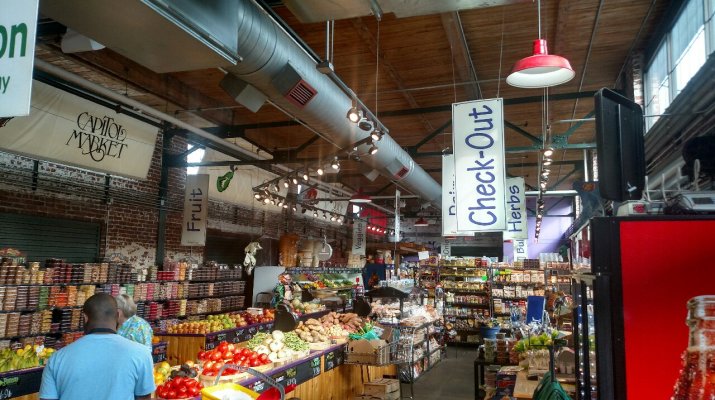
A Tour Of The Charleston Capitol Market – A Gorgeous Farmers Market Like No Other! – Good Witches Homestead

The beauty, activity and sheer size of the Charleston Capitol Market are simply stunning. Take a tour of this West Virginia showplace.

Source: A Tour Of The Charleston Capitol Market – A Gorgeous Farmers Market Like No Other! – Good Witches Homestead

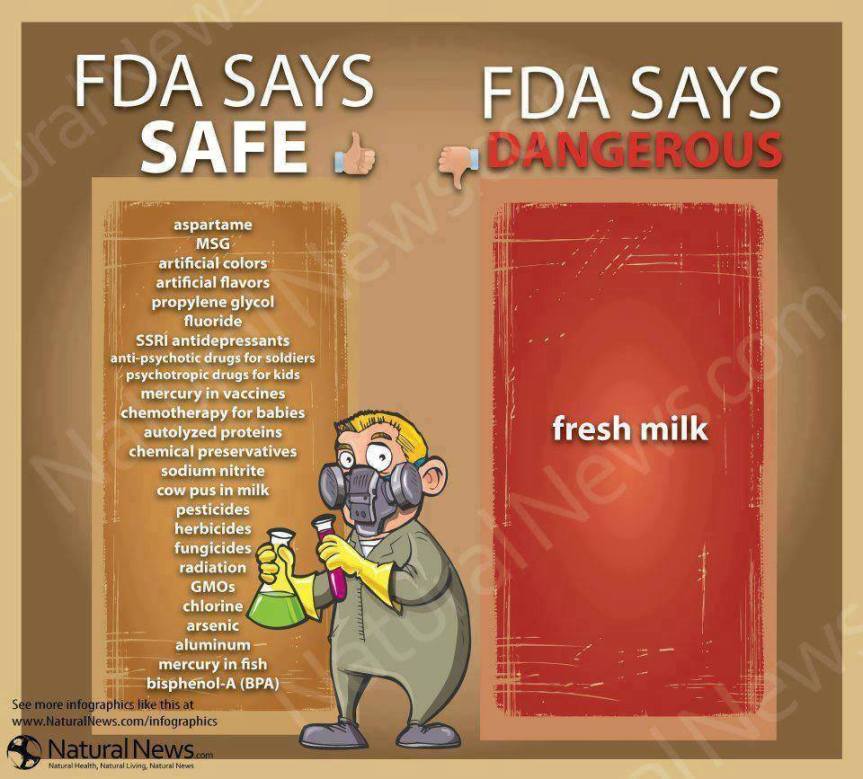
FDA | Toxins – TheBreakAway

Photo post by @ZyMarquiez.

Source: FDA | Toxins – TheBreakAway

I Am A Pagan-Buddhist Witch

Elk Hunting Group Wants to Expand Wolf-Killing Derby into Montana: $1,000 Bounty per Wolf | Straight from the Horse’s Heart

“Here at SFTH and at WHFF it is obvious that our attention is upon the future well being of equines, both wild and domestic, but by no means do we cast a blind eye to other wild American species under attack.  Be it Bison, coyote, cougar or in this case the majestic wolf; we are 100% committed to the belief that Mother Nature is much better suited to manage wildlife than the bumbling, brutal and misguided efforts of man.”~ R.T.


“These wolf lottery efforts are dismantling a century-long conservation heritage that is shared not just with environmental groups but with a lot of sportsmen groups as well,”

(EnviroNews Montana) — The Rocky Mountain Elk Foundation (RMEF), which has funded wolf-killing derbies in Idaho to the tune of $150,000 since 2013, is now seeking to expand its $1,000-per-kill bounty program to the neighboring state of Montana.

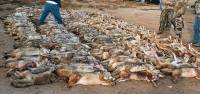
Idaho Wolf and Coyote Killing Derby

RMEF provides funds to the Foundation for Wildlife Management (F4WM), which says its mission “is to promote ungulate population recovery in areas negatively impacted by wolves.” While F4WM is based in Idaho, RMEF is stationed in Montana. F4WM held a meeting on April 5 in Sandpoint, Idaho, in an attempt to drum up support for the expanded bounty program. On April 6, Justin Webb, Mission Advancement Director for F4WM, wrote on the group’s Facebook page, “We had several folks from Montana expressing interest in F4WM expanding into Montana, and all were willing to help create Montana funding!”

Webb cautioned however, that it might take some time to determine if F4WM will go ahead with the effort. “[We] should be able to announce yay or nay on an F4WM expansion into Montana within a couple weeks. We have some business operational hurdles to work through, and fine tuning the legistics [sic] of the expansion.”

“These wolf lottery efforts are dismantling a century-long conservation heritage that is shared not just with environmental groups but with a lot of sportsmen groups as well,” said Erik Molvar, Executive Director for the Western Watersheds Project, in an exclusive interview with EnviroNews.

F4WM’s sole sponsor is RMEF. The group published an open letter to President Donald Trump on its website, calling the reintroduction of wolves to Yellowstone and Idaho “illegal” and telling the President that this “was one extreme criminal act of fraud and theft committed under the administration of William Jefferson Clinton that truly needs to be revisited.”

In 2012, Montana elk hunter Dave Stalling wrote in an op-ed for High Country News about what he described as the RMEF’s “all-out war against wolves.” Stalling worked previously for RMEF and saw changes that he linked to the hiring of David Allen as its director. Today, Allen is President and Chief Executive Officer at RMEF. Allen has supported the delisting of wolves as an endangered species in both Wyoming and Oregon.

“This is an organization that has always been at the fringes of the conservation movement,” said Molvar. “Basically, they are really anti-conservationists in disguise.”

In Idaho, the Department of Fish and Game (IDFG), which regulates hunting in the state, is beset with a funding scandal. An op-ed authored by local hunter Dave Cappell in the January 14, 2017 Idaho State Journal, alleges that two IDFG commissioners were told their terms would not be renewed so that new commissioners, who would approve a system of auction tags for game hunters, could be appointed…(CONTINUED)

http://www.environews.tv/040717-elk-hunting-group-wants-expand-wolf-killing-derby-montana-1000-bounty-per-wolf/

Democrats Ask Teachers To Destroy Books Written By ‘Climate Deniers’ | The Daily Caller


Andrew Follett
Energy and Science Reporter

Three senior House Democrats asked U.S. teachers Monday to destroy a book written by climate scientists challenging the environmentalist view of global warming.

The Democrats were responding to a campaign by the conservative Heartland Institute copies of the 2015 book, “Why Climate Scientists Disagree About Global Warming” to about 200,000 science teachers. Democratic Reps. Bobby Scott of the Committee on Education, Raúl M. Grijalva of the Committee on Natural Resources, and Eddie Bernice Johnson of the Committee on Science, Space and Technology all issued a statement telling teachers to trash the book.

“Public school classrooms are no place for anti-science propaganda, and I encourage every teacher to toss these materials in the recycling bin,” Scott said. “If the Heartland Institute and other climate deniers want to push a false agenda on global warming, our nation’s schools are an inappropriate place to drive that agenda.”

The book’s three authors all hold doctorates and taught climate or related science at the university level. The book was written by former Arizona State University climatologist Dr. Craig D. Idso, James Cook University marine geology and paleontology professor Robert M. Carter, and University of Virginia environmental scientist Dr. Fred Singer.

Grijalv accused the scientists of “lying to children about the world we live in to further corporate polluter profits” and said that doing so was “cruel.” Johnson stated that the scientists had sent “scientifically inaccurate materials on climate change to public school teachers across the country” at the behest of ominous right wing donors and the Charles and David Koch brothers.

The best way to get adults to act like environmentalists is by brainwashing their children, according to research published by Oregon State University. Talking to kids about global warming caused their parents to use less energy and act more like environmentalists. The research was run on was run on 30 Girl Scout troops in northern California and had a “lasting impact on family energy consumption” for at least eight months after the end of the program.

Based on the study’s success, the researchers are now disseminating the curriculum to Girl Scout leaders around the country and attempting to adapt it to other groups of kids, including schools and youth-focused organizations such as 4-H with the help of other universities, such as Stanford. The research was financially supported by government grants.

Follow Andrew on Twitter

Send tips to andrew@dailycallernewsfoundation.org.

Source: Dems Tell Teachers To Trash Global Warming ‘Denier’ Books | The Daily Caller

What Is Prana? – Good Witches Homestead

By Diana L. Jones

Prana is the vital life force that sustains life. In a human, it is all the cosmic Energy that causes the physical actions within one’s body. Prana is the fuel for our bodies, from the food we eat to the air that is breathed.

Prana is energy, vitality, power. Prana is the foundation and essence of all life; the energy and vitality that permeates the entire Universe. Prana flows in everything that exists.

Furthermore, Prana is the connecting link between the material world, consciousness, and mind. It is what makes life on the material level possible. Prana regulates all physical functions, for example, the breath, the supply of oxygen, digestion, elimination and much more. The function of the human body is much like a transformer, receiving energy from the Universal flow of Prana, distributing that energy, and then eliminating it. If a person or a room has a healthy, harmonious vibration, we say: “There is good Prana here”. Illness, on the other hand, disturbs or blocks the flow of Prana. As we develop the ability to control Prana, we gain harmony and health, of both body and mind. In addition to this, with long and consistent practice an expansion of consciousness is experienced.

Prana is divided into ten main functions:

  1. The five Pranas – Prana, Apana, Udana, Vyana and Samana.
  2. The five Upa-Pranas – Naga, Kurma, Devadatta, Krikala and Dhananjaya.

The Five Pranas

PRANA

Prana is that special function of the Cosmic Prana, which supplies the human body with essential oxygen. Its energy flows from the nostrils to the level of the heart.

Clean air is vital for health, however, on its own air, is not the decisive factor in good health. Some people are prone to illness, even though they are frequently out in the fresh air. On the other hand, people who live in rooms or suburbs with relatively poor air quality remain healthy. Our health is not influenced by external factors only. Health is also governed by our inner condition, by the power of resistance and the inner will – Atmabala – the inner vitality. When Atmabala is strong within, external forces can barely harm us. The practice of “Yoga in Daily Life” strengthens our vitality. Certain techniques, in particular, activate Prana Shakti, these are Bhastrika, Nadi Shodhana, and Ujjayi Pranayama.

APANA

Apana Prana influences the lower part of the body from the navel to the soles of the feet. This Prana regulates the elimination process. Diseases that affect the lower abdomen, intestines, kidneys, urinary tract, legs, etc., are the result of disturbed Apana Prana. The techniques of Nauli, Agnisara Kriya, Ashvini Mudra and Mula Bandha serve to strengthen and purify Apana Prana.

VYANA

Vyana Prana flows through the nerve channels of the human body. It has an effect on the whole body and particularly on the Nadis. Poor circulation, impaired nerve stimulation and nervous breakdowns, originate from a deficiency in Vyana Prana.

Vyana Prana is activated and strengthened in the practice of Kumbhaka (breath retention). With each natural, relaxed breath that we take, there is an automatic pause between inhalation and exhalation. In the practice of Pranayama, this pause is consciously lengthened. When we retain the breath, we withhold energy in the body with a resultant build up in pressure. This pressure has the effect of releasing energy blockages. Kumbhaka stimulates the nervous system. Anyone who has combined the techniques of Kumbhaka and Maha Bandha knows the subsequent, pleasant sensation of peace that flows through the body. This is the reason for being able to meditate well after this practice. The feeling is produced by the increased flow of Vyana Prana throughout the whole body.

It is highly recommended to perform the following breath exercise several times a day.

  • Inhale deeply and exhale once
  • Again inhale and hold the breath for as long as comfortable (counting to 20, 30, etc.)
  • Exhale and hold the breath again for a while
  • Repeat this exercise 4-5 times.

The benefit of this simple breath exercise is quickly noticed and our nerves are truly grateful.

UDANA

Udana Prana is the ascending energy that flows from the heart to the head and brain. Udana Prana accompanies the awakening of the Kundalini Shakti. It is with the assistance of Udana Prana that the Astral body separates itself from the physical body. A strong Udana Prana eases the phase of death.

With the control of Udana Prana, the body becomes very light and one may gain the ability to levitate. When Udana Prana is in our control, external obstacles such as water, earth or stones no longer obstruct us. Intense practice of the Yoga breath exercises also gives the possibility of walking on water or even floating in the air. Fakirs who sit or lie on a bed of nails possess the ability to control their Udana Prana. Yogis who live in the forest and remain unaffected by heat, cold, thorns, and insects, etc., are protected through the control of Udana Prana. Udana Prana is activated by the practice of Ujjayi Pranayama, Bhramari Pranayama, as well as Viparitakarani Mudra.

Bhramari Pranayama Technique

  • Close the ears with the fingers and inhale. While exhaling through the nose, hum like a bumble-bee (the mouth remains closed).
  • After about 5-7 breaths sit motionlessly and breathe normally with the ears still closed. Concentrate on your inner space and listen to the inner sound.
  • This exercise will calm the nerves and thoughts, promote concentration and bring you into contact with your Self.

SAMANA

Samana is a very important Prana that connects two main Chakras – Anahata and Manipura Chakras.

Samana Prana distributes the energy of nutrition throughout the human body. We are aware that food not only influences our physical body but also affects our psyche and consciousness. The quality of our Prana (all types of Prana), is directly associated with the quality of our food. Pure, sattvic, vegetarian food and the practice of Pranayama will provide a healthy and balanced body for life.

Samana Prana has an influence on the Manipura Chakra, whose corresponding element is fire. When Yogis are able to control Samana Prana it is a pure flame within them. Those in whom Samana Prana is completely pure are surrounded by a radiant aura, which is even noticeable by those who do not have the ability to see auras.

This Prana is strengthened through the practice of Agnisara Kriya and Nauli. The practice of these two Kriyas prevents digestive problems and Diabetes. It also improves one’s resistance to infectious disease and cancer, due to the digestive fire that is awakened in the whole body, which purifies and cleans.

The most effective technique for awakening Samana Prana is Kriya Yoga. The practice of Kriya Yoga warms the entire body. This is due to the rising of Samana Prana. A very aware person can observe the aura of a Kriya practitioner becoming brighter and stronger with each round of practice.

The Five Upa-Pranas

The five Upa-Pranas regulate important functions in the human body.

NAGA – Burping

Removes blockages of Prana and Apana and prevents gas formation in the digestive system. Constant suppression of Naga can lead to Cardiac Arrhythmia. Other functions include triggering of the vomit reflex due to indigestion and dissolving blockages of Samana Prana.

KURMA – Blinking

This Upa-Prana functions in the area of the eyes, controlling opening and closing of the eyelids. The energy of this Upa-Prana is active when we are awake and is revitalized when we sleep. Kurma protects the eyes from the penetration of dust and foreign bodies etc. Disturbance of this Upa-Prana causes uncontrolled blinking and twitching of the eyelids. The practice of Trataka provides balance and strength to Kurma, as does the chanting of OM, placing warm palms over the eyes and Asanas where the head is bent forward.

DEVADATTA – Yawning

The function of Devadatta is similar to that of Samana Prana. Yawning expels gas, reducing tiredness after eating. Certain foods such as grains, onions, and garlic cause fatigue. Many Yogis only eat vegetables and some milk products in order to sustain their level of vitality and thereby reduce lethargy.

KRIKALA – Sneezing

Clears blockages in the respiratory system. Sneezing can also ease a headache as it releases energy blockages in the head and neck. A sneeze should not be suppressed, as this may affect vertebrae in the cervical spine. In folktales, it is said that he who sneezes loudly and strongly, has a long life. Weak sneezes indicate weak vitality.

DHANANJAYA – Opening and Closing of Heart Valves

Dhananjaya resides close to the Heart. It influences the whole body and in particular the muscles of the heart by opening and closing the heart valves. Cardiac Arrhythmia and even Heart Attack may occur due to a serious disturbance of Dhananjaya.

There are four areas in the human body where the flow of Prana is particularly intensive – through the sole of each foot and the palm of each hand. The feet are closely related to the earth element and represent negative polarity. Therefore one should never concentrate on the feet in meditation. Conversely, the energy of the palms originates from the heart. It is related to the air element and produces positive polarity.

There is an exercise through which we can very clearly feel Prana in the hands.

Raise the arms out to the sides of the body with palms facing to the front. Keep the arms straight and move them in a half-circle to the front of the body, slowly bringing the palms towards each other. Remain completely relaxed, slowly reducing the distance between the hands. As the palms become closer, you will be conscious of a growing sensation between the hands, or a feeling of pins and needles in the palms. Bring the palms closer until the distance between them is only about 1 centimeter. Now, due to the energy that streams from your hands, it feels as though the hands are really being pulled towards each other. Prana causes this. If you now move the hands apart again, you will feel pressure on the back of the hands, producing the opposite effect. This is also Prana because Prana flows without hindrance throughout the entire body.

Prana is distributed throughout the whole body, through the network of the Nadis (nerves). There are 72,000 Nadis in the human body. Of these, there are three Nadis of particular importance.

  • IDA, the “Moon System”, correlates with the left nostril and the Parasympathetic Nervous System.
  • PINGALA, the “Sun System”, correlates with the right nostril and the Sympathetic Nervous System.
  • SUSHUMNA, the “Central Nadi”, penetrates the spinal column and correlates with the Central Nervous System.

The practice of Asanas and Pranayamas, harmonize the Ida and Pingala Nadis and has a purifying, strengthening and balancing effect upon the energy flow in all 72,000 Nadis. Pranayama and Meditation practice enhance energy flow in the Sushumna Nadi. When spiritual energy begins to flow in the Sushumna certain brain centers and Chakras are activated, creating a development and expansion of our consciousness to higher spiritual levels.

Prana itself is totally pure and neutral, just as the spring-water of a river is clear and clean. In its course, the river picks up many substances which change the quality of the water. Exactly the same occurs with Prana. Prana flows into the body clean and pure, but how it departs depends on the individual – on their lifestyle, their inner qualities and feelings, the type of food consumed and the environment and company in which one lives. The quality of the Prana that radiates from people impacts on both the surrounding environment and the individuals themselves.

The level of vitality existent in the blood and individual cells determines the condition of the human body.

The more cells that die, the weaker one becomes, and the quicker one ages. When the flow of Prana is restricted, the result is the same. The flow of Prana is affected by the worries we create for ourselves. The more we feel disheartened or depressed, the weaker the flow of Prana, leaving us more susceptible to illness, and the aging process occurs more rapidly. On the other hand, those who are balanced and content radiate vitality, and their strength reaches out to touch fellow human beings. Therefore, we should always endeavor to radiate positive Prana.

The Prana that we radiate (our “vibration” or “aura”), is clearly perceptible to others. The type of aura depends upon the purity of our thoughts and feelings, and also our internal Biorhythm and physical state of health. Mental unrest, inner tension, and illness are clearly seen in the aura, as is a harmonious balance of body, mind, and soul.

It is most advantageous for others, and ourselves to cultivate positive, confident, trusting and good thoughts. Above all else, negative, self-destructive and hostile thoughts are most harmful to us. With such a mental attitude we poison ourselves. That is why Yoga aspirants always endeavor to keep their thoughts and feelings pure and positive. The practice of meditation and Mantra maintains pure Prana and the practice of Pranayama increases our capacity to store Prana.

When the soul leaves the body and death comes, the life energy also escapes from the body. It is our destiny to die one day, but we always forget this fact. When we die we leave everything behind – our body, worldly possessions, friends and also enemies. So wherein lies the meaning of life? The purpose of life is to recognize reality. This reality is the Divine Self (Atma) within us. This is what we seek in meditation when we ask ourselves the question: “Who am I?”. When we recognize our Self, we have Realised our Self.

In order to achieve this, physical exercises and breath techniques alone are too little. One’s whole life must be directed towards the good. When we are free of hatred, greed, anger, envy, jealousy, passion and dependency, and live in love, harmony, and understanding with the environment and ourselves, all our problems will be resolved. When daily practice and a positive way of life merge with each other in such a way that they become one, our practice has become effective and successful.

Source: What Is Prana? – Good Witches Homestead

Please Comment to Protect Wyoming’s Wild Horses from the Devastating 2017 Checkerboard Roundup | Wild Hoofbeats

Adobe Town Family

Please Comment by April 4, 2017 on the Checkerboard 2017 Roundup

The BLM was unable to roundup wild horses from Salt Wells Creek, Adobe Town and Great Divide Basin in 2016 because we won a lawsuit that prohibits the BLM from managing the wild horses in the Checkerboard using only Section 4 of the Wild Free Roaming Horse and Burro Act, which allows them to remove wild horses from private lands. Because the Checkerboard includes public lands, it is illegal to manage them as if they were privately owned by the ranchers demanding these roundups. In order to legally roundup wild horses from the Checkerboard, the BLM must prove that the numbers are above Appropriate Management Level, or AML. Now, they are not even conducting a census to prove this, instead they are “projecting” that the horses are over the high end of AML.

Roundups cause the destruction of hundreds of wild horse families, as well as injuries and death to the horses as they are chased by helicopters and flee in terror into traps. These captured wild horses are chased into trailers and taken away from the only home they have ever had to end up spending the rest of their days languishing in holding corrals with no shelter. Only a lucky few are adopted by members of the public and these do not always mean good homes – the return rate back to the BLM for adopted or purchased wild horses is over 50%. Many many of these horses will end up at slaughter in Mexico. There is no good reason to roundup and remove these horses from Adobe Town, Salt Wells Creek and Great Divide Basin.

I have been following and observing and photographing the wild horses in these three herd management areas for the last 13 years. These horses are uniquely suited to this sometime harsh high desert environment. They are the last three largest herds in Wyoming, and they deserve to be preserved on our public lands. Although the Checkerboard presents challenges to BLM management because of its pattern of public alternating with private lands, that is no reason to cave into petty demands from the Rock Springs Grazing Association, which is made up from less than 25 members. These wild horses are valuable to us, the American public, and so every effort must be made to preserve them here where they were found at the time the 1971 Wild Free-Roaming Horse and Burro Act was passed. These horses were here long before the Grazing Association, and now what needs to happen is land swaps to consolidate blocks of public land that the horses can continue to roam upon. Managing the wild horses on the range, on our public lands where they can continue to roam free and making these necessary land swaps happen is what the BLM needs to be working on, not perpetuating this every 3 year pattern of roundup, removal, then warehouse our wild horses. The Field Manager of the Rock Springs BLM Field Office has been quoted as saying: “For all intents and purposes, we consider the Checkerboard private.” But it is NOT private. In fact, over half of the Adobe Town, Salt Wells Creek and Great Divide Basin Herd Management Areas are public land, that belongs to us, the citizens of the United States of America, not the Rock Springs Grazing Association.

Great Divide Basin Family

This time, the BLM wants to remove 1029 wild horses: 584 removed from Salt Wells Creek, 210 removed from Adobe Town, and 235 removed from Great Divide Basin.

They are not even calculating their numbers from an actual aerial census – they are making these numbers up. Every year, the BLM conducts and aerial census in late April, but now they are just “projecting” the numbers.

2017 “Projections”

Great Divide Basin  650

Salt Wells Creek       835

Adobe Town              820

Here are past census numbers provided by the BLM for these three areas:

2016 Statistically Corrected Census Counts
HMA Total within HMA Total within Checkerboard
Great Divide Basin 542 272
Salt Wells Creek 696 187
Adobe Town 684 25
Total 1,922 484

2015 April Census Numbers:

Adobe Town: 858
Salt Wells Creek: 616
Great Divide Basin: 579

2014 Post Roundup Census 2014

Adobe Town: 519
Salt Wells Creek: 29
Great Divide Basin: 91

As you can see with these numbers, they randomly go wildly up and down but somehow are considered “statistically corrected.”  The BLM has to prove that Adobe Town has more than 800 wild horses, Great Divide Basin has more than 600 wild horses and Salt Wells Creek has more than 365 wild horses in order to legally proceed with a roundup. There is no attempt to account for mortality rates due to deaths of older horses and foals, which can be very high when there is a harsh winter, which this last winter certainly has been, with storm after storm, much more snow and much more freezing temperatures than normal.

A real, professionally done, independent census needs to be conducted to get a real, accurate count of the wild horses in each of these three HMAs before any plans are made to roundup and remove wild horses from their rightful homes.

Radio Collared Adobe Town mare

I have been following the Adobe Town Radio Collar Study which is currently going on in conjunction with the University of Wyoming. Their plan to study the movements of wild horses through tracking 20 mares wearing radio collars will be completely disrupted if they round up wild horses in Adobe Town, so this is yet another reason that this proposal is senseless. I contend that there are NOT more than 800 wild horses in Adobe Town and therefore there is no legal reason to proceed with a roundup, and they will be subverting their own study by removing wild horses from this HMA, so this is yet another reason not to roundup and remove horses from Adobe Town. But none of the horses from any of these three HMAs should be removed without an accurate count of how many wild horses are in each area.

The biggest reason for not going forward with the Checkerboard 2017 Roundup is the well being of the wild horses themselves. This seems to be very low on the BLM’s priority list. What will happen to these 1029 formerly wild horses? We, the taxpaying public, will be paying to warehouse and feed them, at huge cost. The horses themselves will live out miserable lives in the holding facility, without their families, without shelter, and under the possibility that at any moment the BLM could elect to “euthanize” the more than 45,000 wild horses in captivity. This must stop.

Adobe Town mare and foal

Please comment by April 4. These wild horses need your help.

You are welcome to use any points from this blog but please use your own words. The BLM counts any form letter or form email as 1.

blm_wy_adobetown_saltwells_hma@blm.gov (Please include “2017 AML Gather” in the subject line), mailed or hand-delivered during regular business hours (7:45 a.m. to 4:30 p.m.) to:   BLM Rock Springs Field Office, 2017 AML Gather, 280 Highway 191 North, Rock Springs, WY 82901.

For more information, please contact the BLM at 307-352-0256.

Here is a link to the Scoping Document:

https://eplanning.blm.gov/epl-front-office/projects/nepa/74247/98803/119700/2017_Scoping_Statement_-_Adobe_Town,_Salt_Wells_Creek,_Great_Divide_Basin_AML_Gather.pdf

Source: Please Comment to Protect Wyoming’s Wild Horses from the Devastating 2017 Checkerboard Roundup | Wild Hoofbeats