Edible Spring Greens {Recipes}

By Crooked Bear Creek Organic Herbs

Crooked Bear Creek Organic Herbs's avatarCrooked Bear Creek Organic Herbs

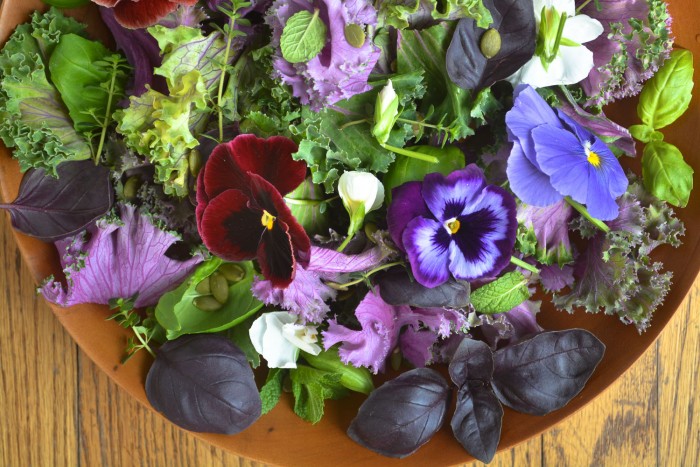
Spring Green Salad

It’s time to renew. This applies to our outer worlds as well as to our inner worlds. Spring has traditionally been a time to jump-start the liver and gently cleanse our bodies.  The natural world, with its infinite wisdom, provides us with every opportunity to do just this. Bitter and nutrient-packed greens come to life, and for those of us paying attention to nature’s hints, provide us with delicious and nutritious Spring tonics.

Dandelion greens are packed with vitamins and minerals, and also, provide a bitter kick that helps support liver function.  This is important during spring because the hepatic function can become naturally a little sluggish after a more sedentary winter filled with rich seasonal food.  Violet-greens and chickweed are super-packed with nutrients, making them just the spring pick-me-up your body needs.  Young greens of dandelion and violet especially are ideal, for both texture and taste reasons.  You’ll…

View original post 689 more words

Plant Profile: White Clover {Trifolium repens}

By Crooked Bear Creek Organic Herbs

Crooked Bear Creek Organic Herbs's avatarCrooked Bear Creek Organic Herbs

Also, Known As:

  • Dutch Clover
  • White Clover

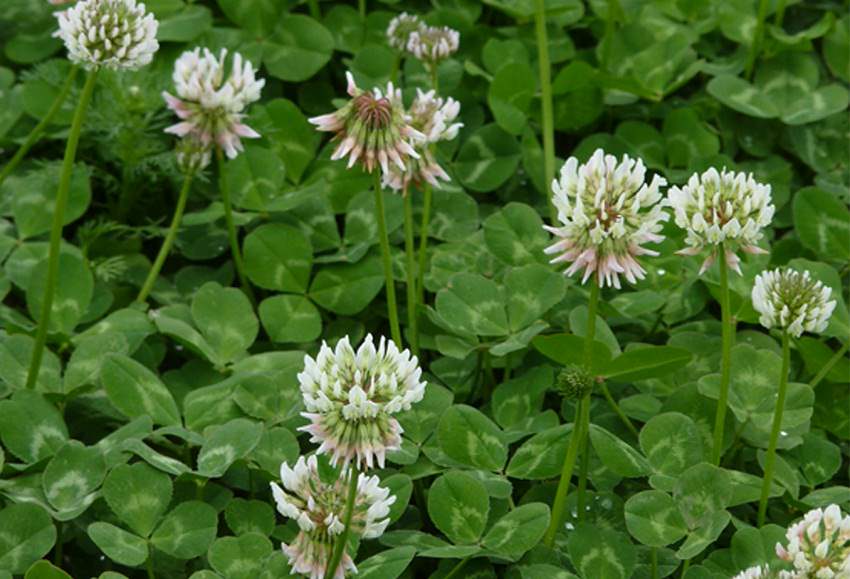
White clover (botanical name Trifolium repens) is a clover species that is indigenous to Europe, West Asia and Northern regions of Africa. Extensively introduced across the globe, this species is cultivated in the form of a pasture crop and is currently even common in the grassland regions of North America as well as New Zealand. White clover is also known as Dutch clover, as this species was cultivated in Holland for the first time.

White clover is a herbaceous (herb-like) perennially growing small plant. It grows close to the ground and produces small whitish flower heads, which usually have a pink or creamy tinge, which may occur as the plant matures. Usually, the flower heads measure anything between 1.5 cm and 2.0 cm (0.6 inches and 0.8 inches) wide and appear at the end of the flower stalks or peduncles measuring about 7…

View original post 1,507 more words

Dandelion, A Common Garden Herb

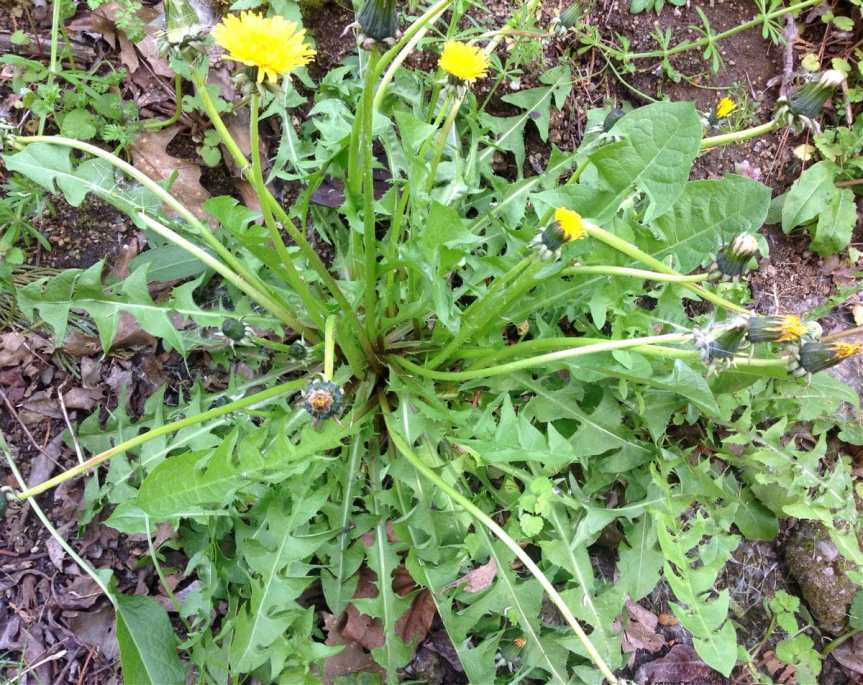
I make a wilted dandelion greens dish that’s fantastic after a long winter. Get the leaves young for eating. The older leaves are bitter.

Crooked Bear Creek Organic Herbs's avatarCrooked Bear Creek Organic Herbs

Taraxacum officinale

Also, Known As:

  • Blow Ball
  • Cankerwort
  • Dandelion
  • Lion’s Tooth
  • Pissabed
  • Priest’s-crown
  • Puff Ball
  • Pu Gong Ying
  • Pu-kung-ying
  • Swine Snout
  • Telltime
  • White Endive
  • Wild Endive

The dandelion is a common garden herb, with easily recognized flowers. During the spring season, the leaves and the root of the dandelion begin to produce mannitol, which is a substance utilized in the treatment of conditions such as hypertension and a weakened heart in continental Europe – where it is often prescribed by herbalist for patients with these conditions. A herbal dandelion tea made using the roots and the leaves of the herb are good to take from about the mid of March to about mid-May in the treatment of such conditions. Prepare the herbal dandelion tea in this way, first, boil a quart of water in a pot, slowly reduce the heat and then add 2 tbsp. of cleaned and chopped fresh…

View original post 2,664 more words

Sustainable Wild Collection Protects People, Plants, and Animals

Crooked Bear Creek Organic Herbs's avatarCrooked Bear Creek Organic Herbs

Chances are, you’re deeply connected with wild plants and don’t even realize it.

All of us in countless ways, whether we recognize it or not, are deeply connected to wild collecting.

Wild plants, as the term suggests, aren’t grown on farms. Instead, they’re collected in meadows, forests and deserts. Since ancient times, they’ve served as natural and essential ingredients in foods, fibers, dyes, cosmetics and traditional medicines.
Consider the açai berries in your super smoothie. They’re wild collected in the Brazilian Amazon. The pure maple syrup you save for special breakfasts most likely comes from the forests of Canada or the northern regions of the United States. The candelilla wax in your favorite skin care products originates in the deserts of northern Mexico. The licorice root used in candies and lozenges could be wild collected in many places — Afghanistan, Kazakhstan, Pakistan, Turkmenistan or Uzbekistan. And at Wildwood Enterprises, more…

View original post 3,466 more words

Wild Foods and Foraging

Crooked Bear Creek Organic Herbs's avatarCrooked Bear Creek Organic Herbs

It’s all rainy days, low slung clouds, and rain on tin-roofs around the Gunnison Valley these days—a much needed, thirst-quenching storm has arrived and settled in.  A perfect excuse for warm coffee, bouquets of flowers on the table, and a book, of course.

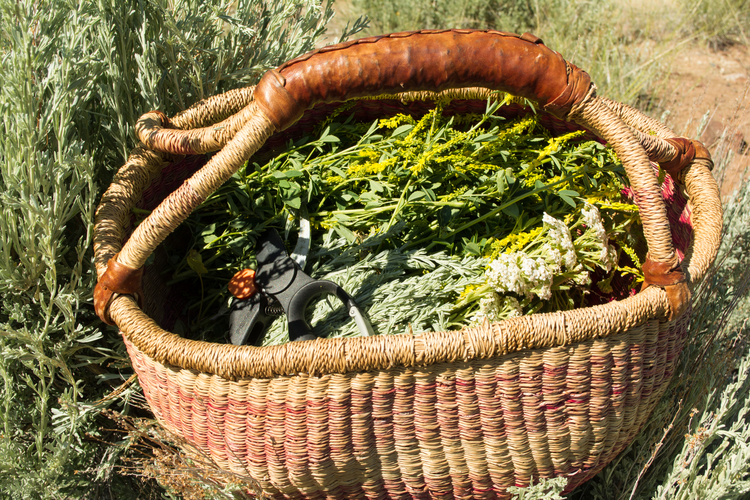
It’s also a great time to get well-versed in the foraging dos and don’ts.  There is plenty to learn in the way of safety, sustainability, legalities, terms, and botany in the world of foraging, and its best to have at least a cursory grasp on these things before heading out, wicker basket and clippers in hand.

Today, a word on foraging safety, considerations, and a note on common poisonous plants to the mountain states.  All of which, can be found in Briana’s new book Mountain States Foraging, a guidebook to wild edibles in the mountain west.

Foraging for Briana has been a lifeline to a wild…

View original post 584 more words

22 Trees That Can Be Tapped For Sap And Syrup | Wild Foodism

maplespilewildfoodism2As winter wanes and spring approaches, wild foodists all across North America tap into the time-honored tradition of sugar production – mainly, the transformation of maple tree sap into maple syrup and sugar.  This process, passed on from the Native Americans to the early settlers, is still quite popular today, and is responsible for one of the few wild foods that can be purchased commercially in most supermarkets.

Most people associate syrup with the maple tree, and although much of today’s syrup does originate from the sugar maple, all species of maple can be tapped.  Even better, many other trees from other genera can be tapped to extract sap, which ultimately can be turned into delicious syrup.

In this post, I won’t be discussing the methods involved in tapping for sugar production.  If you are unfamiliar with the process, there are a variety of great websites, videos, and books to guide you.  Rather, I would like to provide a list of various trees (maples, birches, walnuts, etc.) that you can tap successfully to yield wonderful, sugary products. […]

Read the entire post at its Source: 22 Trees That Can Be Tapped For Sap And Syrup | Wild Foodism

Thistle Soup Recipe – Good Witches Homestead

This Thistle Soup Recipe is made using edible food from the wild.

Make thistle soup by chopping (scissoring would be a better word since an old pair of shears is the best thing I’ve found for cutting up green plants) a pan of thistles. Push them down in the pan and add just enough water to cover the plants. Bring to a boil and let simmer for at least twenty minutes. Now you can season this soup and eat it just as it is or you can add some boiled fish, leftover rice or anything else you happen to have. It’s guaranteed to be good and you can use this stock in a stew. […]

Read the entire post at the Source: Thistle Soup Recipe – Good Witches Homestead