Please Do Research Before You Consume Or Smoke … Anything

By Orzula

Been noticing a lot of worrying posts lately,

Particularly among the newer witchblrs, so I feel as though I should say something:

⚠️ PLEASE DO NOT INGEST/CONSUME/SMOKE ANYTHING UNLESS YOU HAVE DONE EXTENSIVE RESEARCH ⚠️

And research that is preferably done off of Tumblr (aka Google it), so you’ll find a wider range of opinions, articles, and thoughts on the matter.

For example:

  • Certain stones and crystals are toxic when mixed with water/liquids! Big ones include malachite, turquoise, and selenite – but that’s just to name a few!


  • Various herbs can interact negatively with medications/the body: St. John’s Wort with birth control or anti depressants (even though it is used to treat depression in small doses), sleepy time herbs are not to be used in conjunction with melatonin or other sleep aids/pills; some herbs can cause liver damage – pennyroyal, valerian, comfrey, etc – if consumed.


  • DO NOT JUST SMOKE THINGS because a tumblr said to try it!!! I just saw a post about smoking valerian root – THIS WILL CAUSE A CHEMICAL BURN IN YOUR THROAT AND LUNGS. ⚠️

So for the love of gods, and all things decent – including your health – PLEASE do legitimate research before ingesting any herbs or concoctions. 🌿

Source:

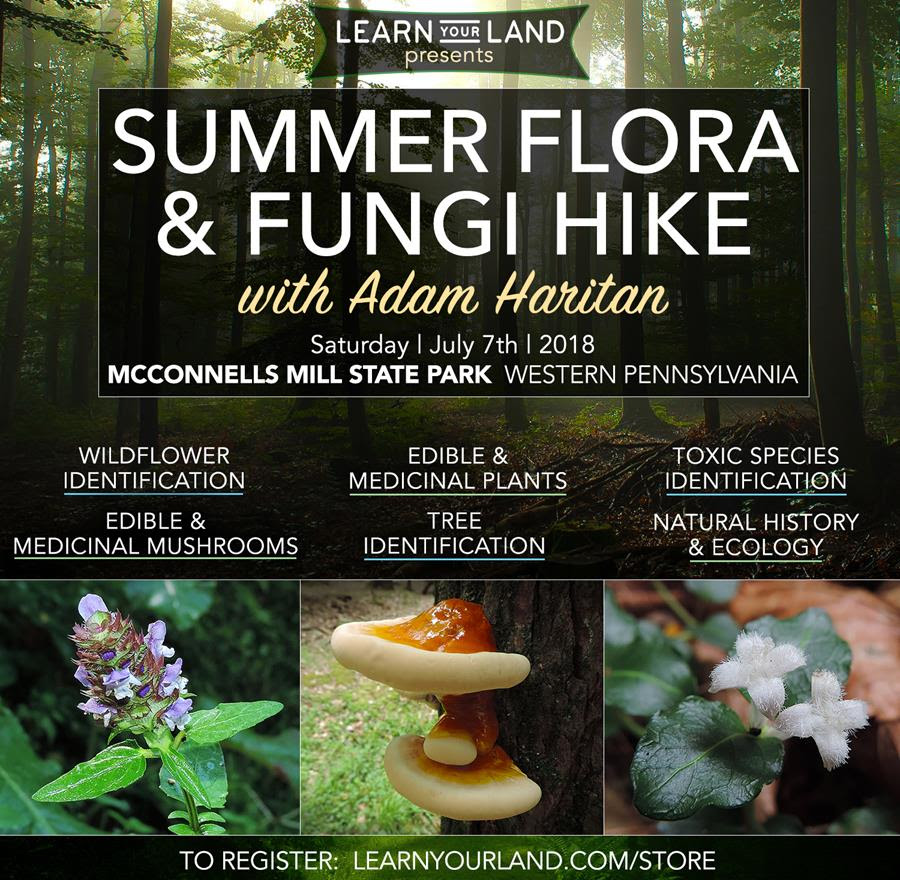
Summer Flora & Fungi Hike

By Adam Haritan

Greetings!

I am excited to announce that I will be hosting the 2018 Summer Flora & Fungi Hike on Saturday, July 7th at McConnells Mill State Park in Western Pennsylvania… and, I’d love for you to join us!

Summer is the perfect season to explore Pennsylvania’s land in search of interesting and useful plants, trees, and mushrooms. McConnells Mill State Park — with its deeply-cut gorges, hemlock-lined ravines, whitewater currents, and historical landmarks — is a prime area for summer exploration.

While exploring the Slippery Rock Creek Gorge within the park, we’ll delve into a myriad of fascinating topics related to this season’s flora and fungi, including:

  • Edible and medicinal plants
  • Edible and medicinal mushrooms
  • Summer wildflower identification
  • Tree identification, along with edible and medicinal uses
  • Medicine-making using wild plants and mushrooms
  • Natural history and ecology of the area

… and more!

Interested? Here are more details:

What: Summer Flora & Fungi Hike at McConnells Mill State Park
When: Saturday, July 7th, 2018
Where: McConnells Mill State Park, Western Pennsylvania
Time: 9:30 AM – 12:30 PM OR 1:30 PM – 4:30 PM

The program is geared toward adults and will entail moderate hiking (about 1.5 miles).

Please note that in order to maximize your learning experience, space is limited and registration with payment in advance is required to secure your spot.

To purchase your ticket, and to learn more about the outing, please visit the following link and choose the appropriate session:

Summer Flora & Fungi Hike with Adam Haritan

I’d love to see you there!
-Adam Haritan

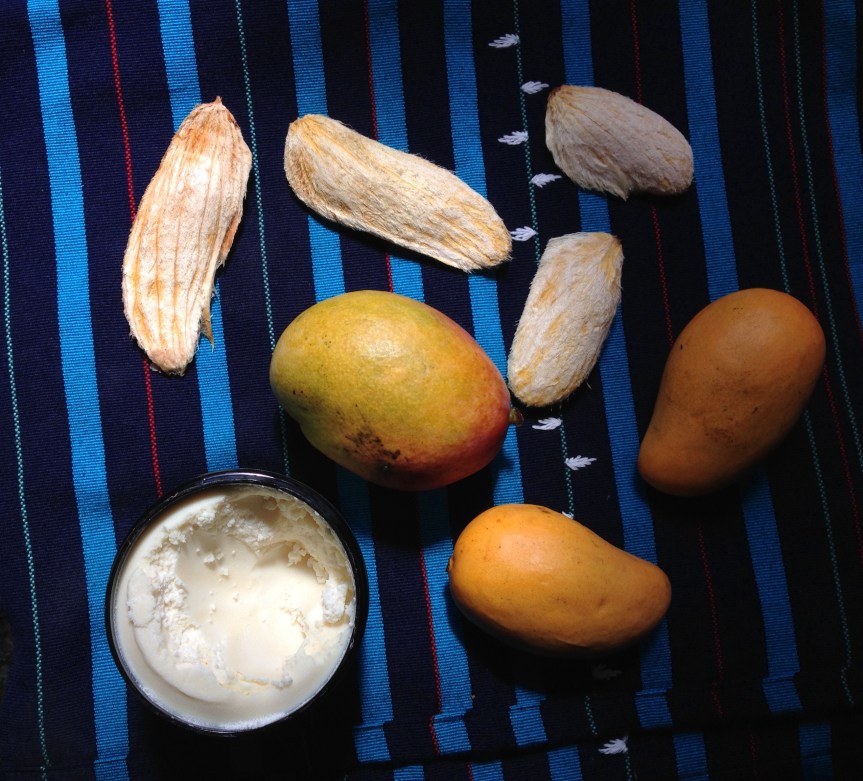
Power of The Seed

By Ancestral Apothecary

Self-care Sisterhood: Folk Medicine Making for Women of Color

By Ancestral Apothecary

Caring for patients facing life threatening illness

By Ancestral Apothecary

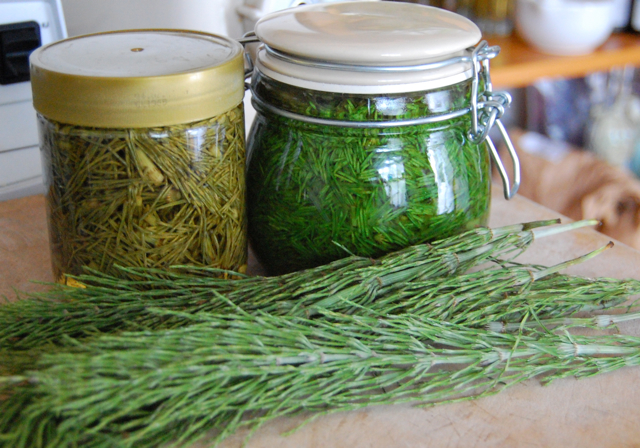
What Is Horsetail {Equisetum arvense}

By Crooked Bear Creek Organics

Crooked Bear Creek Organic Herbs's avatarCrooked Bear Creek Organic Herbs

Also, Known As:

  • Bottlebrush
  • Horsetail
  • Mare’s Tail
  • Scouring Rush
  • Shave Grass

Horsetail is a well-known herb; it is a perennial herb growing in moist loamy or sandy soil found in much of the North American continent, as well as in similar climates in Europe and Asia. The morphology of the horsetail herb is very strange and the plant has a creeping or string-like root name. The roots at the nodes are turned into numerous hollow stems of two kinds. Horsetail begins growth in two stages, initial growth of the plant is through a fertile and flesh-colored stem, this stem can grow to a height of four to seven inches and comes out a cone like a spike – this spike contains spores of the plant. The initial stem does not last long and withers away. The second stem is a green and sterile structure reaching a length of eighteen inches in height…

View original post 2,622 more words

What Is Licorice Root?

By Crooked Bear Creek Organics

Crooked Bear Creek Organic Herbs's avatarCrooked Bear Creek Organic Herbs

Glycyrrhiza glabra

Also, Known As:

  • Chinese Licorice
  • Gan Cao
  • Kan-ts’ao
  • Kuo-lao
  • Licorice
  • Licorice Root
  • Ling-t’ung
  • Liquorice
  • Mei-ts’ao
  • Mi-kan
  • Mi-ts’ao
  • Sweet Licorice
  • Sweet Wood
  • Yasti Madhu

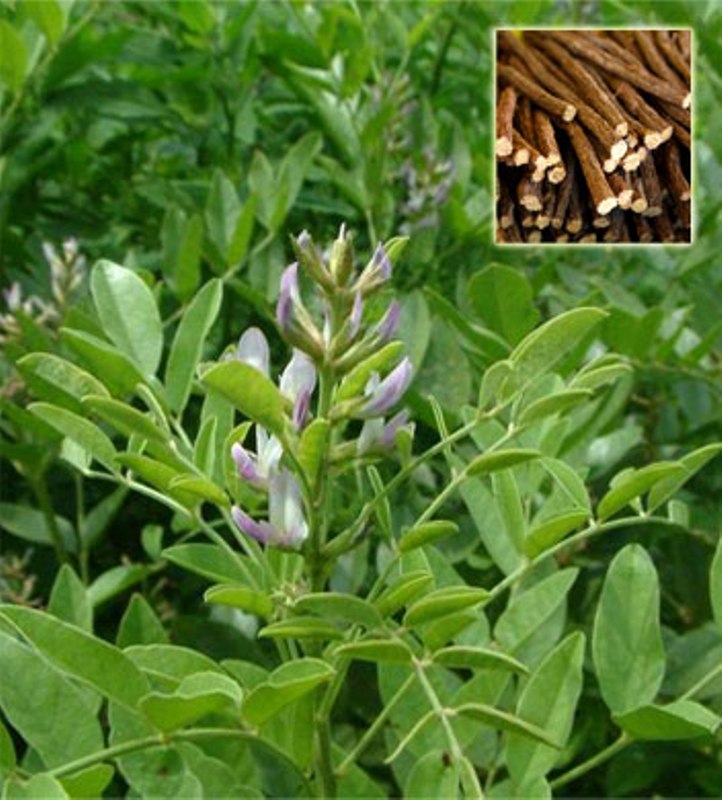
Licorice refers to the roots and rhizome of a variety of plants belonging to the species Glycyrrhiza glabra L. of the family Fabaceae. This is a European species and possesses a sweet yellow wood. There are also Asian species of the plant like Glycyrrhiza uralensis Fisch. and others. In the commercially available licorice in the US markets, all these species are included since a significant part of licorice is imported from China and other Asian countries.

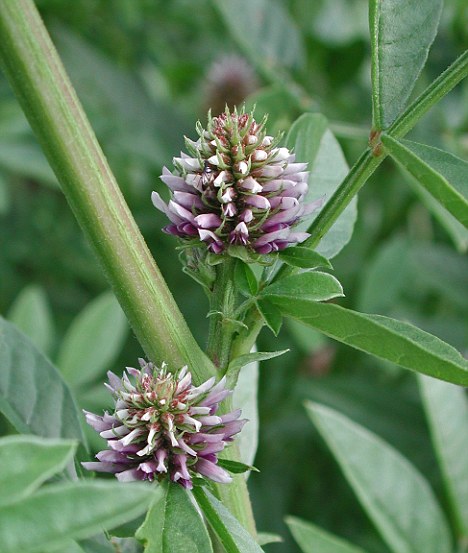
licorice root plant
The herb has expectorant and demulcent properties and has been used traditionally in the treatment of common cold and coughs. The medication is commonly called licorice root or Glycyrrhiza and has also been in use as a flavoring agent. Licorice has been popular for long, in many parts of the…

View original post 3,009 more words

What Is Borututu Bark?

By Crooked Bear Creek Organics

Crooked Bear Creek Organic Herbs's avatarCrooked Bear Creek Organic Herbs

Deep in the jungles of Africa, the bark of the borututu tree (Cochlospermum angolensis) holds many treasures. A tea made from this interesting substance has traditionally been used to manage ailments related to liver function, indigestion, and fatigue. Indeed, borututu bark tea as a broad spectrum tonic is an old-world tradition. A natural and powerful broad spectrum cleansing agent, traditional African medicine favors borututu for the management of problems of the liver and gallbladder.

Beneficial Compounds in Borututu Bark

Rich in active ingredients such as quinones, catechins, phenols, and bio-flavonoids, borututu has a wealth of substances shown to benefit the liver and gallbladder. For problems related to the digestive system and gallbladder, hands down, borututu bark is one of nature’s most powerful tonics. This is why borututu bark is one of the ingredients used to create Livatrex®, a powerful blend of herbs that support detoxification and normal function of…

View original post 206 more words

What Is Elecampane?

By Crooked Bear Creek Organics

Crooked Bear Creek Organic Herbs's avatarCrooked Bear Creek Organic Herbs

Inula helenium

Also, Known As

  • Elecampane
  • Horseheal
  • Scabwort

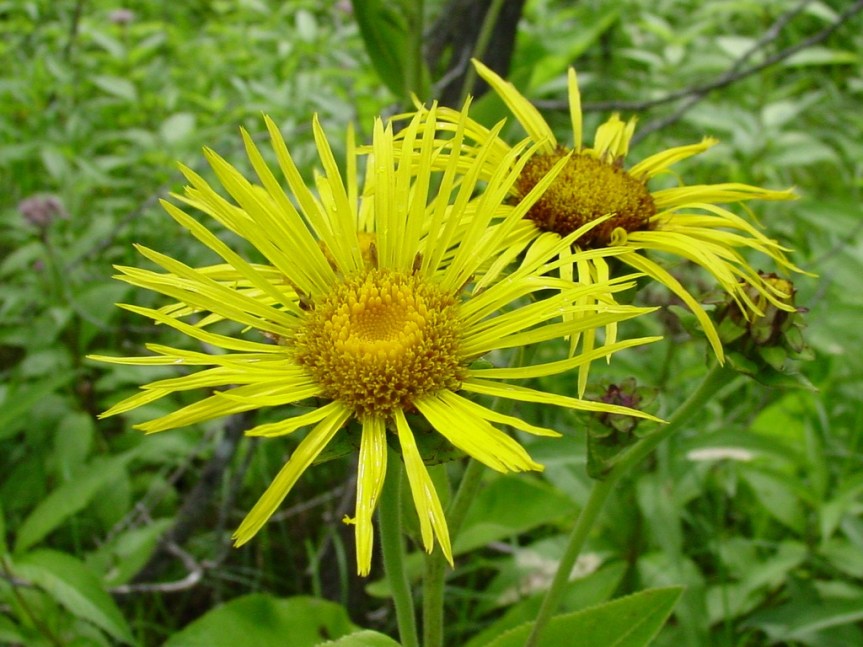
Elecampane (botanical name Inula helenium) is a tall, bristly perennial plant that is native to south-eastern Europe and western Asia. This herb, which bears yellow flowers resembling the daisy, has been naturalized in North America and is found growing in abundance in the moist meadows, fields and along the roads in the central and eastern regions of the United States and neighboring Canada. Elecampane belongs to the Asteraceae family and grows up to a height of four to six feet. The herb has a heavy branching stem that emerges from a basal rosette (a circular arrangement of leaves at the base) with leaves that are large, oval-shaped and pointed at the end. The herb bears vivid yellow flower heads during the period between the middle to the end of the summer. The flower heads of elecampane are generally four inches in diameter…

View original post 3,333 more words

What Is Eleuthero Root?

By Crooked Bear Creek Organics

Crooked Bear Creek Organic Herbs's avatarCrooked Bear Creek Organic Herbs

Latin Name

Eleutherococcus senticosus, Acanthopanax senticosus

Common Names

Ci Wu Jia, Devil’s Bush, Eleuthero, Eleutherococcus senticosus, Russian Ginseng, Siberian Ginseng, Russian Root, Shigoka, Taiga, Thorny Pepperbush, Touch-Me-Not, Wild Pepper

Properties

Adaptogenic, anti-aggregatory, anti-diabetic, anti-edema, anti-inflammatory, anti-proliferative effects on leukemia cells in vitro (Bradley, 1992; Hacker and Medon, 1984), anti-stress (Takasugi, 1985), endocrine, endurance-enhancing, hypoglycaemic, hypertensive, immunomodulator, immunoprotective, immunostimulant, platelet aggregation-inhibiting, radiation protection (Yonezawa, 1989), restorative, stimulant, tonic, vasodilator.

Indicated for

Addictions, Alzheimer’s disease, athletic support, bone cancer, boosting immune system, breast carcinoma, bronchitis, cardiovascular health, chemotherapy support, chronic fatigue syndrome, countering athletic fatigue, depression, diabetes mellitus, energy and vitality, enhancing vision,enhancing resilience, exhaustion and debility, fatigue, fibromyalgia, hantavirus, heart ailments, herpes, HIV support, Hodgkin’s disease, impotence, improving athletic working capacity, general health & mental resilience, increasing stamina, physical endurance under stress & mental alertness, infections, influenza, kidney cancer, lung ailments, maintaining well-being, malignant tumours, memory, myopia, neural diseases, oral cavity…

View original post 2,180 more words