I write fiction, non-fiction, verbiage for all our websites, and have been publishing my fan fiction on my various sites for many years. https://paulacas.com
I am a Spiritual Medium and use Tarot cards as one my primary tools in doing readings. For 30 plus years have been doing readings in settings from my living room to truck stops. I tell you what Spirit wants you know for your betterment, not what you think you need to know.
I’ve worked on computers since before there was such a creature as Windows.
A Mountain Maryland native, but have spent years spent living in Oklahoma, Colorado, Texas, Oregon, California, Nevada, and Arizona. My husband, Oro Cas, and I spent 10 years driving tractor-trailer across the 48 contiguous states.
Oro Cas and I produced and hosted Internet Radio shows on BlogTalk Radio, video productions on KDCL Media and Oro Expeditions YouTube Channels.
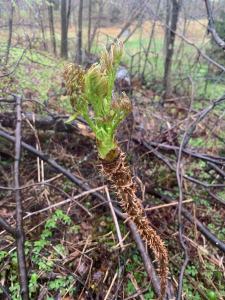
The mighty Devil’s walking stick in early spring–look at those spikes!
The Druid’s Garden Homestead is located on a 5-acre parcel of land in Western Pennsylvania that is currently regenerating from intense logging. Three years ago, just before we bought the property, the family who owned it logged about three of the five wooded acres. This has led to a host of possibilities where we can work on forest regeneration, observing the changes in this damaged place as it regrows, and certainly, opportunities for wildtending and creating food forests. As you walk through this regenerating landscape, one of the most striking understory trees is the Devil’s Walking Stick, Aralia spinosa. Looking like a very spiky and menacing walking stick (it has a name fitting of its visage), this tree is also known as Prickly Elder, Prickly Ash, Shotbush, Pigeon Tree, Angelica Tree, or Hercules club. These varied names really…
As we spin forward into 2021 (are we there yet, mom?!?), it’s exciting to reflect on what you—our friends, fans, and phenomenal plant family—went herb-wild for through the seasons.Did you know we serve up a splendid spread of free herbal content on our blog?In 2020, we decked the halls of Blog Castanea with garlands of new articles, and re-polished our most popular blogs from seasons past. We brought in new contributors and the blog officially became a team sport. Are you curious which topics were herbally admired and adored this year? And which plants people felt positively passionate about? Get caught up with our Best of 2020 Roll Call:
The season of lights is upon us. During this darkest time of the year, we gravitate to earthly sources of light to keep things merry and bright.
Early in our history as a country, many were short on money and luxuries such as candles. Livestock numbers were as yet too low to produce the quantity of tallow needed to make candles affordable, so following the lead of Native Americans, householders turned to candlewood to provide light on winter evenings.
We know candlewood as fatwood or pine knots—the resin-impregnated heartwood of pine trees. Pines that were cut to clear land, build homes, and provide heat for warmth and cooking left stumps in the ground. Those stumps, full of resin, hardened and became rot-resistant…and were an easy source of candlewood. Slim slivers cut from the wood burned hot and bright.
Before I share a brand new video with you, I want to provide a reminder that today — Monday, December 21st— is the last day to register for Foraging Wild Mushrooms. After today, registration will be closed for the season.
If you want to learn the skills involved in safely and successfully harvesting wild mushrooms with confidence, Foraging Wild Mushrooms can help you achieve that goal.
The declining temperatures, sunlight, and vitamin D levels have all ushered in the official arrival of winter — a season in which humans enjoy bringing trees indoors.
But not just any tree, of course. Conifer trees — and more specifically pines, spruces, and firs — are among the most harvested and celebrated trees during the holiday season.
Some of these trees are soft and flexible (e.g., white pine). Others are lush and aromatic (e.g., balsam fir). All of them, it goes without saying, are perpetually green.
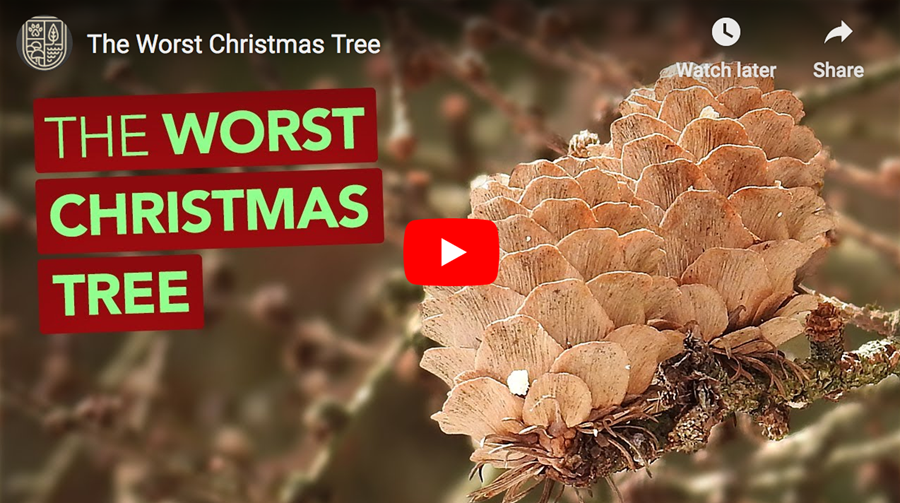
But there is one conifer tree that has never made the cut, and chances are good that, if you do consider yourself an arboreal celebrant of the holiday season, you’ve never invited this particular tree into your home.
In fact, out of all the trees discussed so far, this one would certainly be labeled “The Worst Christmas Tree.”
During a recent walk through a conifer landscape, I encountered this special tree and decided to film a video in which I attempted to answer several pertinent questions.
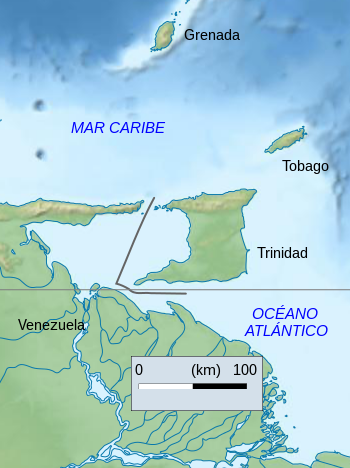
Last week we looked at some of the beverages important to a Trinidad Christmas. Now let’s talk about some of the foods and the special ingredients needed to make them.
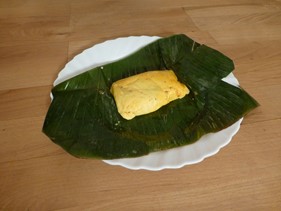
So what is on the menu in Trinidad for Christmas? Here is what Ann told me. “Dinner is ham, of course, pastelles, baked chicken, fried rice, pelau, callaloo, macaroni pie…and everybody makes homemade bread. And, of course, sorrel drink and ponché de crème. And you have to have black cake, of course….Everything is homemade, nobody buys anything.”
Pastelles are the West Indian version of tamales and reflect the Mexican/Aztec heritage in the Caribbean. Making pastelles can be labor intensive, and according to Ann, many families make the work fun by turning it into a party and making large quantities assembly-line style. This is part of what makes them such a Christmas treat. Every island has their own…
It’s been building through this month, having increased in momentum after the new moon solar eclipse on the 14th.
Whether you’re in the northern or southern hemisphere a climax will be reached on the solstice: the darkest night or the longest day. A transition point. Cycles and patterns beginning and ending.
Cultures and faiths the world over have been celebrating this day since ancient times. And while you can apply any practices or notions, ceremonies or beliefs, based on where you come from and what you espouse, if you tune in to the energy and observe nature, there’s no denying the power of this day.
According to many ancient calendars the solstice was observed on the 25th day of December, and it marked the new year.
In the north, it marked the turning point where the sun, in its weakest phase, would be reborn and slowly begin to wax again. It heralded the promising return of light, life, and warmth.
In the south, it marked the height of the sun’s power and the zenith of life force – a time of magic and ceremony – before its power begins to wane.
While in times past I’ve looked forward to my solstice ceremonies and traditions with excitement, this year I feel more contemplative. I’m reflecting on what we’ve been through, and on all those who did not make it through 2020. I’m also reflecting on how we all responded – it was a mix of intense extremes.
While there are those who profited, I see this largely as a year of loss. But loss, in and of itself, is also a healing and growth process.
This is something the ancients have always understood: it’s all a part of the cycle of life.
Loss is an ending but also a beginning. It’s up to us to find what can be gained from losing.
Plants are our medicine, our teachers, our friends, and help us connect deeply to spirit in a wide variety of ways including through spiritual work. Long before recorded history, our ancient ancestors used plants of all kinds. Ötzi, the ancient ancestor who was preserved in ice and who lived between 3400 and 3100 BCE, was found with multiple kinds of plants and mushrooms, including birch polypore (a medicinal mushroom) and the tinder fungus, a mushroom often used for transporting coals starting fires. I love plants, and I love the ancestral connections and assistance that they can provide. In more recent history, we can look to a variety of cultures that use plants in ways that help alter or expand consciousness.
What better time to do some deep visionary work than at the winter solstice, when the world is plunged in darkness? It is in these dark times that we…
The winter mushroom season is almost upon us, and at the request of those eager to pursue educational opportunities during the winter months, I’ve decided to open the doors to Foraging Wild Mushrooms for the next 7 days.
This 4-season online course is designed to help you safely, successfully, and confidently forage wild mushrooms from the forest, from the field, and even from your own backyard.
Whether you’re interested in foraging for food, for medicine, for study, or just for fun, Foraging Wild Mushrooms covers the most important lessons to get you started.
In addition to over 70 step-by-step exclusive and instructional videos included within the course, you’ll also receive:
Supplemental handouts covering mushroom anatomy, terminology, and biology that you can download and print for easy viewing.
A 42-page guide to medicinal mushrooms that summarizes the latest research on the most popular medicinal fungi with over 75 peer-reviewed references.
Immediate and lifetime access to all materials.
Additionally, a portion of all proceeds derived from course sales will be donated to the Western Pennsylvania Conservancy — a nonprofit organization whose mission it is to protect and restore exceptional places and forests for the benefit of present and future generations.
Since 1932, the Western Pennsylvania Conservancy has protected more than a quarter-million acres of natural places. To express gratitude, and to ensure that these and many more wild places exist for generations to come, I find it imperative to support organizations that in turn directly support the land.
Therefore, a portion of all proceeds derived from this enrollment period will be donated to the Western Pennsylvania Conservancy for use in land conservation.
Please note that enrollment for Foraging Wild Mushrooms is open for one week only — from today until Monday, December 21st. After that, enrollment will be closed for the season.
To learn more about the course, check out this video which gives an overview of what you can expect.
Thanks for your continued support, and I hope to see you in there! —Adam Haritan
I was visiting my mother just a few weeks before Christmas in 2017. She had recently moved to a wonderful small family-run assisted living home. The owner, Ann Abdul, asked me if I’d like to taste some “sorrel drink” she had made for the holiday season. I had no idea what that was. It looked Christmassy–a brilliant ruby red. I took a sip, and the most delicious taste filled my mouth. It was a rich, complex, and unfamiliar burst of flavors. But it tasted like Christmas, too—it was sweet, and I thought I could detect cinnamon, cloves, and vanilla. But it also tasted a bit like lemonade with a pronounced citrusy tartness. I loved it, and I had to know more!
Ann and her family are from Trinidad, and over the next two years, I learned so much from her about Trinidad cuisine and culture. The island…

 The mighty Devil’s walking stick in early spring–look at those spikes!

 Early in our history as a country, many were short on money and luxuries such as candles. Livestock numbers were as yet too low to produce the quantity of tallow needed to make candles affordable, so following the lead of Native Americans, householders turned to candlewood to provide light on winter evenings.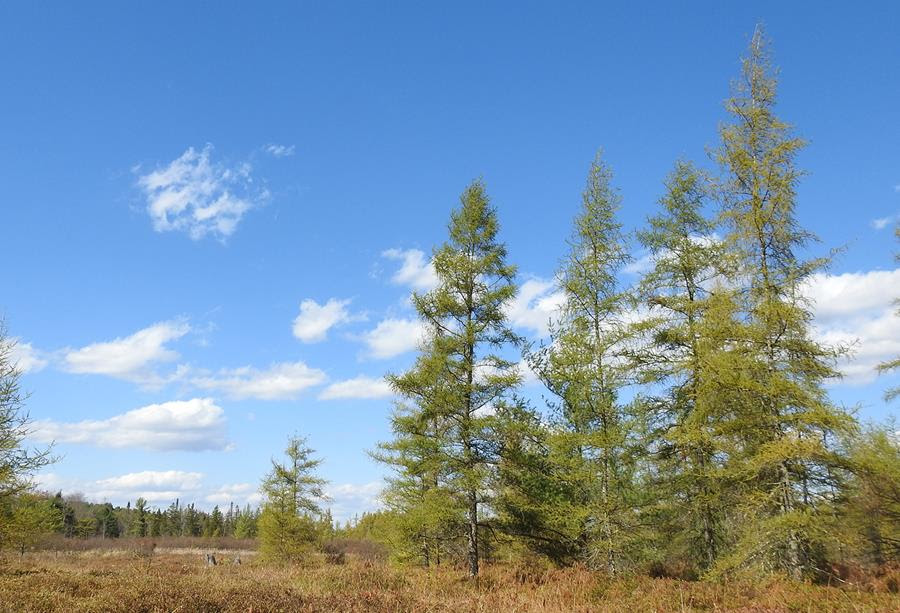

 Last week we looked at some of the beverages important to a Trinidad Christmas. Now let’s talk about some of the foods and the special ingredients needed to make them.
 into a party and making large quantities assembly-line style. This is part of what makes them such a Christmas treat. Every island has their own…


 I was visiting my mother just a few weeks before Christmas in 2017. She had recently moved to a wonderful small family-run assisted living home. The owner, Ann Abdul, asked me if I’d like to taste some “sorrel drink” she had made for the holiday season. I had no idea what that was. It looked Christmassy–a brilliant ruby red. I took a sip, and the most delicious taste filled my mouth. It was a rich, complex, and unfamiliar burst of flavors. But it tasted like Christmas, too—it was sweet, and I thought I could detect cinnamon, cloves, and vanilla. But it also tasted a bit like lemonade with a pronounced citrusy tartness. I loved it, and I had to know more!

You must be logged in to post a comment.