Visioning the Future through the Bardic Arts: Creating Vision, Creating Hope

Dana's avatarThe Druid's Garden


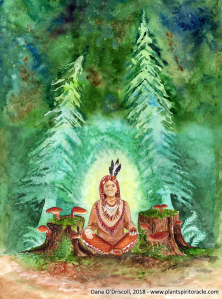
Reishi mushroom from the Plant Spirit Oracle offers a vision of healing, growth, and regeneration

I used to be a big fan of reading dystopian fiction when I was younger. It seemed like a distant world, a reality far from our own. But perhaps now, those books resonate too close to reality. As someone who practices magic, I have to wonder, would the concepts present 1984 be as present if the book hadn’t been so well-read? Did George Orwell manifest these concepts as a magical act, or were these already present and he simply channeled what was already coming into focus? The same can be true of many such influential works: The Handmaid’s Tale, Brave New World, Bladerunner, and more. We also have things like robots, invented by Issac Asimov as science fiction in the 1940s and 60 years or more later, became a reality.  One might…

View original post 2,054 more words

HSA Webinar: A History of Chocolate

The Herb Society of America's avatarThe Herb Society of America Blog

By Jen Munson, HSA Education Chair

20190613_150017Chocolate: food or medicine? For centuries, chocolate was consumed primarily as medicine. Cacao, from which chocolate is derived, was the basis for prescriptions promising relief from such ailments as anemia, alopecia, fever, gout, heart disease, kidney and liver disease, along with tuberculosis. Prescriptions from the 16th and 17th centuries would combine cacao with cinnamon, sugar, pepper, cloves, vanilla, and/or anise to ease common complaints. Certainly modern day amoxicillin could benefit from such a delicious concoction.  

It was only in the 19th century that chocolate became more of a food staple and less of a medicine. This was in part because of the expansion of where cacao could be grown. Cacao is a New World food, but the Portuguese brought the cacao tree to the African tropics. The development of machinery made it easier to separate cacao butter from the seeds, and so the making…

View original post 360 more words

Parsley – Herb of the Month and Herb of the Year

The Herb Society of America's avatarThe Herb Society of America Blog

By Maryann Readal

The spotlight is shining on parsley this month. Parsley (Petroselinum crispum) is The Herb Society of America’s Herb of the Month for January and the International Herb Association’s Herb of the Year for 2021. The three most common varieties of parsley are P. crispum or curly-leaf parsley,  P. crispum var. neapolitanum or flat-leaf Italian parsley, and P. crispum var. tuberosum or turnip-root parsley which is grown for its root and is used in soups and stews.

Parsley has an interesting history dating back to Greek and Roman times. To the Greeks, parsley symbolized death and was not used in cooking. However, according to Homer, the Greeks fed parsley to their chariot horses as they thought it gave them strength. The Greeks believed that parsley sprang from the blood of one of their mythical heroes, Archemorus, whose name means “the beginning of bad…

View original post 1,001 more words

Sacred Tree Profile: Devils Walking Stick (Aralia Spinosa)

Dana's avatarThe Druid's Garden

The mighty Devil’s walking stick in early spring–look at those spikes!

The Druid’s Garden Homestead is located on a 5-acre parcel of land in Western Pennsylvania that is currently regenerating from intense logging. Three years ago, just before we bought the property, the family who owned it logged about three of the five wooded acres.  This has led to a host of possibilities where we can work on forest regeneration, observing the changes in this damaged place as it regrows, and certainly, opportunities for wildtending and creating food forests. As you walk through this regenerating landscape, one of the most striking understory trees is the Devil’s Walking Stick, Aralia spinosa. Looking like a very spiky and menacing walking stick (it has a name fitting of its visage), this tree is also known as Prickly Elder, Prickly Ash, Shotbush, Pigeon Tree, Angelica Tree, or Hercules club. These varied names really…

View original post 1,552 more words

Readers Choice: Ringing in the Best of Blog Castanea

As we spin forward into 2021 (are we there yet, mom?!?), it’s exciting to reflect on what you—our friends, fans, and phenomenal plant family—went herb-wild for through the seasons.Did you know we serve up a splendid spread of free herbal content on our blog?In 2020, we decked the halls of Blog Castanea with garlands of new articles, and re-polished our most popular blogs from seasons past. We brought in new contributors and the blog officially became a team sport. Are you curious which topics were herbally admired and adored this year? And which plants people felt positively passionate about? Get caught up with our Best of 2020 Roll Call:
Continue reading “Readers Choice: Ringing in the Best of Blog Castanea”

Bayberry Candles

The Herb Society of America's avatarThe Herb Society of America Blog

By Katherine K. Schlosser

The season of lights is upon us. During this darkest time of the year, we gravitate to earthly sources of light to keep things merry and bright.

Drupes2_zoomed in to see waxEarly in our history as a country, many were short on money and luxuries such as candles. Livestock numbers were as yet too low to produce the quantity of tallow needed to make candles affordable, so following the lead of Native Americans, householders turned to candlewood to provide light on winter evenings.

We know candlewood as fatwood or pine knots—the resin-impregnated heartwood of pine trees.  Pines that were cut to clear land, build homes, and provide heat for warmth and cooking left stumps in the ground. Those stumps, full of resin, hardened and became rot-resistant…and were an easy source of candlewood. Slim slivers cut from the wood burned hot and bright.

Alice Morse Earle, writing in the 1800s about…

View original post 898 more words

The Ladder

This Tree Wins The Award For “Worst Christmas Tree”

Greetings,

Before I share a brand new video with you, I want to provide a reminder that today — Monday, December 21st—  is the last day to register for Foraging Wild Mushrooms.  After today, registration will be closed for the season.

If you want to learn the skills involved in safely and successfully harvesting wild mushrooms with confidence, Foraging Wild Mushrooms can help you achieve that goal.

Click here to register before midnight.

And now onto this week’s brand new video.

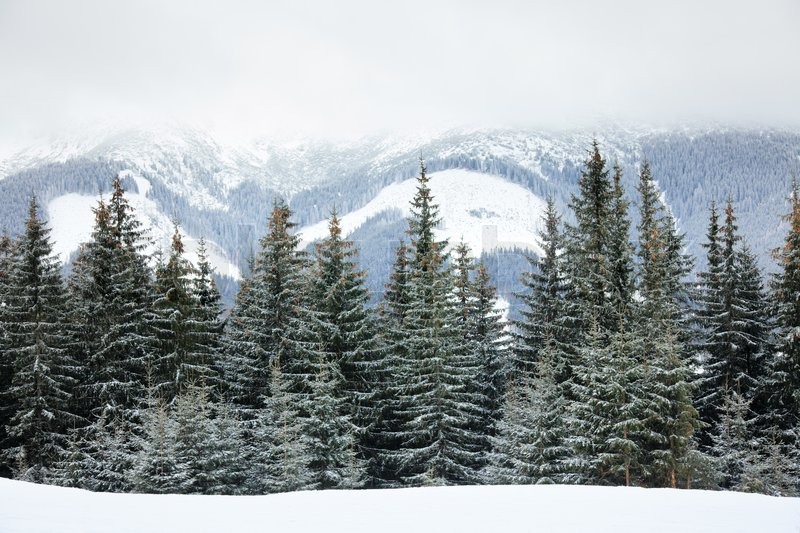
The declining temperatures, sunlight, and vitamin D levels have all ushered in the official arrival of winter — a season in which humans enjoy bringing trees indoors.

But not just any tree, of course.  Conifer trees — and more specifically pines, spruces, and firs — are among the most harvested and celebrated trees during the holiday season.

Some of these trees are soft and flexible (e.g., white pine).  Others are lush and aromatic (e.g., balsam fir).  All of them, it goes without saying, are perpetually green.

But there is one conifer tree that has never made the cut, and chances are good that, if you do consider yourself an arboreal celebrant of the holiday season, you’ve never invited this particular tree into your home.

In fact, out of all the trees discussed so far, this one would certainly be labeled “The Worst Christmas Tree.”

During a recent walk through a conifer landscape, I encountered this special tree and decided to film a video in which I attempted to answer several pertinent questions.

If you’re interested in learning more, check out the brand new video!

Thanks for reading and watching, and thanks for your continued support!

-Adam Haritan

Christmas Herbs of Trinidad, Part II

The Herb Society of America's avatarThe Herb Society of America Blog

By Amy Forsberg

Trinidad_tobago-esLast week we looked at some of the beverages important to a Trinidad Christmas. Now let’s talk about some of the foods and the special ingredients needed to make them.

So what is on the menu in Trinidad for Christmas? Here is what Ann told me. “Dinner is ham, of course, pastelles, baked chicken, fried rice, pelau, callaloo, macaroni pie…and everybody makes homemade bread. And, of course, sorrel drink and ponché de crème. And you have to have black cake, of course….Everything is homemade, nobody buys anything.” 

Pastelles are the West Indian version of tamales and reflect the Mexican/Aztec heritage in the Caribbean. Making pastelles can be labor intensive, and according to Ann, many families make the work fun by turning it pastelles on leafinto a party and making large quantities assembly-line style. This is part of what makes them such a Christmas treat. Every island has their own…

View original post 2,124 more words

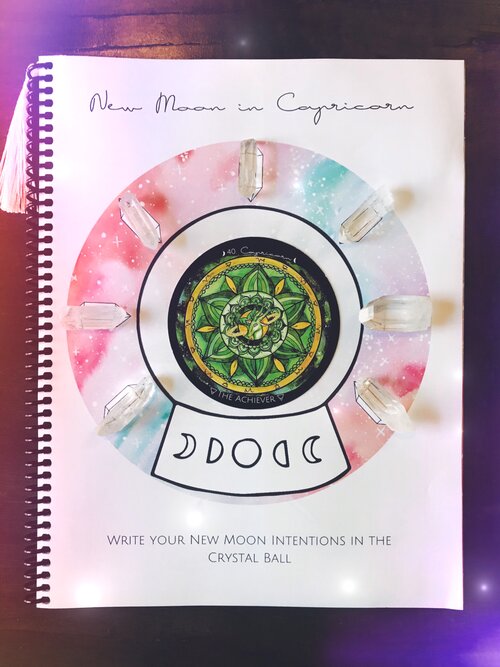
Crystal Healing for the Solstice: Beginnings & Endings

Crystal Healing for the Solstice: Beginnings and Endings / www.krista-mitchell.com

Can you feel the energy building?

It’s been building through this month, having increased in momentum after the new moon solar eclipse on the 14th.

Whether you’re in the northern or southern hemisphere a climax will be reached on the solstice: the darkest night or the longest day. A transition point. Cycles and patterns beginning and ending.

Cultures and faiths the world over have been celebrating this day since ancient times. And while you can apply any practices or notions, ceremonies or beliefs, based on where you come from and what you espouse, if you tune in to the energy and observe nature, there’s no denying the power of this day.

According to many ancient calendars the solstice was observed on the 25th day of December, and it marked the new year.

In the north, it marked the turning point where the sun, in its weakest phase, would be reborn and slowly begin to wax again. It heralded the promising return of light, life, and warmth.

In the south, it marked the height of the sun’s power and the zenith of life force – a time of magic and ceremony – before its power begins to wane.

While in times past I’ve looked forward to my solstice ceremonies and traditions with excitement, this year I feel more contemplative. I’m reflecting on what we’ve been through, and on all those who did not make it through 2020. I’m also reflecting on how we all responded – it was a mix of intense extremes.

While there are those who profited, I see this largely as a year of loss. But loss, in and of itself, is also a healing and growth process.

This is something the ancients have always understood: it’s all a part of the cycle of life.

Loss is an ending but also a beginning. It’s up to us to find what can be gained from losing.

Read original article at: Krista Mitchell ~ Crystal Healing for the Solstice