Scandal: MRI brain-imaging completely unreliable ‹ Jon Rappoport’s Blog ‹

Fake news on a grand scale.

By Jon Rappoport

Over the years, I’ve exposed a number of medical diagnostic tests. For example, the antibody test was once taken as a sign of good health when it registered positive, but then it was turned upside down—a positive result was read as a signal of illness.

Now we have the vaunted MRI brain-imaging system.

From sciencealert.com (7/6/16): “There could be a very serious problem with the past 15 years of research into human brain activity, with a new study suggesting that a bug in fMRI software could invalidate the results of some 40,000 papers.”

“That’s massive, because functional magnetic resonance imaging (fMRI) is one of the best tools we have to measure brain activity, and if it’s flawed, it means all those conclusions about what our brains look like during things like exercise, gaming, love, and drug addiction are wrong.”

“It’s fascinating stuff, but the fact is that when scientists are interpreting data from an fMRI machine, they’re not looking at the actual brain. As Richard Chirgwin reports for The Register, what they’re looking at is an image of the brain divided into tiny ‘voxels’, then interpreted by a computer program.”

“’Software, rather than humans … scans the voxels looking for clusters’, says Chirgwin. ‘When you see a claim that “Scientists know when you’re about to move an arm: these images prove it,” they’re interpreting what they’re told by the statistical software’.”

“To test how good this software actually is, Eklund and his team gathered resting-state fMRI data from 499 healthy people sourced from databases around the world, split them up into groups of 20, and measured them against each other to get 3 million random comparisons.”

“They tested the three most popular fMRI software packages for fMRI analysis – SPM, FSL, and AFNI – and while they shouldn’t have found much difference across the groups, the software resulted in false-positive rates of up to 70 percent.”

“And that’s a problem, because as Kate Lunau at Motherboard points out, not only did the team expect to see an average false positive rate of just 5 percent, it also suggests that some results were so inaccurate, they could be indicating brain activity where there was none.”

“’These results question the validity of some 40,000 fMRI studies and may have a large impact on the interpretation of neuroimaging results’, the team writes in PNAS [Proceedings of the National Academy of Sciences].”

“The bad news here is that one of the bugs the team identified has been in the system for the past 15 years, which explains why so many papers could now be affected.”

“The bug was corrected in May 2015, at the time the researchers started writing up their paper, but the fact that it remained undetected for over a decade shows just how easy it was for something like this to happen, because researchers just haven’t had reliable methods for validating fMRI results.”

40,000 scientific papers invalidated. And from what I gather, not everyone is sure all the problems with MRI have been corrected.

Think about the bloviating—“We now know what the brain is doing when people are running and sleeping and eating…” No reason to have believed any of this.

And then there is Obama’s so called Brain Initiative, a program kicked off and funded after the Sandy Hook School catastrophe. At least some of the scientific work has been relying on MRI imagining. How much of that work needs to be thrown out?

In case you think invalidating 40,000 research papers isn’t a gigantic scandal, consider how many times these worthless papers have been cited as evidence in other studies. The ripple effect creates a tsunami of lies.

And for each one of those lies, there has been a researcher who, quite sure of himself and his reputation, made statements to the press and colleagues and students, promoting his findings.

Fake news? Now here is awesome fake news.

Source: Scandal: MRI brain-imaging completely unreliable ‹ Jon Rappoport’s Blog ‹ Reader — WordPress.com

Medicinal and Herbal Wildflowers – Good Witches Homestead

From the beginning of human history, man has considered plants “useful.” Of course, the most obvious use is as a food source, but in all cultures, plants have also figured prominently as medicines. From prehistoric rites to modern medicine, plants have been shown to possess curative properties. Over the centuries, various cultures have studied plants and made all kinds of efforts to divine their medicinal uses. Some experiments have proved disastrous, even fatal. Others seemed miraculous. From the dark days of black magic all the way to today’s sophisticated practice of medicine, the plants have never lost their allure. In fact, today we live in a time of renewed interest in herbal remedies. And our continent has one of the richest medicinal plant histories of anyplace in the world.

Below, you’ll find just a few of the wildflowers that man has used from ancient times forward to aid in his health and provide cures for his illnesses and diseases. It is provided as a source of information and not intended for prescriptive purposes. In fact, many of the same plants used as medicinals are also poisonous if not used properly. (Wildflowers mentioned that pose a serious danger are noted.)

Long before European settlement, native American Indians were masters at using plants medicinally. And today’s modern medicine proves many of their ancient cures. Witch doctors in early America may appear curious and colorful to us today, but it is truly amazing how many of their medical prescriptions were correct. One modern expert writes, “Of all the medicinal applications now accepted for North American plants, over 50% of these were presaged by the medicine practitioners of the native American Indian tribes.”

Meanwhile in Europe, during the Middle Ages, the Herbalists worked to advance the plant studies that had been going on there since the time of the ancient Greeks. During the Middle Ages, with more superstition than science, the herbalists offered their cures, sometimes with disastrous consequences.

The famous Doctrine of Signatures. One of the more bizarre pseudo-sciences that flowered during the early medieval period was medical treatment based on plant structure and appearance. Certain herbalists decided that one could prescribe an herbal cure or treatment based on a relationship between plant parts and body parts. This wild course of the study noted, for example, that parts of the plant Hepatica could be made into a curative concoction for liver ailments. Why? Because the plant has three-lobed leaves that reminded the herbalists of the human liver. Today, Hepatica , the beautiful early spring wildflower we enjoy still carries the name based on its connection to the human liver, yet it’s been shown to have no medicinal value. (Hepatica is the Latin word for “liver”, as is hepatitis.) Most prescriptions based on the Doctrine of Signatures probably only made people sick, since ingesting various non-food plants is usually upsetting. However, others, when poisonous plants were unknowingly used, were fatal.

As medical science progressed and Europeans settled North America, the advancing European medical knowledge of plants was combined with the traditions of Native American medicine. This led to an active exportation of plants from North America, as the settlers learned the new plants’ “secrets” from the Indians.

But this was only the beginning. As modern medicine evolved, plant values were studied and tested, and the results have been amazing.

Today, flowering plants provide almost 25% of the basic ingredients for our modern drugs. This little-known fact makes the study of medicinal plants even more interesting today than ever before. North America has tens of thousands of native plants that have yet to be studied. As Lady Bird Johnson has said, “Surely there are others like digitalis waiting out there.” She was referring to the famous English medicinal wildflower commonly known as Wild Foxglove, but botanically, “Digitalis purpurea.” This is the now-famous plant that is widely used today to treat heart disease. The medicine derived from this plant is usually called, simply “Digitalis”, and has saved untold lives worldwide through its modern applications.

How at least one medicinal plant was “discovered.” The story of the Foxglove is a classic. In 1775, an English physician and botanist named William Withering were asked to treat a patient suffering from dropsy, a broad term that at the time meant “fluid retention.” He had heard of an “old woman in Shropshire” who knew a secret cure which included the foxglove plant. Dr. Withering, after using the secret remedy, which was a concoction of over twenty herbs, found it amazingly successful, but also quickly perceived that only one plant in the mix was working the cure. The whole stew was said to be a diuretic, but Dr. Withering knew that the major cause of dropsy was congestive heart failure. He also knew that foxglove, with its powerful toxic properties in the proper quantity, could strengthen cardiac contraction and enable the heart to pump more efficiently, delivering blood to the rest of the body. Ten years later, Dr. Withering published “10 years of clinical data on patients treated with foxglove.” The rest, as they say, literally, is history–medical history.

From an old woman’s secret cure, through the careful work of an early physician, we have a “wonder drug” direct from a plant that is used today to treat almost every kind of heart disease.

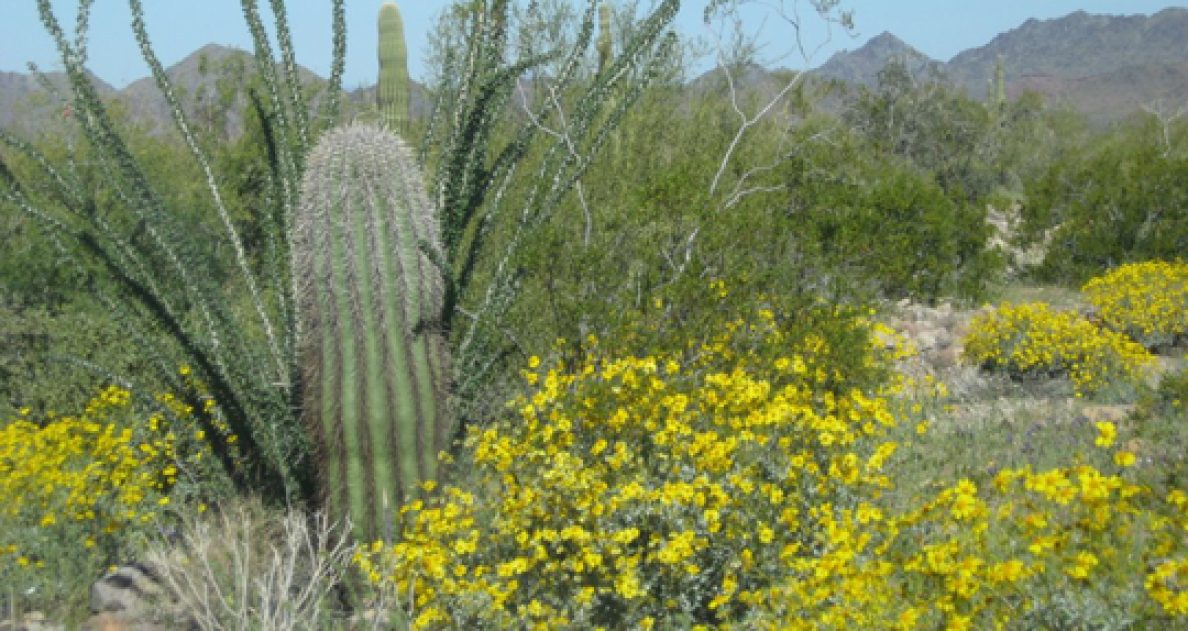
The cure for spider bite becomes environmental monitor. Other stories in herbal and medicinal plants take various paths, as the scientific use of a species is accidentally discovered. Spiderwort, Tradescantia virginiana, a common North American native wildflower with three-petaled purple flowers, was once considered a cure for the bites of spiders, but during modern times has offered scientists other advantages. Botanically, the plant is unusual, being a historic link between the sedges (grass-like wetland plants) and lilies. Moreover, the plant has relatively large chromosomes, making it useful for lab studies in cytology (the structure of cells).

Modern scientific studies of Spiderwort recently rendered an unexpected discovery. Attentive botanists noticed that the plant is extremely sensitive to pollution and radiation which cause its blossoms to change color from blue to pink in a very short period of time! What happens is that the number of cells mutating when in contact with severe pollutants, correlates directly to the level of pollution. So this plant is now used as an inexpensive, but a very accurate device for testing pollution. Where dangerous pollution is expected, spiderworts are planted, and their flower color is closely monitored for changes.

Of course, man cannot exist without plants (since they provide the very oxygen we breathe), so it is no wonder that this interdependence has produced a very long and fascinating history which continues today.

Here are a few examples of various wildflowers and how they’ve been used over the centuries for herbal and medicinal purposes. Plus a few that are stars of the very active boom today in herbal remedies and supplements.  […]

Rest of the article at its Source: Medicinal and Herbal Wildflowers – Good Witches Homestead

Leprechaun – secretsoftheserpent


By

Originally Posted August 14, 2016

index

The Leprechaun was a little tough to pinpoint. First I thought that, like so many other myths, it had to do with the mind. As you will see, the Leprechaun has more with preserving history of this character than anything else. I started with the myths and legends in Ireland. First thing I come across is the leprechaun has something to do with the Faery people of the Tuatha De Danann. If you have read my previous work, you know this is right in my wheelhouse. I won’t go into depth here about the Tuatha De Danann, but if you don’t know much about these matriarchal people from ancient Ireland, your are definitely missing out on great history.

Come to find out leprechaun comes from the Sun God Lugh. I found out that it is pronounced luck. This doesn’t surprise me because London, Loudan, Lyons and other cities are named after Lugh. Leprechaun actually comes from Luchchromain meaning little Lugh or little Luck. Now you know where the luck of the Irish comes from. The original leprechaun were not green like they are today. In the past they always had a red outfit. Why would leprechauns be in red? Why were they changed to green? Why rainbows? Why gold? Just like so many things, we have to look to Egypt for the answer. If you have followed my earlier work, you know that Gaythelos was a Pharaoh of Egypt. He married a daughter of Akhenaton named Scota. Together they came to Ireland and Scotland and this is how we got the names Scotland and Ireland.  The term gaelic comes from Gaythelos.

Looking to Egypt, I found a dwarf bearded god named Bes. Bes was associated with sexuality, humor, music and dancing. Although he was the protector of Pharaohs, he was very popular with the Egyptian people because he protected women and children. I’m not saying that Bes is Lugh. I know better. Gaythelos conquered the Tuatha De Danann. The conquered pagans needed to keep the spirit of the people of Ireland intact and they made the Tuatha De Danann into Faery people. This way the history would be remembered. St. Patrick and the Christians made the Faery people evil. Then Disney made them what they are today. Lugh was incorporated with Bes by  scribes who were ardent to Gaythelos and his group.  I have shown before that the scribes love to outwit each other.  These scribes were preserving the the Egyptian connection of Ireland and Scotland.   Gaythelos was very close to Akhenaton and Bes was found all over the city that Akhenaton built. I have seen where some researchers have said that Bes comes from Ethiopia or Nubia. Again this shows just how well are history has been hidden from us or lost. As I have shown before, the scribes have purposely made Upper Egypt to be Ethiopia. (See Patriarch Pharaohs) Bes originated in Upper Egypt. Because he was a sun-god, Akhenaton used him. Aton is the sun god Akhenaton worshipped. If it had to do with the sun, Akhenaton was on board.

Bes had a female version named Beset. So where are the female leprechauns? Early legends of leprechauns had women. It wasn’t till St. Patrick and the Christians that the female leprechauns were first turned into “little women that lure away men for secret adventures”, then just disappearing. Yes, Christians turned the leprechaun into the solitary male that some how reproduces. Is this surprising? The leprechaun wore red to show that they were brought from Egypt with Gaythelos. Gaythelos was from the red crown of Lower Egypt. They switched the leprechauns to green to hide this fact. Because there are true illuminati out there, they hid clues in plain sight. The stuff on the internet about the Illuminati is ridiculous(See Lemurian Magic). They had to hide clues that the papacy wasn’t smart enough to figure out. If they actually came out and told the truth, they would be burned at the stake. This is where the rainbow and gold come in.

I started with the shoes, but the only thing I could find is shoes symbolize walking your path.  Leprechauns being shoe builders, I believe symbolizes creating your own path. I switched to the rainbow and found that the ancients saw rainbows as a serpent coming out of the ground then going back in. Serpents have to do with wisdom, but I was none the wiser. Christians see the rainbow as a promise from god not to flood the earth again. Bullocks! Then I found Lugh’s sling. Lugh’s sling was the rainbow!!! This was put into the leprechaun legend to show where it came from. These scribes are clever. The color was changed to green to show the leprechaun origins are from Upper Egypt? Osiris is from Upper Egypt and the green man all over the world is Osiris. Yes the little green men and gargoyles on churches is Osiris. One researcher I found even linked Bes to a form of Osiris. Just to add to the wittiness of the myth the Irish name for the sun is Grian(pronounced green).  So the rainbow is showing you the leprechauns connection to Lugh and green is showing the Egyptian connection.  When you think of Egypt, besides pyramids, what is the first things that comes to mind? Gods and gold is it not? The gold is yet another clue where to look, Egypt. Figure out the rainbow and you get the gold and the knowledge.

Source: Leprechaun – secretsoftheserpent

Glimpse into Horse Slaughter – Eagle Pass, Texas (raw video)


“Quietly and behind the scenes the Equine Welfare Alliance and Wild Horse Freedom Federation have been watching, taking note and documenting more than just the unnecessary roundups of wild horses and burros by the BLM; but also paying attention to where tens of thousands of American horses and donkeys (domestic and wild) disappear to without even so much as a final wave goodbye. Horse Slaughter has not been banned in the USA instead it has only moved across our borders and both our beloved domestic equines and our protected wild horses and burros continue to end up on the dinner plates of foreigners across the globe. Below is simply raw video of what the horses go through as they cross the border from Texas to Mexico in the final hours of their precious lives. No commentary, no music, no opinions as the footage speaks for itself. We have simply released it to emphasis the need to act, of things to come and to remind those who participate in this predatory blood business that we are watching and taking names. Yes, we are paying attention as the victims cannot speak for themselves but we can. Let the kill buyer beware. Keep the faith, my friends. We are paying attention.” ~ R.T.

via Glimpse into Horse Slaughter – Eagle Pass, Texas (raw video) — Straight from the Horse’s Heart

Video supplied by investigators from EWA and WHFF

Astrorisa Moon Forecaster ~ The Virgo Full Moon

By Iya Olusoga ~Bisi Ade

Welcome to the full moon of Virgo, and its vibrations spanning 29 days, March 12th – April 10th.
Themes: Finances, actions, plans, business, burning the candle at both ends, treading water, feeling your way, attention to detail, and overworked vs.rest.
This Virgo moon time challenges our collective consciousness to determine how best to maneuver through our experiences and to know when to rest or to push forward. Whatever the case maybe, we’ll have to be careful of over taxing our resources (funds, health, time, etc.) With the sun in Pisces and moon in Virgo (water, mind, and earth), we can feel as though we’re dredging through a marsh. As we’re between solid ground and a large body of water. Which way should we go? To the left near solid ground or to the right near open water? Do we want to walk or swim? Which avenue and experience will get us there quicker? Which ever direction we take, will determine our experiences and impact our destiny.

Feel Good Sunday: Icy Roads Leave Semi Driver Stranded Overnight. But When He Looks out Window, He Spots Horse…

…warming hearts across the world.

Canadian winters can be harsh. Motorists can easily find themselves stranded on roadways, because of heavy snow and icy conditions. That’s exactly what happened to semi-truck driver Peter Douglas.

The Winnipeg driver was captured by highway cameras after getting stuck on highway 10 south of Brandon. Looking at the footage, it’s easy to see why; conditions were fierce.

He was forced to sleep in his cab overnight, hoping the weather would clear up by next morning. Instead, he woke up to find someone quite surprising knocking on his door.

Eighteen-year-old Eileen Eagle Bears was watching the traffic cams with her mother, when they spotted the stranded truck driver just over 3 miles from their home. She told herself if he was still there when she looked again in the morning, she wanted to help.

The next morning, Douglas was still stuck, so the teen got her horse, Mr. Smudge, and headed Douglas’ direction. The trip would be roughly one hour in the cold.

“There was a lot of ice on the road from the rain that we had got and drifts were bad in a few places,” Eagle Bears told CBC News.

Imagine Douglas’ surprise when he awoke to see a young woman, her horse, and a thermos filled with hot coffee outside his window. A gesture those same highway cameras caught on video.

“She had to walk that horse half a mile up that hill and half a mile down because it was so icy. Blew me away,” said Douglas to CTV News. “She said she saw me on the camera. Her and her family were watching.”

Douglas was so grateful for her kind gesture, and she promised him that if he were still stuck there later in the day, she would return with a hot meal. “He was just really glad that someone knew that he was there and that someone cared,” said Eagle Bears.

She did, in fact, return later that evening with another thermos. This time it was filled with stew and potatoes. She also brought him water.

“I thought he would be getting pretty hungry, and that’s not a good feeling, I just put on extra clothes and did what I promised I would,” Eagle Bears stated. What an amazing young woman!

Douglas was stuck there for a total of 28 hours before finally being towed and able to get safely back on the road to finish his work. He still has Eagle Bears thermoses and plans to return them on his next run through the area.

Since hearing about her heroic story, Eagle Bears has been inundated with support and appreciation from strangers. “It is overwhelming. I had gotten back and my mom had posted just a post on Facebook,” she said.

“And there was a few likes at the beginning, but we went back and there was just more and more, and it just totally blew up,” said the teen. That’s not hard to understand, because hers was an act of kindness in the cold that is warming hearts across the world.

Source: Icy Roads Leave Semi Driver Stranded Overnight. But When He Looks out Window, He Spots Horse…

Slowing Down the Druid Way, Part IV: Slow Movements and Slow Spirituality | The Druid’s Garden

When I lived in Michigan, each Christmas, a local church just down the road from me put on a drive-by nativity scene. Cars full of people would line up for over half a mile and drive around this circular loop surrounding the church, where church members dressed up and enacted various kinds of nativity scenes.  I’m sure from the perspective of the church (who, clearly, invested a lot of time and resources, taking weeks to build the sets in the bitter cold in the time leading up to the event), it was a way to reach people who might otherwise not come through the church doors.  This same church also offered “speedy sermons” and other “quick” ways of getting busy people in the door. The idea behind these different initiatives was reaching out to people who were otherwise too busy to come to church–a reasonable and rather creative thing to do, given the time crunch everyone seems to be in these days. But for all that was gained (new members, new donations, etc) what was lost in the process of converting religion into a drive-through experience? Of course, just like the burger at McDonald’s vs. the burger you grill at home with time and care, there are likely some big differences not only in taste but also in presentation, nutrition, and energy.


In my last three posts in “Slowing Down the Druid Way”, we explored the history of time and our relationship to our working hours, and how we might begin to honor our time more fully.  This directly leads me to the topic of my final post on time and work: looking at the slow movements as a way of slowing down, making slowing down a conscious choice, and embracing leisure time.


The “Slow” Movements

The term “slow” has been increasingly used to describe many of the movements connected to sustainable living: you might have heard of slow food (as opposed to fast food or industrialized food) or slow money (in terms of investing, saving, and spending and in opposition to current derivatives/investment market).  We now also have slow schools, slow books, and even (in my own field) discussion of slow writing! The slow movement has, in fact, been around since the 1980’s; it was started by Carlo Petrini, who protested the opening of the “fast” food joint, McDonalds, in Rome, Italy. Since then, the movement has spread and deepened, connecting now to all aspects of life: travel, food, parenting, education, working, gardening, and more. Of course, you won’t see any discussion of this movement in mainstream culture–mainstream culture, here in the US, is focused on the idea that more and faster is better, and that kind of thinking takes some time to overcome.


A good slowing down spot!

The slow movements suggest that we are all the victims of “time poverty” and the slow movements are deliberate attempts by people to live at a reasonable pace (rather than a frantic one).  But these movements are more than just about slowing down–they recognize inherently that the faster we move, the fewer connections we make: with ourselves, with each other, with our creative gifts, and with the world as a whole.  So let’s now explore some of these slow movements and what they provide.


Nature Spirituality and Slow Spirituality

I’m going to start by introducing my own kind of “slow” movement: slow spirituality.  Cultivating a deeper relationship with time is certainly a principle that seems inherent in the druid traditions and in related nature-spiritual traditions. Anyone following the wheel of the year is certainly concerned a tremendous amount with time: the eight holidays on the wheel of the year are all about timing and the sun and it’s slow movement across the sky.  The phases of the moon reflect this on a monthly cycle. We focus on the interplay of light and dark, the slow changing of the seasons, the minute changes from day to day of weather patterns.  All of this takes observation and interaction with nature and a lot of time dedicated to understanding this larger cycle of the seasons.  Sure, there are ways of going about these practices that are “fast”, but moving fast means you miss most of the important pieces. In the AODA, for example, we ask that all members spend weekly time in nature, daily time in meditation, and time just observing and interacting with the world. This time is critical–and it is through these activities that deepest understandings are often cultivated.


In fact, I think part of the reason that so many people are drawn to meditation, ritual and other druid practices is that it offers a way to slow down and change pace. The more time you spend with these practices, the deeper they will go and the richer the rewards will be.  There is much room for exploration in linking the slow movements to the druid tradition and key practices within it. […]

Rest of the story at its Source: Slowing Down the Druid Way, Part IV: Slow Movements and Slow Spirituality | The Druid’s Garden

BLM Set to Wage War on Wyoming’s Wild Horses, AGAIN! | Straight from the Horse’s Heart

Sources: Multiple

“Using poor science and bad numbers the BLM continues to ensure that the wild horses of Wyoming will have no families, freedom or future.  Unedited, propaganda article posted below. (Herds do not double in size every four years – Fake News)” ~ R.T.

Adobe Town ~ photo by Carol Walker

ROCK SPRINGS, Wyo.  — The Bureau of Land Management is proposing to remove about 1,000 wild horses from three herd management areas, including Adobe Town, in southwest Wyoming in order to meet population level objectives.

Kimberlee Foster, field manager for the Rock Springs BLM field office, said there are too many horses on the land, and rules require them to remove horses when they are above management levels.

Foster said the gathered horses will go to the Rock Springs Holding Facility where they will be put up for adoption.

The BLM plans to remove 210 horses from Adobe Town, 584 from Salt Wells Creek and 235 from Great Divide Basin.

There are many reasons the BLM must carefully maintain certain population ranges for wild horses in Wyoming. For one, there are no natural predators for horses in the state and equines can be prodigious breeders.

“Typically a herd management area can double in size every four or five years,” Foster told the Rawlins Daily Times (http://bit.ly/2mayVKA ).

If wild horse populations become too large, the natural forage on the land won’t be able to support them.

Herd management is based around the usage of the land, Foster said, as well as the amount of available forage for the animals. Additionally, the BLM has agreed to act to reduce herd sizes should population levels reach a certain point.

The BLM is accepting public comment until April 4 on its horse roundup plan.

Source: BLM Set to Wage War on Wyoming’s Wild Horses, AGAIN! | Straight from the Horse’s Heart

Yellowstone & Montana Can Stop the Bison Slaughter Today | The Buffalo Field Campaign

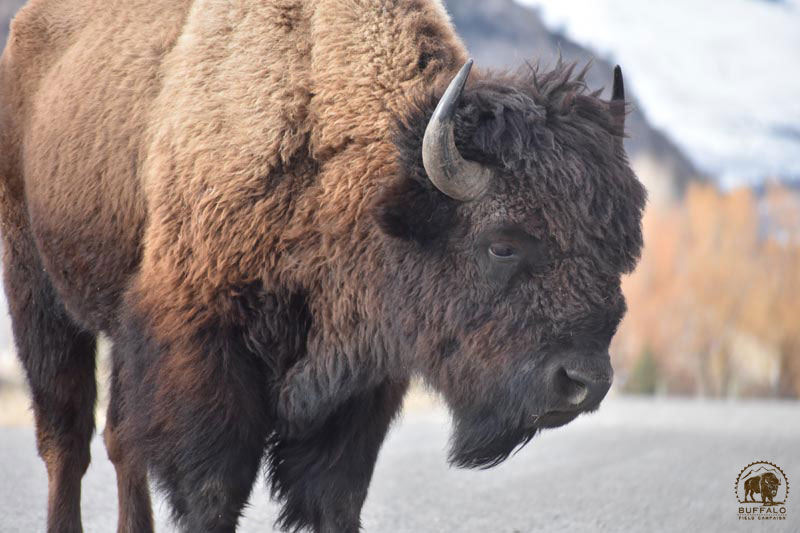
This winter’s Yellowstone buffalo death toll has breached one thousand, and continues to climb. Counting the few hundred still trapped inside Yellowstone’s Stephens Creek capture facility and the continued hunting pressures just outside the park, the government agencies will likely surpass their goal of killing 1,300 ecologically extinct wild, migratory buffalo. This does not even include the significant number of buffalo deaths due natural causes from the severe winter. Hundreds of thousands of people are seeing and sharing BFC’s stories and images of Yellowstone’s shameful crimes against wild buffalo. These actions are being conducted with your tax dollars on behalf of Montana’s livestock industry.

This morning BFC will be attending a second “media tour” inside the trap. The atrocious actions we’re witnessing and documenting continue despite thousands, if not tens of thousands, of calls, emails, and letters to Yellowstone Superintendent Dan Wenk and Montana Governor Steve Bullock. Most people who reach these decision-makers are meeting with frustration; being told lies in condescending tones by the governor’s office that Yellowstone is responsible for the slaughter while Yellowstone officials say that it’s all Montana’s fault and there is nothing they can do to stop it. As the number of slaughtered buffalo climbs due to their actions, these same decision-makers toss up their hands in mock helplessness. However, they are both responsible and they can both take immediate and necessary actions today to end this senseless war against wild buffalo. These decision-makers work collaboratively within the Interagency Bison Management Plan to devise and carry out agreed upon management schemes, and their deceptive, pass-the-buck strategy of shirking of responsibility is pushing the country’s last continuously wild buffalo herds towards the brink of extinction.

Please continue to make these calls! If you are outside of the U.S., send letters and emails. Be relentless and don’t accept their excuses.
Phone calls are the most effective because they cannot be ignored.

  • Yellowstone Superintendent Dan Wenk, #307-344-2002
  • Montana Governor Steve Bullock #406-444-3111

Here are some important points to consider – No agency’s hands are tied!

Read the article in its entirety at its Source: The Buffalo Field Campaign

Healing & Balancing Your Chakras – Good Witches Homestead

As a herbalist, I prescribe herbal potions and essential oils to my clients as a complement to our healing sessions and an alternative to medication. Over the years, I’ve watched herbs help treat everything from PTSD to depression, anxiety, chronic pain, migraines, obesity, rage, and more.

After about five years of experience with prescribing herbs, I started learning about medicinal-grade essential oils—what a game changer. I now use essential oils in every acupuncture session, and regularly prescribe them for home care. They’re like topical herbs—distilled from the same plants I’ve been studying and prescribing as herbal remedy tinctures for years. The skin is our largest organ, and our body literally ingests much of what we douse it with. Essential oils work with our fascia (which lies just beneath the skin), so the healing properties of the plants are transmitted throughout our entire body. It’s such a sensual, luxurious way to ingest medicine.

Essential oils are particularly great for treating common chakra imbalances—more below, along with the most effective oils that I frequently rely on:

FIRST CHAKRA: ROOT — “I AM” — RED

Our first chakra is our most primal energy vortex of psychic information. It’s the foundation of our chakra system. This red spinning disc resides at the base of our spine and manages our most basic needs: safety, security, trust, fear, pooping, survival, procreation. Located on our lower backs, it governs this area, the large intestine, urinary bladder, and kidneys. […]

Read about all your Chakras at the Source: Healing & Balancing Your Chakras – Good Witches Homestead