Brew your iced tea a little stronger than you would if you were going to enjoy it hot since the ice will water down the tea infusion and its flavor.
Some heat is required for the initial brewing, and this can be done either on the stovetop or as a sun brewed tea. Sun teas take more time but less work to make, requiring three to five hours in direct sunlight to properly infuse.
Once your tea has brewed and cooled, store in the fridge for optimal shelf life and consume within a week or less.
Iced tea is one of the joys of summer! Get ready for those hot days with our guide to the best teas to serve iced.
Summer sure is here and that also means the insects are out. There are numerous ways that you can get rid of these critters from your home, balcony or garden, and the most simplest way is to have pots of herbs indoors or outdoors. Here are three herbs that can help banish the critters: Lemongrass […]
With our non-stop, busy lives, it’s hard to find a quiet moment to relax and recharge. But even the practice of pouring a cup of tea can bring peace of mind – especially with the right herbs. Whether you take your tea at high noon or prefer a bedtime brew, these garden herbs provide the […]
Suddenly, hemp is everywhere! Thousands of new hemp products have flooded the market seemingly overnight, and you might be wondering what the excitement is about. Hemp products offer an astonishing number of health benefits, from boosting your mood and calming stress to easing joint discomfort. Hemp can also bring restful sleep, which helps you stay […]
Rosemary is one of my favorite herbs, and it has a lore stretching back to the ancients, so maybe it is fitting, that more than any other this is the herb of ‘remembrance’. It is such an attractive plant, with long, slender limbs of the darkest green, and delicate, pale blue flowers that the bees […]
Depending on where you live, you may have started to see “CBD” products – capsules, tinctures, salves – pop up in your natural food stores or even at the supermarket. And if you’re “canna-curious,” you may have questions about the health benefits of this non-psychotropic medicinal as well as its different forms and delivery methods. […]
In Pennsylvania’s lush, green Appalachian foothills, our North American ginseng thrives. It’s here in these undulating woodlands that Randy has tended our certified organic and forest grown ginseng for more than 30 years. “There are very few people who are cultivating the plant in its wild habitat,” said Jennifer, Mountain Rose Herbs’ Chief Operations Officer. “It’s a […]
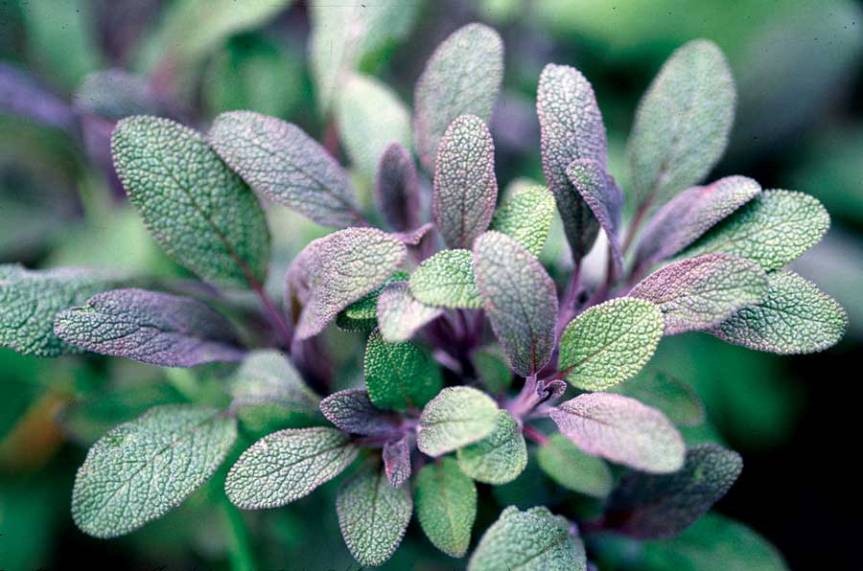
The genus Salvia contains a staggering range of species suitable for every garden use under the sun—and in the shade. But for cooking, none can rival common garden sage (Salvia officinalis) and its cultivars. Sage has long been valued for its contributions to the cook’s palette of flavors. Its robust piney aroma and earthy flavor complement many ingredients. Sage is also an attractive garden plant, particularly in its fancy-leaved forms. Plus, it prospers under a wide range of conditions and adds striking bold texture to mixed plantings.
Growing Info For Sage
• Light: Full sun
• Height: 18 to 24 inches
• Width: 24 to 36 inches
• Bloom time: Late spring, although valued most for its evergreen foliage.
• Soil: Well-drained, tolerant of a wide range of soil types.
What’s the Difference Between Types of Sage?
S. officinalis vary widely in the size and shape of its leaves. Sharp-eyed herbalists…
They may be small, but these extracts pack a powerful herbal punch. Discover the multiple benefits of tinctures, and how to make and use them to stay healthy.
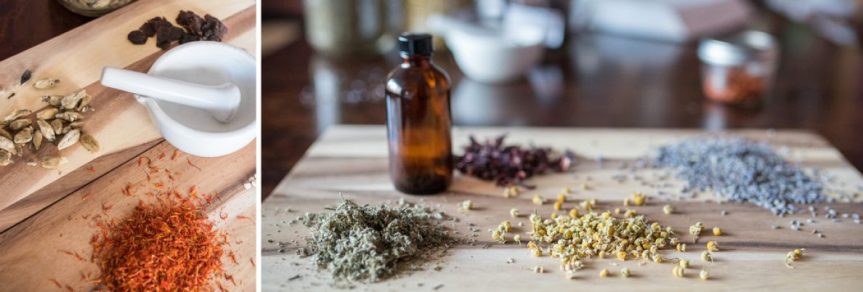
Crafting stellar herbal remedies in your kitchen that surpass anything you can buy in stores is easy and fun. The basic method simply entails packing herbs in a jar, covering them with something, such as alcohol, vinegar, or honey and then straining them after a few weeks. Alternatively, they can be simmered on the stove and then strained.
Here, we’re going to talk about tinctures, a liquid extract made with alcohol. Alcohol is as good as water, and sometimes better, for extracting most plant constituents, and it makes a far more concentrated product. Instead of drinking a whole cup of tea, you take just 1/5 to 1 teaspoon of the tincture. Dilute your tincture in a…
There in Misali, I was discovering my own circular route, from childhood familiarity with Aloe vera in America, to the splendid diversity found in Africa, and eventually… back home again.
RICHO CECH
The popular story goes that long ago, somewhere in North Africa, grew a smallish yet handsome, robust and edible aloe, plump of leaf and yellow of flower. This unique plant was taken from a wild stand which has since been extirpated, leaving no parent population to be found. In the process of domestication, the plant lost its ability to reproduce from seeds, and is thus currently propagated by pups (lateral offshoots) only. This aloe became known as “Aloe vera,” a common name that eventually came to be accepted as the scientific name. Lovely Latin, it means “True aloe.”
Aloe vera Plants
However, the story makes little botanical sense, and although charming, has always left me with a number of questions unanswered. How true is this true aloe? If true, then I’d like to know where it is from, and why it is more true than the rest? If Aloe vera came originally from the wild, then why has it lost its ability to reproduce from seed? Because the ability to reproduce from seed is one of the main earmarks of a wild-derived species aloe. And, why is common Aloe vera so very consistent in form? Wild aloes are not like that–they show some variability in form, and indeed require pollination with plants of different parentage in order to make viable seed. Finally, why is the plant so very vigorous? One can hardly keep up with transplanting all the pups. This trait looks a lot like hybrid vigor. All these questions are satisfied by this one hypothesis: Aloe vera is a hybrid!
Overview: The Aloe family (the Aloaceae) is represented by about 550 species growing in mainland Africa and Arabia as well as the islands of Socotra, Zanzibar, the Mascarenes and Madagascar. Aloes are in general rosette-forming, polycarpic, drought-tolerant succulents.[1] Their leaves are toothed on the margin, boat-shaped in cross-section, non-fibrous and filled with gel. The vascular bundles that occur just beneath the epidermis of the leaf are filled with a bitter, yellow latex. The flowers are drooping, tubular and brightly colored; arranged in terminal, sometimes branched, racemes. The seeds are dark-colored, occur in capsules, and are winged to encourage dispersal by wind. Beyond these commonalities, aloes come in a fantastic array of forms. There are tree aloes, single-stemmed aloes, multistemmed aloes, bushy aloes, stemless aloes, dwarf aloes, creeping aloes…[2] Aloes are the most common medicinal herb in Africa.[3] Many African mothers living in the bush know to use aloe leaf for treating conjunctivitis, a use that has rarely been understood by Western practitioners. Aloe in Africa is also used for treating burns and wounds, as a bitter tonic to the digestion, as an antiparasitic, for treating malarial fever, HIV/AIDS, jaundice, yellow fever, hepatitis, high blood pressure, etc. Ethnobotanical uses range from snuff ingredient (Aloe marlothii) to harborage of ancestral spirits (Aloe dichotoma). Aloe vera itself is a clumping aloe that will make a woody stem with age. The leaves are filled with mucopolysaccharide-rich gel that is used topically to treat burns or other skin injuries, promotes fibroblastic activity and speeds healing–a soothing and antiinflammatory emollient. The mucilage contains acemannan which is anti-tumor and beneficial against HIV. The skin of the leaves contains anthroquinone glycosides that are hydrolyzed in the intestines, speeding peristalsis and producing a stomachic and laxative effect. [4] [5]
You must be logged in to post a comment.