HSA Webinar: Herbal Hues

The Herb Society of America's avatarThe Herb Society of America Blog

by Sasha Duerr

Sasha Duerr is an artist, designer and educator who works with plant-based color and natural palettes. Join her this Thursday, August 26 at 3pm Eastern as she explores creating natural dyes. 
Our webinars are free toThe Herb Society of America members and $5.00 for guests. Become a member today, and enjoy all of our webinars for free along with access to the webinar library with over fifty program titles. To register, visit  www.HerbSociety.org/hsa-learn/hsa-webinars/ 


IMG_7166For those who love color AND plants, natural dyes connect you instantly to a vast range of artisanal hues that are truly vital, vibrant, and inherently meaningful through the ingredients themselves.

Plant-based palettes tell stories that are inherent to places, people, and the plants, and plant-based colors can be conjured seasonally from weeds, yard waste, florals, and food. There is an intertwined overlap with natural colors that are awe-inspiring and a…

View original post 1,097 more words

Cayenne Pepper – Herb of the Month

The Herb Society of America's avatarThe Herb Society of America Blog

By Maryann Readal

Hot! Hot! HOT! – but not the hottest! Cayenne pepper, Capsicum annuum, is hot, but it reaches only 30,000 – 50,000 Scoville Heat Units (SHU) on the Scoville Heat Scale. For comparison, the ‘Carolina Reaper’ pepper reaches 1.4M – 2.2M SHU, and the jalapeño pepper just a meager 2,500-8,000 SHU. The Scoville Scale was developed by pharmacist Wilbur Scoville in 1912 to determine heat levels based on subjective sensitivity to capsaicinoids in peppers. Although modern lab methods are used today to determine the heat level of peppers, the Scoville Scale is still the common way to classify pepper heat intensity (Mountain Rose Herbs, 2021).

Cayenne pepper, a member of the Solanaceae, or nightshade, family, is native to tropical North and South America. The term “cayenne pepper” can generically refer to any of a number of peppers within the Capsicum annuum Cayenne Group, which is characterized by being…

View original post 882 more words

Herbal Hacks, Part 4: Herbs for the Home

The Herb Society of America's avatarThe Herb Society of America Blog

This is our last installment of reader-submitted herbal hacks – herbs for the home. We hope they’ve inspired you to use herbs in new and creative ways. Enjoy!  

bees-insects-pollen-lavender-flowers-garden_Creative commons via Pxfuel

When your “Italian herbs” (whether store-bought or home-mixed) reach the end of their tasty usefulness, place them in the coffee grinder and pulverize. Then, mix equal parts herbs and baking soda and strew over your wool carpet. Let sit for one hour or overnight, then vacuum. It is surprisingly deodorizing and refreshing! – Lisa de Vries

20210503_162231Got a big patch of lemon balm in the garden? Freshen up your sink disposal after trimming the lemon balm leaves to use in salads! Stuff the stems down the drain and whirr away for lemony freshness. – Peg Deppe
I drop lavender essential oil on wool dryer balls for a fresh fragrance on my laundry. – Cynthia Wheeler

I fill large tea bags with lavender…

View original post 387 more words

2021 Virtual Educational Conference and Annual Meeting of Members

The Herb Society of America's avatarThe Herb Society of America Blog

By Jen Munson, Education Chair

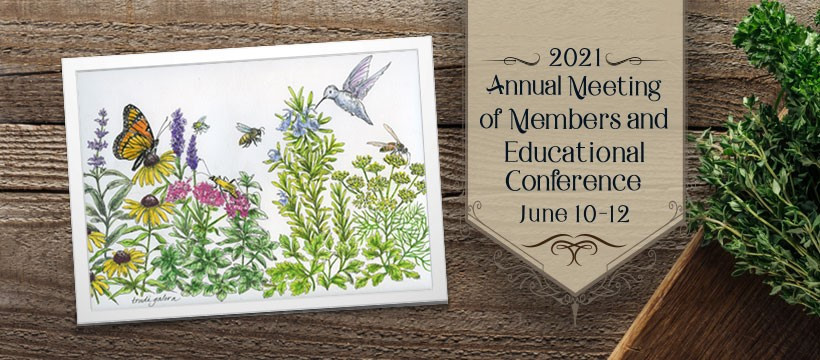
Registration is now open for The Herb Society of America’s 2021 Virtual Educational Conference and Annual Meeting of Members (Virtual EdCon). This year, we are meeting online from June 10th – 12th and our host is Zoom. For our seasoned attendees, this is a safe way to celebrate the accomplishments of HSA award winners, recognize our new Rosemary Circle and Golden Sage Members, and enjoy educational programming in a socially distanced format. For first-time guests, our Virtual EdCon is a unique way to participate in our signature conference via a simulated experience. 

Conference Blog Image 1During our Virtual EdCon, you will have the opportunity to enjoy nine outstanding programs featuring presenters from all parts of the country and beyond. Notable HSA member, Deni Bown, joins us from Spain to kick off the educational programming portion of the conference with a keynote titled “Herbs R Us.” Don Haynie, a returning…

View original post 196 more words

HSA Webinar: Exploration of Spice

The Herb Society of America's avatarThe Herb Society of America Blog

Sponsored by The New York Unit
by Jen Munson, HSA Education Chair

spice imageThe Herb Society embraces spices as herbs, but what distinguishes an herb from a spice? An herb is the leafy part of a plant, whereas a spice is the “hard” part. So, herbs might include oregano, sage, rosemary, sorrel, and basil, to name a few. Spices, on the other hand, include the bark, root, or seed…think of cinnamon, black pepper, cloves, and nutmeg. Notable exceptions to the herb vs. spice conversation are coriander and dill. Coriander and dill seed are the seeds of the cilantro and dill plants, respectively. 

While herbs take the culinary spotlight for delivering immense flavor to our food, spices often get relegated to fall holidays when cinnamon, allspice, and other favorite spices get used. However, spices can be enjoyed year-round to ramp up the flavor in food. To learn more, join us on Tuesday…

View original post 472 more words

HSA Special Program: Foodscaping with Herbs

The Herb Society of America's avatarThe Herb Society of America Blog

by Jen Munson, HSA Education Chair

image-assetFoodscaping–it’s so simplistic. In its most basic form, it is landscaping with an edible twist. It’s the intersection of the purely ornamental garden with the purely edible or vegetable garden. Herbs, vegetables, berry-producing bushes, and fruit trees intertwine with ornamentals to become design elements. 

Join us for Foodscaping with Herbs with bestselling author Brie Arthur on Friday, May 14th from 12pm to 1:30pm ET. Brie will share creative ideas about foodscaping with herbs in this lively, virtual session. Lemongrass suddenly becomes a replacement for other tall grasses, providing beauty and enjoyment. Blend Thai basil with lemon basil for a stunning border. Use chives and garlic for structure and as natural pest deterrents. Discover how to plant beautiful and bountiful designs for year-round use, and learn easy-to-apply strategies to deter browsing mammals, including voles!

Brie Arthur - 2Food in our landscapes is not new. Cottage gardens and the…

View original post 309 more words

Pineapple Mint – Herb of the Month

The Herb Society of America's avatarThe Herb Society of America Blog

A Two-Color Mint

by Maryann Readal

The Herb Society of America’s Herb of the Month for May is pineapple mint, Mentha suaveolens ‘Variegata’.

With its lime green leaves edged with a creamy white ruffle, pineapple mint is a perfect plant for the spring garden. This mint is a variegated cultivar of apple mint (Mentha suaveolens). However, its taste and smell does not remind one of apple mint. It has a sharp initial taste that fades into a light fruity flavor. Like other mints, pineapple mint thrives in a moist, rich soil. It does well in sun or in partial shade. In the south, it may need to be grown in partial shade. Also similar to other mints, pineapple mint can be a fast spreader, so containing it in a pot is a good way to control its growth. It is a nice plant to add to a hanging…

View original post 588 more words

Spring Plantain Herbal Infusion | The School of Aromatic Studies — Crooked Bear Creek Organic Herbs

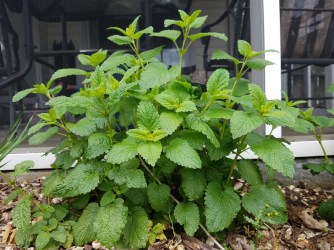
It’s finally spring and all around there are cleavers, violet flowers, chickweed, plantain, and a few other early spring medicinal plants in the area around us. I am sure if you look around your yard or in a field yet to be touched by modern-day‘ weed killers’ you will stumble upon plantain.  Today we… Continue […]

Spring Plantain Herbal Infusion | The School of Aromatic Studies — Crooked Bear Creek Organic Herbs

Beltane Gardening Rituals: Garden Blessings, Standing Stones, and Energy Workings

Dana's avatarThe Druid's Garden

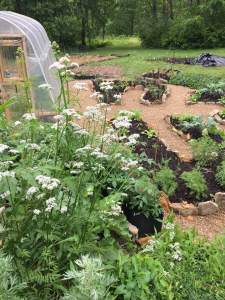
Here in the Laurel Highlands of Western PA, Beltane marks the start of “planting” season, where we move our indoor seeds out into the greenhouse to harden off, where many seeds like carrots and beans start to go into the ground directly, and where the land is budding and blooming with the joy that spring offers.  And so in today’s post, I’m going to share some Beltane spring garden blessing ideas for you, as you can craft your own sacred “druid’s garden”.

One of our amazing sacred gardens here at the Druid's Garden Homestead! One of our amazing sacred gardens here at the Druid’s Garden Homestead!

The concept of “blessing” is quite wide-ranging.  In the broadest sense, a garden blessing is any working that offers positive energy and protection to a growing space for a season, ensuring your plants a bountiful harvest, long life, and joyful existence.  Blessings can be extremely wide-ranging and pretty much anything you do can have some positive…

View original post 2,021 more words

Bewitching Maibowle Cream Cake For Walpurgis Nacht (May Day Eve) – Gather Victoria

Crooked Bear Creek Organic Herbs's avatarGood Witches Homestead

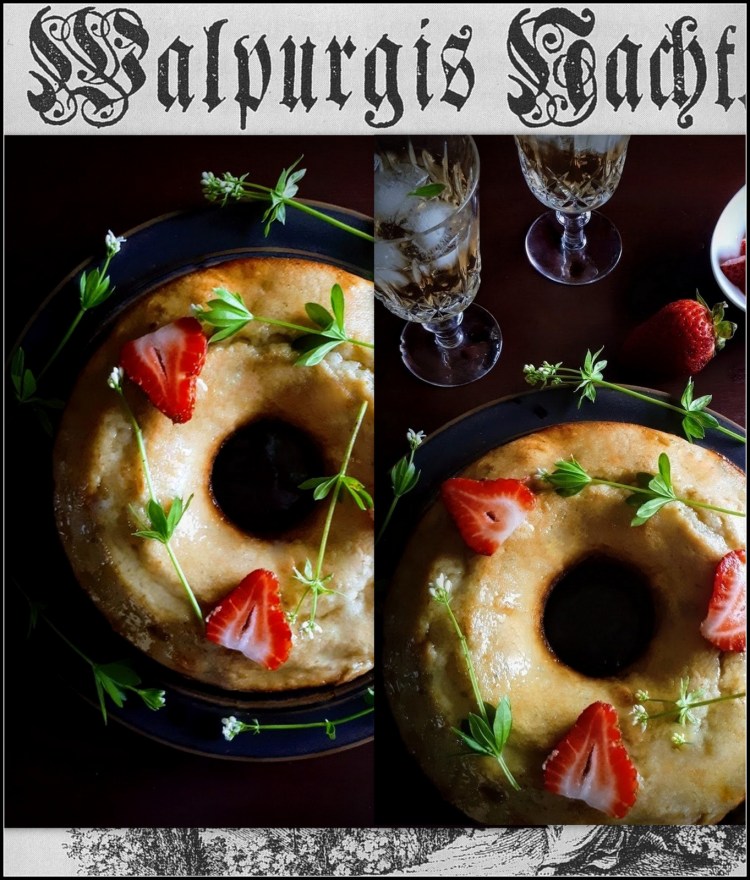
Soon May Day Eve will be upon us – so I’m sharing this recipe posted last year at Gather Patreon. (Patrons will see a new recipe coming soon!) This Maibowle Cream Cake – made and…

Source: Bewitching Maibowle Cream Cake For Walpurgis Nacht (May Day Eve) – Gather Victoria

View original post