Plant Spirit Communication, Part II: Communication in Many Forms

Dana's avatarThe Druid's Garden

I remember taking a drive with some friends and friends-of-friends some years ago. As we were driving through a really nice forest preserve with some old trees, one of my friends in the car said, “There’s so much money there in the trees, some of them would be worth more than $1500.” He went on to talk about how his family had recently logged their property and earned over $25,000. Other people in the car jumped in and talked about the forest’s beauty and argued against him; and I just listened. Finally, I responded and said, “Every living being has a spirit. I hope that forest stands forever. They deserve to live as much as you or I.” Before this conversation had started, I was listening to the singing of that forest, so happy, so safe to be preserved. This experience stayed with me, and was a good reminder about…

View original post 2,288 more words

Our Pantry Profile: Rosemary

Crooked Bear Creek Organic Herbs's avatarCrooked Bear Creek Organic Herbs

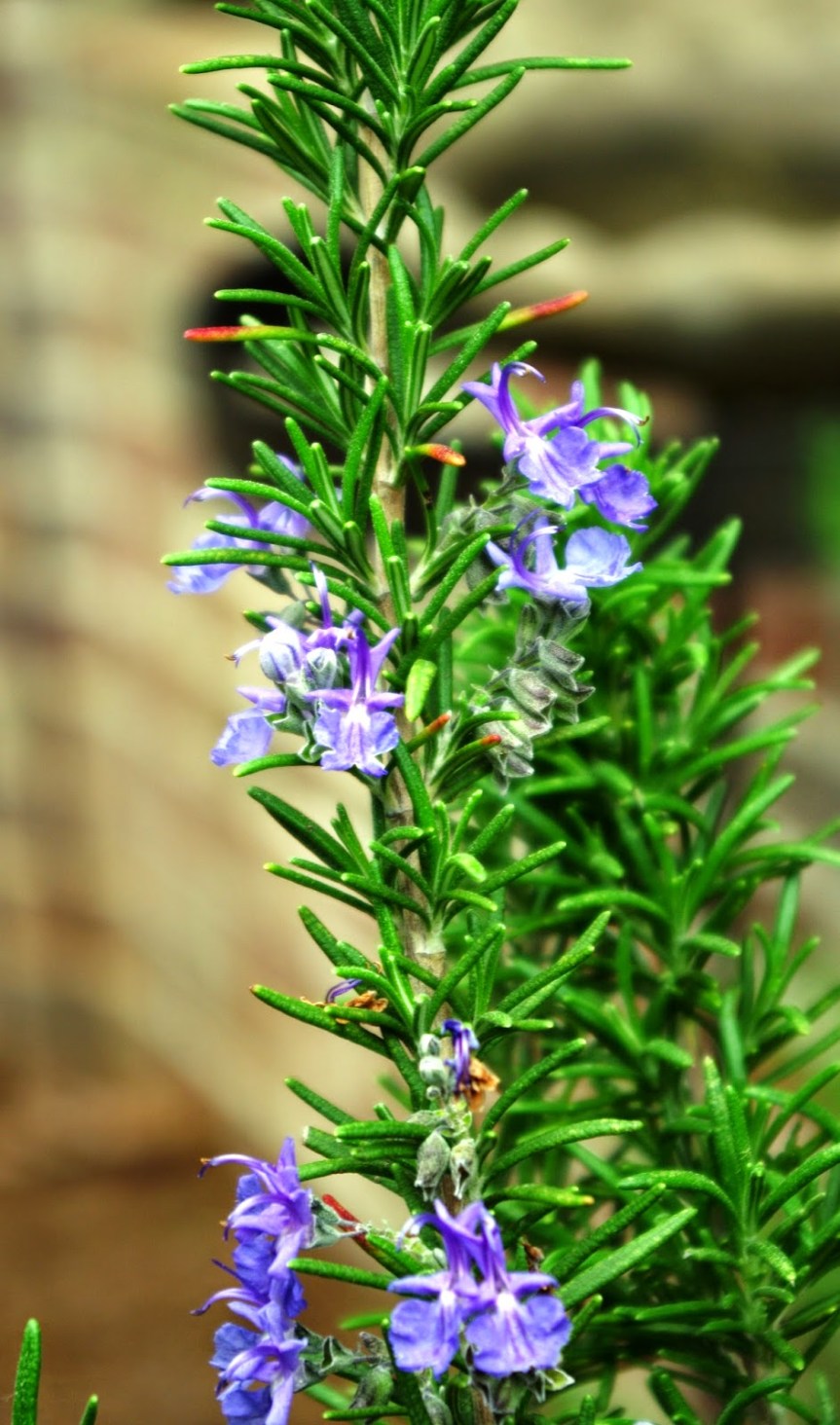
Rosemary {Rosmarinus officinalis}

The name Rosmarinus loosely translates to “dew of the sea,” given to rosemary because of its affinity for the wind-swept cliffs of the Mediterranean coast, where it originates. Beloved for centuries for its aroma and health benefits, this strongly aromatic member of the mint family is now cultivated worldwide.

Greek scholars wore garlands of rosemary to improve their memory and concentration, and many ancient herbalists recommended rosemary for failing mental acuity. During the Middle Ages, some would wear it around the neck to protect from the plague. Thirteenth-century Queen Elisabeth of Hungary claimed at 72 years of age, crippled with gout and rheumatism, that she had regained her beauty and strength by using “Hungary Water” {largely rosemary-infused}, compelling the King of Poland to propose marriage to her. Along with juniper, rosemary was frequently burned by the tub-full to disinfect the air from disease, from ancient times through…

View original post 827 more words

Our Pantry Profile: Thyme

Crooked Bear Creek Organic Herbs's avatarCrooked Bear Creek Organic Herbs

Thyme {Thymus vulgaris}

Common garden thyme has been used for protection, courage, food, and medicine since the beginning of recorded history. A low-growing, aromatic shrub native to the rocky hills of the Mediterranean and Southern Europe, it’s now a staple of herb gardens around the world.

Roman soldiers bathed in thyme to maintain their courage and strength before a battle, and in medieval times, departing knights received thyme-embroidered scarves from their lady loves to keep up spirits and inspire courage. A popular belief was that thyme tea prevented nightmares and even encouraged dreams of fairies. Carrying thyme warded off evil spells and witchcraft, while sewing thyme and fern into the hem of a dress kept the Devil from taking a woman as his bride. Placing a sprig of thyme in one shoe and a sprig of rosemary in the other on the Eve of St. Agnes {January 20} was said…

View original post 827 more words

Food as Medicine: West Indian Lemongrass (Cymbopogon citratus, Poaceae)

Crooked Bear Creek Organic Herbs's avatarCrooked Bear Creek Organic Herbs

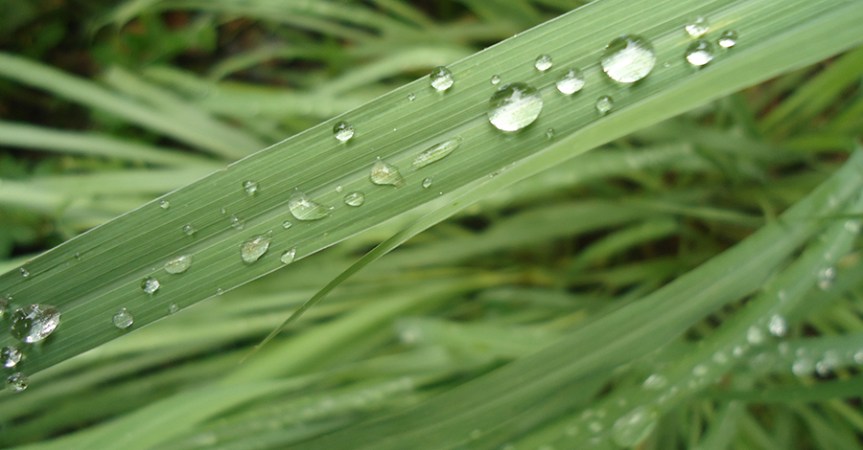
West Indian lemongrass (Cymbopogon citratus, Poaceae) is an aromatic tropical perennial with long, slender, light green leaves that grow in groups with bulbous and fibrous stems at the base of the plant.1-3The grass can grow from two to six feet tall, and its leaves are approximately one inch wide with slightly toothed, saw-like margins.2 West Indian lemongrass likely originated from India, Malaysia, or Sri Lanka.1,2,4,5 It is now cultivated in tropical and subtropical countries.4 The largest exporter of lemongrass leaves and stalks is Guatemala,5 while India is the largest producer of lemongrass essential oil, 80% of which is exported annually.6Lemongrass grows well in warm and humid areas with plenty of sunshine and moisture.4 The leaves and fleshy part of the stem are used for flavoring teas and broths in many Asian cuisines, and its essential oil is used in…

View original post 2,696 more words

Plant Spirit Communication, Part I: Your Native Langauge

Dana's avatarThe Druid's Garden

When I was  new to my first job, a colleague had given two of us both who had been recently hired an elephant ear plant seedling for our offices. Our offices were next to each other, both with the same window. Each plant was planted in an identical pot and in identical soil. My elephant ear plant grew quite large and beautiful, while my colleague’s plant kept sending up small shoots and dying back. Finally, she said to me, “Why is your plant doing so much better than mine?” And I responded as a druid, totally without thinking, “I just talk to the plant and it tells me what it needs.” She rolled her eyes at me, let out an exasperated sigh, and walked away. She was never a very pleasant person, but she was particularly nasty to me for some time after that. Perhaps she thought I was mocking…

View original post 1,837 more words

A Druid’s Guide to Connecting With Nature, Part III: Nature Engagement

Dana's avatarThe Druid's Garden

Leading you in deeper! Leading you in deeper!

I’ve heard a lot of conversation in the nature spirituality community, including the druid community, about not touching nature, leaving it alone, to simply “be”.  I remember one influential druid speaking at an event and saying, “The best thing you can do in nature is pick up the garbage and get out.”  From a certain standpoint, this perspective makes a lot of sense. It is the same perspective held by many conservationists trying to preserve pristine lands or lands that have been replanted and are healing; the best thing that can be done is figure out how to keep people from mucking them up, pick up garbage, and leave them undisturbed. Because people have a tendency to come in, move things about, pick things, disrupt ecosystems, and generally cause havoc.  Or worse, much, much worse. Further, in a world where most humans can’t identify even five…

View original post 2,628 more words

Friends of Forest Farming

Crooked Bear Creek Organic Herbs's avatarCrooked Bear Creek Organic Herbs

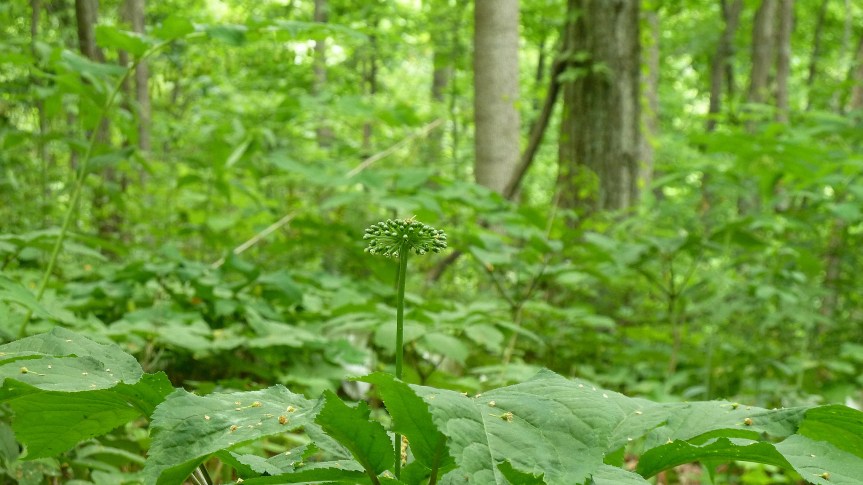
As armies of amateur wildcrafters pluck Appalachian ginseng, goldenseal, and other medicinal herbs to near extinction, a coalition of universities, nonprofits, and “forest farmers” are working on a solution that will not only help preserve these wild herbs but also prevent supplement adulteration.

The Appalachian Beginning Forest Farmer Coalition includes Virginia Tech, Penn State, and North Carolina State University; the U.S. Department of Agriculture, Pennsylvania Bureau of Forestry, and other government organizations; nonprofits like United Plant Savers and the Blue Ridge Woodland Growers; and Appalachian landowners and farmers. Together, these entities are developing a model called “forest farming” for cultivating traditionally wildcrafted herbs, including black cohosh {Actaea racemosa}, goldenseal {Hydrastis canadensis}, bloodroot {Sanguinaria canadensis}, ginseng {Panaxquinquefolius}, blue cohosh {Caulophyllum thalictroides}, stoneroot {Collinsoniacanadensis}, wild yam {Dioscorea villosa}, and wild indigo {Baptisia tinctoria}.

During…

View original post 614 more words

A Druid’s Guide to Connecting with Nature, Part II: Nature Wisdom

Dana's avatarThe Druid's Garden

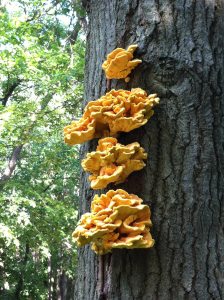
One of my favorite mushrooms- the Chicken of the Woods One of my favorite mushrooms- the Chicken of the Woods

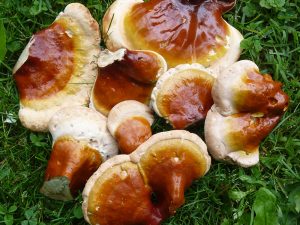
As any mushroom hunter knows, mushrooms are tricksy little buggers.  What one looks like in one setting may not necessarily be what one looks like in another, depending on soil conditions, moisture, sun, size of the mushroom, insect damage, and/or regional variation. Mushroom species can vary a lot, even from one small region to another, and that variation can spell trouble for someone who hasn’t yet gained the wisdom to understand such variation.  Mushroom books offer perhaps 1-2 photos of mushrooms, and a good book will also offer a mushroom hunter the “keys” (features that distinguish one mushroom from another, like attached gills, color, etc).  However, only lived and true experience can help you not make a dangerous mistake when it comes to the mycelium kingdom.  The difference here, I think, epitomizes two key things: the different aspects of nature…

View original post 1,978 more words

Pantry Profile: Basil {Ocimum basilicum}

By Crooked Bear Creek Organics

Crooked Bear Creek Organic Herbs's avatarCrooked Bear Creek Organic Herbs

Bright green, tall, and aromatic, basil is a beauty. An ancient plant with a long history and strange folklore, its sweet, peppery flavor has been used for centuries in cuisine and medicine.

Basil is native to Africa and Southeast Asia and was eventually cultivated in the Middle East and the Mediterranean. Roman scholar Pliny the Elder described basil’s {now well-known} benefits as a carminative and digestive, explaining its effectiveness in relieving flatulence, colic, and nausea. It also has a long history of use for coughs associated with colds, and the leaves were routinely used topically as an insect repellent and poultice to relieve bug bites and stings.

Much myth and legend surrounded this plant we now consider a simple culinary herb. The ancient Egyptians believed basil would entice the god Osiris to open the gates of the afterlife. In his book the English Physician Enlarged, 17th-century botanist Nicholas Culpeper…

View original post 859 more words

6 Bug Repellent Patio Plants

Six Bug Repellent Patio Plants …

Crooked Bear Creek Organic Herbs's avatarCrooked Bear Creek Organic Herbs

We love to spend our summer days outside with family and friends, but pesky bugs are quick to drive a party indoors. For a chemical-free way to keep insects at bay this season, we asked the experts from our green goods team to recommend their favorite bug repellent plants. Planted near the doorway or transformed into essential oils, these six natural options deter mosquitoes, flies, and more uninvited guests in the summer garden.

1. Lemon Balm (Melissa officinalis): Like many members of the mint family, this herb provides protection against summertime mosquitoes. To make a quick, all-natural bug repellent, crush a handful of lemon balm leaves and rub onto any exposed skin. If you’ve already suffered a bug bite, its soothing oils can limit itching as well. This easy-to-grow herb also has a number of additional applications, from infused teas and vinegar to green salads.

2. Ageratum ‘Artist…

View original post 326 more words