Southwest Gardening: Sacred Mesquite ~Recipes

By Crooked Bear Organics

Crooked Bear Creek Organic Herbs's avatarCrooked Bear Creek Organic Herbs

Mesquite grows well in desert areas from the southwestern United States to the Andean regions of South America. Traditionally, native peoples of the Southwest depended on mesquite. It provided food, fuel, shelter, weapons, medicine, and cosmetics. As times changed, and as refined sugar and wheat flour became staples, the role of mesquite was diminished.

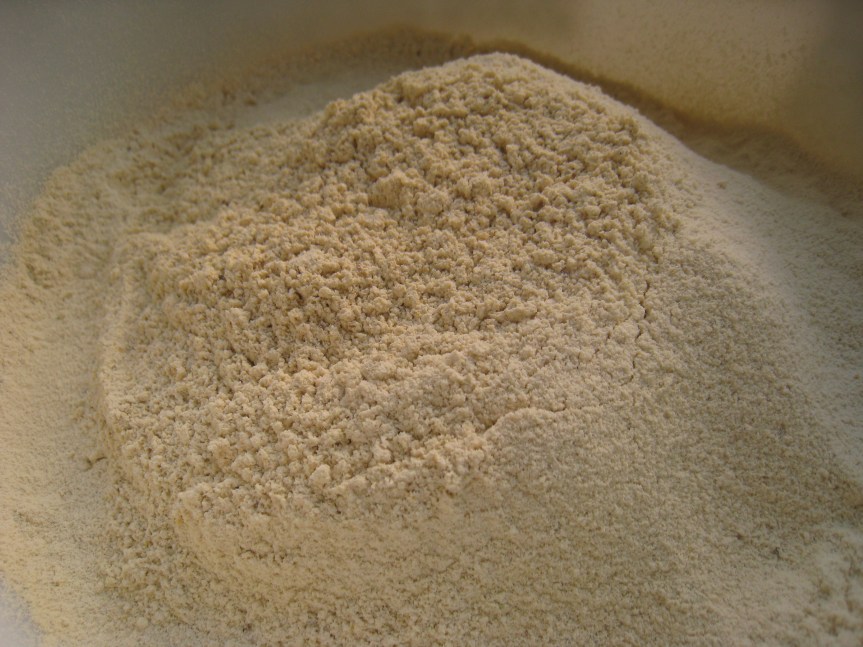
mesquite flour

Mesquite meal was once made by hand-grinding the plant’s seeds and pods on stones. Now modern milling techniques speed up the process, grinding the entire mesquite pod at once, including the protein-rich seed. This produces a meal that is highly nutritious as well as very flavorful. The meal ground from the pod contains 11 to 17 percent protein. High lysine content makes it the perfect addition to other grains that are low in this amino acid.

mesquiteflourfinal400

http://www.mesquiteflour.com/

Although desert dwellers used mesquite pods as a source of food for centuries, when you order and use this product…

View original post 1,746 more words

One Of My Favorite Places To Find Incredible Wild Plants & Mushrooms

Greetings!

First, I want to say “Thank you!” to everyone who pre-registered for the upcoming Summer Flora & Fungi Hike on July 7th.  Registration is now closed, as both walks have filled to max capacity.  Stay tuned for another Learn Your Land outdoor event to be held in August!

Second, let’s talk about ideal locations to find incredible wild plants and mushrooms.

Bogs are magical.  Floodplains are great.  Deciduous woods are wonderful, and forest edges are fantastic.

I love walking through all these unique ecosystems during all seasons of the year, though I’d be remiss if I didn’t mention an additional habitat that I absolutely love exploring…

A hemlock forest.

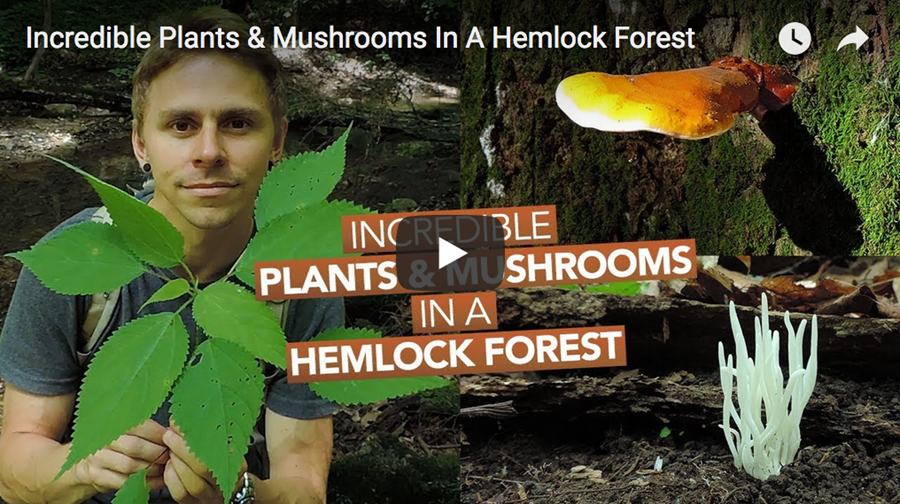
There’s something special about it.  Dark, moist, green, and aromatic… this is how I typically think of a hemlock forest.  Deep in these woods, incredible wild plants and mushrooms can often be found if the conditions are right.

I recently explored a hemlock forest in search of summer’s flora and fungi.  Needless to say, I brought my camera along and documented the experience.  If you’re interested in learning a few new incredible plants and mushrooms (some of which are edible and medicinal!), check out the brand new video!

Speaking of incredible wild fungi, Black Trumpet mushrooms are appearing right now.  These fungi are some of the tastiest wild mushrooms on the planet, though they’re not always so easy to find.  Check out this recent Instagram post to learn a few foraging tips!

Thanks for reading and watching, and as always, thank you for your support!

-Adam Haritan

Did You Find Any Morel Mushrooms This Year?

Greetings!

During the weekend of June 8th — 10th, I’ll be participating in the Great Lakes Foragers’ Gathering in Grass Lake, Michigan.  This event is considered to be the largest annual gathering of wild food enthusiasts in the Great Lakes region.  I’ll be leading a few mushroom walks and programs on Saturday and Sunday.  Additional presenters include Samuel Thayer (nationally recognized foraging author), Rachel Mifsud (creator of Will Forage For Food), and several others.  If you’re interested in attending, click here!

Moving forward, let’s talk about spring’s most popular fungi.

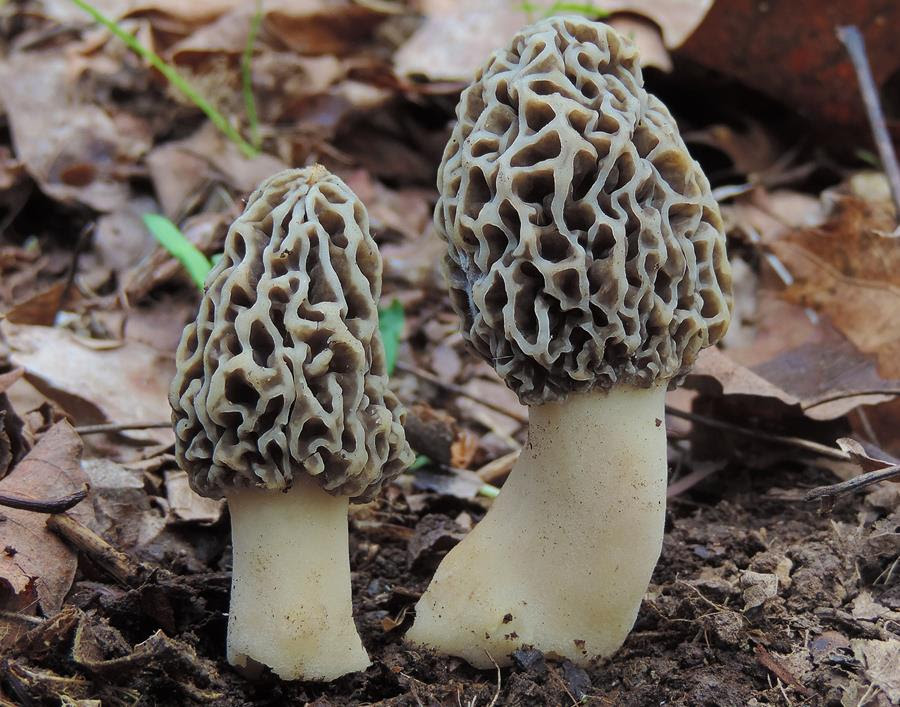
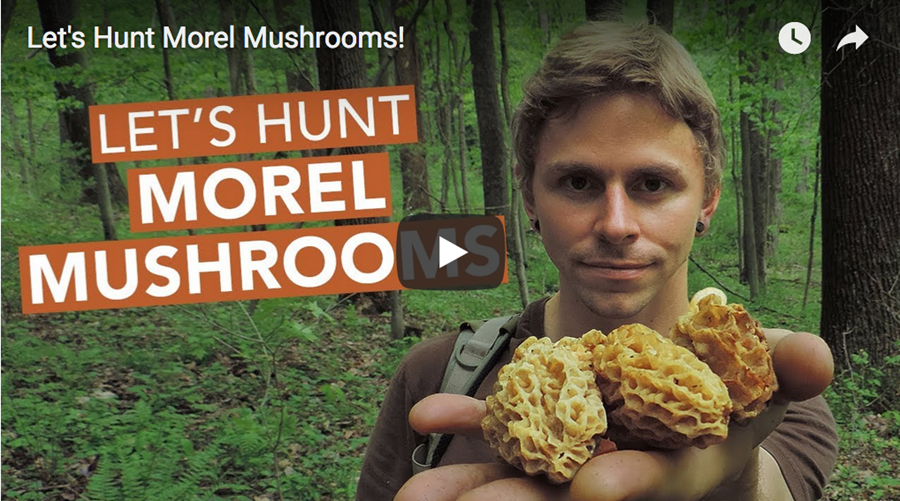
Morel mushrooms are among the most alluring and widely recognized wild edible fungi intensively collected by mushroom hunters.

They’re tasty, they’re elusive, and they’re some of the first fungi to appear during the early spring weeks.  No two morel mushroom hunts are the same, and even an “unsuccessful” hunt through an old, familiar spot is likely to yield auxiliary benefits including fresh air, wildflower sightings, and long overdue exercise!

In my neck of the woods, the morel mushroom season is just about finished.  Over the past few weeks, however, I documented a few of my experiences on video.  If you’re interested in seeing what I discovered, check it out!

Speaking of fungi, almost all wild orchid species require relationships with fungi to germinate successfully and grow into beautiful plants.  What’s the reasoning behind this?  And for how long do these intimate relationships last?  Check out this recent Instagram post to learn more!

Thanks for reading and watching, and as always, thank you for your support!

-Adam Haritan

Wild Food Profile: Eat Your Hostas!

Often, when you are interested in unusual and wild foods, a season for a delectable treat may only last for a few short days or weeks. A fun early spring food that is usually popping up around or before Beltane in temperate parts of North America is the hosta. Yes, you heard me–that large leafy […]

via Wild Food Profile: Eat Your Hostas! — The Druid’s Garden

Have You Seen These Amazing Wildflowers?

Greetings!

First, I want to say “thank you!” to everyone who pre-registered for the upcoming Wild Edible Plant & Mushroom Outing (featuring Sam Thayer!) on June 2nd.  The event filled to max capacity within 24 hours and registration is now closed.  Stay tuned for another exciting Learn Your Land event to be held in early July!

Second, let’s talk about flowers.

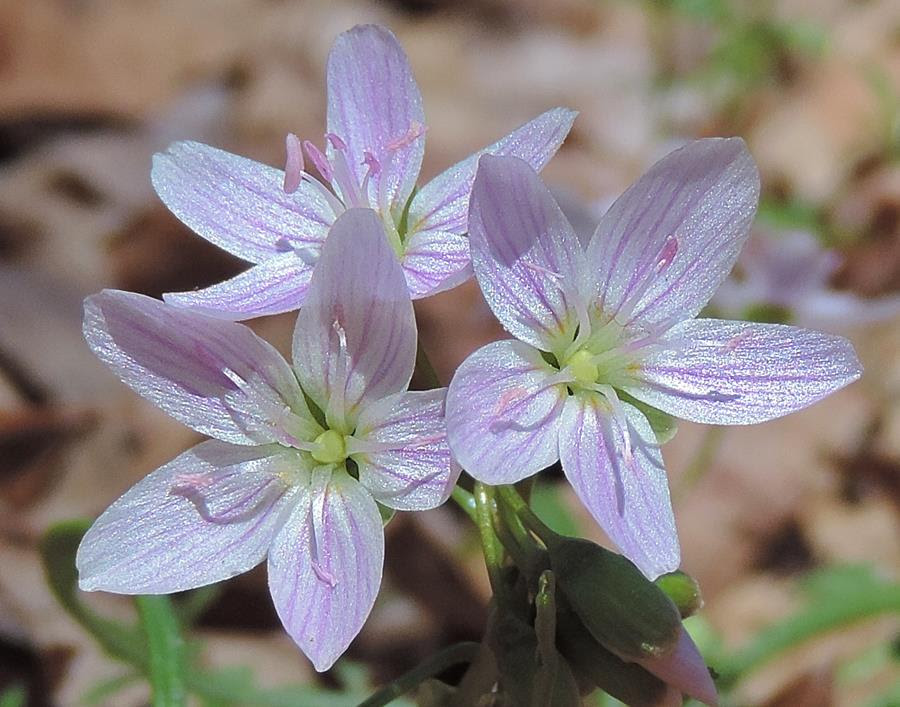
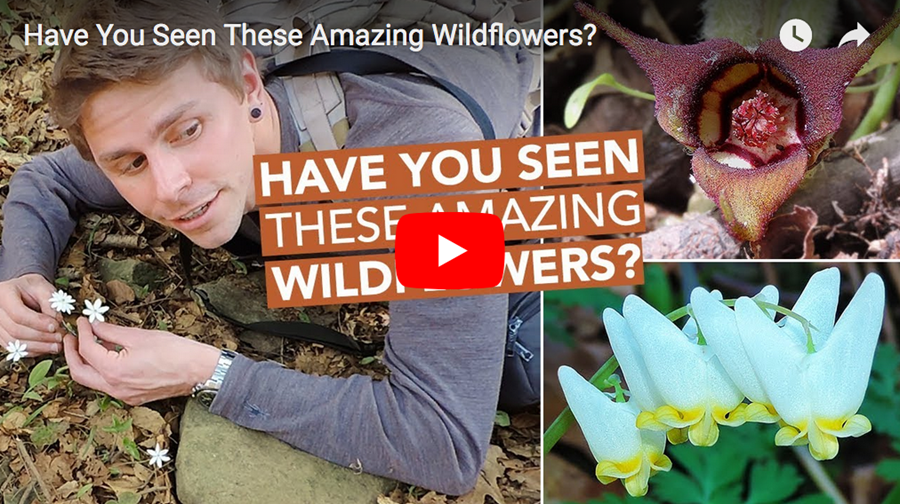
If you’re a wildflower enthusiast like me, perhaps you’ll agree that the spring ephemeral wildflower season is one of the best times of year to explore the woods.

What’s not to love about a hillside teeming with White Trillium?  Or a vernal pool speckled with Marsh Marigold? Or a floodplain loaded with Virginia Bluebells?

Personally, I can’t think of a spring ephemeral wildflower I don’t like.  No matter the color, no matter the size… each one is a superstar in its own special way.

Recently, I took to the woods in search of these fleeting flowers and tried my best to capture the magic on film.  The sky was sunny, the air was warm, and plenty of plants were blooming that afternoon.  Needless to say, the wildflowers definitely put on a good show.  Check it out!

Speaking of ephemeral organisms, morel mushrooms are making grand appearances all over the woods right now.  Depending on where you live, these choice edible fungi may currently be fruiting in your neck of the woods.  Check out this recent Instagram post to learn more about these elusive springtime fungi!

Thanks for reading and watching, and as always, thank you for your support!

-Adam Haritan

CREATING HERB GARDENS WITH CHILDREN

Visit http://www.kidsgardening.org/ for more fun gardening ideas at school or at home. Herbs arouse kids’ curiosity and interest because they thoroughly engage the senses. What better motivator for student investigations than plants that feel cool, smell great, and can turn mere tomatoes into pizza sauce? Their life stories, it turns out, are fascinating too. After all, […]

via Creating Herb Gardens With Children — Crooked Bear Creek Organic Herbs

HERBARIUM PROJECT FOR CHILDREN

An herbarium is a collection of dried plants that botanists use for studying, identifying, and classifying plants. Making an herbarium is a great way for kids and their parents to learn about botany and the plants used in herbalism. An herbarium will help you and your child get to know what plants look like, along with […]

via HERBARIUM PROJECT FOR CHILDREN — Crooked Bear Creek Organic Herbs

FUN ON THE WILD SIDE ~ INTRODUCTION TO HERBS FOR KIDS: WILDCRAFTING

Take a trip outside your door and look down! What do you see? Do you see little plants growing? Perhaps it is one single little dandelion or maybe you have found a whole area of plants growing and thriving. You won’t have to go far to find wild plants! Sometimes wild plants found around homes, […]

via Fun On The Wild Side ~ INTRODUCTION TO HERBS FOR KIDS: WILDCRAFTING — Crooked Bear Creek Organic Herbs

Wild Edible Plant & Mushroom Outing with Sam Thayer & Adam Haritan

Greetings!

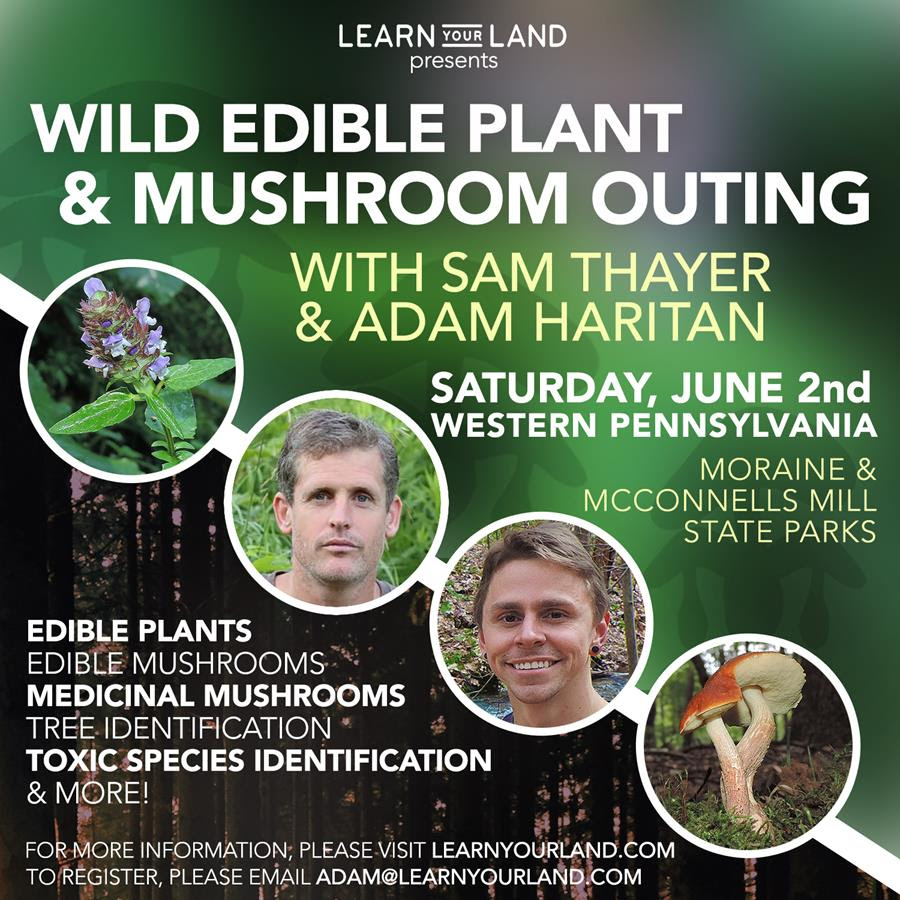
I am extremely excited to announce that I will be co-hosting the upcoming Wild Edible Plant & Mushroom Outing with Sam Thayer on Saturday, June 2nd.  Sam is a nationally recognized foraging instructor and the author of three popular foraging books, including The Forager’s HarvestNature’s Garden, and Incredible Wild Edibles.

He will be traveling from his home in Wisconsin to spend the day with us in Western Pennsylvania for the Wild Edible Plant & Mushroom Outing.  This event is an all-day outdoor excursion designed to improve your identification skills by introducing you to a variety of edible species that grow in the early weeks of summer.

During the first part of the event, we will explore Pennsylvania’s beautiful Moraine State Park by hiking a 1.5-mile trail alongside the park’s main feature, Lake Arthur.  While walking, we’ll discuss the plants and mushrooms that inhabit the grassy meadows, lakeside ecosystems, and wooded habitats.

In the afternoon, we’ll head to nearby McConnells Mill State Park to explore 2.5 miles of the North Country Trail and its notable hemlock-lined ravines, sugar maple slopes, and sandstone cliffs… all while discussing the area’s unique plants and mushrooms.

Interested?  Here are more details:

What: Wild Edible Plant & Mushroom Outing with Sam Thayer & Adam Haritan
When: Saturday, June 2nd, 2018
Where: Moraine & McConnells Mill State Parks, Western Pennsylvania
Time: 9:00 AM — 6:00 PM

Please note that in order to maximize your learning experience, space for this event is limited to approximately 25 participants.  Registration with payment in advance is required.

To purchase your ticket, and to learn more about the outing, please visit this link:  Wild Edible Plant & Mushroom Outing

We’d love to see you there!

-Adam Haritan

Indefinitely Wild; Foraging Wild Strawberries

By Good Witches Homestead

Crooked Bear Creek Organic Herbs's avatarGood Witches Homestead

Once abundant, wild strawberries provided helpful medicine to Native Americans and early settlers.

Picture it; An abandoned field of wild strawberries, ripe and shimmering under a bright June sun. The field is isolated, bounded on three sides by leafy, benevolent hardwoods. A light breeze moves gently through the leaves and sparse grasses.

A Berry in History

I’m not alone, of course, in my love of this summertime fruit. The wild strawberry {Fragaria virginiana, or F. vesca} held a special place in the lives of several Native American tribes – in their mythology, diets, and medicine – which they shared with early settlers.

In Medicinal and Other Uses of North American Plants, Charlotte Erichsen-Brown reveals some uses of the wild strawberry plant through the eyes of early Europeans, whose research was likely based on what they learned from these native tribes as well as their own observations. From…

View original post 1,635 more words