Category: Spiritual Toolbox
Cleansing Your Aura with Crystals
by Kat Michaels
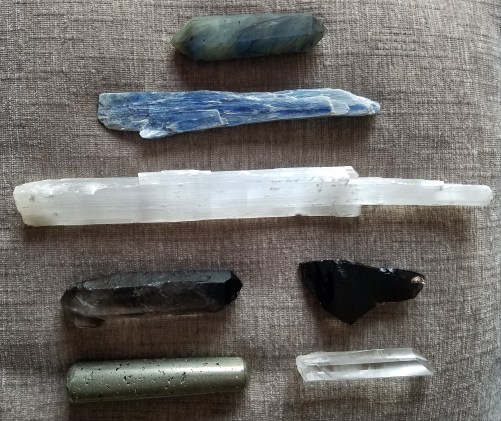
Have you ever tried cleansing your aura after a rough day? An aura cleanse is a great way to remove harmful energy using crystals.
For an aura cleanse, start with your favorite cleansed piece of selenite, black obsidian, clear quartz, smoky quartz, or labradorite. It’s best to use a carved massage wand or a natural wand with a single or double termination, but any shape will work.
After choosing your stone, trace it through your aura about 4-6 inches away from your body, using your intuition to guide you. If you’re using a carved massage wand or a natural wand with a single termination, make sure that the blunt end is facing toward your body and that the termination is facing outward. That will ensure that the energy you remove will exit the wand through the termination instead of getting stuck in your auric field. Trace the front and back of yourself as well as your sides, under your arms, and between your legs, as energy can get stuck in any area of your aura. Energy is particularly likely to be stuck in areas where you have pain or have previously been injured, so pay extra attention to those spots.
Once you’re done cleansing your aura, make sure to cleanse your stone well again so that the harmful energy doesn’t affect the stone’s healing properties. To keep your aura in tip-top shape, try to do this three to four times a week.
If you liked this article, visit Kat Michael’s website.
Ecoregional Druidry: Adapting and Localizing Symbolism


To follow up from two posts a month or so ago on ecoregional druidry and the wheel of the year and celebrating rituals, observances, and activities, I want to continue thinking about how druids can adapt basic practices of druidry to their local ecosystems. This is particularly important for those of us in diverse ecosystems around the world: part of nature spirituality is being with nature as she is in your region. Thus far in this series, we’ve explored a druid’s wheel of the year that is seasonally-focused on a local ecosystem as well as the different ways we might celebrate this wheel of the year with rituals, observances, and activities. Also tied to these spiritual practices are symbolism associated with the elements and directions; framing symbolism that weaves its way into our practices in a variety of different contexts. And so, in this post, we’ll delve into thinking…
View original post 1,883 more words
Crystal Towers
By Sonia Acone
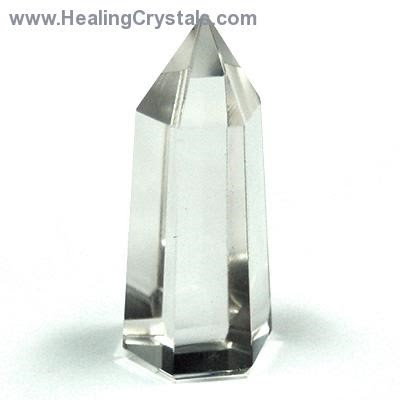
Crystal towers are usually 6-sided crystals that converge to a point on one end and are flat on the other end. They can often be confused with obelisks, which are 4-sided. Towers are designed to stand up with the point facing up. Energy is directed upward towards the point and outward. Crystal towers are also wonderful Generator crystals and can be used in grid layouts as the central stone.
You can also use a tower to amplify your intentions when using a grid, by touching the point of the tower to each of the crystals in your crystal grid, even if the central stone is not a tower. This will magnify the energy spreading throughout your crystal grid.
Towers can also be used just as you would a wand, as they generate power at the tip. Write down a wish or intention. Touch the tip of the tower to the written words as you say them out loud, raise the tip up towards the sky and back down to the written words.
Use your crystal tower during meditation, distance healing or even on yourself to increase enthusiasm, relieve pain and to connect to other like-minded people.
Sage Ash
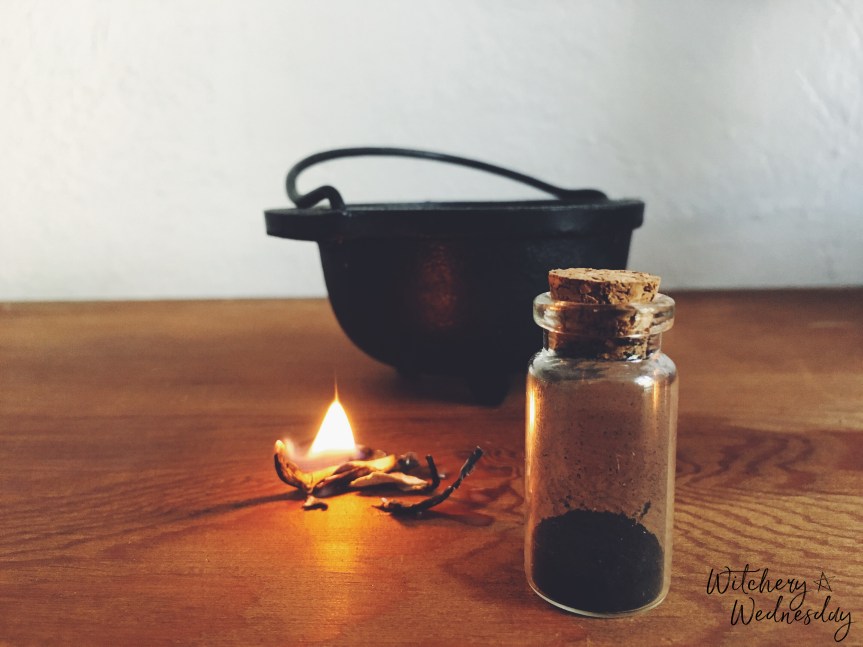

One of the signs that you might be a little witchy is that you tend to save everything. It’s not hoarding if it’s useful, right? And when it comes to spellwork, everything can be useful. If your pockets are currently full of bits of stray string and your shelves full of glass jars (that may or may not actually contain cobwebs on purpose) then you know what we’re talking about. But here’s something you’re probably not saving that you should be.
Burning white sage, whether as a smudge stick or loose, is almost a witchy right of passage. Some people will insist that you should discard of any loose sage or sage ash that is “used up” after burning so as to avoid “contamination”. But we disagree. Sage ash is incredibly useful, and should not be wasted.
How to do it? If you are using a smudge stick, roll…
View original post 191 more words
Cave Trolls
Awakening
As Autumn Approaches…
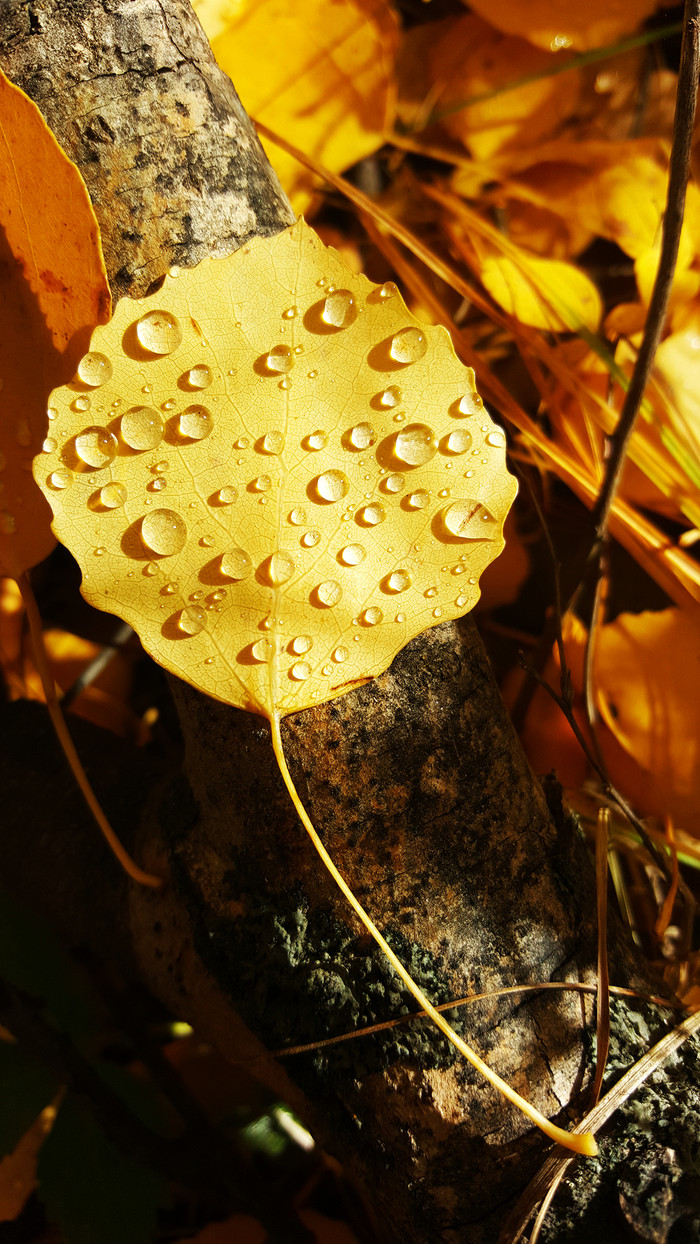
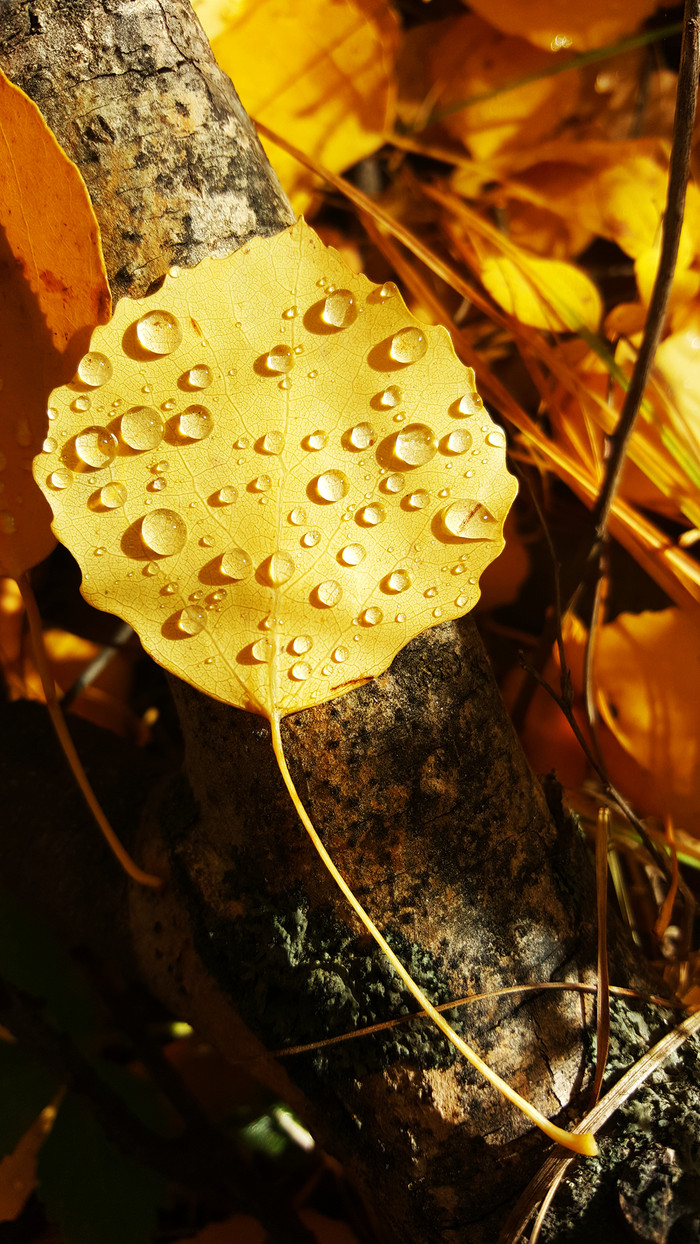

As autumn approaches, it brings with it shorter days and cooler nights. This makes it the perfect time to experiment with warming essential oils, such as cinnamon, clove, ginger, cardamom, and black pepper. One of my favorite combinations contains cassia (cinnamon), clove, and sweet orange essential oils. It just smells like autumn to me! You can diffuse this blend or add a few drops of each oil to an oil burner and let the scent fill your home. You can also mix these oils into a water-based spray. When doing this, I like to add some Moss Agate chips or small tumbled stones to the bottle. Moss Agate is a stone of rebirth and is great to use during seasonal changes.
Autumn also means the start of the school year for those with school-aged children, or for those who recently returned to school as students or teachers. This can usher…
View original post 191 more words


You must be logged in to post a comment.