Praise of the Pumpkin

Crooked Bear Creek Organic Herbs's avatarGood Witches Homestead

The pumpkin is a fall fruit with a rich heritage and flexible flavor that has been used for centuries.

If the tomato is the queen of garden vegetables, the pumpkin may well be the king. In fact, in some parts of China, it is called “Emperor of the garden.” And why not? No plant produces a larger edible fruit, and what other plants can yield tens (or even hundreds) of pounds of healthful, delicious eating from a single seed in only a few months’ time? Pumpkins are known and loved around the world, for their beauty as well as for the gifts they bestow so generously, asking so little in return.

What’s In A Name?

A pumpkin is a winter squash, but not all winter squash are pumpkins. Confused? So is everyone else. The Oxford English Dictionary defines pumpkin as the large fruit of Cucurbita pepo, “egg-shaped or nearly…

View original post 3,989 more words
Who Knew That The Chicken Mushroom Could Have An Endangered Look-Alike?

Greetings!

Within the world of mushroom hunting exists a regionally-dictated and arbitrary list known as the “foolproof four.”  Such an assemblage includes choice edible fungi that are easily identified.

Chicken Of The Woods, with its vivid colors and meaty texture, is one wild mushroom whose name is frequently included in “foolproof four” lists across North America.  Ask any seasoned mushroom hunter, and he or she will tell you that few wild fungi resemble Chicken Of The Woods.

But few doesn’t always mean zero.

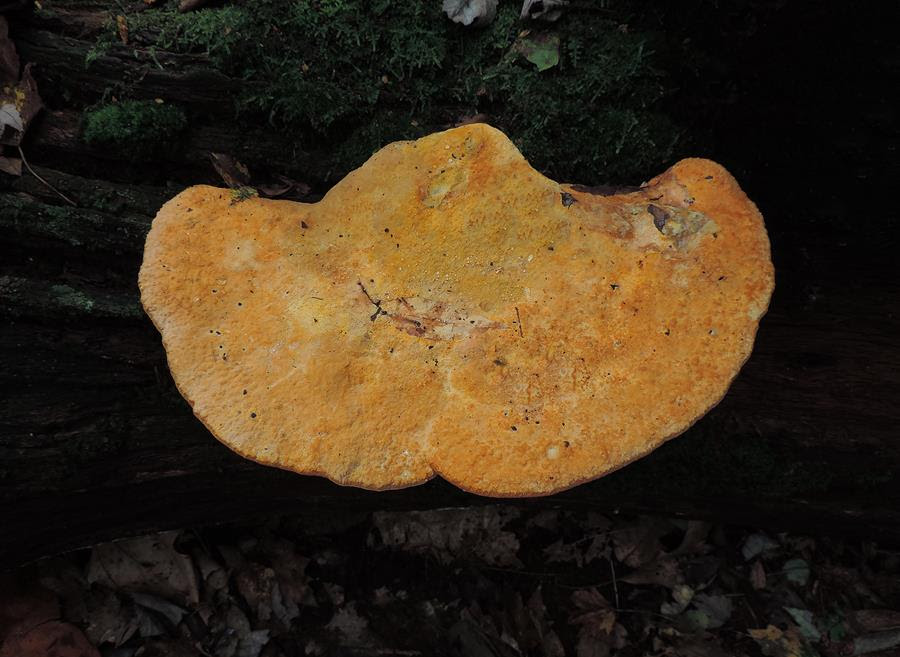
There are mushrooms that, at least from a distance, can certainly resemble Chicken Of The Woods, and featured in the following video (and pictured above) is one such look-alike that’s actually considered to be critically endangered in some forests around the world.

If you’re interested in learning more about this bright orange fungus that can indeed resemble Chicken Of The Woods, check out the brand new video!

And in case you missed it, I released another brand new video last week without sending an accompanying email.

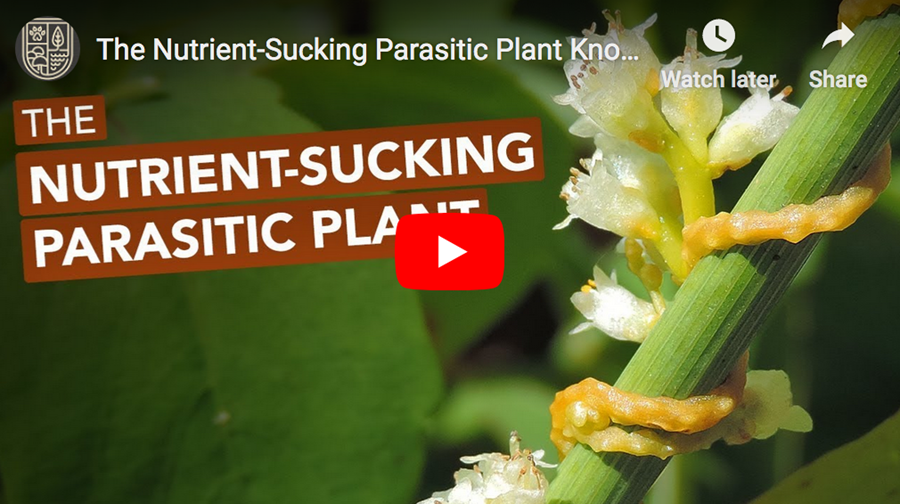
This time, we’re talking about a common plant that undoubtedly lives an unconventional life.  With names like Devil’s Guts, Strangle Weed, and Love Vine, this wild plant is despised by many people and surprisingly cherished by others.

Check out the video if you haven’t seen it already!

Thanks for reading and watching, and as always, thank you for your support!

-Adam Haritan

A Deeper Look At Forest Roots

Black and Blue Cohosh Forest

Sandy loam, a substance created by the breakdown of minerals (rock) mixed with the breakdown of carbon (tree or grass detritus). Sandy loam is what we all want, because it is the best all around substrate for growing the plants we love the most: GoldensealGinsengBlack and Blue CohoshWild YamTwinleafBloodroot, Stonerooot, Mayapple — the entire interconnected clan of powerfully medicinal shade-loving forest roots. My book “Growing At-Risk” gives a chapter on each of these (and other) herbs of the hardwood forest biome. Let’s look a bit deeper into what can be done to bring these entities down home and help them prosper!

Survey the growing area. It may be a woodland with trees, brush and diverse broadleaf species already intact. If this is the case, identify areas overgrown by weedy species or heavily shaded by dead wood or thin-able trees. Such areas have often been left undisturbed for some time, and the soil may be rich and undisturbed. Clear away dead wood and crowded trees, giving access to the forest floor and providing more light to the growing beds. Forest roots like dappled shade, where sunlight moves across the moist and humus-laden soil in amorphous patches.

After all, even shade-loving herbs eat light! Remove existing weedy species and push your spade into the ground. If you have at least 6 inches of good dirt, then it’s a go. Pull the existing mulch away from the planting bed, which should be at

Mayapple Forest

least 4 feet wide, arranged with a path to the side to guide forest creatures and humans away from the planting, not over the top of the sensitive plants. Pile the mulch in the path, and plant the dormant roots in the bed, then rake the mulch back over the top of the bed. Mark the bed with a heavy stake and a label giving the date and the species planted there. Metal tags may be used for this, so that they do not fade or disintegrate with time. You will be oh-so-happy that you marked your planting spot!


Read full article via Ricoh’s Blog: A Deeper Look at Forest Roots

Medicine Chest: Herbal First Aid Kit

Crooked Bear Creek Organic Herbs's avatarCrooked Bear Creek Organic Herbs

Topical Herbal First Aid Kit

As you delve into the world of herbal medicine, at some point or another you take a look at your medicine cabinet and think, “What kinds of natural remedies should I stock in my first aid kit?” Many herbs offer topical applications for a variety of everyday woes, including aches and bruises, cuts and scrapes, bug bites and rashes. And conveniently, you can cultivate or wildcraft most of these herbs or find them easily at natural food stores and online herb shops. Here are a few basics to consider stocking:

Plantain {Plantago major} leaf, a ubiquitous and easily recognizable weed, is readily available in most lawns, woodland path edges, and pavement cracks. You can apply the freshly chewed or mashed leaves directly to bug bites, bee stings, poison ivy, rashes, and splinters to quickly draw out inflammation, irritation, venom, and foreign objects. How…

View original post 1,755 more words

Caring With Calendula

Crooked Bear Creek Organic Herbs's avatarCrooked Bear Creek Organic Herbs

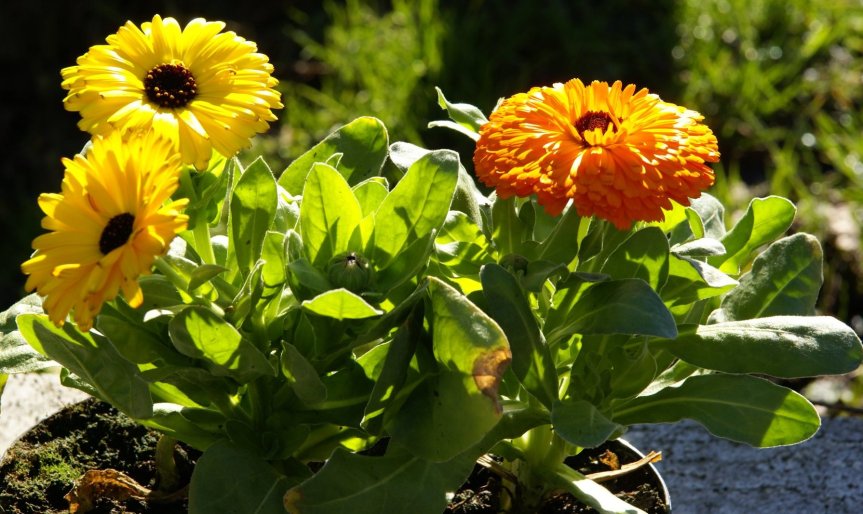
This vibrant orange blossom pops in the garden add a burst of color to cuisine and is a powerhouse in the medicine cabinet. Learn more about this amazing, autumn-loving species.

Brilliantly striking, calendula’s gorgeous yellow and deep-orange blossoms bring a smile to both gardener and herbalist alike. In the fall, you’ll find this plant gracing many doorways, a staple among other autumn harbingers that herald the colder weather to come. But this dazzling ornamental’s long, storied history and powerful medicine make it a must-have for the home.

Sunshine in the Yard

Visually delightful, sun-loving Calendula officinalis is also commonly called marigold, but don’t confuse it with Mexican marigold {Tagetes erecta}, which is another species entirely. A member of the Asteraceae family along with chamomile, dandelion, and Echinacea, calendula is native to southern Europe and parts of the Middle East, but now grows in temperate climates throughout the world…

View original post 1,964 more words

Back to School; Finding Your Herbal Path — Good Witches Homestead

Looking for a career in the burgeoning and rewarding field of herbs? Start by finding the right educational program to suit your individual needs and goals. By some estimates, 70 percent of Americans are not fully satisfied with their current jobs, and this lack of contentment impacts not only the workplace but also our personal […]

via Back to School; Finding Your Herbal Path — Good Witches Homestead

Best Herbal Iced Teas for Summer

Crooked Bear Creek Organic Herbs's avatarGood Witches Homestead

PRO TIPS FOR MAKING ICED TEA:

  • Brew your iced tea a little stronger than you would if you were going to enjoy it hot since the ice will water down the tea infusion and its flavor.
  • Some heat is required for the initial brewing, and this can be done either on the stovetop or as a sun brewed tea. Sun teas take more time but less work to make, requiring three to five hours in direct sunlight to properly infuse.
  • Once your tea has brewed and cooled, store in the fridge for optimal shelf life and consume within a week or less.

Iced tea is one of the joys of summer! Get ready for those hot days with our guide to the best teas to serve iced.

Source: Best Herbal Iced Teas for Summer

5 Herbal Iced Teas for Summer:

  1. Mint Tea
    This delightful blend is made with mints from…

View original post 563 more words

A Joyful Cup — Good Witches Homestead

With our non-stop, busy lives, it’s hard to find a quiet moment to relax and recharge. But even the practice of pouring a cup of tea can bring peace of mind – especially with the right herbs. Whether you take your tea at high noon or prefer a bedtime brew, these garden herbs provide the […]

via A Joyful Cup — Good Witches Homestead

Rosemary ‘to remember’ Infused Oil — Wylde and Green

Rosemary is one of my favorite herbs, and it has a lore stretching back to the ancients, so maybe it is fitting, that more than any other this is the herb of ‘remembrance’. It is such an attractive plant, with long, slender limbs of the darkest green, and delicate, pale blue flowers that the bees […]

via Rosemary ‘to remember’ Infused Oil — Wylde and Green

Plant Medicine: CBD — Good Witches Homestead

Depending on where you live, you may have started to see “CBD” products – capsules, tinctures, salves – pop up in your natural food stores or even at the supermarket. And if you’re “canna-curious,” you may have questions about the health benefits of this non-psychotropic medicinal as well as its different forms and delivery methods. […]

via Plant Medicine: CBD — Good Witches Homestead