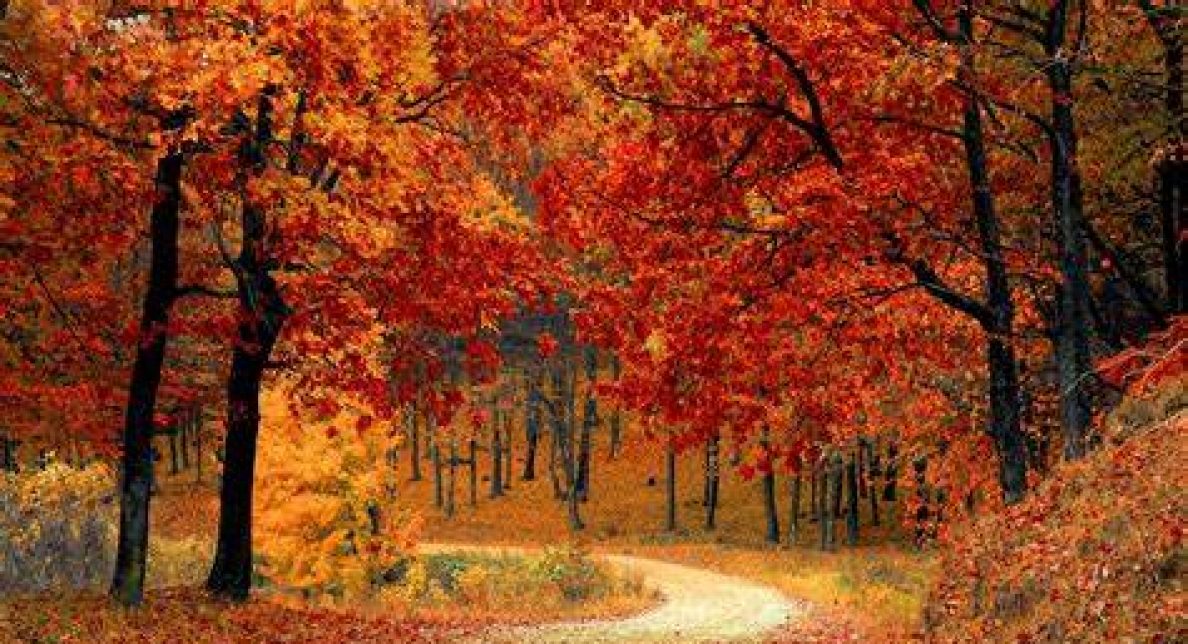
Questions To Ask A Tree

“The wonder is that we can see these trees and not wonder more.”

It’s no surprise that Ralph Waldo Emerson wrote these words.  The famous American writer was intimately connected to trees:  He planted trees, gathered their fruits, and taught his children the value of learning their names.

Emerson spoke the language of trees, yet was still humble enough to acknowledge that every encounter with trees presented a fresh opportunity to engage in wonder.

Who are you?  How old are you?  Why are you here?  Can you say anything about the underlying rocks?  What can you tell us about the broader ecosystem?

In the spirit of Ralph Waldo Emerson, you and I can ask these kinds of questions every time we encounter a tree.  When we ask questions, we engage in wonder.

A basic step we can then take to answer those questions is first to learn the names of trees.  Fortunately, there are many ways to learn.  We can:

  • Study tree ID field guides
  • Learn how to use dichotomous keys
  • Learn all major physical features of trees (buds, bark, leaves, flowers, etc.)
  • Learn habitat characteristics of trees
  • Attend tree ID walks
  • Visit arboretums (where trees are often labeled)
  • Cultivate friendships with local tree enthusiasts
  • Teach others what we have learned

If you’re looking for a carefully curated opportunity to improve your tree identification skills, consider enrolling in Trees In All Seasons.  This online course teaches you how to identify 100 trees in every season.  It’s currently on sale through Monday, December 23.

You can register and learn more about the course here.

Regardless of how you decide to learn, I strongly encourage you to hone your tree identification skills over time.  With learning comes wonder, appreciation, love, and the unraveling of at least some of nature’s mysteries.

—Adam Haritan

Welcoming the Winter Solstice: A Celebration of Light, Magic, and Nature’s Gifts

More Earthworms = Less Lyme Disease?

Cases of tick-borne diseases are on the rise, and people are wondering what to do.

Spray more repellent on clothes?  Wrap more duct tape around socks?  Ingest more Japanese knotweed?  Cull more deer?

How about introducing more earthworms into tick-prone landscapes?

It sounds bizarre, but some ecologists are researching this latter strategy.  According to a few studies, the prevalence of earthworms is associated with fewer ticks in certain ecosystems.

How is this possible?  Why are earthworms associated with fewer ticks?  Could the intentional release of earthworms into wild landscapes work as a viable tick-reduction strategy?

In a brand-new video, I address these fascinating questions.

You can watch the video here.

Thanks for reading and watching!  Do you have any unique tick-reduction strategies?

— Adam Haritan

The tree that built America

“Why do you like trees so much?”

People routinely ask me this question.

It isn’t an easy question to answer, but I try my best to explain what it is about trees that makes me feel good.

I love the food trees offer.  I enjoy the medicine trees provide.  I like the shade trees cast.  And I admire their beauty.

But there’s something else about trees I really appreciate:  their ability to tell stories.

As it turns out, trees tell remarkable stories of peace, tragedy, death, and — believe it or not — democracy.

One notable tale that trees tell quite well is the story of America’s birth as a nation.  While many people associate this story with icons like the Liberty Bell and the Declaration of Independence, the founding of the United States is also strongly connected — both physically and symbolically — to one particular tree.

Tall, majestic, and extremely useful, this tree has been famously labeled “the tree that built America.”

To learn more about this celebrated tree, check out the brand-new video.

Speaking of trees, I was recently interviewed on Harvesting Nature’s Wild Fish and Game Podcast.  In the interview, we discussed how trees can help you become a better hunter and observer of wildlife.

You can listen to the interview here.

Thanks for reading and watching!  Do you have any unique reasons for loving trees?

— Adam Haritan

Garlic: Rooted in Folklore

Ditch the Screen, Embrace the Green, Part II: Taking Action!

Ditch the Screen, Embrace the Green Part I: Five Arguments for the Elimination of Screens

Exploring Wild Ecosystems Is Now Open For Enrollment

Greetings,

I am excited to announce that my newest online course, Exploring Wild Ecosystems, is now open for enrollment!

You can register here.

This course is designed to improve your ecological knowledge by introducing you to fascinating ecosystems — including alvars, barrens, bogs, dunes, fens, glades, savannas, vernal pools, and others!

Learning to recognize ecosystems is an essential step toward understanding how nature works.  When we pay attention to the bigger picture, we see beyond individual components.  We see connections, we see relationships, and we see where humans fit into the story. 

If you want to develop ecological literacy; if you want to be able to read landscapes more effectively; if you want to see how all the components within nature are connected, consider enrolling in Exploring Wild Ecosystems today.

Please note that Exploring Wild Ecosystems is open for one week only — from today until Monday, September 30.  After that, registration will be closed.  Upon registration, you can immediately access all course content and view the lessons at your own pace.

To learn more about the course, check out this video which gives you an overview of what you can expect.

Thanks for supporting nature education!  I hope to see you in there!

—Adam Haritan

Metaphysical Land Healing: A Druid’s Garden Guide

How The Passenger Pigeon Changed North American Forests

In 1857, the Ohio State Legislature famously wrote:

The passenger pigeon needs no protection. Wonderfully prolific, having the vast forests of the North as its breeding grounds, traveling hundreds of miles in search of food, it is here today and elsewhere tomorrow…

Forty-five years later, the last wild passenger pigeon was shot and killed in Indiana.  In 1914, the last member of the species died in captivity at the Cincinnati Zoo.

The passenger pigeon — a species once numbering in the billions — became extinct in a few short decades.

Barring a miracle in the field of de-extinction, no human alive today will ever see a living passenger pigeon that isn’t a biological novelty.  No human alive today will stand in awe as massive flocks of passenger pigeons eclipse the sun and darken the skies.

But whether or not scientists actually figure out how to resurrect the dead, there is something many humans can experience today:  the legacy left behind by the passenger pigeon on the North American landscape.

In a brand-new video, I discuss how the passenger pigeon profoundly altered North American forests.

You can watch the video here.

Thanks for reading and watching, and thanks for your continued support!

— Adam Haritan