A Beltane Blessing: Recipe for Sacred Herbal Offering Blend — The Druid’s Garden

Offerings to the land, spirits, and/or diety are a common stable in many traditions, druidry being no exception. Many opportunities present themselves and having something you carry with you can be built into your regular druid practice (and kept within, say, a crane bag). Some years ago, I wrote about sustainable offerings and the kinds […]

via A Beltane Blessing: Recipe for Sacred Herbal Offering Blend — The Druid’s Garden

CREATING HERB GARDENS WITH CHILDREN

Visit http://www.kidsgardening.org/ for more fun gardening ideas at school or at home. Herbs arouse kids’ curiosity and interest because they thoroughly engage the senses. What better motivator for student investigations than plants that feel cool, smell great, and can turn mere tomatoes into pizza sauce? Their life stories, it turns out, are fascinating too. After all, […]

via Creating Herb Gardens With Children — Crooked Bear Creek Organic Herbs

HERBARIUM PROJECT FOR CHILDREN

An herbarium is a collection of dried plants that botanists use for studying, identifying, and classifying plants. Making an herbarium is a great way for kids and their parents to learn about botany and the plants used in herbalism. An herbarium will help you and your child get to know what plants look like, along with […]

via HERBARIUM PROJECT FOR CHILDREN — Crooked Bear Creek Organic Herbs

FUN ON THE WILD SIDE ~ INTRODUCTION TO HERBS FOR KIDS: WILDCRAFTING

Take a trip outside your door and look down! What do you see? Do you see little plants growing? Perhaps it is one single little dandelion or maybe you have found a whole area of plants growing and thriving. You won’t have to go far to find wild plants! Sometimes wild plants found around homes, […]

via Fun On The Wild Side ~ INTRODUCTION TO HERBS FOR KIDS: WILDCRAFTING — Crooked Bear Creek Organic Herbs

Health Benefits of Barley Water

By Crooked Bear Creek Organics

Crooked Bear Creek Organic Herbs's avatarCrooked Bear Creek Organic Herbs

Barley water is made from barley, which is believed to be one of the oldest grains in the world. Although it is not a staple of most American diets, there is growing evidence that barley and barley-based foods have a variety of health benefits.

In this article, we look at the evidence behind the many health claims about barley, as well as its nutritional value. We also list steps on how to make barley water at home.

Five potential benefits

The health benefits of barley water include:

1. Fiber Boost

Barley water benefits digestive system

Barley water is an excellent source of fiber, which helps to keep the digestive system healthy.

Many of barley’s health benefits come from it being an excellent source of dietary fiber. Fiber is essential for keeping the digestive system healthy, contributing to healthy bowel movements, and helping people avoid problems such as constipation.

Researchers have linked a diet high in dietary…
View original post 1,956 more words

Jewelweed Salve

By Luna Walks Alone

The Witchy Ways of Carnations

by Slavic Witch

Spellbinding Sweet Woodruff Cake: Prosperity Magic — gather

In my tiny wildish garden, nestling at the foot of a tall tree, is sweet woodruff. Her glossy leaves and small white blossoms may be hidden by a profusion of taller plants, but it is her scent that perfumes the air. Fresh, her fragrance (like rain, earth, fresh air and green grass all condensed into…

via Spellbinding Sweet Woodruff Cake: Prosperity Magic — gather

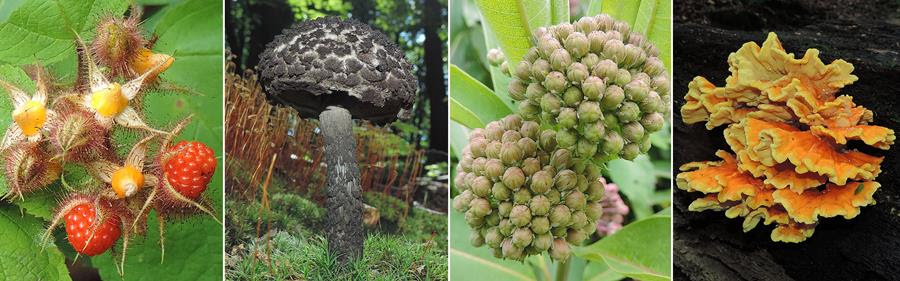
Wild Edible Plant & Mushroom Outing with Sam Thayer & Adam Haritan

Greetings!

I am extremely excited to announce that I will be co-hosting the upcoming Wild Edible Plant & Mushroom Outing with Sam Thayer on Saturday, June 2nd.  Sam is a nationally recognized foraging instructor and the author of three popular foraging books, including The Forager’s HarvestNature’s Garden, and Incredible Wild Edibles.

He will be traveling from his home in Wisconsin to spend the day with us in Western Pennsylvania for the Wild Edible Plant & Mushroom Outing.  This event is an all-day outdoor excursion designed to improve your identification skills by introducing you to a variety of edible species that grow in the early weeks of summer.

During the first part of the event, we will explore Pennsylvania’s beautiful Moraine State Park by hiking a 1.5-mile trail alongside the park’s main feature, Lake Arthur.  While walking, we’ll discuss the plants and mushrooms that inhabit the grassy meadows, lakeside ecosystems, and wooded habitats.

In the afternoon, we’ll head to nearby McConnells Mill State Park to explore 2.5 miles of the North Country Trail and its notable hemlock-lined ravines, sugar maple slopes, and sandstone cliffs… all while discussing the area’s unique plants and mushrooms.

Interested?  Here are more details:

What: Wild Edible Plant & Mushroom Outing with Sam Thayer & Adam Haritan
When: Saturday, June 2nd, 2018
Where: Moraine & McConnells Mill State Parks, Western Pennsylvania
Time: 9:00 AM — 6:00 PM

Please note that in order to maximize your learning experience, space for this event is limited to approximately 25 participants.  Registration with payment in advance is required.

To purchase your ticket, and to learn more about the outing, please visit this link:  Wild Edible Plant & Mushroom Outing

We’d love to see you there!

-Adam Haritan

A Shady Subject…

By Crooked Bear Creek Organics

Crooked Bear Creek Organic Herbs's avatarCrooked Bear Creek Organic Herbs

Question: I have a lot of trees in my yard, which leaves very few sunny spots. Are there any herbs I can grow?

herb farm bucket

Answer: Most herbs love the sun, but some do thrive in woodlands and other shady spaces. Look for herbs that have shallow roots, which help them compete with tree roots that tend to hog water. Here are several of my favorite herbs that thrive on four or fewer hours of sun a day or dappled sunlight.

  • Angelica {Angelica archangelica}
  • Anise Hyssop {Agastache foeniculum}
  • Black cohosh {Actaea racemose}
  • Cardamom {Elettaria cardamomum}
  • Catnip {Nepeta Cataria}
  • Chervil {Anthriscus cerefolium}
  • Chives {Allium schoenoprasum}
  • Cilantro {Coriandum sativum}
  • Evening Primrose {Oenothera biennis}
  • Ginger, wild {Asarum canadense} or Mioga {Zingiber mioga}
  • Goldenseal {Hydrastis canadensis}
  • Lemon balm {Melissa officinalis}

View original post 52 more words