Our Holiday Favorite Spice: Cinnamon

Crooked Bear Creek Organic Herbs's avatarCrooked Bear Creek Organic Herbs

Most of us think of spices as incidental to our diets, but perhaps it’s time to update our appreciation of these flavorful, and powerfully health-promoting, seasonings.

Spices are defined as any “aromatic vegetable substance.” The keyword is a vegetable. Derived from “vegetables” in the form of tree bark {cinnamon}, seed {nutmeg}, or fruit {peppercorns}, spices have potent anticancer, anti-inflammatory and other health-promoting effects that are daily being confirmed by researchers. Indeed, the following spices have been identified b the National Cancer Institute as having cancer-preventive properties: sage, oregano, thyme, rosemary, fennel, turmeric, caraway, anise, coriander, cumin and tarragon. In one comparison of antioxidant power from the Agricultural Research Center, the compounds of oregano rank higher than vitamin E.

Spices also make major contributions to our health by allowing us to reduce the amounts of salt, sugar and fat in our foods.

We’ve chosen cinnamon as a super-spice because of its…

View original post 916 more words

What are Meridians? – Holistic Experiment

by Lucia Santos

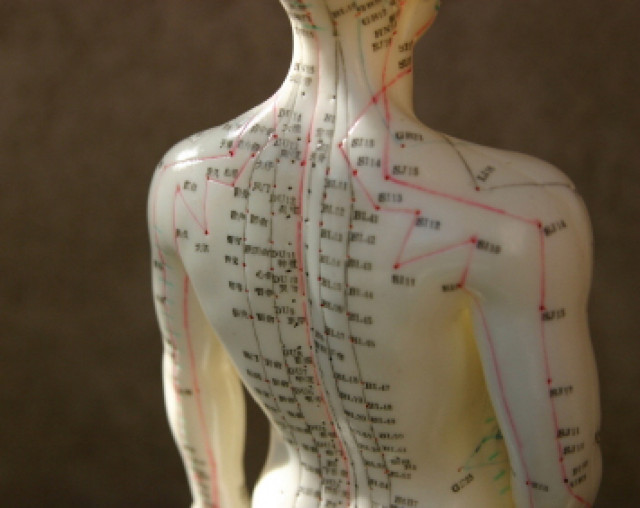
Dubbed as the “primo-vascular system” by the scientists at Seoul National University, Meridians are a channel system that carries and distributes qi (energy) and blood. These Meridians work as conduit for energy to organs, endocrines, and body parts. Acupuncture, acupressure, and Reiki work with these meridians to remove any sort of blockage or imbalance in the body.

There are 12 primary paired meridians and two single mid meridians; six of them are yang (which is male and active) and the rest are yin (which are female and passive). The yang meridians run down the body while the yin meridians flow up the body. Each meridian is related to the elements of Earth, Metal, Fire, Wood or Water, which gives us the tools for treating imbalances that come from a lack or surplus of certain channels.

The most interesting fact is that each meridian is extremely active at a certain time of the day or night. For example, from 3AM to 5AM the qi (energy) is flowing through the Lung Meridian and later on enters the Large Intestine Meridian from 5-7Am, and then the Stomach Meridian from 7-9AM. The meridian cycle is continuous as the qi or energy flows throughout the body. If you’re curious about finding out more about the Qi Current, check out this interesting post.

Also, since sickness can happen when there’s a blockage of energy or when the ying and yang balance (also known as the male and female balance) in our bodies is disturbed. These meridians can show how an imbalance in an organ can cause symptoms in a completely different area of the body.

The twelve meridians are named according to their corresponding organs, these include:

  • Three arm yin meridians which focuses on the lungs, pericardium, and heart
  • Three arm yang meridians that focuses on the large intestine, triple burner, and small intestine.
  • Three leg yang meridians which focuses on the stomach, gallbladder, and the bladder
  • Three leg yin meridians that focuses on the spleen, liver, and kidney.

These twelve meridians make up the majority of the Meridian system and are known as the regular or principal channel. As mentioned before, there are various methods that will help balance the body such as Reiki, Acupuncture, Acupressure, and Yoga.

Meridians show that the human body is connected to the elements, the energetic structure and flow of energy at a cellular and physical level. It’s also said that Earth has energetic pathways or ley lines that are similar to the meridians in our bodies.

Source: What are Meridians? – Holistic Experiment

Grounding With The Elements ~ Elementenchanter

SSRI antidepressants increase risk of intracranial hemorrhage « Jon Rappoport’s Blog

From healthline.com: “Intracranial hemorrhage (ICH) refers to acute bleeding inside your skull or brain. It’s a life-threatening emergency. You should go to the emergency room right away or call 911 if you think you or someone you know is experiencing ICH.”

By Jon Rappoport

The public has learned about the increased risk of suicide and violent behavior (including murder) stemming from the use of SSRI antidepressants. Now there is more:

Psychiatric News reports (4/7/17): “A study published in February in JAMA Neurology has found that patients taking antidepressants that are strong inhibitors of serotonin reuptake (SSRIs) may be at an increased risk for intracranial hemorrhage, particularly during the first month of use…”

“The results showed that compared with patients taking [the older] tricyclic antidepressants, patients being treated with SSRIs had a 17 percent increased risk of experiencing an intracranial hemorrhage. The risk was highest during the first 30 days the patients were taking the medications.”

SSRIs include: Celexa; Prozac; Paxil; Zoloft; Lexapro; Luvox.

Here are quotes from other Psychiatric News articles about SSRI use and bleeding:

“Physicians prescribing selective serotonin-reuptake inhibitors (SSRIs) should make patients aware of the possibility of gastrointestinal bleeding, especially if they have pre-existing risk factors or are taking other drugs that increase risk, said a University of Pennsylvania psychiatrist.”

From a January 2014 study in the American Journal of Psychiatry—“Short-term SSRI use—even as little as 7 days—elevated the risk of upper gastrointestinal bleeding, especially in male patients. Just as with NSAIDs and aspirin, physicians should carefully monitor for this side effect.”

Note: Suddenly withdrawing from these drugs can be very dangerous. Psychiatrist Peter Breggin publishes this warning: “Most psychiatric drugs can cause withdrawal reactions, sometimes including life-threatening emotional and physical withdrawal problems. In short, it is not only dangerous to start taking psychiatric drugs, it can also be dangerous to stop them. Withdrawal from psychiatric drugs should be done carefully under experienced clinical supervision. Methods for safely withdrawing from psychiatric drugs are discussed in Dr. Breggin’s new book, Psychiatric Drug Withdrawal: A Guide for Prescribers, Therapists, Patients and Their Families.”

rug Withdrawal: A Guide for Prescribers, Therapists, Patients and Their Families.”

Source: SSRI antidepressants increase risk of intracranial hemorrhage « Jon Rappoport’s Blog

Reiki and Palliative Care – Holistic Experiment

By Lucia Santos

Palliative care is a way to improve the quality of life of patients and their families are facing the problems that are often associated with life-threatening illnesses. It provides relief from pain and other distressing symptoms, affirms life and regards dying as a normal process, integrates psychological and spiritual aspects of patient care, and offers a support system to help the patient and their family.

Palliative Care is not the same as hospice, it focuses more broadly on improving life and providing comfort to people of all ages with serious, chronic, and life-threatening illnesses. It can start as soon as the patient is diagnosed with a serious illness, at the same time they continue to pursue a cure. Some patients can recover and move out of palliate care while others can move in and out of palliative care as the need arises.

It’s a holistic alternative that attends to the challenges that the illness poses in every aspect of life. It also extends to family members as well as caregivers. It can help educate family members about the patient’s illness, treatment, and medication; provide care for caregivers; help with transportation issues, meals, and shopping among other things.

Reiki helps assists those who are passing away and preparing to leave the physical plane. It can also be used to help those grieving the loss of loved ones.

It is essential that all Reiki practitioners to examine their beliefs and conduct the research they need to provide evidence for themselves either way so they can be a clear channel. This healing method can help resolve any unfinished business and find resolutions with regard to previous conflict. The sessions can help the recipient have a  peaceful transition.

Reiki and Palliative Care on Animals

Our pets are our family; they are so loyal and take pleasure in helping and bringing joy into our lives. When an animal is dying, Reiki can be used to help not only the animal, but also the family transition with grace and love, honoring the memory and time they had with their cherished pet.

With Reiki, an animal’s symptoms can be eased while providing emotional support. Reiki can help to extend an animal’s life or help them to pass away in peace.

The family may notice that performing Reiki on their beloved animals helps to bring them closet together and communicate more clearly. Reiki can help with any unresolved energy and help heal and balance. By resolving emotional or mental imbalances and releasing any energy that’s not serving its highest good, the animal is free to transition with peace and love.

It’s so important that the family should get Reiki along with their pet. These sessions can help the family be present in order to enjoy the final days with their animals as well as to help them have clarity when making a decision regarding with the welfare of their pet. Helping the family through the grief provides relief for the animal, who might be trying to hold on and prolong their suffering in an effort to help ease the family’s pain.

Source: Reiki and Palliative Care – Holistic Experiment

Scandal: MRI brain-imaging completely unreliable ‹ Jon Rappoport’s Blog ‹

Fake news on a grand scale.

By Jon Rappoport

Over the years, I’ve exposed a number of medical diagnostic tests. For example, the antibody test was once taken as a sign of good health when it registered positive, but then it was turned upside down—a positive result was read as a signal of illness.

Now we have the vaunted MRI brain-imaging system.

From sciencealert.com (7/6/16): “There could be a very serious problem with the past 15 years of research into human brain activity, with a new study suggesting that a bug in fMRI software could invalidate the results of some 40,000 papers.”

“That’s massive, because functional magnetic resonance imaging (fMRI) is one of the best tools we have to measure brain activity, and if it’s flawed, it means all those conclusions about what our brains look like during things like exercise, gaming, love, and drug addiction are wrong.”

“It’s fascinating stuff, but the fact is that when scientists are interpreting data from an fMRI machine, they’re not looking at the actual brain. As Richard Chirgwin reports for The Register, what they’re looking at is an image of the brain divided into tiny ‘voxels’, then interpreted by a computer program.”

“’Software, rather than humans … scans the voxels looking for clusters’, says Chirgwin. ‘When you see a claim that “Scientists know when you’re about to move an arm: these images prove it,” they’re interpreting what they’re told by the statistical software’.”

“To test how good this software actually is, Eklund and his team gathered resting-state fMRI data from 499 healthy people sourced from databases around the world, split them up into groups of 20, and measured them against each other to get 3 million random comparisons.”

“They tested the three most popular fMRI software packages for fMRI analysis – SPM, FSL, and AFNI – and while they shouldn’t have found much difference across the groups, the software resulted in false-positive rates of up to 70 percent.”

“And that’s a problem, because as Kate Lunau at Motherboard points out, not only did the team expect to see an average false positive rate of just 5 percent, it also suggests that some results were so inaccurate, they could be indicating brain activity where there was none.”

“’These results question the validity of some 40,000 fMRI studies and may have a large impact on the interpretation of neuroimaging results’, the team writes in PNAS [Proceedings of the National Academy of Sciences].”

“The bad news here is that one of the bugs the team identified has been in the system for the past 15 years, which explains why so many papers could now be affected.”

“The bug was corrected in May 2015, at the time the researchers started writing up their paper, but the fact that it remained undetected for over a decade shows just how easy it was for something like this to happen, because researchers just haven’t had reliable methods for validating fMRI results.”

40,000 scientific papers invalidated. And from what I gather, not everyone is sure all the problems with MRI have been corrected.

Think about the bloviating—“We now know what the brain is doing when people are running and sleeping and eating…” No reason to have believed any of this.

And then there is Obama’s so called Brain Initiative, a program kicked off and funded after the Sandy Hook School catastrophe. At least some of the scientific work has been relying on MRI imagining. How much of that work needs to be thrown out?

In case you think invalidating 40,000 research papers isn’t a gigantic scandal, consider how many times these worthless papers have been cited as evidence in other studies. The ripple effect creates a tsunami of lies.

And for each one of those lies, there has been a researcher who, quite sure of himself and his reputation, made statements to the press and colleagues and students, promoting his findings.

Fake news? Now here is awesome fake news.

Source: Scandal: MRI brain-imaging completely unreliable ‹ Jon Rappoport’s Blog ‹ Reader — WordPress.com


Healing & Balancing Your Chakras – Good Witches Homestead

As a herbalist, I prescribe herbal potions and essential oils to my clients as a complement to our healing sessions and an alternative to medication. Over the years, I’ve watched herbs help treat everything from PTSD to depression, anxiety, chronic pain, migraines, obesity, rage, and more.

After about five years of experience with prescribing herbs, I started learning about medicinal-grade essential oils—what a game changer. I now use essential oils in every acupuncture session, and regularly prescribe them for home care. They’re like topical herbs—distilled from the same plants I’ve been studying and prescribing as herbal remedy tinctures for years. The skin is our largest organ, and our body literally ingests much of what we douse it with. Essential oils work with our fascia (which lies just beneath the skin), so the healing properties of the plants are transmitted throughout our entire body. It’s such a sensual, luxurious way to ingest medicine.

Essential oils are particularly great for treating common chakra imbalances—more below, along with the most effective oils that I frequently rely on:

FIRST CHAKRA: ROOT — “I AM” — RED

Our first chakra is our most primal energy vortex of psychic information. It’s the foundation of our chakra system. This red spinning disc resides at the base of our spine and manages our most basic needs: safety, security, trust, fear, pooping, survival, procreation. Located on our lower backs, it governs this area, the large intestine, urinary bladder, and kidneys. […]

Read about all your Chakras at the Source: Healing & Balancing Your Chakras – Good Witches Homestead