Do Plants Scream When Stressed? A Brand New Study Has Some Answers

Noises associated with plants aren’t unfamiliar to those of us who spend time with plants.  We hear plants in the wind, in the rain, and even when fruit capsules explode to release seeds.

Generally, plant noises are considered to be the by-products of mechanical processes, rather than the ways in which plants intentionally communicate with other organisms.

In fact, it almost seems too esoteric to suggest that plants communicate using sounds, yet new research offers insights into the unique ways in which plants may do just that.

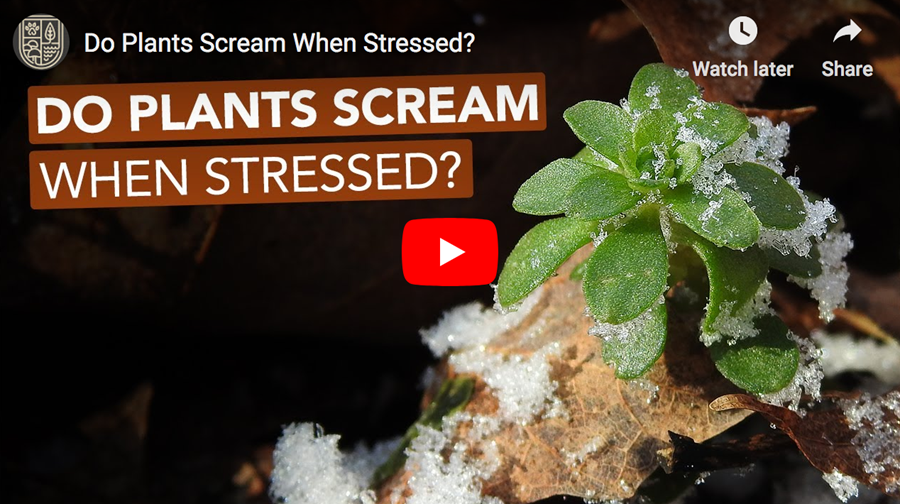
Interestingly, many news outlets have picked up on this story and are now reporting on the ability of plants to “scream” in stressful situations.  These situations include drought-like conditions and the physical cutting of stems.

But is that what plants are really doing?  “Screaming” when cut or deprived of water?

That’s the topic of this week’s video, so if you’re unfamiliar with the ability of plants to emit informative airborne sounds in stressful situations, check it out!

Mushrooms utilize all kinds of organic material for sustenance… including the stems and leaves of moss.  If you’re unfamiliar with this particular moss-loving fungus, check out the recent Instagram post!

Thanks for reading and watching, and as always, thank you for your continued support.

-Adam Haritan

KidsGardening Program Spotlight – The Klamath Food Forest

Crooked Bear Creek Organic Herbs's avatarCrooked Bear Creek Organic Herbs

This Gro More Good Grassroots Grant winner created a food forest to help Klamath youth learn about local food, revive traditional sustainable food, and more

Source: KidsGardening Program Spotlight – The Klamath Food Forest

One of the 2019 Gro More Good Grassroots Grant Winners, The Family Resource Center of the Redwoods, is partnering with the Community Food Council for Del Norte and Tribal Lands (DNATL) to help create new and sustainable sources of food for members of their community. Located in the far northwest corner of California, they serve rural areas that are isolated and do not have grocery stores readily available. One of the projects their Grassroots Grant money assisted with was the Au-Minot ‘we-nue-nep-ueh (Klamath Food Forest) at Margaret Keating Elementary School.

The Klamath Food Forest is one of four food forest sites developed in the region. This particular program is located on an elementary school campus…

View original post 306 more words

A Druid’s Guide to Homestead Bird Flocks and Flock Happiness

Dana's avatarThe Druid's Garden

On the Druid’s Garden homestead, we have many feathered friends. I think a lot of people see birds just as livestock, but here, we see them a little differently. Thus, I wanted to create a short guide for people who were thinking about cultivating a relationship with a backyard flock of birds but they weren’t sure what kind of birds they might want!  Of course, this is my own druid perspective on homestead bird flocks, which might be a bit different than what you’ll find on more general sites.   In this guide, I’ll talk about a variety of backyard flock breeds, how they might help your garden and homestead, challenges, temperament, and more. I will also note that I haven’t raised birds for meat, so I won’t talk about that much in this guide. I’ll cover four common backyard flock birds: chickens, ducks, geese, and guinea fowl.

Entering Into Relationship

View original post 4,195 more words

Ancestral Herbalism and Samhain: Working Deeply with Rosemary

Dana's avatarThe Druid's Garden

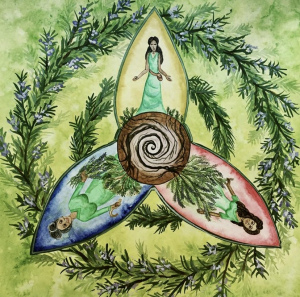
Rosemary from the Plant Spirit Oracle Rosemary Card from the Plant Spirit Oracle

As we quickly approach Samhain, it is a useful practice to spend some time with rosemary (Rosmarinus officinalis) and build here into your Samhain practices. In this post, we look into some of the magic and medicine of Rosemary, and I share a number of ancestor and Samhain-focused practices that you can use with Rosemary.

An Ancestral Ally of Humans: History, Medicine, Magic

Before we get into what you can make or do with rosemary, let’s spend some time exploring and understanding this ancient herb. Rosemary has been with humanity almost as long as we have written records. Native to the mediterranean region, rosemary was first found referenced on cuineform tablets from Ancient Egypt that are from 5000 BCE–thus, humanity has at least an 8000 year old relationship with this herb (but I suspect it is much longer than our written history!)…

View original post 1,368 more words

Food as Medicine: Black Chokeberry (Aronia melanocarpa, Rosaceae)

Crooked Bear Creek Organic Herbs's avatarCrooked Bear Creek Organic Herbs

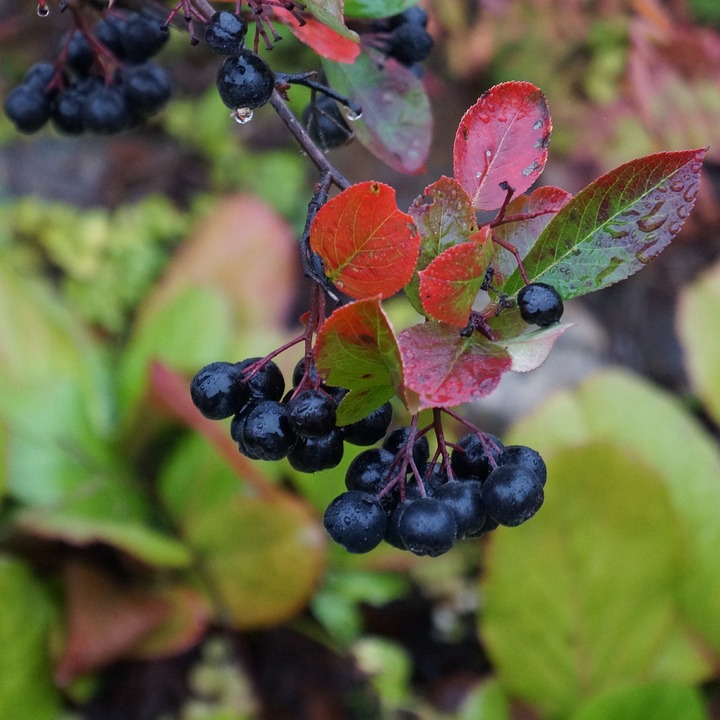
Black chokeberry (Aronia melanocarpa), also known as aronia berry, is a member of the economically important rose (Rosaceae) family, which includes other pome-producing plants like apple (Malus spp.), pear (Pyrus spp.), and quince (Cydonia oblonga). A pome is a fruit produced by the Malinae subtribe within Rosaceae. The genus Aronia includes two species of shrubs that are both native to North America: A. melanocarpa (black chokeberry) and A. arbutifolia (red chokeberry).1 Aronia melanocarpa grows to a height of 4-8 feet (1.2-2.4 meters) and is a cold-hardy, deciduous, thicket-forming shrub that prefers full sun and woodland edges.2,3 Black chokeberry’s natural range extends from the northeastern part of North America and the Great Lakes region to the Appalachian Mountains.1

In spring, black chokeberry shrubs produce clusters of white-to-pink flowers that are 2-2.5 inches long and each form 10-15 pea-sized, purple-black pomes after…

View original post 3,344 more words

Create Your Own Magical Tea Blends – Witch Way Magazine

Crooked Bear Creek Organic Herbs's avatarGood Witches Homestead

by Emma Kathryn

Published in Witch Way Magazine’s May issue

Herbal teas are a fantastic way to bring your magical practice into your everyday life. For me, every aspect of making tea, from the sourcing of ingredients (foraging is my thing!) to the blending of them, is part of that witching process, and I use my magical knowledge as well as my mundane skills to infuse them with, well, magic!

Teas can be drunk for a variety of reasons, least of all because you like them. There are blends that help with the mundane as well as the magical, teas that revive the soul and others the body. And who doesn’t love tea anyway!

A note on teas and blends. When making a single cup of tea, a teaspoon of herb matter is all that is required, which is fine when using a single ingredient but does make it a…

View original post 947 more words

A Culinary Herbal…

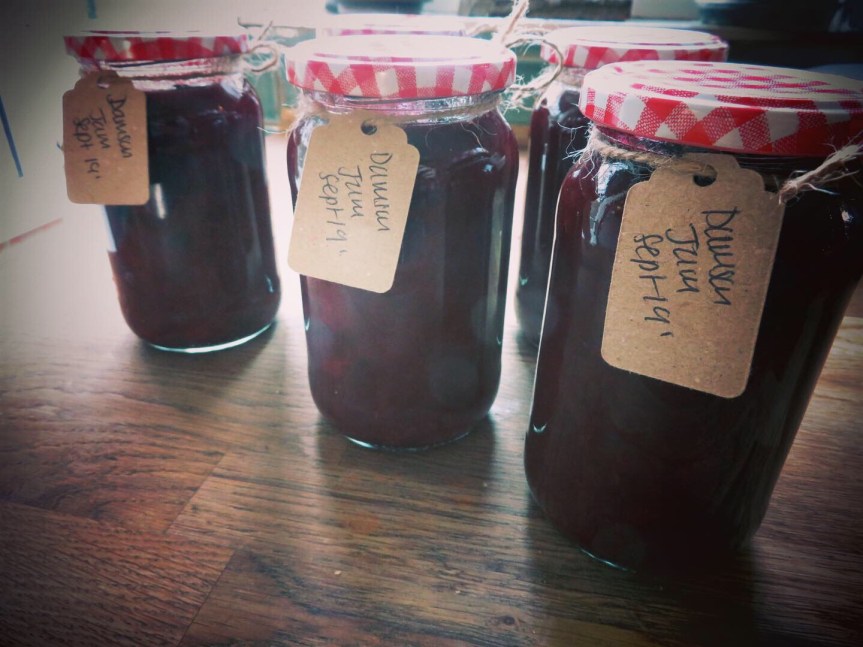
Damson Jam

Valerian Root Benefits: How to Use Nature’s Wonder Root

Crooked Bear Creek Organic Herbs's avatarCrooked Bear Creek Organic Herbs

When Hippocrates had a headache, it’s possible he enjoyed a nice steaming cup of valerian root tea. The ancient Greek physician was one of the first to describe the therapeutic benefits of valerian root.

Since the early days in Greece and Rome, people sought the benefits of valerian for everything from head discomfort to heart health, nervousness, feminine issues, and the blues. Valerian brings some unique mythological history as well. People once used it to keep away troublesome elves — stay away Dobby! — and folklore experts believe it helped the Pied Piper lure rats away from town.

What Is Valerian?

Garden valerian (Valeriana officinalis) is also known as garden heliotrope, Tagar (in Ayurvedic medicine), cut-finger, and all-heal — funny names for a potent plant! The species originally grew in Asia and Europe, but it now grows throughout North America, as well. Its scientific name derives from the Latin…

View original post 1,544 more words

Thornapple, Gender and Ritual Application | Coby Michael Ward

Crooked Bear Creek Organic Herbs's avatarGood Witches Homestead

Cultivating the Devil’s Apple aka Thornapple

I spent part of this afternoon harvesting my Thornapple plants.  One of them grew to be close to five feet high!  The Thornapple I grew this year is a Datura stramonium var. tatula; similar to the common Datura stramonium only it is less shrubby and has lavender-purple flowers.  I harvested leaves, seedpods, and stems.  I have a few workshops coming up over Samhain season on different aspects of the Poison Path and like to have the actual plants on hand for anyone interested in working with them.  Part of my bargain with said plants is to make them available to others and teach people how to use them.  All parts of the plant are going to be put to various uses.  The leaves are dried and used for spirit offerings, intense personal cleansing and as spell ingredients.  The stems, when dried become hard…

View original post 1,105 more words