It’s A Lavender Season! Lavender Association of Colorado

Crooked Bear Creek Organic Herbs's avatarCrooked Bear Creek Organic Herbs

The cultivar of the Month

Lavender coloradoJune 2020 Cultivar of the Month
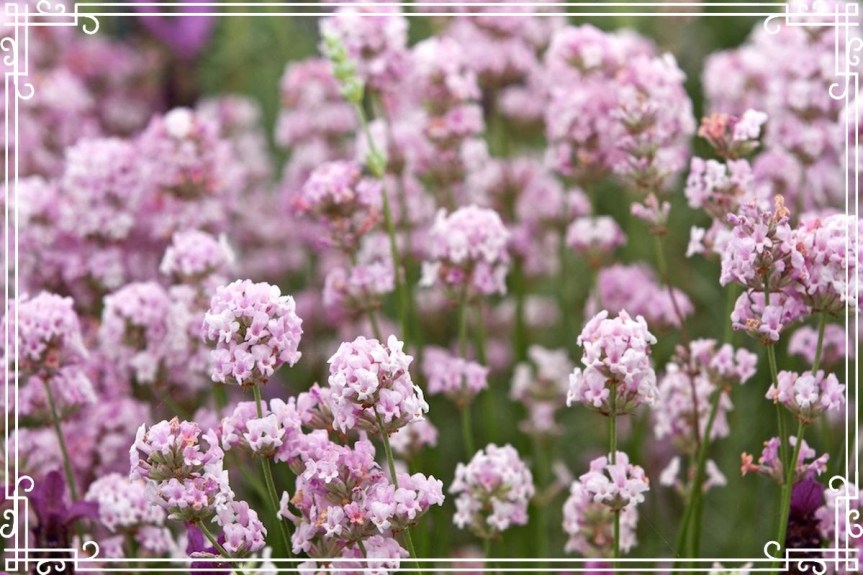
Lavandula angustifolia ‘Hidcote Pink’

Hidcote Pink is another versatile lavender grown in Colorado.  It is an excellent culinary variety.  It produces an exceptionally sweet oil that several growers use in conjunction with other lavender essential oils to make unique blends.  Planted with purple lavenders, the pink flowers make the purple flowers “pop” in the landscape.
Hidcote Pink is not really good for crafting as in drying it loses its pink color and dries to a brown.
Hidcote Pink plants are 30-40″ tall.  Stems are in the 6-10″ range.  Spacing the plants 36″ apart should allow them to remain separate over the years.
Hidcote Pink was developed by Major Lawrence Johnston in Gloucester, England, and became available around 1958.  It is hardy in zones 5-9.  It blooms once in the spring.

lavender dilution

Dilution The Key To Using Essential Oils Safely

We…

View original post 739 more words

Introduction to Sacred Gardening: Connection, Reciprocity, and Honoring Life — The Druid’s Garden

Walking into a sacred garden is like walking into another world, one full of joy, happiness, and wholeness. Fruit hanging from happy branches, plants coming up from all angles inviting a nibble, a taste, a touch. The pathways spiral and you get lost, looking at flowers, breathing in the fresh air, and tasting the tart […]

via Introduction to Sacred Gardening: Connection, Reciprocity, and Honoring Life — The Druid’s Garden

A Safe Bug Spray That Really Works: Natural Mosquito Repellent

Crooked Bear Creek Organic Herbs's avatarCrooked Bear Creek Organic Herbs

Summer is prime time for enjoying the outdoors. But more often than not, there’s a dark cloud hanging over that backyard barbecue: bugs – and especially mosquitoes. These blood-seeking fun busters expertly follow their senses right to your skin. But if you can repel them with one quick application of bug spray, then what’s the problem? It turns out that many old-fashioned bug sprays contain neurotoxic ingredients that may increase cancer risk. But, worry not – there are plenty of nontoxic essential oil blends that repel the bugs, without the bite to your health.

Why Should We Use Natural Mosquito Repellent?

Mosquito bites are not just annoying. They can also transmit diseases such as malaria, Zika, and dengue fever, among others. So, it’s important to guard against them. Mosquitoes are guided by their sense of smell, which is equipped with hundreds of odor-receptor proteins, and they’re attracted to the carbon dioxide we…

View original post 2,121 more words

Wild Foragers, Violets, Spring Enchantments

Crooked Bear Creek Organic Herbs's avatarGood Witches Homestead

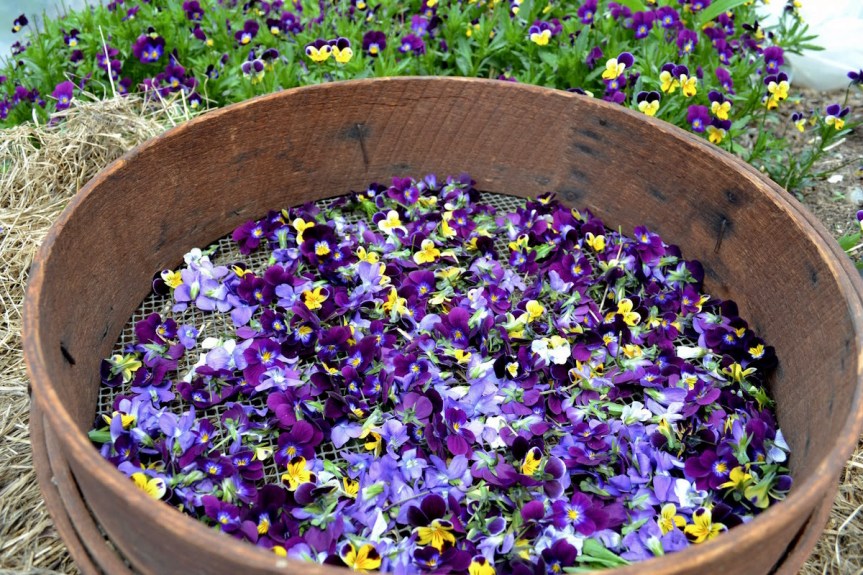
Violet has been on our minds this spring as we see her pretty little flowers blooming here in southeastern Utah. Violets are one of the earliest wild plants to appear in the season, and we are reminded of her beauty as well as her long history of culinary and herbal use that may have us deciding to seize spring for all that it is!

Violet, being rich in vitamin C, indeed has our attention for a supportive immune boost! 

We love to harvest the fresh leaves and flowers to incorporate into springtime salads, juices, and refreshing smoothies. Violet, of course, also makes a really lovely tea, vinegar, or syrup, not only for the vitamin C content but also for soothing respiratory symptoms. 
Violet has a cooling and moistening energy, and its demulcent and expectorant properties are soothing to a sore throat, dry cough, and other respiratory irritation.
The recipe for…

View original post 449 more words

THE COURAGE TO TRUST YOUR INNER WISDOM — Good Witches Homestead

NEW CRESCENT MOON IN ARIES We have passed through the Dark Moon in Aries into the New Crescent Moon today. We passed through the Spring Equinox last week, which is the official start of the lunar year, and have moved into the New Moon in Aries which is the official start to the lunar year. […]

via THE COURAGE TO TRUST YOUR INNER WISDOM — Good Witches Homestead

Lemongrass: A Resourceful Herb and Essential Oil

Crooked Bear Creek Organic Herbs's avatarCrooked Bear Creek Organic Herbs

Lemongrass {Cymbopogon citratus}

Also, Known As:

  • Citroengrass
  • Fever Grass
  • Lemongrass
  • Sereh
  • Te Limon
  • Zacate Limon

Cymbopogon citratus, generally known as lemongrass, is a resourceful herb, a natural source of aroma, mosquito repellent as well as a plant that is widely used to decorate gardens. Lemongrass belongs to the grass or Poaceae family (formerly known as Gramineae) and has several functions – an effective herb, aromatic or container garden, or as a medication for various conditions. One may find a number of the variety of lemongrass and each of them possessing dissimilar chemical compositions. However, citral is the major chemical ingredient found in all varieties of essential oils of lemongrass.

Lemongrass is native to tropical regions and grows in clusters. The plant has globular stems that eventually become leaf blades. This herb belongs to the herb family which also includes citronella and palmarosa and possesses a lemon essence. When the leaves of the herb are compressed…

View original post 2,240 more words

Where And How To Grow An Herbal Groundcover

The urge to muck about and create plant habitat goes hand-in-hand with the urge to grow more and more species of plants that need individualized growing conditions.   As your species list increases, you will probably feel motivated to prepare specific plant habitats.  After all, making your plants happy is a way to spread a groundcover of happiness into yourself.

RICHO CECH

Bugle (Ajuga reptans)

Living groundcovers can be of great benefit to the garden and the gardener.  The best ones are evergreen or at least remain trim and green for most of the year: pleasing to the eye, softening the edges of the landscape around pathways, beds and walls; discouraging weeds; preventing erosion; conserving water and nutrients, these are the many attributes of the groundcover.   Classic examples are: the Roman Chamomile lawn that dresses rich soils in full sun; Corsican Mint or Creeping Thyme grown on rocks,  over steps or between stepping stones;  Rupturewort grown over rock, gravel and scree; European Speedwell or Brahmi growing in muck at the margins of the pond;  Bugle or Self-Heal grown in loose mulch under trees in acidic woodlands or in moist, open meadows.  An added benefit is that each of these and other groundcovers also has medicinal use, uses as diverse as their preferred environmental niche, uses as diverse as the gardeners that choose to live with these groundcover allies.  This article will give an overview of herbal groundcovers and how to get them established, including a few notes on their medicinal uses and preferred habitats.

Site preparation and planting.  A good groundcover can be achieved only if the slate is wiped clean.  A monotypic stand cannot be achieved by sprinkling seeds into an existing lawn, grasses or weeds.  These must be removed prior to the planting of the groundcover.  Various options exist, but the general plan is to grub out the weeds and prepare a new seedbed, either by working the existing ground or by bringing in soil, sand, compost, pumice, coir and/or peat.  Although gardeners sometimes have success with direct-seeding groundcovers into a prepared seedbed, the reality is that more control gives more results.  Most groundcover species have very small, sometimes dust-like seeds, and in most cases it works better to start the plants indoors and transplant young bare-rooted or potted groundcover plants into the receptive soil.  A six-inch spacing is usually very effective–the groundcover will root in, spread and interlock.

View original post at:  Richo’s Blog ~ Where and How to Grow an Herbal Groundcover

Love It Up With Herbal Aphrodisiacs Recipes

Crooked Bear Creek Organic Herbs's avatarGood Witches Homestead

Sex doesn’t have to be all business and no fun! If you find yourself slipping under the bedsheets for the primary purpose of procreation or if you’re struggling to express your sexuality, if you feel something in your sexual life is off or maybe you just want to rev up an already pleasurable experience—let’s talk about it. Let’s talk about sex, baby, and how herbs can help! 

Get ready to discover and celebrate the wonders of sex! You can use herbal allies to enhance sexual function while enjoying heightened expression and pleasurable intimacy. Through this 3-part intensive on herbal aphrodisiacs and sexual health, you’ll learn about the physiological processes that play into your sexual function and gain the understanding of an entirely new approach to using classic botanicals to support and jazz up your sex life. We’re pulling our favorite hot herbs into an irresistible collection of aphrodisiac recipes…

View original post 435 more words

Primrose is Considered the Flower of February.

Crooked Bear Creek Organic Herbs's avatarGood Witches Homestead

COMMON NAME:  primrose
GENUS:  Primula
SPECIES, HYBRIDS, CULTIVARS:
P. denticulata-lavender, purple, or white flowers; grows to 12 inches. P. japonica ‘Millar Crimson’-flowers whorled around the 24-inch stem; blooms May-June. P. polyanthus-best known; colors are red, pink, blue, gold, and white, all with small yellow eyes.
FAMILY:  Primulaceae
BLOOMS:  spring
TYPE:  perennial
DESCRIPTION:  Primroses form an attractive rosette of crinkly, light green leaves. The flowers are generally brightly colored and occur in tight bundles on individual stems above the leaves.
CULTIVATION:  Needing partial shade, primroses thrive in well-drained, rich soil. They are indigenous to cool, moist meadows and woodland environments  Duplicating these conditions as closely as possible will create the best growing conditions for primroses. The soil should not be allowed to dry completely. To retain vigorously blooming plants, divide clumps every four to five years. Seeds should be sown in midsummer for bloom the following spring.

Primrose is…

View original post 2,309 more words

Raspberry, Herb of the Year and Herb of the Month: History and Lore

The Herb Society of America's avatarThe Herb Society of America Blog

HOM Brambles

By Pat Greathead

Raspberry, Rubus spp., is the International Herb Association’s Herb of the YearTM for 2020 and The Herb Society of America’s Herb of the Month for January (Brambles). The genus Rubus includes both the red and black raspberry and the blackberry as well as almost 700 other species. Rubus is in the Rosacea family.

My Wisconsin Unit of The Herb Society each year examines the IHA Herb of the Year.TM In this blog post, I have mainly focused on red raspberry leaf and have used information from many websites in writing this article. I hope you enjoy reading it as this is the year of the raspberry!

Raspberry leaves are among the most pleasant tasting of all the herbal remedies, with a taste much like black tea, without the caffeine. Raspberries are native to Asia and arrived in North America via prehistoric people, with the first…

View original post 1,425 more words