
Fall Flora & Fungi Outing with Adam Haritan ~ New event scheduled!

Greetings!

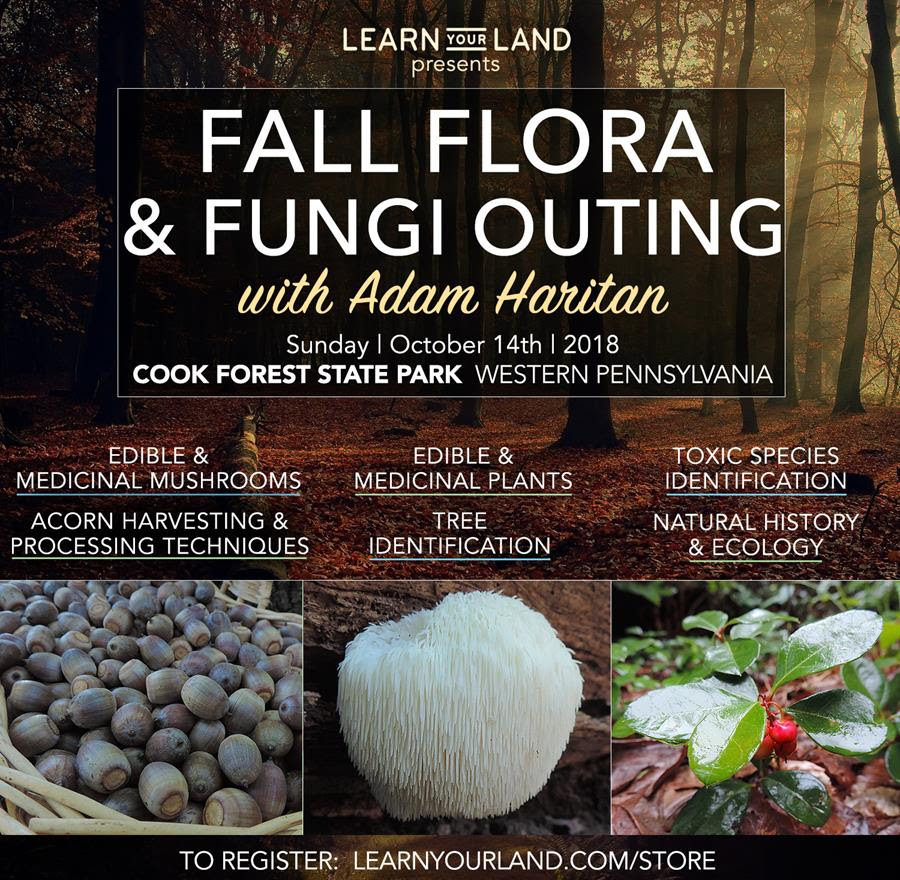
I am excited to announce that I will be leading the Fall Flora & Fungi Outing on Sunday, October 14th at Cook Forest State Park in Western Pennsylvania.  And of course, I’d love for you to join us!

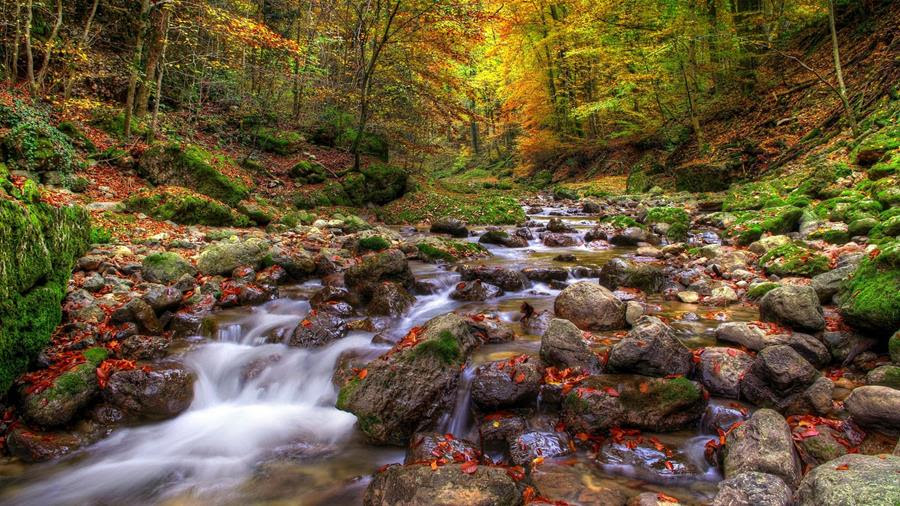
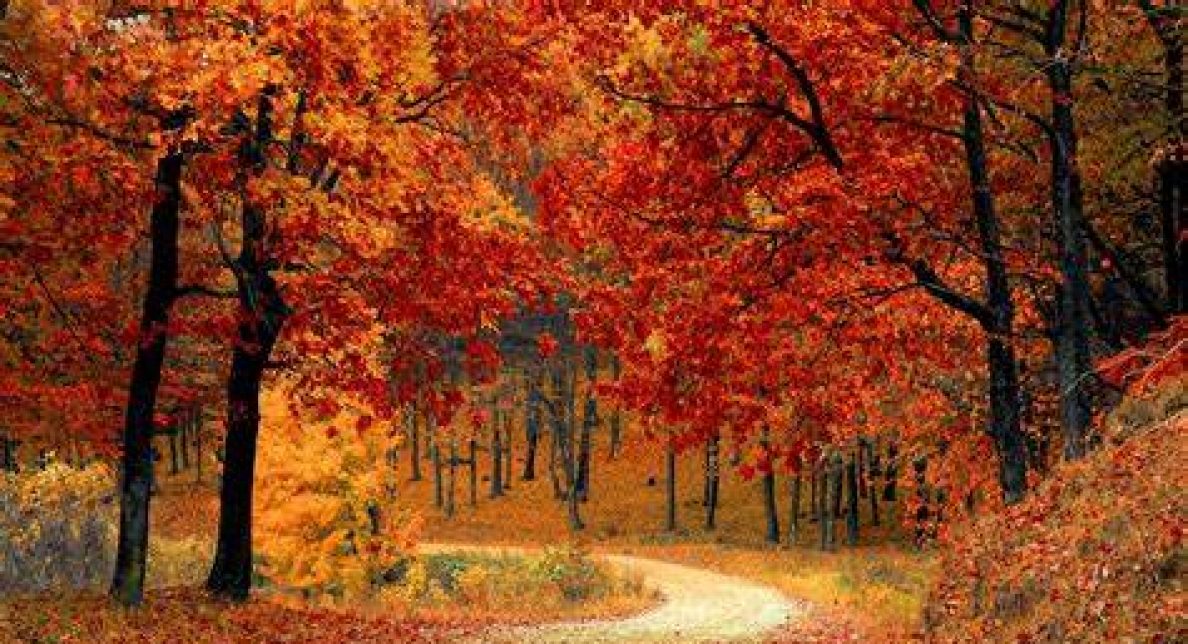
Autumn is the perfect season to explore Pennsylvania’s colorful land in search of interesting and useful plants, mushrooms, and trees.  We will spend the first part of this event in a mature oak forest learning the techniques involved in harvesting and processing acorns.  This year has already proven to be a banner year for many species of oaks whose acorns have been falling incessantly in Western Pennsylvania.  Participants will learn the steps involved in turning acorns into edible, delicious flour.  We will also search the area for oak-loving mushrooms of all types.

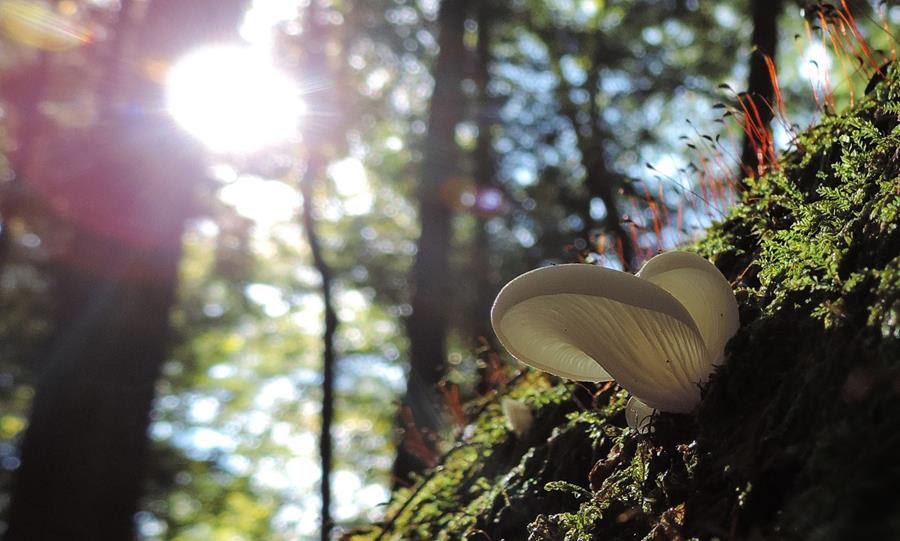
During the second part of the event, we will visit the old growth area of Cook Forest and explore the valley in search of mushrooms.  This particular section of the park is home to some of the oldest and tallest hemlock and pine trees in the Northeast.  Participants will learn the basics of mushroom hunting, including mushroom ecology and biology, edible species, medicinal species, and poisonous species.

Throughout the day, we’ll also discuss various plants — including the edible, medicinal, and poisonous species — that inhabit the old growth forest.

Interested?  Here are more details:

What: Fall Flora & Fungi Outing with Adam Haritan
When: Sunday, October 14th, 2018
Where: Cook Forest State Park, Western Pennsylvania
Time: 9:30 AM — 4:30 PM

The program is geared toward adults and will entail moderate hiking.

Please note that in order to maximize your learning experience, space is limited and registration with payment in advance is required to secure your spot.

To purchase your ticket, and to learn more about the outing, please visit the following link.

Fall Flora & Fungi Outing with Adam Haritan

I’d love to see you there!
—Adam Haritan


Crabapple & Rosemary Hand Pies: Ancestral Offerings for Mabon — Gather Victoria

A couple of years ago, completely hidden in dark thicket of trees, I discovered a beautiful gnarled Crabapple – gleaming with clusters of hundreds & hundreds of rosy, autumn fruits. I was thrilled! I love crisp truly tart apples (which are getting harder to find) so the Crabapple fits the bill perfectly. Crabapples are the…

via Crabapple & Rosemary Hand Pies: Ancestral Offerings for Mabon — Gather Victoria

Have You Ever Eaten Milk Cap Mushrooms?

Greetings!

I’d like to tell you about wild mushrooms that ooze latex.

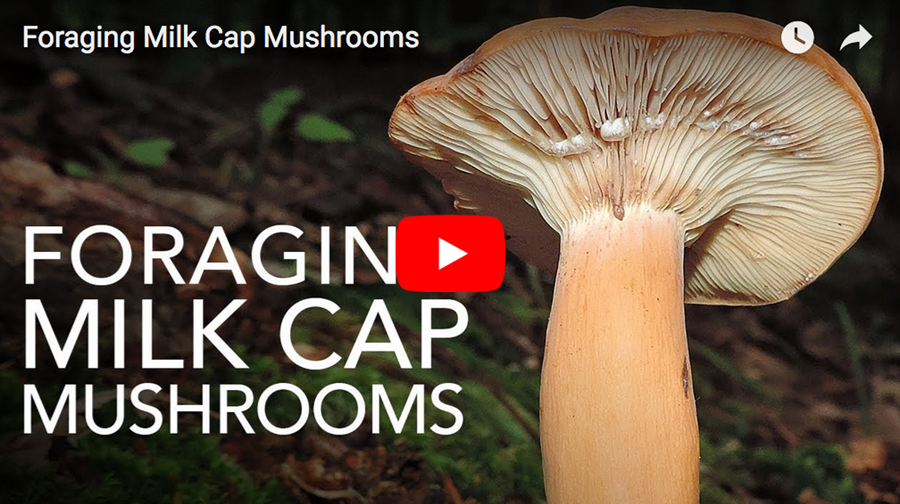
Known as “milk cap mushrooms,” these fungi may not seem worthy of anyone’s appetite, though they are certainly a group worth learning!

Milk cap mushrooms form important associations with various trees, and the value of these mushrooms to wildlife (specifically to animals and insects) is high.  Additionally, many milk cap mushrooms have been shown to be sources of naturally occurring rubber.

Perhaps the most exciting feature of milk cap mushrooms (at least from the mycophagist’s perspective) is that some of them are edible… and quite delicious!  Featured in this new video is a milk cap mushroom that perhaps you’ve been overlooking all these years.  If you’re interested in adding a new species to your list, check it out!

Mushrooms grow on all kinds of substrates, including trees, leaves, insects, soil… and hickory husks!  This time of year, a yellowish-orange mushroom can be seen fruiting from hickory and walnut debris.  Have you seen it?  Check out this recent Instagram post to learn more!

Thanks for reading and watching, and as always, thank you for your support!

-Adam Haritan

Food as Medicine: Stinging Nettle (Urtica dioica, Urticaceae)

Crooked Bear Creek Organic Herbs's avatarCrooked Bear Creek Organic Herbs

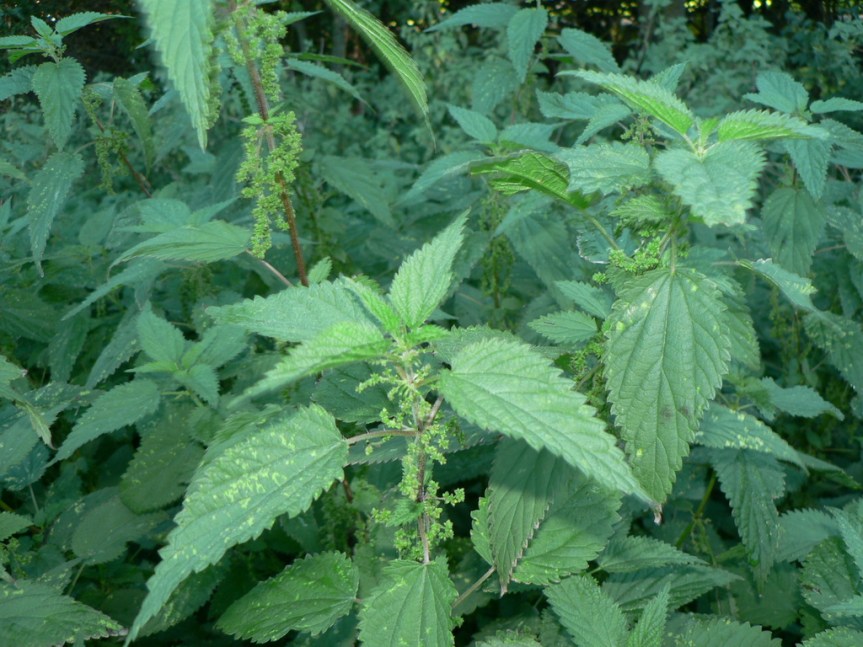
Urtica dioica (Urticaceae) is commonly known as nettle, common nettle, or stinging nettle. The species is an herbaceous perennial with a spreading growth habit. Growing 4-6 feet tall, stinging nettle produces numerous erect and wiry stems that hold up its opposite, roughly textured, serrated leaves.1-4 It produces small, inconspicuous greenish-brownish flowers that emerge as axillary inflorescences.The stems and undersides of leaves are covered with hairs called trichomes. When touched, these stinging trichomes inject a chemical cocktail that typically causes localized skin irritation as well as a painful, tingling sting from which the species has derived its most common name, stinging nettle.1,5

The Urticaceae family contains about 500 known species, distributed mainly in tropical areas.1 The genus Urtica, whose name comes from the Latin uro (to burn) and urere (to sting), consists of both annual and perennial herbaceous plants known for the burning properties of the…

View original post 3,981 more words

Locating Wild Deer Truffles ~ And Other Fascinating Fungi!

Greetings!

First, I’d like to say “thank you!” to everyone who attended a Learn Your Land event over the past few months.  It’s always a wonderful experience meeting nature enthusiasts around the country!  I still have plenty of events scheduled throughout the upcoming months.  If you’re local to any of these areas, I’d love to meet you!

September 8, Muskegon, MI: Michigan Mushroom Hunters Club — Fungus Fest
September 9, Owosso, MI: Wild Edibles Walk & Mushroom Outing
September 21-23, Prairie du Chien, WI: Midwest Wild Harvest Festival
October 8, Pittsburgh, PA: Botanical Society of Western PA evening presentation
November 5, Clemson, SC: South Carolina Upstate Mycological Society evening presentation
November 7, Atlanta, GA: Mushroom Club of Georgia evening presentation

For more information on these events, check out the Learn Your Land event calendar.

Moving forward, let’s talk about deer truffles.

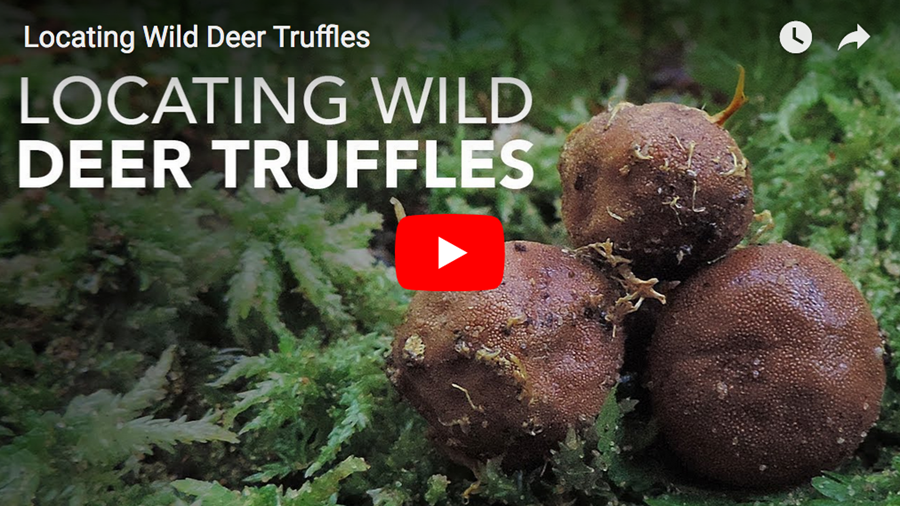
These fungi exist a few inches below the surface of the earth in a mutualistic association with various trees.  What’s more, deer truffles are valued food sources for a variety of forest-dwelling animals.

Because they grow underground, deer truffles are among the most elusive fungi in the world.  However, there is a simple trick to finding them, and if you’re interested in finding your very own deer truffles this season, check out the brand new video!

Stinkhorns aren’t your typical mushrooms.  One look at them (and a quick whiff of them!) should hint at their uniqueness.  Pictured here are a few interesting stinkhorns I recently found in a local forest.  Check out this recent Instagram post to learn more!

Thanks for reading and watching, and as always, thank you for your support!

-Adam Haritan
Activity of Lemon Balm and Moldavian Dragonhead Essential Oils against Foodborne Microorganisms

Crooked Bear Creek Organic Herbs's avatarCrooked Bear Creek Organic Herbs

It has been postulated that plant essential oils can be used as natural preservatives to delay food spoilage, inhibit pathogen growth, and improve food quality. Lemon balm (Melissa officinalis, Lamiaceae) aerial parts and Moldavian dragonhead (Dracocephalum moldavica, Lamiaceae) aerial parts have antibacterial and antifungal activity. The purpose of this study was to evaluate the chemical composition, antimicrobial activity, and antioxidant capacity of lemon balm and Moldavian dragonhead essential oils with the goal of finding natural agents to protect against oxidation changes and pathogenic bacteria of food.

Lemon balm and Moldavian dragonhead aerial parts were collected at blossoming in the summer of 2013 in Urmia, Iran. The plants were confirmed by the Herbarium Department of Jahad Agriculture and Natural Resources Center of West Azerbaijan, Iran. Essential oils were extracted via hydro-distillation, and gas chromatography-mass spectrometry (GC-MS) was used to analyze the compounds in the essential oil. Antibacterial…

View original post 327 more words

Geographical Variation in Nutritional Content of Baobab

Crooked Bear Creek Organic Herbs's avatarCrooked Bear Creek Organic Herbs

The baobab (Adansonia digitata, Malvaceae) tree is indigenous to sub-Saharan Africa and is an important source of food and economic generation. Leaves, fruit, and seeds are eaten, and timber, fodder, and fibers from the tree are marketed. With roles in traditional medicine, culture, and religions, it is widely considered a sacred tree and often allowed to thrive in agricultural lands. Baobab is known to be high in vitamin C and other nutrients. However, nutritional studies on baobab vary greatly by sourced material and analytical methods. In addition, data on nutrients from east and south African baobabs have not been previously reported. Therefore, the authors analyzed fruit pulp and seeds from 17 populations in east, south, and west African nations (Kenya, Tanzania, Mali, Zambia, Zimbabwe, and Malawi) to determine if the region of origin affects nutrient content.

Provenances were from 8-1114 meters above sea level with rainfall of 463-1125…

View original post 816 more words

New event scheduled! Old Growth Forest Hike & Spring Water Gathering

Greetings!

I am excited to announce that I will be leading the Old Growth Forest Hike & Spring Water Gathering during the weekend of August 25th and 26th at Cook Forest State Park.  And of course, I’d love for you to join us!

If you’ve never experienced the magnificence of Cook Forest, it truly is one of the most remarkable natural areas in Pennsylvania.  This particular ecosystem encompasses one of the last remaining old growth forests in the entire eastern United States, currently hosting 11 old growth areas that total over 2,300 acres.  One of these areas within the park, the Forest Cathedral, contains arguably the finest concentration of old growth trees in the northeastern United States.  This special area is home to dozens of old growth eastern white pine and hemlock trees, many over 300 years old and towering above 140 feet in height!

In this event, we will hike and explore the Forest Cathedral surrounded by Pennsylvania’s tallest and oldest trees while discussing:

  • Edible and medicinal plants
  • Edible and medicinal mushrooms
  • Tree identification, along with edible and medicinal uses
  • Medicine-making using wild plants and mushrooms
  • Natural history of the area

…and lots more!

For the second part of the event, we will visit a pristine spring to gather wild Pennsylvania water straight from the source.  As you may or may not know, I’ve been harvesting wild water from springs all over the country as part of my personal health strategy for several years, championing the idea that nature’s wild water can provide the perfect alternative to other conventional hydration strategies (tap water, bottled water, commercial filters, etc.).

During this second part of the event, we will discuss the benefits of drinking wild spring water, the importance of developing your own personalized water strategy, and locations of other fantastic springs.  You are encouraged to bring your own collection vessels so that you can harvest fresh, clean spring water following the event.

Interested?  Here are more details:

What: Old Growth Forest Hike & Spring Water Gathering
When: Saturday, August 25th OR Sunday, August 26th
Where: Cook Forest State Park, Western Pennsylvania
Time: 12:00 PM — 5:00 PM

The program is geared toward adults and will entail moderate hiking (about 1.5 miles).

Please note that in order to maximize your learning experience, space is limited and registration with payment in advance is required to secure your spot.

To purchase your ticket, and to learn more about the outing, please visit the following link and choose the appropriate session:

Old Growth Forest Hike & Spring Water Gathering

I’d love to see you there!
—Adam Haritan

Now’s The Time To Harvest This Great North American Superfood!

Greetings!

I’m excited to partner with Forager’s Harvest in Bruce, Wisconsin for an evening mushroom walk on Thursday, August 9th.  We’ll explore the area in search of summer mushrooms, as well as identify mushrooms that participants bring to the program.  If you’re in the Midwest this August 9th, I’d love to meet you!  More information can be found here.

Next, let’s talk about foods that are super…

When many people think of the word “superfood,” images of expensive powders, fancy juices, and exotic herbs come to mind.

When I think of the word “superfood,” images of local plants, backyard weeds, and brambly fruits come to mind.

As nature would have it, North America (and every habitable continent!) is replete with a cornucopia of superfoods manifested as wild fruits, nuts, seeds, and herbs.

The wild blueberry is one common fruit that, despite its ubiquity, is certainly a superfood in every sense of the word.  Tasty, abundant, and brimming with health-promoting compounds, its value to both humans and wildlife cannot be overstated.

I recently spent some time in the company of a few wild blueberry shrubs and decided to document the experience.  If you’re interested in learning why I recommend the wild blueberry as a regular component of the human diet (and garden!), check out the brand new video!

Have you been finding any choice edible mushrooms lately?  Here’s a list of 8 edible fungi you’re likely to encounter during the warmest weeks of the year… especially after a good rainfall!

Thanks for reading and watching, and as always, thank you for your support!

Adam Haritan

Mahonia & Lavender Oat Bars: Berry Delicious! — Gather Victoria

Mahonia & Lavender Oat Bars …

20180703_164848.jpg


You may not have heard of Mahonia berries but I know you’d love them – and they’re likely growing near you. Mahonia japonica and Mahonia bealei are both extremely common ornamental shrubs found in a wide variety of urban spaces – and in early July both are laden with deep blue dusky berries hanging in fat grape-like clusters.…

via Mahonia & Lavender Oat Bars: Berry Delicious! — Gather Victoria