Please Do Research Before You Consume Or Smoke … Anything

By Orzula

Been noticing a lot of worrying posts lately,

Particularly among the newer witchblrs, so I feel as though I should say something:

⚠️ PLEASE DO NOT INGEST/CONSUME/SMOKE ANYTHING UNLESS YOU HAVE DONE EXTENSIVE RESEARCH ⚠️

And research that is preferably done off of Tumblr (aka Google it), so you’ll find a wider range of opinions, articles, and thoughts on the matter.

For example:

  • Certain stones and crystals are toxic when mixed with water/liquids! Big ones include malachite, turquoise, and selenite – but that’s just to name a few!


  • Various herbs can interact negatively with medications/the body: St. John’s Wort with birth control or anti depressants (even though it is used to treat depression in small doses), sleepy time herbs are not to be used in conjunction with melatonin or other sleep aids/pills; some herbs can cause liver damage – pennyroyal, valerian, comfrey, etc – if consumed.


  • DO NOT JUST SMOKE THINGS because a tumblr said to try it!!! I just saw a post about smoking valerian root – THIS WILL CAUSE A CHEMICAL BURN IN YOUR THROAT AND LUNGS. ⚠️

So for the love of gods, and all things decent – including your health – PLEASE do legitimate research before ingesting any herbs or concoctions. 🌿

Source:

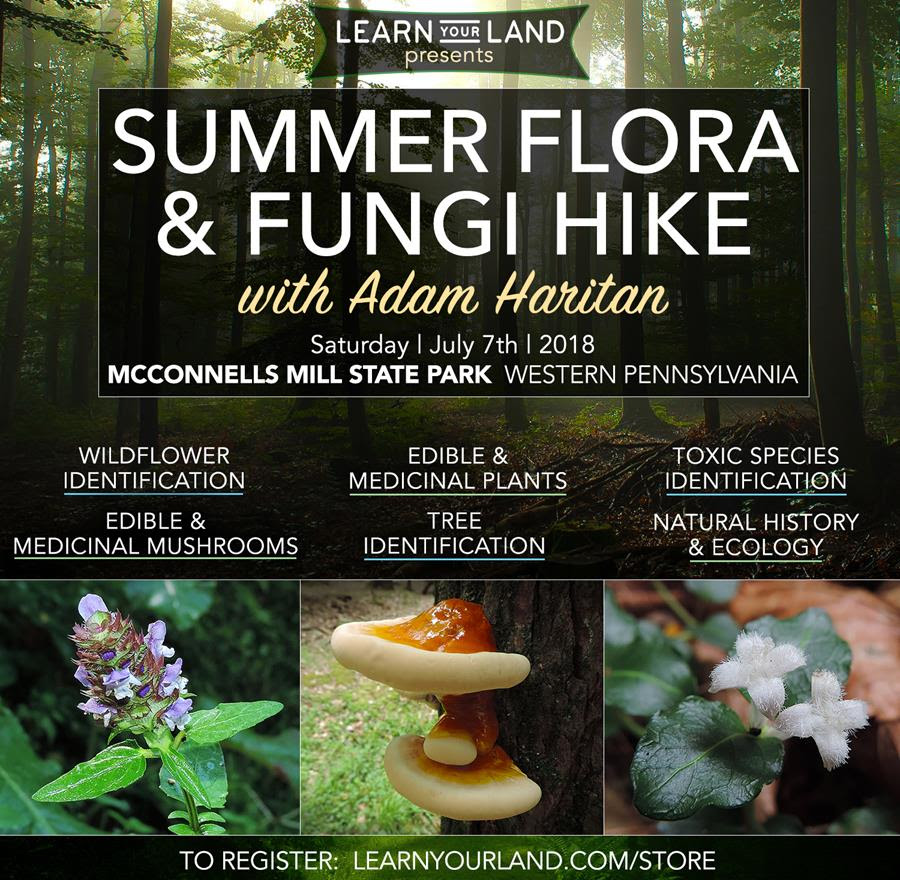
Summer Flora & Fungi Hike

By Adam Haritan

Greetings!

I am excited to announce that I will be hosting the 2018 Summer Flora & Fungi Hike on Saturday, July 7th at McConnells Mill State Park in Western Pennsylvania… and, I’d love for you to join us!

Summer is the perfect season to explore Pennsylvania’s land in search of interesting and useful plants, trees, and mushrooms. McConnells Mill State Park — with its deeply-cut gorges, hemlock-lined ravines, whitewater currents, and historical landmarks — is a prime area for summer exploration.

While exploring the Slippery Rock Creek Gorge within the park, we’ll delve into a myriad of fascinating topics related to this season’s flora and fungi, including:

  • Edible and medicinal plants
  • Edible and medicinal mushrooms
  • Summer wildflower identification
  • Tree identification, along with edible and medicinal uses
  • Medicine-making using wild plants and mushrooms
  • Natural history and ecology of the area

… and more!

Interested? Here are more details:

What: Summer Flora & Fungi Hike at McConnells Mill State Park
When: Saturday, July 7th, 2018
Where: McConnells Mill State Park, Western Pennsylvania
Time: 9:30 AM – 12:30 PM OR 1:30 PM – 4:30 PM

The program is geared toward adults and will entail moderate hiking (about 1.5 miles).

Please note that in order to maximize your learning experience, space is limited and registration with payment in advance is required to secure your spot.

To purchase your ticket, and to learn more about the outing, please visit the following link and choose the appropriate session:

Summer Flora & Fungi Hike with Adam Haritan

I’d love to see you there!
-Adam Haritan

Lunar Tinctures

By Crooked Bear Creek Organics

Crooked Bear Creek Organic Herbs's avatarGood Witches Homestead

Making your tinctures following the phases of the moon allows the powerful gravitational pull of the moon to draw out the properties in the plant and also adds a bit of ancient wisdom to your mixture. Just as the gravitational pull of the moon affects many things in nature and our lives, it’s thought that this very same phenomenon affects the strength of our tinctures. Although there is no scientific proof that the moon gives our tinctures a little something extra, herbal traditionalists have long believed in the power of the moon in regards to making plant medicine.

Herbalists of old knew how to plant, harvest, and preserve food and herbs, among other things, following the phases of the moon. For instance, seeds for above ground plants were planted with the new moon, as the lunar gravity pulls water up from the ground creating perfect conditions for a seed to…

View original post 396 more words

Your Apothecary Cabinet: Calendula Oil

By Crooked Bear Creek Organics

Crooked Bear Creek Organic Herbs's avatarCrooked Bear Creek Organic Herbs

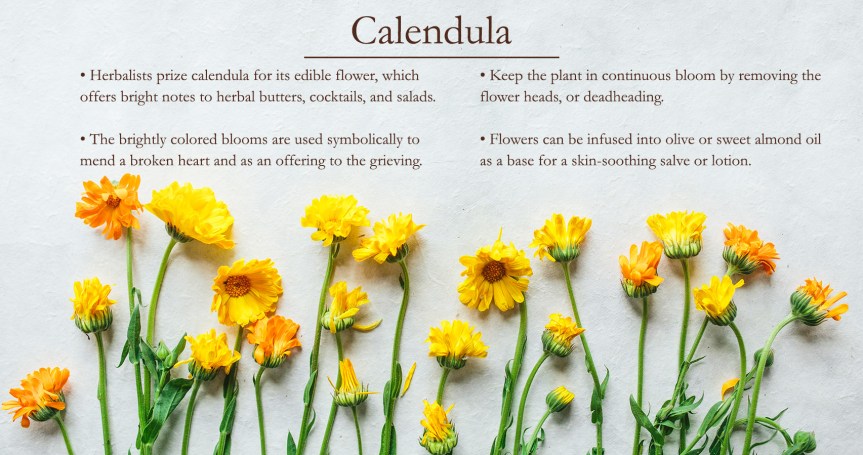
Marigold has much value today and in traditional cultures as a homeopathic remedy, but the oil extracted from the flowers, called calendula oil, is not far behind in providing benefits. Learn more about this oil distilled from the petals of the pot marigold or Calendula officinalis, and how you can harness its health and practical everyday uses.

What Is Calendula Oil?

Marigold is a genus of about 15 to 20 species of plants in the Asteraceae family. This flower is native to Southwestern Asia, as well as Western Europe and the Mediterranean. The common name “marigold” refers to the Virgin Mary, to which it is associated in the 17th century.

Apart from being used to honor the Virgin Mary during Catholic events, marigold was also considered by ancient Egyptians to have rejuvenating properties. Hindus used the flowers to adorn statues of gods in their temples, as well as to color their…

View original post 1,254 more words

Did You Find Any Morel Mushrooms This Year?

Greetings!

During the weekend of June 8th — 10th, I’ll be participating in the Great Lakes Foragers’ Gathering in Grass Lake, Michigan.  This event is considered to be the largest annual gathering of wild food enthusiasts in the Great Lakes region.  I’ll be leading a few mushroom walks and programs on Saturday and Sunday.  Additional presenters include Samuel Thayer (nationally recognized foraging author), Rachel Mifsud (creator of Will Forage For Food), and several others.  If you’re interested in attending, click here!

Moving forward, let’s talk about spring’s most popular fungi.

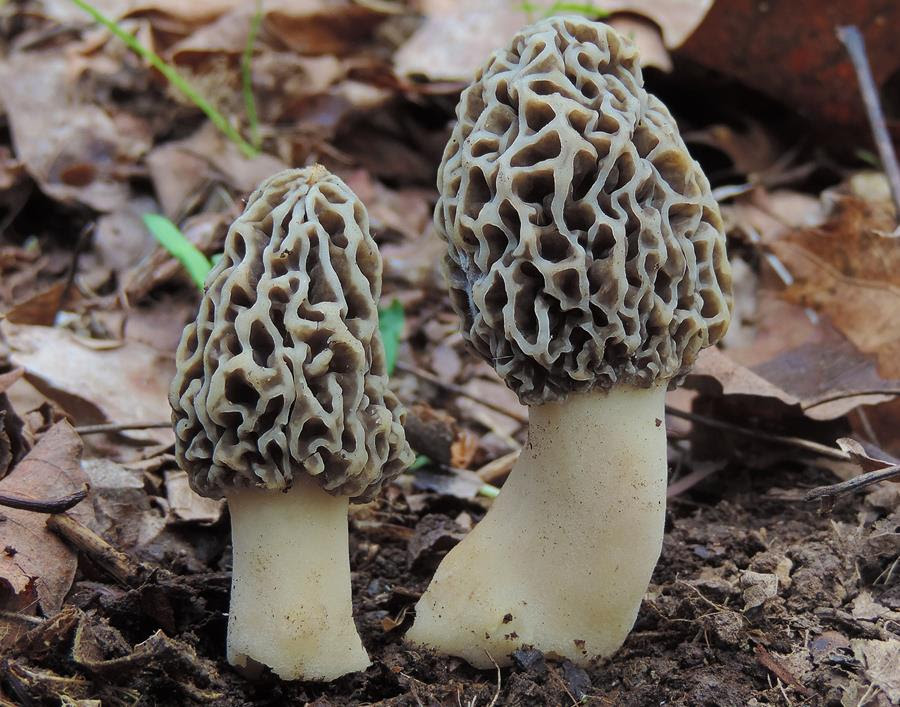
Morel mushrooms are among the most alluring and widely recognized wild edible fungi intensively collected by mushroom hunters.

They’re tasty, they’re elusive, and they’re some of the first fungi to appear during the early spring weeks.  No two morel mushroom hunts are the same, and even an “unsuccessful” hunt through an old, familiar spot is likely to yield auxiliary benefits including fresh air, wildflower sightings, and long overdue exercise!

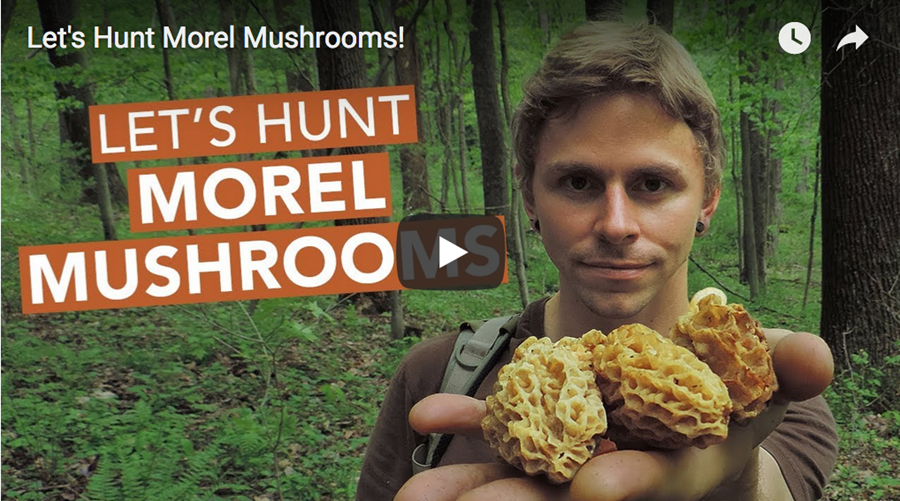
In my neck of the woods, the morel mushroom season is just about finished.  Over the past few weeks, however, I documented a few of my experiences on video.  If you’re interested in seeing what I discovered, check it out!

Speaking of fungi, almost all wild orchid species require relationships with fungi to germinate successfully and grow into beautiful plants.  What’s the reasoning behind this?  And for how long do these intimate relationships last?  Check out this recent Instagram post to learn more!

Thanks for reading and watching, and as always, thank you for your support!

-Adam Haritan

The History of Herbal Medicine and Essential Oils

By Crooked Bear Creek Organics

Crooked Bear Creek Organic Herbs's avatarGood Witches Homestead

The history of essential oils is intertwined with the history of herbal medicine, which in turn has been an integral part of magical practices. Herbal medicine has been used for more than treating minor ailments and disease; it has been instrumental in providing life-enhancing benefits. In most ancient cultures, people believed plants to be magical, and for thousands of years, herbs were used as much for ritual as they were for medicine and food. According to medical herbalist and healer Andrew Chevallier, the presence of herbs in burial tombs attests to their powers beyond medicine. In addition, fourth-century BCE Greek philosopher Aristotle noted his belief that plants had psyches.

Aromatic plants in the form of oil and incense were elements of religious and therapeutic practices in early cultures worldwide. In addition, anointment with perfumes and fragrant oils was an almost universal practice. Burning incense in rituals provided a connection between…

View original post 1,460 more words

Know Your Herbal Chemistry

By Crooked Bear Creek Organics

Crooked Bear Creek Organic Herbs's avatarCrooked Bear Creek Organic Herbs

A herbalist should be fully aware of details about the pharmacology of herbs, a basic understanding of it is more than enough. Herbs are used for healing the human body, they are considered to be holistic agents, and they are used on a physical and biochemistry level. Many pharmacologists try to find out the constituents of herbs, place them according to their chemical groups and have done numerous research and have found herbs to be very complex in their characteristics. Herbs contain a huge variety of chemicals like water, inorganic salt, sugars, carbohydrates, proteins that are highly complex, and alkaloids.

Plant Acids:

An example of weak organic acids is generally found among plants, lemon is the perfect example of citric acid. Organic acids can be split into those based on a carbon chain, and those, which contain a carbon ring in their configuration, but what both have in common is the…

View original post 2,106 more words

Know Your Underground Roots

By Crooked Bear Creek Organics

Crooked Bear Creek Organic Herbs's avatarCrooked Bear Creek Organic Herbs

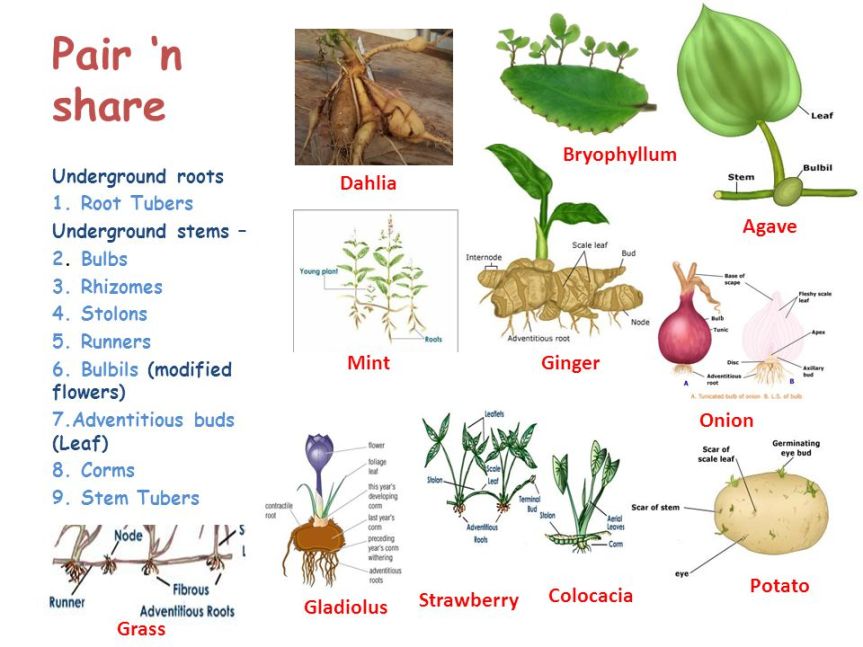
Underground Stems

The underground stems, by being situated below the surface of the soil, protect themselves against unfavorable conditions of weather and the attack of animals and serve as storehouses for reserve food, and in vegetative propagation. Their stem nature can be distinguished by the presence of nodes and internodes, scale leaves at the nodes, axillary buds in axils of scale leaves and a terminal bud. Further, the anatomy of the underground stem resembles that of an aerial stem. The underground stems are of four types namely rhizome, tuber, bulb, and corm.

Rhizome

A rhizome is a thick horizontally growing stem which usually stores food material. It has nodes and internodes, scale leaves, axillary buds, adventitious roots and a terminal bud. Scale leaves enclosing the axillary buds are seen arising from the nodal points of the stem. Some of the axillary buds develop into branches which grow upwards into the…

View original post 338 more words

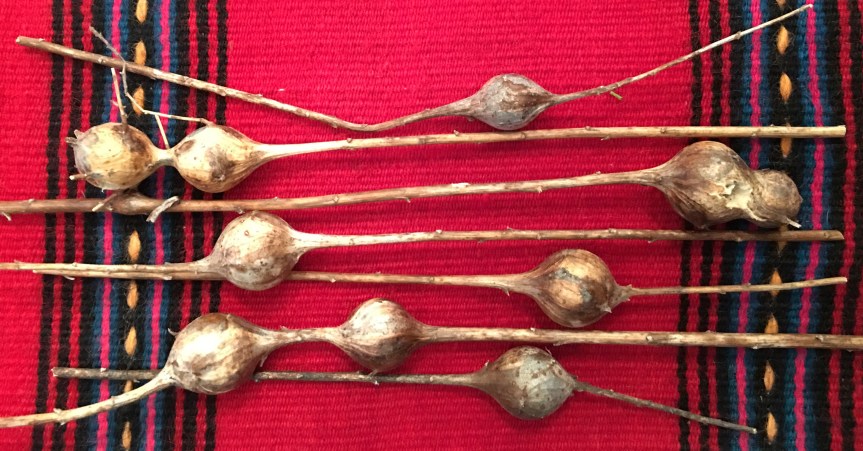
Witchcraft Charms, Talismans & Amulets with Goldenrod Galls

By Slavic Witch

Herb Guide: It’s About Thyme

By Crooked Bear Creek Organics

Crooked Bear Creek Organic Herbs's avatarCrooked Bear Creek Organic Herbs

Thymus vulgaris

Also, Known As:

  • Black Thyme
  • Common Thyme
  • English Thyme
  • French Thyme
  • Garden Thyme
  • German Thyme
  • Serpyllum
  • Thyme
  • Tomillo
  • Winter Thyme

Thyme is a common name given to all the herbs belonging to the plant species called Thymus. The Thymus is indigenous to Europe and Asia and all plants belong to this species are usually low-growing and perennial. Among the different plants of this species, the common or garden thyme is regarded as the main variety and is used commercially for flowering as well as decorative purposes. The garden thyme is a small shrub bearing greyish-green leaves and flowers whose hues vary from white to pink or purple. Several countries in Europe, including Spain, Portugal, France, and Greece, as well as the United States, cultivate and harvest the thyme. Basically, there are three major types of thyme – French, English, and German, and each of them bears leaves of…

View original post 3,610 more words