
Tag: Plants
Fall Flora & Fungi Outing with Adam Haritan ~ New event scheduled!
Greetings!
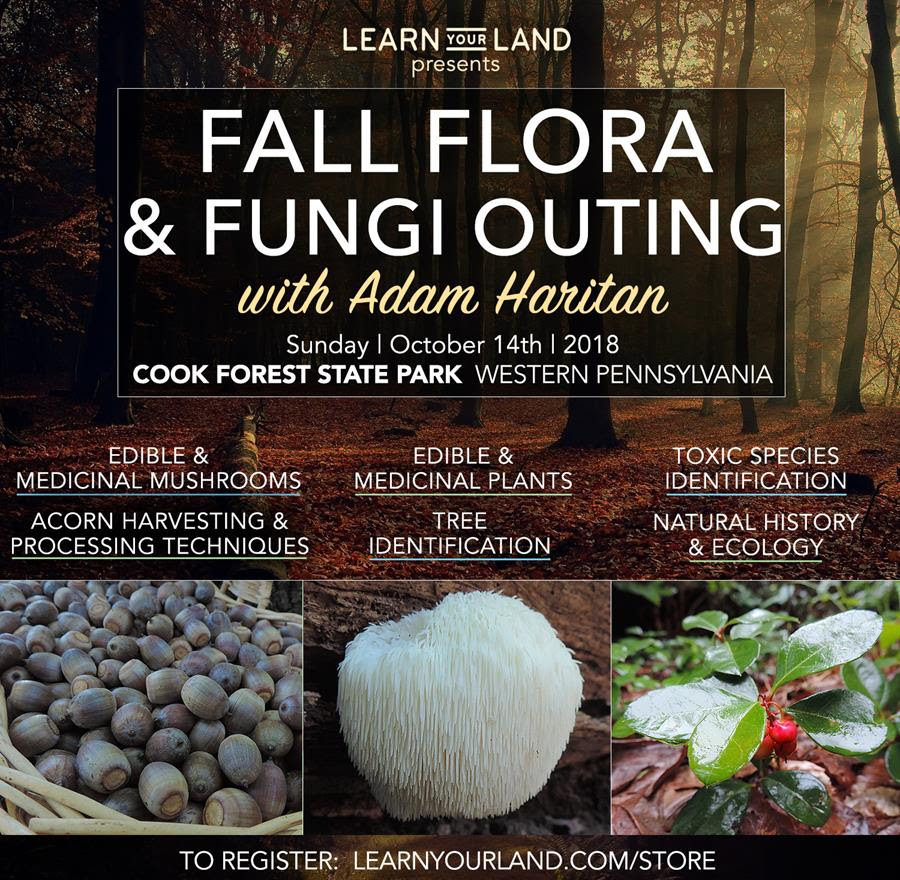
I am excited to announce that I will be leading the Fall Flora & Fungi Outing on Sunday, October 14th at Cook Forest State Park in Western Pennsylvania. And of course, I’d love for you to join us!
Autumn is the perfect season to explore Pennsylvania’s colorful land in search of interesting and useful plants, mushrooms, and trees. We will spend the first part of this event in a mature oak forest learning the techniques involved in harvesting and processing acorns. This year has already proven to be a banner year for many species of oaks whose acorns have been falling incessantly in Western Pennsylvania. Participants will learn the steps involved in turning acorns into edible, delicious flour. We will also search the area for oak-loving mushrooms of all types.
During the second part of the event, we will visit the old growth area of Cook Forest and explore the valley in search of mushrooms. This particular section of the park is home to some of the oldest and tallest hemlock and pine trees in the Northeast. Participants will learn the basics of mushroom hunting, including mushroom ecology and biology, edible species, medicinal species, and poisonous species.
Throughout the day, we’ll also discuss various plants — including the edible, medicinal, and poisonous species — that inhabit the old growth forest.
Interested? Here are more details:
What: Fall Flora & Fungi Outing with Adam Haritan
When: Sunday, October 14th, 2018
Where: Cook Forest State Park, Western Pennsylvania
Time: 9:30 AM — 4:30 PM
The program is geared toward adults and will entail moderate hiking.
Please note that in order to maximize your learning experience, space is limited and registration with payment in advance is required to secure your spot.
To purchase your ticket, and to learn more about the outing, please visit the following link.
Fall Flora & Fungi Outing with Adam Haritan
I’d love to see you there!
—Adam Haritan
Watch Webinar on Native Wildflowers

By Jen Munson, HSA Education Chair
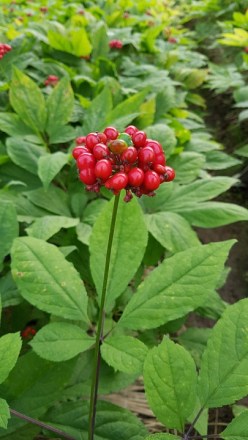 American ginseng (Panax quinquefolius) a globally rare plant species
The diversity of the world’s plants has dwindled and/or is threatened. In fact the International Union for the Conservation of Nature estimates that 54 percent of the 19,000 plant species they have identified are at risk. In New England it is estimated that almost 20 percent of New England’s native plants are on the verge of being lost and another 5 percent has already disappeared. Native plants are under threat from invasive species, habitat loss, climate changes among other impacts.
The New England Wildflower Society seeks to preserve New England native plants. Based at the Garden in The Woods botanic garden in Framingham, Massachusetts, their mission is, “to conserve and promote the region’s native plants to ensure healthy, biologically diverse landscapes.” They secure and preserve seeds from rare plants to protect genetic diversity…
View original post 196 more words
Building Soil Fertility with Fall Gardening at the Equinox

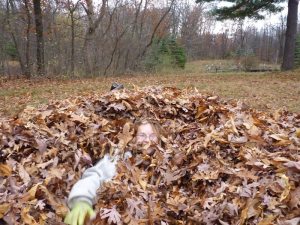 Leaves – nutrients AND enjoyment!
In the druid wheel of the year, we have three “harvest” festivals. Lughnasadh, the first harvest. So much of the garden produce starts to be ready at this time–and also at this time, the garden is still at its peak, but quickly waning. In the weeks after , our pumpkin patch died back with beautiful orange pumpkins and said “ok, I’m done for the year!” Then we have the Fall Equinox, where things are continuing to be harvesting, but many of the plants are in serious decline. By Samhain, everything is dead, the hard frosts have come and the land goes to sleep. It seems then, on the surface, that what we should be doing in the fall is primarily harvesting and sitting on our laurels and watching fall and winter come.
However, as a gardener and homesteader, my busiest time, by far, is the…
View original post 2,163 more words
BACOPA MONNIERA: Brain Health and Nervous System Restorer


The Bacopa monniera herb, also known as Brahmi, has been used as a traditional Ayurvedic treatment for mental issues, epilepsy, and asthma. In fact, its documented medicinal uses can be traced back to the 6th century A.D.
A classic brain and nerve tonic, Bacopa is a medicinal herb that has been used effectively for several thousand years as a brain and nervous system restorer. The herb is known to increase mental clarity and promote improved memory and intelligence. It also assists in heightening mental acuity and supports the physiological processes involved in relaxation. In other words, it can keep you feeling relaxed while also boosting mental clarity, your focus, and mood. In fact, Bacopa is thought to help nourish neurons as it restores depleted synaptic activity.
Bacopa Monniera for Improved Memory
A 2006 double-blind, randomized study published in the Indian Journal of Psychiatry showed that the control group taking 125…
View original post 495 more words
Have You Ever Eaten Milk Cap Mushrooms?


Greetings!
I’d like to tell you about wild mushrooms that ooze latex.
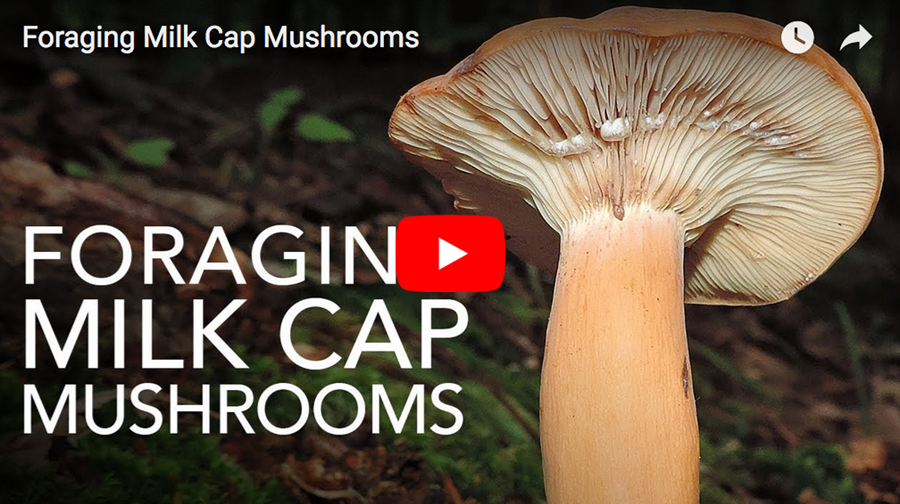
Known as “milk cap mushrooms,” these fungi may not seem worthy of anyone’s appetite, though they are certainly a group worth learning!
Milk cap mushrooms form important associations with various trees, and the value of these mushrooms to wildlife (specifically to animals and insects) is high. Additionally, many milk cap mushrooms have been shown to be sources of naturally occurring rubber.
Perhaps the most exciting feature of milk cap mushrooms (at least from the mycophagist’s perspective) is that some of them are edible… and quite delicious! Featured in this new video is a milk cap mushroom that perhaps you’ve been overlooking all these years. If you’re interested in adding a new species to your list, check it out!

Mushrooms grow on all kinds of substrates, including trees, leaves, insects, soil… and hickory husks! This time of year, a yellowish-orange mushroom can be seen fruiting from hickory and walnut debris. Have you seen it? Check out this recent Instagram post to learn more!
Thanks for reading and watching, and as always, thank you for your support!
-Adam Haritan
The Plant Spirit Oracle Project
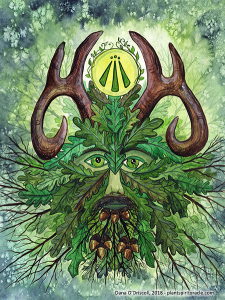 Spirit of the Oak from the Plant Spirit oracle!
As we’ve been exploring over the last few weeks, plant spirit communication can take many forms. The rustle of leaves outside of your window, the inner knowing, or the song a plant sings to you as you honor it for the harvest. These simple messages weave a complex landscape beyond what we can sense with our fives senses, and invite us deeper into the mysteries of the earth and all living beings. And as we’ve explored, the voices of the plants, the spirits of the plants, take a number of forms and can appear to each of us uniquely. What is clear is that the more that we open ourselves up to understanding them, honoring them, and working with them, the more connection we have with the living earth in her many forms.
Part of the reason I’ve been sharing so…
View original post 1,559 more words
Food as Medicine: Stinging Nettle (Urtica dioica, Urticaceae)
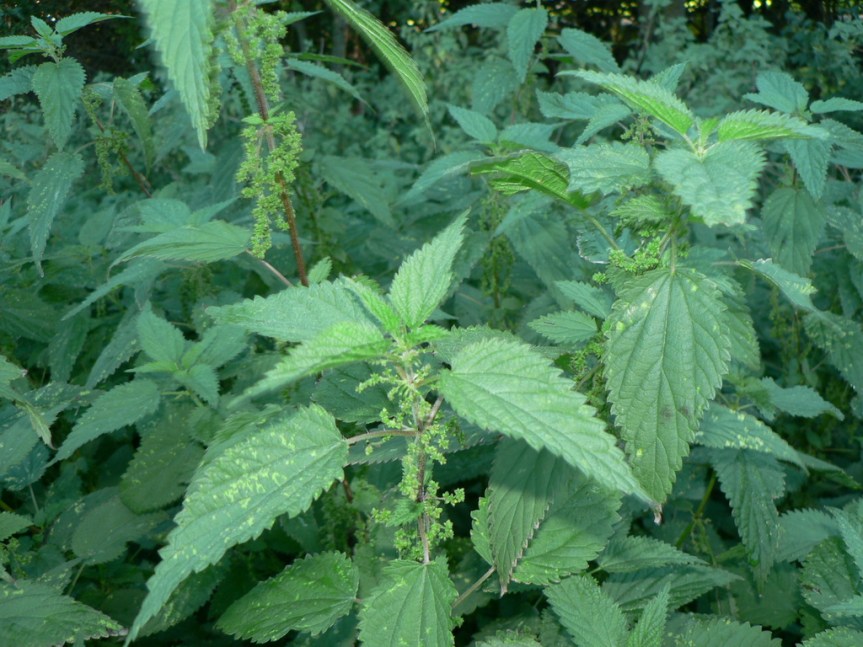
Urtica dioica (Urticaceae) is commonly known as nettle, common nettle, or stinging nettle. The species is an herbaceous perennial with a spreading growth habit. Growing 4-6 feet tall, stinging nettle produces numerous erect and wiry stems that hold up its opposite, roughly textured, serrated leaves.1-4 It produces small, inconspicuous greenish-brownish flowers that emerge as axillary inflorescences.2 The stems and undersides of leaves are covered with hairs called trichomes. When touched, these stinging trichomes inject a chemical cocktail that typically causes localized skin irritation as well as a painful, tingling sting from which the species has derived its most common name, stinging nettle.1,5
The Urticaceae family contains about 500 known species, distributed mainly in tropical areas.1 The genus Urtica, whose name comes from the Latin uro (to burn) and urere (to sting), consists of both annual and perennial herbaceous plants known for the burning properties of the…
View original post 3,981 more words
Plant Spirit Communication Part IV: Medicine for the Body and the Soul
In the last few weeks, we’ve considered various ways in which we might communicate with plant spirits, work with them, and engage in spirit journeys with them. In this post, I am beginning to make the transition to talk about plant medicine and herbalism for a few weeks–both medicine of the body and medicine of the soul. I think that herbal medicine is something incredibly powerful to add to any earth-based spiritual based practice, both to keep you in good health and to create inter-dependency between you and the living earth. In order to do that, I wanted to talk today about plant spirits and the connection between medicine for the body and medicine for the soul. To do this, we’ll delve into animism and an animistic worldview as well as consider deepening plant relationships.
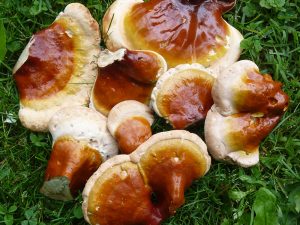 Amazing reishi!
Medicine of the Body
Plants have physical bodies and various…
View original post 2,377 more words
Plant Spirit Communication, Part II: Communication in Many Forms
I remember taking a drive with some friends and friends-of-friends some years ago. As we were driving through a really nice forest preserve with some old trees, one of my friends in the car said, “There’s so much money there in the trees, some of them would be worth more than $1500.” He went on to talk about how his family had recently logged their property and earned over $25,000. Other people in the car jumped in and talked about the forest’s beauty and argued against him; and I just listened. Finally, I responded and said, “Every living being has a spirit. I hope that forest stands forever. They deserve to live as much as you or I.” Before this conversation had started, I was listening to the singing of that forest, so happy, so safe to be preserved. This experience stayed with me, and was a good reminder about…
View original post 2,288 more words
 Paths I Walk
You must be logged in to post a comment.