The Other Side of Yew

The Herb Society of America's avatarThe Herb Society of America Blog

By Erin Holden

As an herbalist I’m interested in many aspects of plants – from their use in herbal and conventional medicine, to lore that informs us how those in the past viewed the plant. I knew that Taxol was a cancer drug made from the yew tree, but when a friend mentioned its poisonous aspects, I decided to dig a bit deeper.

Taxol, the well-known cancer treatment, was first isolated and studied in the early 1960s into the late 1970s, and approved as a cancer drug in the early 1990s. Paclitaxel, the common chemical name of Taxol, was initially extracted from the bark of the Pacific yew (Taxus brevifolia). It was quickly realized that extracting enough paclitaxel to meet demand would wipe out this species in short order, so scientists turned to its faster-growing cousin, the European yew (Taxus baccata), as an alternative. A precursor…

View original post 659 more words

Sacred Trees in the Americas: Spicebush (Lindera Benzoin) Magic, Ecology, and Sacred Uses

Dana's avatarThe Druid's Garden

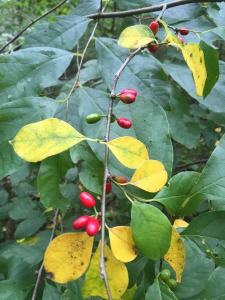
Spicebush leaf and berry in August in Western Pennsylvania

As I continue to explore some of the most important understory trees in the US East Coast and Midwest region, we turn our attention today to the amazing Spicebush (Lindera Benzoin).  Historically, Spicebush was an incredibly important plant, medicine, and spice both to Native Americans and early white settlers in the US and yet today has largely been forgotten in history. Spicebush is a native understory tree with a large range in North America, spanning from Maine to Florida and all the way across the south and Midwest to Texas and up to Ontario. While I’ve taught this plant routinely on my plant walks, and what amazes me is that nobody can even identify it, much less recognize how it might be used. Spicebush has an incredible flavor, medicinal value, and offers much in the way of magic and mystery. It…

View original post 1,877 more words

Spring Flowers, Magical Bluebells.

Crooked Bear Creek Organic Herbs's avatarGood Witches Homestead

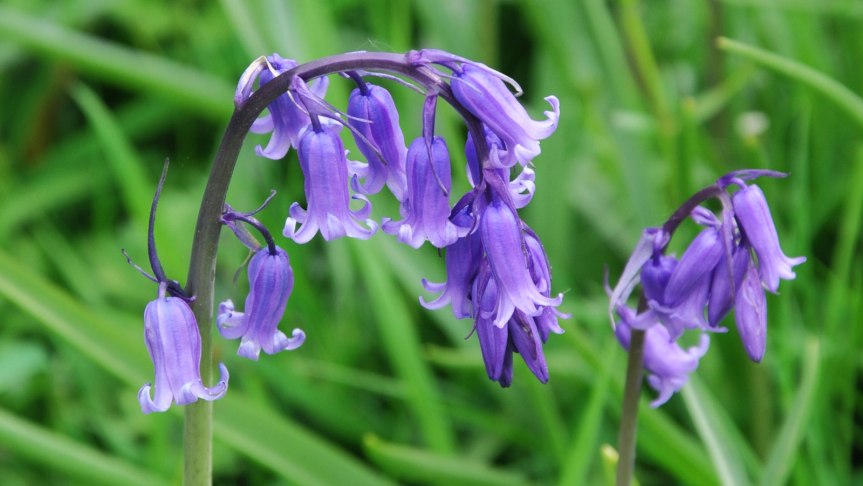
To Elizabethans, bluebells were enchanted, and heaven forbid you hear their bell-shaped heads ring, for death would likely follow. Links with folklore were still prevalent more than three centuries later, as borne out by Cicely Mary Barker’s depictions ofFlower Fairies(the first book in the series was published in 1923) and her assertion that the bluebell be ‘the peerless Woodland King’.

Deep blue H.non-scripta, a perennial bulb, flourishes in humus-rich soils, and on limestone ridges. Young shoots push their way up through leaf litter to allow their flowers to open in the dappled shade of trees such as beech and oak.

The bluebell is a natural indicator that helps us to identify ancient woodlands, where it has grown for hundreds of years. Rich in pollen and nectar, it is also a vital food source for many native insects, including its main pollinator, the bumblebee.

Believed to call…

View original post 409 more words

Exploring Vanilla in the Rainforest and in the Kitchen: Part II

The Herb Society of America's avatarThe Herb Society of America Blog

By Susan Belsinger

(Adapted from her article, “Exploring Rainforest Spices at Villa Vanilla,” featured in the 2019 issue of The Herbarist, the annual journal of The Herb Society of America.)

“Plain vanilla is very much like that little black cocktail dress—always welcome, simply chic, so quietly dramatic.”

                —Lisa Yockelson, from Baking by Flavor

Vanilla in the Kitchen

P1110888Although I am a chocolate lover, I have always adored the fragrance of vanilla. More than once as a child, I tasted vanilla extract straight from the bottle—knowing full well that I wouldn’t like it—I just could not resist, because it always smelled so good.   
Back in my early adult years—and the beginning of my lifetime association with natural foods, herbs, and spices—I used vanilla beyond the kitchen. I found the aroma alluring, so why not use it like perfume? I…

View original post 2,723 more words

DIY Recipe of the Month: Herbal Spring Tincture • The Organic Alcohol Company

Crooked Bear Creek Organic Herbs's avatarCrooked Bear Creek Organic Herbs

Organic Alcohol Company (OAC) was founded in 2001 to provide high-proof Organic Alcohol with herbalists in mind. Our founder, an herbalist himself, saw the need to provide an alternative to other conventional ethanols on the market. Focusing on high quality and healthful medicines is still something our whole team values. We regularly purchase products from our local herbalist customers, not only support their work, but to support the use of herbal medicines and remedies.

Many of us at OAC have taken to experimenting with OAC alcohol to make various herbal concoctions ourselves. As a novice, I am learning new information all the time. I only recently found out that traditional tinctures may be only called a tincture when alcohol is used as the solvent, or menstruum (another word for solvent).

Each time I learn something new I am more excited to dive deeper into herbal education, and glean knowledge from…

View original post 444 more words

Heartsease–Herb of the Month

The Herb Society of America's avatarThe Herb Society of America Blog

A Tiny Herb Worth Knowing

by Maryann Readal

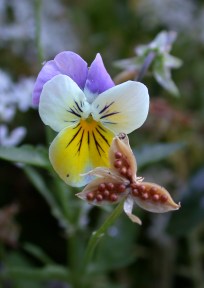
Heartsease, Viola tricolor, also called Johnny-jump-up, is The Herb Society of America’s Herb of the Month for March. It is the perfect time to learn about this delicate little woodland herb that will be popping out of the warming earth very soon. You may know V. tricolor by one of its many other names. There are dozens of names for it including wild pansy, hearts delight, come-and-cuddle-me, love-in-idleness, call-me-to-you, and kiss-me-at-the-garden-gate, etc.

Viola_tricolor_aggr Muriel Bendel. Wikimedia CommonsV. tricolor is in the violet family (Violaceae). The flowers can be purple, yellow, or white but are most commonly all three colors. The herb is native to Europe and Eurasia and was thought to be brought to the United States by colonists. It can be an annual, biennial, or a short-lived perennial. It will reseed itself and thrives in cooler weather.

This unassuming little herb is rich…

View original post 926 more words

A Witches Garden | Why You Need One and How to Make it

Happy Full Moon!

Spirit de la Lune Seed Moon A Witches Garden | Why You Need One and How to Make it

This full moon takes place in the earthy sign of Virgo. We can feel the earth begin to wake up as we shift from the colder, darker months into the warmer season of spring.

You might feel yourself beginning to wake up from your own winter season too. Move your body and stretch often. Drink plenty of water (especially during the full moon) to help facilitate movement for changes that are surfacing at this time.

The Full Seed Moon falling in the sign of Virgo this cycle can be beneficial towards the transformation you’ve been yearning for.

Virgo is the healer of the zodiac. Her eye is sharp and she is able to see the things others may miss. Virgo sharpens our eye as well and makes us more detail oriented. This full moon helps shine light on the areas in our lives that are going well, and on the areas that may need some cleansing or weeding.

Virgo is an earth sign, making this full moon the perfect time for working with the element of earth. As the earth wakes up, we wanted to do a Full Moon Ritual that helps honor the rebirth of Spring…

Read full article at: Spirit de la Lune ~ A Witches Garden | Why You Need One and How to Make it

BIG NEWS: Our newest course is officially here!

Crooked Bear Creek Organic Herbs's avatarGood Witches Homestead

Do you dream of creating your own herbal recipe book? One that’s full ofeffective, original, well-balanced formulasinspired by your unique herbal journey and expertise, and the needs of the people for whom they are intended?Our herbal recipe book would be something environmentally friendly, maybe a wax canvas-bound cover and handwritten interior, with oil stains on the pages and pressed flowers tucked into the spine. Part recipe book, part diary, part scrapbook – it would smell of the garden and be bursting with tried-and-true herbal recipes.
Crafting your own herbal formulations is a beautiful way to develop and share your herbal legacy – a tome of time-tested formulas that your family and clients will treasure for years to come. It’s also how you can start creating personalized formulas based on unique wants, needs, and energetics.  If you’re ready to progress from following other peoples’ herbal formulations to developing your own…

View original post 357 more words

Florida Herbal Conference

Crooked Bear Creek Organic Herbs's avatarCrooked Bear Creek Organic Herbs

Though winter snows continue to fall here in the Northeast, we are daring to dream of Spring, flowers, and new gardens filled with beauty and fragrant, healing herbs! For more inspiration, exciting workshops, deepening your understanding of the green world, great music and marvelous fun connecting with herbalists around the world ~ head on over to the Florida Herbal Conference site! Emily Ruff and her amazing team are making this conference available to EVERYONE with the pay-what-you-are-able registration fee.   I so hope you have the time to show up and be a part of this Herbal Celebration!! Enjoy!

Source: Florida Herbal Conference

View original post

Exploring Vanilla in the Rainforest and in the Kitchen: Part I

The Herb Society of America's avatarThe Herb Society of America Blog

By Susan Belsinger

(Adapted from her article, “Exploring Rainforest Spices at Villa Vanilla,” featured in the 2019 issue of The Herbarist, the annual journal of The Herb Society of America.)

Vanilla in the Rainforest

P1110204Before going to Costa Rica, I researched gardens, restaurants, herbs, spices, botanicals and the rainforest—places where I wanted to go, see, and experience. Once I visited Villa Vanilla’s website, https://www.rainforestspices.com/, I knew that I had to go there. I made reservations for the farm tour in advance. It was one of my favorite things in Costa Rica—I loved seeing the tropical spice plants up close and personal—and I got to smell and taste so many things, which was a memorable sensory experience!

During the half day Spice Plantation Tour, visitors experience the sights, tastes, and aromas of vanilla, cinnamon, pepper, and other tropical spices, essential oil plants, and a wide variety of…

View original post 1,181 more words