Dana Perino: How I reset my heart (after a brutal election) — My visit to Mercy Ships | Fox News

Last October, after an intense, bizarre and exhausting day covering the election, I came home and told my husband Peter I needed to regroup.

I was suffocating from superficiality. I needed to reset my heart, reconnect with him, and do something together as a couple to the benefit of other people.

So we booked a five-day trip. Our destination: Cotonou, Benin in West Africa, to visit Mercy Ships.

Mercy Ships is a surgical hospital ship whose mission is to bring health and healing to the forgotten poor. We’ve been involved with the group for several years. For this visit, we brought along Erin Landers, the sole employee of Dana Perino and Company. She’d never been to Africa, and it was fun to watch it through her eyes. “Did you see that?!” She loved it. And then some.

I wrote this on the long flight home:

The trip to Benin was our second visit to Mercy Ships. The first was in August 2013 when the ship was in Pointe Noir, Congo. We were there for the screening day, before the surgeries even started, when 7,500 people lined up hoping to be a candidate to be cured of what ailed them.

Some problems are not fixed by surgery, like cerebral palsy. Watching the gentle way the nurses turned non-surgical cases away was heart wrenching. But they were also able to say yes to many, and we shared their relief and joy as they moved on to scheduling. (As an example of how much need there is in this part of the world, Mercy Ships filled up all nine months of goiter surgeries before noon on screening day.)

That day, a little boy, two-years-old, was in and out of consciousness and the people in line raised up their arms and passed him to the front. His name was Emanuel.

A doctor looked at him and couldn’t see anything wrong — until she asked him to open his mouth. There was a tumor growing on his palate that was obstructing his breathing. The doctors got him stable, and Emanuel was the first to be operated on during the ship’s stay in Congo.

The surgeon was a friend we made on the ship, Dr. Mark Shrime (Assistant Professor of Otolaryngology and of Global Health and Social Medicine at the Harvard Medical School). Dr. Shrime volunteers two months a year on the ship, which he has that written into his contract (note to self).

When I talked to him in the fall of 2016, he said he’d be back on the ship in March, so we booked our trip to overlap with his.

At dinner one night, I asked how Emanuel was. Unfortunately, no one knows. They haven’t heard anything since he was treated.

We know he was a healthy and happy boy when he left the ship, and that he was loved by his mom and dad who were there by his side. But it’s also Africa — follow up is difficult, though technology will help the ship try to stay in contact with patients in the future.

We agreed that we must find out how Emanuel is doing. Someone at the table had a friend who was still there, and they knew someone who worked at the port where Emanuel’s dad worked. Six degrees of separation applies in Africa, too. I bet Dr. Shrime that he and Emanuel would be reconnected by April.

There were several volunteers still on the ship that we’d met on our first trip. Some of them stay for many years. All of them raise money from their churches and communities, including online ones, and they pay a ship’s fee to cover their expenses.

Some people, like Keith Brinkman, have spent 28 years on the ship — what a career he’s had (and one of his financial supporters follows me on Twitter. How about that!).

Others, like Dr. Shrime, come when they can. Surgeons, dentists, anesthesiologists and ophthalmologists, for example, can come for as little as two weeks, while other jobs require a longer commitment due to training requirements or for teachers.

One of the full-timers that works in the operating room says he loves having visiting surgeons on the ship, but if they are there for two weeks they want to work 24/7 and get as much done as possible, which means the others don’t get a day or two to recharge. And one of the reasons they brought their families on the ship was to have more time with them. There’s a lot of what we used to call “forced family fun!”

In Benin there’s a cultural custom that family members wear the same pattern of traditional African clothing. The ship knows a few tailors who come on and make special outfits for everyone.

When we went out one night, several of the couples dressed in matching clothes. When in Benin! (Though Peter, Erin and I had a bit of a uniform, too – khakis and blue shirts. “YOBOS!”, we learned, is the nickname for white people — it wasn’t an insult; rather more playful and we laughed, too).

We made some new friends, too — including a young woman named Renee Joubarne from Canada who is relatively new to Mercy Ships and works in the communications office.

She patiently drove us everywhere and served as our interpreter. Her first service was in Madagascar. Next stop, Cameroon. We told her that back in the States, they’d call her a “Girl Boss.” She isn’t prideful, but I think she kind of loved that title.

We met nurses from Michigan. One of them is going back at the end of this field service to work as a travel nurse and pay down her student loans. Her girlfriend opted to stay on and will work in Cameroon as a ward nurse.

The head operating room nurse is from Holland and such a great leader — I’d follow her anywhere.

The galley staff is amazing — they make so much food, buying local when they can, cooking birthday cakes for celebrations, making sure anyone with a food allergy has some options, and being so cheerful about it all.

The captain is John Barrow from Australia. Quite a character.

When we were touring the ship’s bridge, I said “What’s it like to be captain of a ship that stays in port for nine months at a time?”

He was a good sport and laughed.

Captain Barrow and his wife are raising two boys on the ship.

“What’s the hardest part about that?” I asked.

“Boys want to run. But there’s no running on the ship. And as the rule enforcer for everyone on the ship, I’m always telling them to stop running!” he said.

Captain Barrow said that recruiting for non-medical staff was really important, because without the support staff (both on and off the ship), the medical team can’t do their work.

For example, he said that they really needed a car mechanic for their fleet of vehicles. I asked if they’d tried to tap into returning veterans who want to continue doing good work with organized, meaningful missions, and he thought that sounded like a good idea.

So that night during a live hit with “The Five,” I made an appeal for a car mechanic. Well, the next day there was an application in from a 25-year-old veteran with the required skills who said he was interested in the job.

The night we left, he caught me in the hall and said, “You’re a woman that’s good for your word.”
Well, it’s better than being good for nothing!” I said.

I hope I see him again one day.

There was also Timmy Baskerville, who started as a mechanic and ended up on the communications team as a photographer. Remember his name — his art is powerful. He started on the ship doing one job and ended up realizing he had a hidden talent and has a future as an artist.

I loved talking with the dentist from Peru, and the couple from Pennsylvania who sold everything and decided to give this a go because retirement felt like a death sentence.

I also enjoyed a couple from Oklahoma that is raising their three kids on Mercy Ships. The father is an anesthesiologist who could make a big salary in the States, but they wanted this experience for their family.

Their 11-year-old son agreed to do an interview for my package on Fox News, but he had a question for me, too. I said, go ahead ask me anything. But he got too shy and looked to his mom for help.

It turns out he wondered if I knew anyone in the States that might be willing to donate some AstroTurf that can be rolled or folded up and put away to be stored on the ship. The only place for them to play is on the dock and he wants to play “American football” (not just soccer and frisbee).

“Who’s your team?” I asked.

“The Seahawks,” he said.

“Is that allowed when you’re from Oklahoma?”

“Well, I don’t want to support the Cowboys!”

“How about the Broncos then? That’s my team.”

He scoffed.

“Ok, the Seahawks it is.”

I told him I didn’t know any company off the top of my head that made that kind of AstroTurf project but that I would ask. I posted it on Facebook with a photograph of the cement dock where the kids play. The first response came immediately from a man who works for Shaw and said, “I think we can do that.” Lesson: don’t be afraid to ask.

The kids living on board attend a school called The Mercy Ships Academy. There are thirty-five students, from nursery school to 11th grade. The classes are taught in English. On my tour, I met fifth graders learning synonyms and eighth graders building apps.

I talked with a social studies teacher that was creating lessons about different forms of government.

One of my favorite teachers is Miss Beth Kirchner, who used to work for Disney and can draw Mickey for her students to color in. Dave is their principal — he’s from Australia. Wonderful chap. He’s leaving in a couple of months and the school needs a new principal ASAP (hint hint) so that the kids can keep attending the school on the ship with their parents. Otherwise they’d have to go to boarding school. “Do not want” is an understatement.

I met a William Wolfenberger from Kansas in his early 20’s who works in the engine room on the ship – before this job he’d never been on a boat or seen the ocean. The second youngest on board, he’s grown a beard and seems to always be in a good mood, even when we were talking about the cabin he had where his towels never completely dried.

He is friends with Tyler Shroyer, a young man from Ft. Wayne, Indiana. Tyler spent his time on the ship studying business and will be going back this year, the oldest of seven boys, to help his father grow his concrete company. He also has a blog called “From the Barnyard to Benin.”

For Christmas this year, he sold his beard at an auction — they get creative with gifts. Whoever won got to dye the beard purple or pink (he has red hair). The cost of this item? $25.

“So, if I put up $26, I could get you out of it?” I asked.

“Yes, I suppose you could,” he said, a bit hopeful.

“Not that I’m going to,” I said. “I don’t want to spoil the fun.”

There was a girl named Anna Psiaki. Tall and willowy, long blond hair. She’s from upstate New York, one of nine children. She’s a writer on the ship — a poet, too.

Her team says she’s the first to get to know all the locals and has amazing stories of how people just invite her in for a meal, ask her to babysit their children and make her special gifts.

We saw her off the ship, too, at the French Institute where a jazz concert was playing. She was wearing a red sweater despite the heat. It was hideous and I said so.

“It’s meant to be!” she said.

It was an ugly Christmas sweater a friend had left behind on the ship. She wore it with no inhibitions. Anna is fully herself. I admire and envy that.

“What number were you out of the nine?” I asked her.

“I was the fifth,” she said.

“So no one paid attention to you?”

“I don’t think anyone even knows I’m in Africa.”
That was one of the funniest things I heard on the ship.

Then there was nine-year-old (almost 10!) Harry. His dad is the second engineer who served in the Navy for New Zealand. Harry, according to his dad, “loves the ladies.” He was not shy about saying hello and telling me all sorts of things.

“You are quite something!” I said. “You have a way with words.”

“Well, my mom says I can be about as diplomatic as a starving rhinoceros.”

“Can I use that line back home on ‘The Five’?”

Permission granted. I started wondering who’d that best describe back in the States.

We met a British couple that really should have their own reality show. Ally and Amy Jones. He’s the human resources director and she’s the Nurse and Medical Capacity Building Manager. Everyone loves these two and their great senses of humor.

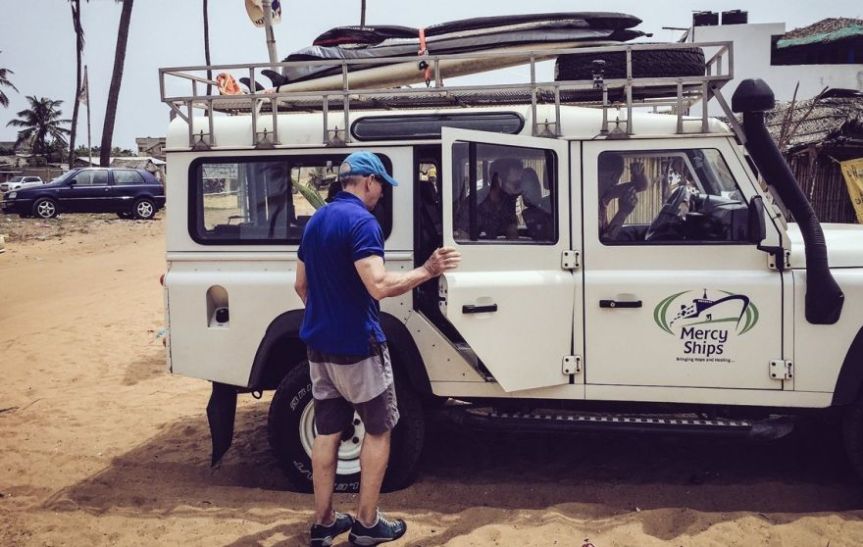
Ally even took Peter surfing one morning. Well, Peter said it wasn’t really “surfing.” It was more like “fell off a short board over and over again.” The waves are rough in West Africa, but the temperature was perfect.

The night before, Amy was the designated driver to get me back to the ship in time to do my Fox News TV hit. We had to leave early, and our vehicle was blocked in. The parking attendants shrugged and looked around without meeting our eyes. But Amy was determined to get me back to the ship. The guys got one car moved. That left about 14 feet of space for a 15-foot long vehicle. She started maneuvering the vehicle. The men were all yelling instructions at her in different languages (she speaks English, French and some of the local language, Fon). The French military guard across the street came over to assist – these guys seemed bemused by this red headed woman driving a big SUV. She was confident. When she gunned it, the military guy jumped out of the way and the others all were shocked into laughter and a little bit of cheers. We made it with about a centimeter of space on each side. I kept saying, “Don’t worry, Amy. If I miss my hit, this will be the best reason EVER.” She was another Girl Boss. And one with a huge heart.

They’ll be leaving the ship soon for Amy to give birth to their first baby. Ally told me her condition upon agreeing to marry him was that he had to be comfortable living out of a suitcase. She loves to get off the ship and work in the village, while he likes being on board (with air conditioning and showers). A perfect match.

“Is the baby going to have to live out of one suitcase, too? I asked.

“Yes,” Ally said. “Well, ok, maybe two.”

They’ll be great parents.

Besides meeting new people, we got to see a lot more this time as the ship has been in port for about nine months and is preparing to leave this summer.

The hospital wards were full. Dr. Shrime performed four surgeries our first morning (Peter and Erin went in and filmed, while I shied away and dealt with motion sickness that morning — which is not the same as having morning sickness, so let’s not start any rumors).
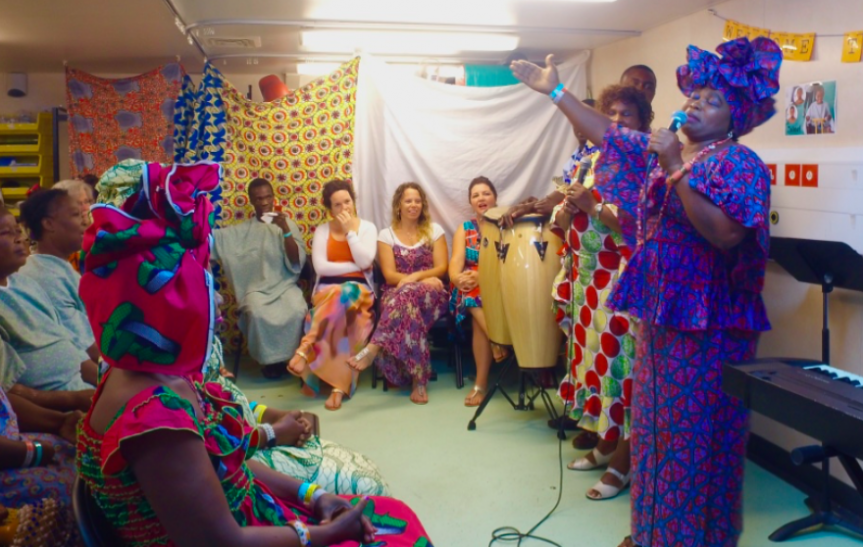
We went to a celebration of sight where seventy patients that very week had gone from blind to seeing in just a couple of days. They danced and told their entire stories – no one summarized (we had to duck out or we’d have been there all day).

Then we visited patients in the outpatient tents who were having physical therapy to make sure everything was going well after their surgeries. It’s not of much use to have a skin graft to repair a burn if you don’t do the exercises to ensure range of motion. I was impressed by the care — from start to finish. No one is urged to go home before they’re ready.

The most powerful event was a New Dress ceremony held for three women who had their fistulas repaired on the ship. I am particularly interested in helping to heal women who have a fistula after their pregnancies.

I first became aware of it at the Aberdeen Clinic in Sierra Leone where women there stayed for three weeks and got to attend classes. The day I was there, they were learning to count to ten. Pause. Think of that. Learning to count to ten after you’ve already had at least one baby, probably more.

The patients get a new dress after their fistula surgery to celebrate the fact that they’re now healed. That morning on the ship, it was standing room only. The chaplain led the worship, the band played songs, and the patients and volunteers sang and danced. One of the songs lasted for twelve minutes — it had a good beat, and I was kind of bummed when it finished.

I was amazed that each of these women felt confident and strong enough to stand up in front of all of us, with no inhibitions, and give a speech — many fistula sufferers are ostracized for their condition and withdraw from society. Often they have their children taken away from them. They become broken, just shells of their former selves.

The first patient said she’d suffered from the condition for nineteen years — more than half of her life. She’d been shunned and no medical care was able to address her problem. Until the ship.

“Hallelujah!” she said. Indeed.

Then she led everyone in another song. I didn’t know the words, but I clapped and danced next to the patient who had beat me in Connect Four twice the day before.

“Rematch?” he said with his eyes.

“You bet,” I nodded. He was good though. A Connect Four ringer.

Despite those bits of humor, I cried for the entire ceremony — for their suffering, for the guilt of not being able to do more for them, and for the women who will not get this chance of a surgical remedy.

But mainly, mine were tears of joy. And maybe some tears of relief that my heart wasn’t as hard as it felt by the end of the election season. Then more guilt because with that thought I was making this about me. Is there no end to our self-absorption?

One of the African volunteers (a full-timer on the ship) who saw my tears stepped out to get me a tissue, a sweet gesture that, guess what? Made me cry even more.

As I tried to pull myself together, I was surprised to be called up to present one of the women with a gift. As self-conscious as I was since I really didn’t do anything to make her repair a reality, I wanted her to know how I felt.

I gave her an enthusiastic hug and she hugged me back as women who just understand each other.

“I’m so happy for you,” I said.

She didn’t speak English, but she knew what I meant.

She kissed my cheeks four times. Four is better than two in Benin.

At the end of the ceremony, the nurse in charge of the women’s clinic said to them. “All we ask is that when you leave here today, let God walk with you. You are not alone.” Yes, please do that. Don’t walk alone.

On Saturday, the ship held a party for kids from a local orphanage called Arbre de Vie, which means “tree of life”. The young couple that runs the orphanage is from Ohio. Ashley and John Reeves.

Ashley wore a black sleeveless dress, wedged sandals and a red straw hat. I liked her style. She held a toddler boy named Codjo. He called her mommy.

I wondered if they all did, but no, Ashley and John are adopting him.
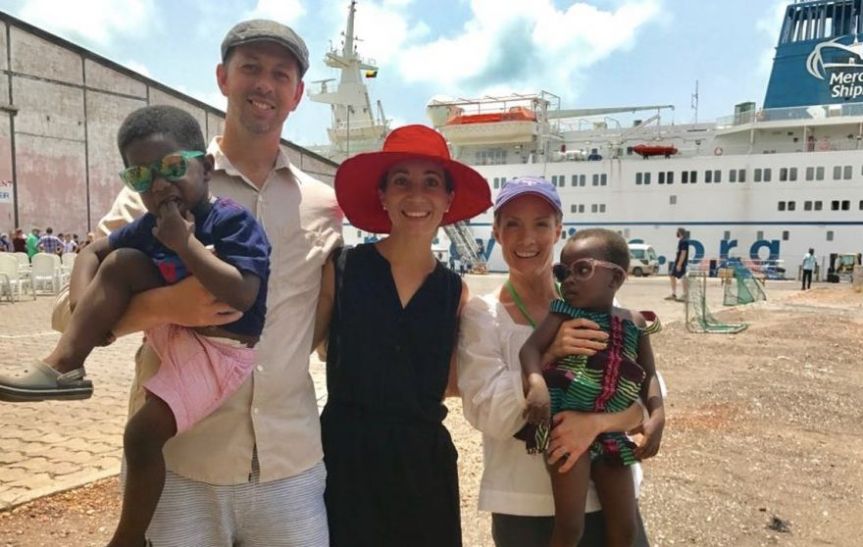
He was brought to the orphanage when he was twenty days old. His mother had had a C-section and was sent home. But the placenta was still inside. Oh. Oh dear. What a tragic end to her young life. Story after story like this in Africa.

The orphanage has about thirty children under its care at any one time. They live way outside the city. I hear the place is joyous. They do all they can with what they have. They just got electricity last summer and a new kitchen, but their staff still prefers to cook outside over a fire. It probably does taste better anyway.

One of Ashley and John’s other kids is ready to go to university and wants to study medicine. They’ve done so many great things so far in their life, and being around people like that can make you really question your contribution to the world.

As we walked together after an interview, she thanked me for spreading the word.

“Well, none of us ever feels like we do enough,” I said.

She stopped walking, we shifted the babies we were holding from one hip to the other.

She said gently, “But you’re here. And not everyone can be here. You have unique talents that will help us be able to stay behind and do even more.”

I nodded, speechless, and was glad I was wearing sunglasses.

THE HOPE CENTER

Martha Rodriguez runs the Hope Center. She changed her name badge with a pen to go from public service to public servant. She grew up in Michigan and then worked for a chemical company in Houston.

She retired but wasn’t ready to settle. She was ready to do. And doing ended up being taking the lead at the Mercy Ships Hope Center. When she took us on a tour, she was full of joy and energy. “Can you believe I get to live here and do this?”

She loved every bit of it — the local day crew she hired all greeted her with big smiles. The children ran to her. The mamas met her gaze that to me said, “Thank you, thank you, thank you.”

The cooks make over 300 meals a day out of an outdoor kitchen, and they were washing beautiful lettuce leaves and had a huge bowl full of avocados (I kind of wanted one but I didn’t dare).

At one table, patients ready for surgery in the coming week were eating with their fingers, some with gigantic tumors on their faces that would be gone by Friday. In the heat, in their discomfort, they all stood to greet her, smiling. (Can you believe I got to come and see this?).

At the laundry area, several kids — some patients, others siblings or children of patients — played with whatever was handy — a stick, a broken race car.

I gave one little girl Felt Jasper to hold and she rubbed the soft material all over her face, put his pink Barbie stethoscope in his ears. Then the children saw Erin and the camera equipment and in unison they asked for what kids the world over want – a selfie! It turns out even little babies in Africa know how to swipe a phone.

Martha is an attractive woman. She has a long pony tail, letting her hair turn a lovely grey.

I thought I’d like to do that one day. Run a Hope Center and have pretty hair I don’t have to worry about coloring. And to have a heart that big.

As we were leaving to go back to the ship, an older couple came to the door. The husband was blind, walking with a cane and being led by his wife. They’d traveled from up country and said they were there to be pre-screened for his surgery. The problem was they were a day early and the center was full. It was only 2 p.m., and Martha said she’d figure it out, not to turn them away yet.

In the car, she called someone and explained that they’d come a long distance and needed a bed. But she was told there wasn’t a room that night and that they believed couple had a place to stay, perhaps with family.

Martha said good-bye and then, to no one in particular, said, “But they’ve traveled so far. There has to be a way. How could we turn them away?”

“I could never. Ever,” I said from the back seat, admiring and wanting to be more like her.

She was here and she was doing.

What was I doing?

A word about Benin. I’ve traveled to many countries in Africa, and to me Benin felt the most hopeful. It has a new president with a business background who is focused on the economy and expects results.

“But I am wearing the helmet, officer!”

I kind of appreciate the mix of compliance and defiance. But I do hope they start to wear their helmets.

With a stable government and a young population (65 percent of the country is under 35), and decent infrastructure in the main cities (that’s all relative in Africa), the city feels alive. And fairly safe.

Cotonou is the economic capital, and we ate at an Indian restaurant, Shamiana, whose pappadam were better than any I’ve had in the States.

Ouidah is the cultural city where millions of slaves died or passed through the Gate of No Return before the terrifying trip over the Atlantic.

When we were there, busloads of schoolchildren were there on field trips. They were colorful, loud, and funny.

Looked to me just like kids look anywhere. I got a photograph from behind as they all gathered at the sea, many of them seeing the ocean for the first time. And I wished them well — that they’d have peace and opportunity and that they’d keep giggling like that.

Finally, we met the U.S. Ambassador, Lucy Tamlyn and her husband Jorge Serpa, wonderful representatives of the USA in a country that aligns with America’s interest for freedom and opportunity. They are wonderful people who have both dedicated their lives to foreign service.

Peter and I feel lucky to know them – they have the best stories! (Like when Jorge was evacuated in Chad…TWICE). I finished my trip feeling like Benin had a hopeful future.

And not to be left behind on the ship, I took Caleb Biney with me. Caleb is fourteen and lives on the ship with his family. He’s a part of Scholastic’s young journalism program, and was able to interview Amb. Tamlyn for an article for Scholastic’s News Kids magazine. He was also taller than both of us.

As we left the ship, I told Peter I want my obituary to say, “Loved hellos. Hated goodbyes.”

Humans can make friends easily, if they are open to it and are interested in other people. There’s so much cultural and language diversity on the ship, but we all bonded over something that means a lot more than anything else I do every day — to serve others who need our help, and to do it selflessly and joyously.

It’s actually rather simple. It just took traveling halfway around the world for me to be reminded of it.

We accomplished what we set out to do — reset our priorities and reconnected with each other.

And now…back to our previously scheduled program, but with lighter hearts and renewed enthusiasm for the things that really matter.

Dana Perino currently serves as co-host of FOX News Channel’s “The Five” (weekdays 5-6PM/ET). She previously served as Press Secretary for President George W. Bush. She is the author of the new book “Let Me Tell You about Jasper : How My Best Friend Became America’s Dog” (October 25, 2016). Ms. Perino joined the network in 2009 as a contributor. Click here for more information on Dana Perino. Follow her on Twitter@DanaPerino.

Source: Dana Perino: How I reset my heart (after a brutal election) — My visit to Mercy Ships | Fox News

Yellowstone and Montana are Killing the Last Wild Buffalo

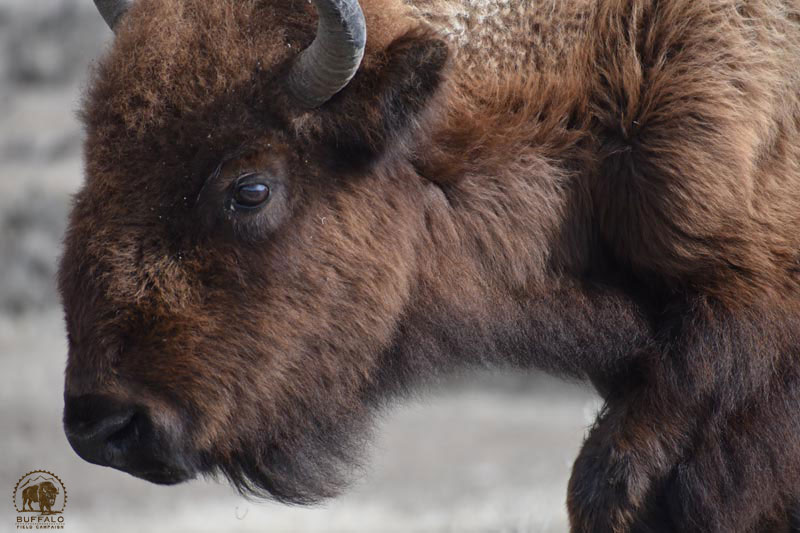
2017 03 16 01 003 YoungBull BFCseay2017

More than 1,200 of America’s last wild buffalo have been killed this winter, and it isn’t over yet. Hunting along Yellowstone’s boundaries has taken the lives of more than 400 buffalo. Hunters are still in the field making kills. It’s a terrible time of year to hunt. The buffalo — like other wild grazers — have used up all of their fat stores, and are showing ribs and bony hips, waiting for the re-greening of the Earth so they can again replenish their huge bodies. This is also the time of year when the long, harsh winter takes her toll, too. There will be many buffalo who will not survive into spring, but the government is not accounting for these deaths in their mad rush to reduce this most significant and vulnerable population. Further, hunters are still killing adult female buffalo who will begin having their calves in about six weeks. All too often, BFC patrols make heartbreaking discoveries of finding fully-formed baby buffalo in their mother’s gut piles.

2017 03 16 01 002 YNPtrapBFCseay2017

Additionally, Yellowstone National Park — shamefully complicit in Montana’s livestock industry’s war against wild buffalo — has captured close to 800 buffalo, all of whom have been or will be sent to slaughter. The trap is emptying quickly, though Yellowstone continues to attempt to capture. Recently, some buffalo have resisted these attempts, while others have not been so lucky. On Monday in Gardiner, BFC patrols documented as five Yellowstone wranglers on horseback tried to trap fifty-five buffalo; all but one got away, running to the hills for their lives. The unfortunate mama buffalo who was trapped caught the attention of another family group of twenty-two. Coming dangerously close to the trap, they sealed their own fate as the wranglers, hungry to capture, took advantage of the situation. Hundreds of wild buffalo are gone forever. BFC’s Mike Mease and Stephany Seay attended the second media tour of Yellowstone’s trap last Thursday, where we again witnessed Yellowstone park rangers, wranglers, and biologists doing the service of the Montana Department of Livestock as they loaded wild buffalo onto stock trailers headed for the slaughterhouse, then proceeded to move more through the trap. It has become business as usual for these buffalo abusers, just another day in the park. They tell us that they don’t like doing this, that they want slaughter to end, but their actions say something else. Yellowstone National Park is not without significant power, but they have shown they are without courage. They can stand up to Montana and refuse to participate. But they don’t. Their cold routine of capturing, testing, sorting, and shipping the country’s national mammal to a horrific death — as they don the image of this sacred being on their uniforms and rake in millions from the people who come to adore them — has become just another day at work. They attempt to put the task of change on the public, shirking responsibility for their part in these crimes. While it is true that a current Montana law – MCA 81-2-120 — is the driver behind the cumulative mismanagement plans and practices, Yellowstone should not have the luxury of of passing the buck. The world’s most well-known national park has astounding influence that they choose not to use. Instead, they kill America’s last wild buffalo. By the end of March, this should all be over.

Please continue to keep pressure on Montana and Yellowstone. Do not ease up. Be relentless and don’t accept their excuses. Laws, decisions, and management plans can be changed.
* Yellowstone National Park Superintendent Dan Wenk 307-344-2002
* Montana Governor Steve Bullock 406-444-3111

And contact your members of Congress to tell them that this must end once and for all. Congress holds the purse strings and can end the funding.

2017 03 16 01 001 RedHead BFCseay2017

The coming of spring is beginning to benefit the buffalo, and we are thankful. The Gardiner Basin is swiftly losing all of its snow and the earth is beginning to turn green again. This is encouraging buffalo to migrate away from the vicinity of the trap and away from the boundary where hunters still wait. In the Hebgen Basin, west of the park, however, there is still a significant amount of snow covering the ground. It’s beginning to melt, and south-facing slopes are opening up, but with so much snow there’s still a long way to go. Buffalo here are making their living along creeks and rivers, eating the sedges that are exposed. Soon spring migration will begin in earnest, as family groups — hopefully by the hundreds — will make their way to their calving grounds around Horse Butte. BFC patrols will soon shift our focus to the highway, helping to warn motorists as the buffalo move through this important corridor to their birthing grounds. The Montana Department of Transportation has recently installed new 55mph signs for night time drivers, but without enforcement this change will not benefit buffalo very much. A few other mitigation measures have been or will soon be put into place as well, including new wording on three marquee signs that alert drivers to “BISON” on the road, as well as an incident alert for a mobile app to alert truckers and other travelers that they should expect buffalo on the road along this section of highway. These things will help, but safe passage infrastructure is the only thing that will make a real and lasting difference. Until then, and as we always are, BFC will be out day and night helping to warn traffic, trying to keep the buffalo safe.

Saint Patrick’s Day – secretsoftheserpent

By

March 16, 2017

kissmepaganheritage

St. Patrick’s day is the day people celebrate St. Patrick. He is the British born missionary who is credited with converting Ireland to Christianity. Why are we celebrating a foreigner going into to Ireland and enforcing his will on the people? St. Patrick’s parents were not Irish either, they were Roman. I have always said that everything goes back to Egypt and this holiday is no exception.

I was going to do a post on St. Patrick himself, but the history of him has been monopolized by the church. Everything we know about him and his history is basically from his writings after he became a bishop. I have found some ancient texts that say he burned pagan books, but that is no surprise with the history of Christianity. I find it amusing that researchers scratch their heads about him casting out all the serpents from Ireland. Ireland has never been known to have snakes. The serpent is code for intelligent people. Most of the intelligent people were Druids or Witches. He either ran them off, converted them or killed them. If they were converted they weren’t serpents in the first place and given the history of Christianity I have no doubt he burned them with the books. He didn’t just become a bishop in the fifth century by converting people. In the Thesaurus Paleohibernicus it states “Patrick fought the Druids with a hard heart and crushed the proud”.

St. Patrick’s day first began during the revolutionary war. Britain and America were both trying to rally their troops and several had Irish ancestry. It was mainly a celebration by protestants. General George Washington declared that March 17, 1780 become a national holiday. Washington proclaimed “it was an act of solidarity with the Irish in their fight for independence”. This was the first holiday the soldiers had in two years. Washington and most of the American army were Masons. Masonry goes all the way back to Egypt. This was the beginning of St. Patrick’s day in America. In Ireland, St. Patrick’s day was always a religious holiday. Up until the 70’s the Irish government even had laws that closed pubs on March 17. It was in 1995 that the Irish government used St. Patrick’s day as a way to drive tourism and showcase Ireland. […]

Entire post at its Source: Saint Patrick’s Day – secretsoftheserpent

Stunning 700-year-old giant cave used by Knights Templar found behind a rabbit hole in the British countryside – Mirror Online

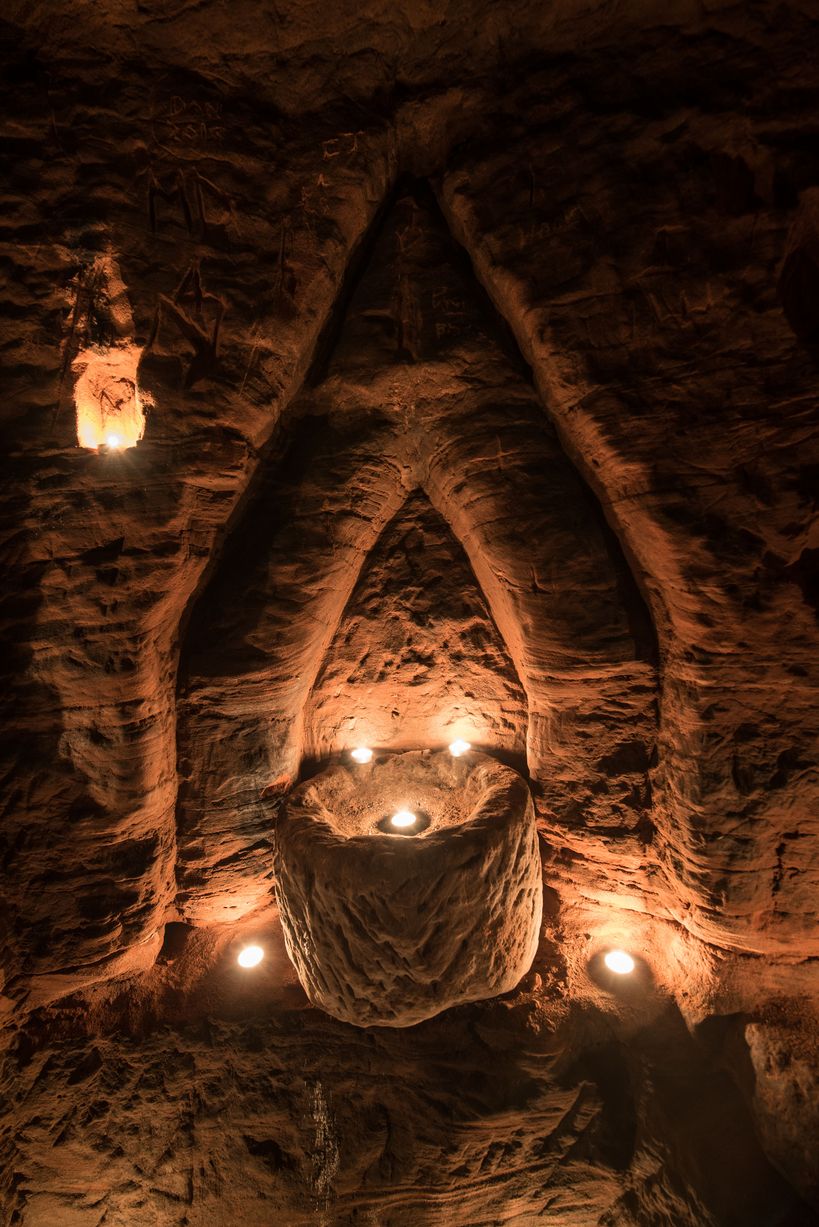
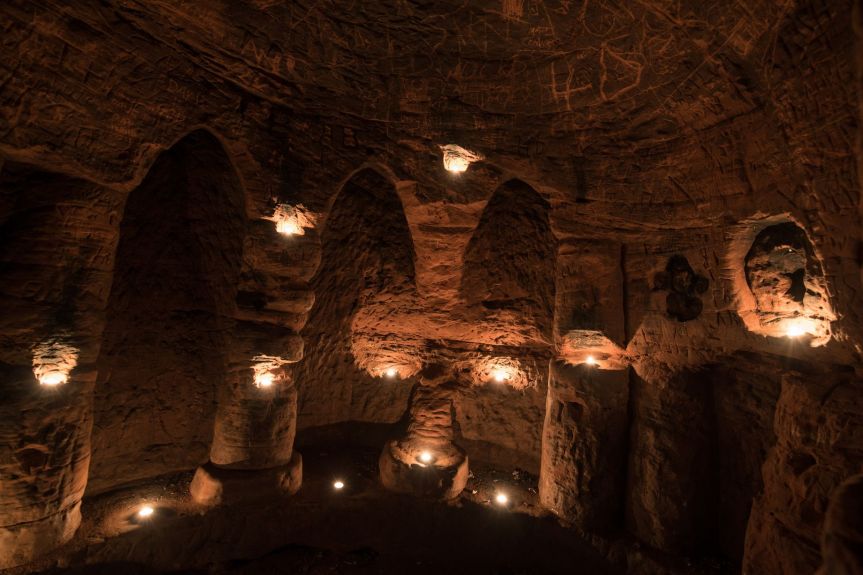
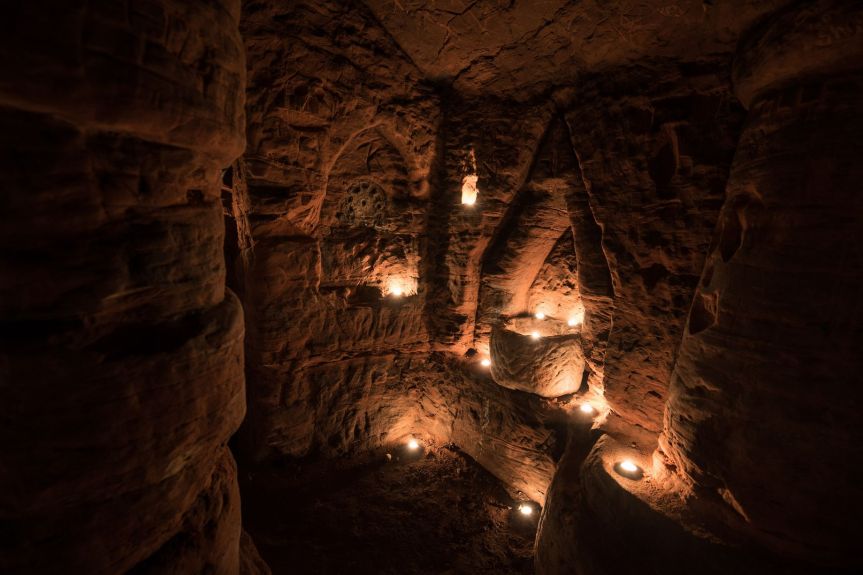
The cave, beneath a farmer’s field in Shropshire, was used by the medieval religious order that fought in the Crusades and these stunning images were captured by photographer Michael Scott

It contains a network of walkways that are “completely untouched”

The way out of the cave, where Knights Templar would have walked 700 years ago

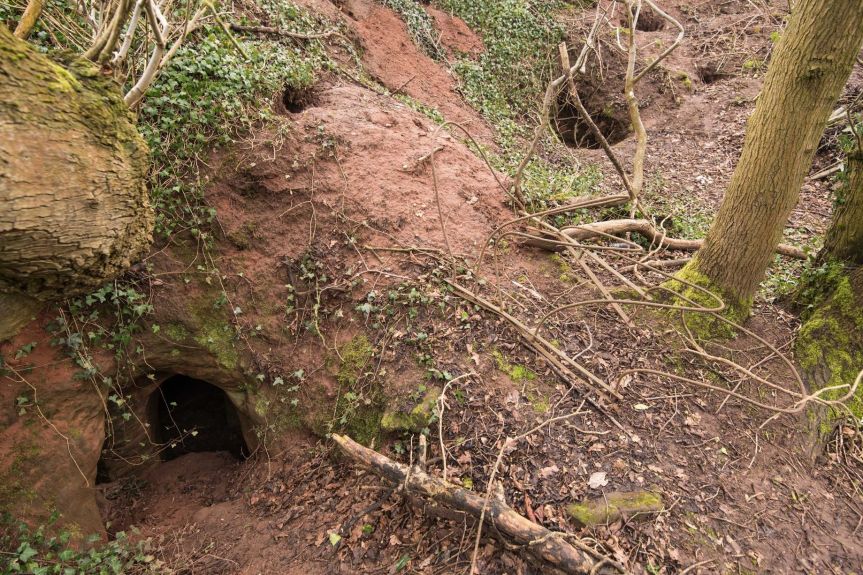
The hole leading into the cave looks just like a rabbit’s hole.

The cave is near the Shropshire village of Albrighton.

The Knights Templar were active from 1119 to the beginning of the 1300s, although the exact dates are disputed.

It is not known exactly when the cave was dug, but it is thought around 700 years ago – although some believe it was much later in the 17th century

Source: Stunning 700-year-old giant cave used by Knights Templar found behind a rabbit hole in the British countryside – Mirror Online

Reiki and Palliative Care – Holistic Experiment

By Lucia Santos

Palliative care is a way to improve the quality of life of patients and their families are facing the problems that are often associated with life-threatening illnesses. It provides relief from pain and other distressing symptoms, affirms life and regards dying as a normal process, integrates psychological and spiritual aspects of patient care, and offers a support system to help the patient and their family.

Palliative Care is not the same as hospice, it focuses more broadly on improving life and providing comfort to people of all ages with serious, chronic, and life-threatening illnesses. It can start as soon as the patient is diagnosed with a serious illness, at the same time they continue to pursue a cure. Some patients can recover and move out of palliate care while others can move in and out of palliative care as the need arises.

It’s a holistic alternative that attends to the challenges that the illness poses in every aspect of life. It also extends to family members as well as caregivers. It can help educate family members about the patient’s illness, treatment, and medication; provide care for caregivers; help with transportation issues, meals, and shopping among other things.

Reiki helps assists those who are passing away and preparing to leave the physical plane. It can also be used to help those grieving the loss of loved ones.

It is essential that all Reiki practitioners to examine their beliefs and conduct the research they need to provide evidence for themselves either way so they can be a clear channel. This healing method can help resolve any unfinished business and find resolutions with regard to previous conflict. The sessions can help the recipient have a  peaceful transition.

Reiki and Palliative Care on Animals

Our pets are our family; they are so loyal and take pleasure in helping and bringing joy into our lives. When an animal is dying, Reiki can be used to help not only the animal, but also the family transition with grace and love, honoring the memory and time they had with their cherished pet.

With Reiki, an animal’s symptoms can be eased while providing emotional support. Reiki can help to extend an animal’s life or help them to pass away in peace.

The family may notice that performing Reiki on their beloved animals helps to bring them closet together and communicate more clearly. Reiki can help with any unresolved energy and help heal and balance. By resolving emotional or mental imbalances and releasing any energy that’s not serving its highest good, the animal is free to transition with peace and love.

It’s so important that the family should get Reiki along with their pet. These sessions can help the family be present in order to enjoy the final days with their animals as well as to help them have clarity when making a decision regarding with the welfare of their pet. Helping the family through the grief provides relief for the animal, who might be trying to hold on and prolong their suffering in an effort to help ease the family’s pain.

Source: Reiki and Palliative Care – Holistic Experiment

Scandal: MRI brain-imaging completely unreliable ‹ Jon Rappoport’s Blog ‹

Fake news on a grand scale.

By Jon Rappoport

Over the years, I’ve exposed a number of medical diagnostic tests. For example, the antibody test was once taken as a sign of good health when it registered positive, but then it was turned upside down—a positive result was read as a signal of illness.

Now we have the vaunted MRI brain-imaging system.

From sciencealert.com (7/6/16): “There could be a very serious problem with the past 15 years of research into human brain activity, with a new study suggesting that a bug in fMRI software could invalidate the results of some 40,000 papers.”

“That’s massive, because functional magnetic resonance imaging (fMRI) is one of the best tools we have to measure brain activity, and if it’s flawed, it means all those conclusions about what our brains look like during things like exercise, gaming, love, and drug addiction are wrong.”

“It’s fascinating stuff, but the fact is that when scientists are interpreting data from an fMRI machine, they’re not looking at the actual brain. As Richard Chirgwin reports for The Register, what they’re looking at is an image of the brain divided into tiny ‘voxels’, then interpreted by a computer program.”

“’Software, rather than humans … scans the voxels looking for clusters’, says Chirgwin. ‘When you see a claim that “Scientists know when you’re about to move an arm: these images prove it,” they’re interpreting what they’re told by the statistical software’.”

“To test how good this software actually is, Eklund and his team gathered resting-state fMRI data from 499 healthy people sourced from databases around the world, split them up into groups of 20, and measured them against each other to get 3 million random comparisons.”

“They tested the three most popular fMRI software packages for fMRI analysis – SPM, FSL, and AFNI – and while they shouldn’t have found much difference across the groups, the software resulted in false-positive rates of up to 70 percent.”

“And that’s a problem, because as Kate Lunau at Motherboard points out, not only did the team expect to see an average false positive rate of just 5 percent, it also suggests that some results were so inaccurate, they could be indicating brain activity where there was none.”

“’These results question the validity of some 40,000 fMRI studies and may have a large impact on the interpretation of neuroimaging results’, the team writes in PNAS [Proceedings of the National Academy of Sciences].”

“The bad news here is that one of the bugs the team identified has been in the system for the past 15 years, which explains why so many papers could now be affected.”

“The bug was corrected in May 2015, at the time the researchers started writing up their paper, but the fact that it remained undetected for over a decade shows just how easy it was for something like this to happen, because researchers just haven’t had reliable methods for validating fMRI results.”

40,000 scientific papers invalidated. And from what I gather, not everyone is sure all the problems with MRI have been corrected.

Think about the bloviating—“We now know what the brain is doing when people are running and sleeping and eating…” No reason to have believed any of this.

And then there is Obama’s so called Brain Initiative, a program kicked off and funded after the Sandy Hook School catastrophe. At least some of the scientific work has been relying on MRI imagining. How much of that work needs to be thrown out?

In case you think invalidating 40,000 research papers isn’t a gigantic scandal, consider how many times these worthless papers have been cited as evidence in other studies. The ripple effect creates a tsunami of lies.

And for each one of those lies, there has been a researcher who, quite sure of himself and his reputation, made statements to the press and colleagues and students, promoting his findings.

Fake news? Now here is awesome fake news.

Source: Scandal: MRI brain-imaging completely unreliable ‹ Jon Rappoport’s Blog ‹ Reader — WordPress.com

Medicinal and Herbal Wildflowers – Good Witches Homestead

From the beginning of human history, man has considered plants “useful.” Of course, the most obvious use is as a food source, but in all cultures, plants have also figured prominently as medicines. From prehistoric rites to modern medicine, plants have been shown to possess curative properties. Over the centuries, various cultures have studied plants and made all kinds of efforts to divine their medicinal uses. Some experiments have proved disastrous, even fatal. Others seemed miraculous. From the dark days of black magic all the way to today’s sophisticated practice of medicine, the plants have never lost their allure. In fact, today we live in a time of renewed interest in herbal remedies. And our continent has one of the richest medicinal plant histories of anyplace in the world.

Below, you’ll find just a few of the wildflowers that man has used from ancient times forward to aid in his health and provide cures for his illnesses and diseases. It is provided as a source of information and not intended for prescriptive purposes. In fact, many of the same plants used as medicinals are also poisonous if not used properly. (Wildflowers mentioned that pose a serious danger are noted.)

Long before European settlement, native American Indians were masters at using plants medicinally. And today’s modern medicine proves many of their ancient cures. Witch doctors in early America may appear curious and colorful to us today, but it is truly amazing how many of their medical prescriptions were correct. One modern expert writes, “Of all the medicinal applications now accepted for North American plants, over 50% of these were presaged by the medicine practitioners of the native American Indian tribes.”

Meanwhile in Europe, during the Middle Ages, the Herbalists worked to advance the plant studies that had been going on there since the time of the ancient Greeks. During the Middle Ages, with more superstition than science, the herbalists offered their cures, sometimes with disastrous consequences.

The famous Doctrine of Signatures. One of the more bizarre pseudo-sciences that flowered during the early medieval period was medical treatment based on plant structure and appearance. Certain herbalists decided that one could prescribe an herbal cure or treatment based on a relationship between plant parts and body parts. This wild course of the study noted, for example, that parts of the plant Hepatica could be made into a curative concoction for liver ailments. Why? Because the plant has three-lobed leaves that reminded the herbalists of the human liver. Today, Hepatica , the beautiful early spring wildflower we enjoy still carries the name based on its connection to the human liver, yet it’s been shown to have no medicinal value. (Hepatica is the Latin word for “liver”, as is hepatitis.) Most prescriptions based on the Doctrine of Signatures probably only made people sick, since ingesting various non-food plants is usually upsetting. However, others, when poisonous plants were unknowingly used, were fatal.

As medical science progressed and Europeans settled North America, the advancing European medical knowledge of plants was combined with the traditions of Native American medicine. This led to an active exportation of plants from North America, as the settlers learned the new plants’ “secrets” from the Indians.

But this was only the beginning. As modern medicine evolved, plant values were studied and tested, and the results have been amazing.

Today, flowering plants provide almost 25% of the basic ingredients for our modern drugs. This little-known fact makes the study of medicinal plants even more interesting today than ever before. North America has tens of thousands of native plants that have yet to be studied. As Lady Bird Johnson has said, “Surely there are others like digitalis waiting out there.” She was referring to the famous English medicinal wildflower commonly known as Wild Foxglove, but botanically, “Digitalis purpurea.” This is the now-famous plant that is widely used today to treat heart disease. The medicine derived from this plant is usually called, simply “Digitalis”, and has saved untold lives worldwide through its modern applications.

How at least one medicinal plant was “discovered.” The story of the Foxglove is a classic. In 1775, an English physician and botanist named William Withering were asked to treat a patient suffering from dropsy, a broad term that at the time meant “fluid retention.” He had heard of an “old woman in Shropshire” who knew a secret cure which included the foxglove plant. Dr. Withering, after using the secret remedy, which was a concoction of over twenty herbs, found it amazingly successful, but also quickly perceived that only one plant in the mix was working the cure. The whole stew was said to be a diuretic, but Dr. Withering knew that the major cause of dropsy was congestive heart failure. He also knew that foxglove, with its powerful toxic properties in the proper quantity, could strengthen cardiac contraction and enable the heart to pump more efficiently, delivering blood to the rest of the body. Ten years later, Dr. Withering published “10 years of clinical data on patients treated with foxglove.” The rest, as they say, literally, is history–medical history.

From an old woman’s secret cure, through the careful work of an early physician, we have a “wonder drug” direct from a plant that is used today to treat almost every kind of heart disease.

The cure for spider bite becomes environmental monitor. Other stories in herbal and medicinal plants take various paths, as the scientific use of a species is accidentally discovered. Spiderwort, Tradescantia virginiana, a common North American native wildflower with three-petaled purple flowers, was once considered a cure for the bites of spiders, but during modern times has offered scientists other advantages. Botanically, the plant is unusual, being a historic link between the sedges (grass-like wetland plants) and lilies. Moreover, the plant has relatively large chromosomes, making it useful for lab studies in cytology (the structure of cells).

Modern scientific studies of Spiderwort recently rendered an unexpected discovery. Attentive botanists noticed that the plant is extremely sensitive to pollution and radiation which cause its blossoms to change color from blue to pink in a very short period of time! What happens is that the number of cells mutating when in contact with severe pollutants, correlates directly to the level of pollution. So this plant is now used as an inexpensive, but a very accurate device for testing pollution. Where dangerous pollution is expected, spiderworts are planted, and their flower color is closely monitored for changes.

Of course, man cannot exist without plants (since they provide the very oxygen we breathe), so it is no wonder that this interdependence has produced a very long and fascinating history which continues today.

Here are a few examples of various wildflowers and how they’ve been used over the centuries for herbal and medicinal purposes. Plus a few that are stars of the very active boom today in herbal remedies and supplements.  […]

Rest of the article at its Source: Medicinal and Herbal Wildflowers – Good Witches Homestead

Leprechaun – secretsoftheserpent


By

Originally Posted August 14, 2016

index

The Leprechaun was a little tough to pinpoint. First I thought that, like so many other myths, it had to do with the mind. As you will see, the Leprechaun has more with preserving history of this character than anything else. I started with the myths and legends in Ireland. First thing I come across is the leprechaun has something to do with the Faery people of the Tuatha De Danann. If you have read my previous work, you know this is right in my wheelhouse. I won’t go into depth here about the Tuatha De Danann, but if you don’t know much about these matriarchal people from ancient Ireland, your are definitely missing out on great history.

Come to find out leprechaun comes from the Sun God Lugh. I found out that it is pronounced luck. This doesn’t surprise me because London, Loudan, Lyons and other cities are named after Lugh. Leprechaun actually comes from Luchchromain meaning little Lugh or little Luck. Now you know where the luck of the Irish comes from. The original leprechaun were not green like they are today. In the past they always had a red outfit. Why would leprechauns be in red? Why were they changed to green? Why rainbows? Why gold? Just like so many things, we have to look to Egypt for the answer. If you have followed my earlier work, you know that Gaythelos was a Pharaoh of Egypt. He married a daughter of Akhenaton named Scota. Together they came to Ireland and Scotland and this is how we got the names Scotland and Ireland.  The term gaelic comes from Gaythelos.

Looking to Egypt, I found a dwarf bearded god named Bes. Bes was associated with sexuality, humor, music and dancing. Although he was the protector of Pharaohs, he was very popular with the Egyptian people because he protected women and children. I’m not saying that Bes is Lugh. I know better. Gaythelos conquered the Tuatha De Danann. The conquered pagans needed to keep the spirit of the people of Ireland intact and they made the Tuatha De Danann into Faery people. This way the history would be remembered. St. Patrick and the Christians made the Faery people evil. Then Disney made them what they are today. Lugh was incorporated with Bes by  scribes who were ardent to Gaythelos and his group.  I have shown before that the scribes love to outwit each other.  These scribes were preserving the the Egyptian connection of Ireland and Scotland.   Gaythelos was very close to Akhenaton and Bes was found all over the city that Akhenaton built. I have seen where some researchers have said that Bes comes from Ethiopia or Nubia. Again this shows just how well are history has been hidden from us or lost. As I have shown before, the scribes have purposely made Upper Egypt to be Ethiopia. (See Patriarch Pharaohs) Bes originated in Upper Egypt. Because he was a sun-god, Akhenaton used him. Aton is the sun god Akhenaton worshipped. If it had to do with the sun, Akhenaton was on board.

Bes had a female version named Beset. So where are the female leprechauns? Early legends of leprechauns had women. It wasn’t till St. Patrick and the Christians that the female leprechauns were first turned into “little women that lure away men for secret adventures”, then just disappearing. Yes, Christians turned the leprechaun into the solitary male that some how reproduces. Is this surprising? The leprechaun wore red to show that they were brought from Egypt with Gaythelos. Gaythelos was from the red crown of Lower Egypt. They switched the leprechauns to green to hide this fact. Because there are true illuminati out there, they hid clues in plain sight. The stuff on the internet about the Illuminati is ridiculous(See Lemurian Magic). They had to hide clues that the papacy wasn’t smart enough to figure out. If they actually came out and told the truth, they would be burned at the stake. This is where the rainbow and gold come in.

I started with the shoes, but the only thing I could find is shoes symbolize walking your path.  Leprechauns being shoe builders, I believe symbolizes creating your own path. I switched to the rainbow and found that the ancients saw rainbows as a serpent coming out of the ground then going back in. Serpents have to do with wisdom, but I was none the wiser. Christians see the rainbow as a promise from god not to flood the earth again. Bullocks! Then I found Lugh’s sling. Lugh’s sling was the rainbow!!! This was put into the leprechaun legend to show where it came from. These scribes are clever. The color was changed to green to show the leprechaun origins are from Upper Egypt? Osiris is from Upper Egypt and the green man all over the world is Osiris. Yes the little green men and gargoyles on churches is Osiris. One researcher I found even linked Bes to a form of Osiris. Just to add to the wittiness of the myth the Irish name for the sun is Grian(pronounced green).  So the rainbow is showing you the leprechauns connection to Lugh and green is showing the Egyptian connection.  When you think of Egypt, besides pyramids, what is the first things that comes to mind? Gods and gold is it not? The gold is yet another clue where to look, Egypt. Figure out the rainbow and you get the gold and the knowledge.

Source: Leprechaun – secretsoftheserpent

Astrorisa Moon Forecaster ~ The Virgo Full Moon

By Iya Olusoga ~Bisi Ade

Welcome to the full moon of Virgo, and its vibrations spanning 29 days, March 12th – April 10th.
Themes: Finances, actions, plans, business, burning the candle at both ends, treading water, feeling your way, attention to detail, and overworked vs.rest.
This Virgo moon time challenges our collective consciousness to determine how best to maneuver through our experiences and to know when to rest or to push forward. Whatever the case maybe, we’ll have to be careful of over taxing our resources (funds, health, time, etc.) With the sun in Pisces and moon in Virgo (water, mind, and earth), we can feel as though we’re dredging through a marsh. As we’re between solid ground and a large body of water. Which way should we go? To the left near solid ground or to the right near open water? Do we want to walk or swim? Which avenue and experience will get us there quicker? Which ever direction we take, will determine our experiences and impact our destiny.

Feel Good Sunday: Icy Roads Leave Semi Driver Stranded Overnight. But When He Looks out Window, He Spots Horse…

…warming hearts across the world.

Canadian winters can be harsh. Motorists can easily find themselves stranded on roadways, because of heavy snow and icy conditions. That’s exactly what happened to semi-truck driver Peter Douglas.

The Winnipeg driver was captured by highway cameras after getting stuck on highway 10 south of Brandon. Looking at the footage, it’s easy to see why; conditions were fierce.

He was forced to sleep in his cab overnight, hoping the weather would clear up by next morning. Instead, he woke up to find someone quite surprising knocking on his door.

Eighteen-year-old Eileen Eagle Bears was watching the traffic cams with her mother, when they spotted the stranded truck driver just over 3 miles from their home. She told herself if he was still there when she looked again in the morning, she wanted to help.

The next morning, Douglas was still stuck, so the teen got her horse, Mr. Smudge, and headed Douglas’ direction. The trip would be roughly one hour in the cold.

“There was a lot of ice on the road from the rain that we had got and drifts were bad in a few places,” Eagle Bears told CBC News.

Imagine Douglas’ surprise when he awoke to see a young woman, her horse, and a thermos filled with hot coffee outside his window. A gesture those same highway cameras caught on video.

“She had to walk that horse half a mile up that hill and half a mile down because it was so icy. Blew me away,” said Douglas to CTV News. “She said she saw me on the camera. Her and her family were watching.”

Douglas was so grateful for her kind gesture, and she promised him that if he were still stuck there later in the day, she would return with a hot meal. “He was just really glad that someone knew that he was there and that someone cared,” said Eagle Bears.

She did, in fact, return later that evening with another thermos. This time it was filled with stew and potatoes. She also brought him water.

“I thought he would be getting pretty hungry, and that’s not a good feeling, I just put on extra clothes and did what I promised I would,” Eagle Bears stated. What an amazing young woman!

Douglas was stuck there for a total of 28 hours before finally being towed and able to get safely back on the road to finish his work. He still has Eagle Bears thermoses and plans to return them on his next run through the area.

Since hearing about her heroic story, Eagle Bears has been inundated with support and appreciation from strangers. “It is overwhelming. I had gotten back and my mom had posted just a post on Facebook,” she said.

“And there was a few likes at the beginning, but we went back and there was just more and more, and it just totally blew up,” said the teen. That’s not hard to understand, because hers was an act of kindness in the cold that is warming hearts across the world.

Source: Icy Roads Leave Semi Driver Stranded Overnight. But When He Looks out Window, He Spots Horse…

Storytime with Rachel F Hundred

Creating stories for pleasure

Sibyl Moon

Shh I'm Writing

Sylum Clan

Nothing is True. Everything is Connected.

Laura Bruno's Blog

Medical Intuition, Astrology, Soul Readings, Intuitive Coaching, Tarot, Reiki: Inspiring and Empowering Visionaries, Artists and Healers

Fire Family Conflagration

Weekly Challenge from the 118, 126, & 113

Kiayea's Corner

all things fanfic...

Crystal Dawn Books & Gifts

Crystals, and all things Magical

Starkindler's Realm

welcome to the inner workings of my mind...

The Herb Society of America Blog

Learn • Explore • Grow

Dr. Gary Samuelson

A Journey of Discovery

Kylia's World

Where Canon has No Meaning and Universes Collide

originaltempus

Just another WordPress.com site

Profilers For Christmas

The Crime Drama Advent Calendar

Entangled Wood

Just another WordPress.com site

brokenamethystwrites

Here there be Dragons

Toasterpop's Fiction

Fanfiction and original stories from Toasterpop

Breakaway Consciousness

Seeking Ideas Beyond Conventional Thought

gypsysue

Writting, Drafts, Ideas

Ellywinkle

All Things Wicked and Wonderful

Natalie J. Case

Author, Editor, Photographer, Artist

Your Stories. Your Wall.

Honoring their service and building their legacy. The official blog of the Vietnam Veterans Memorial Fund.

00Q Reverse Big Bang!

Art and Stories for all things 00Q, since 2014

The Wild Hare Project

Where the Writer Comes First.

Anthea Davis

FanFiction Author

Every Fandom Bangs

The home of the Every Fandom Bang and Reverse Bang!

Penumbria

n. pl. pe·num·brae (-br) or pe·num·bras 1. A partial shadow, as in an eclipse, between regions of complete shadow and complete illumination.

This Crooked Crown

Witchcraft for the Everyday and the Extraordinary

This is who I am...

... and this is what I like

Fanfiction Recommendations by Isabelle Disraeli

Fanfiction Recommendations ~ Slash, Femslash, & Het Fanfic Recs

Ellywinkle

EVIL AUTHOR DAY

Convivial Supper

Recipes from the Past

Kaethe Vaako's Fiction

what my demented mind comes up with

Sylum Archive

Nothing is True. Everything is Connected

Quantum Bang

The Multi-Fandom Fix-it Big Bang

by Geep 10

a place for me to share what I've written

Good Witches Homestead

Enchanted World of Magical Gardening ~ Crystals & Gemstones ~ Locally Grown Organic Herbs

tkbenjamin

m/m original fiction and fanfic for adults only

Chestnut NOLA

It's All About The Romance

Loam Ananda

Spiritual Journeys in Druidry