Angelica {Angelica archangelica} – Good Witches Homestead

Angelica {Angelica archangelica}
Also, Known As:

  • Amara Aromatica
  • American Angelica
  • Angelica
  • Archangelica
  • Archangelica Officinalis
  • Bellyache Root
  • European Angelica
  • Garden Angelica
  • Goutweed
  • Herb Of The Angels
  • High Angelica
  • Holy Ghost Plant
  • Holy Herb
  • Masterwort
  • Purple Angelica
  • Purplestem Angelica
  • Root Of The Holy Ghost
  • Wild Angelica
  • Wild Parsnip

angelica

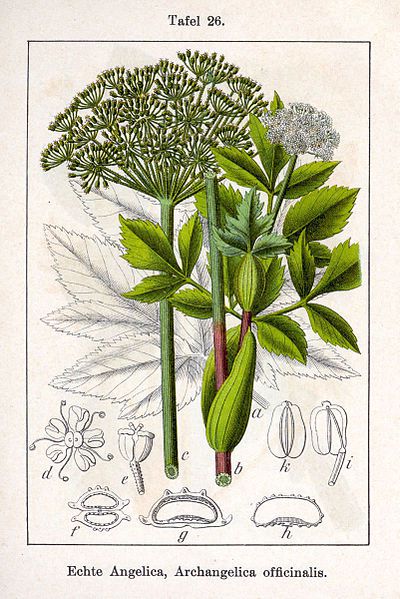
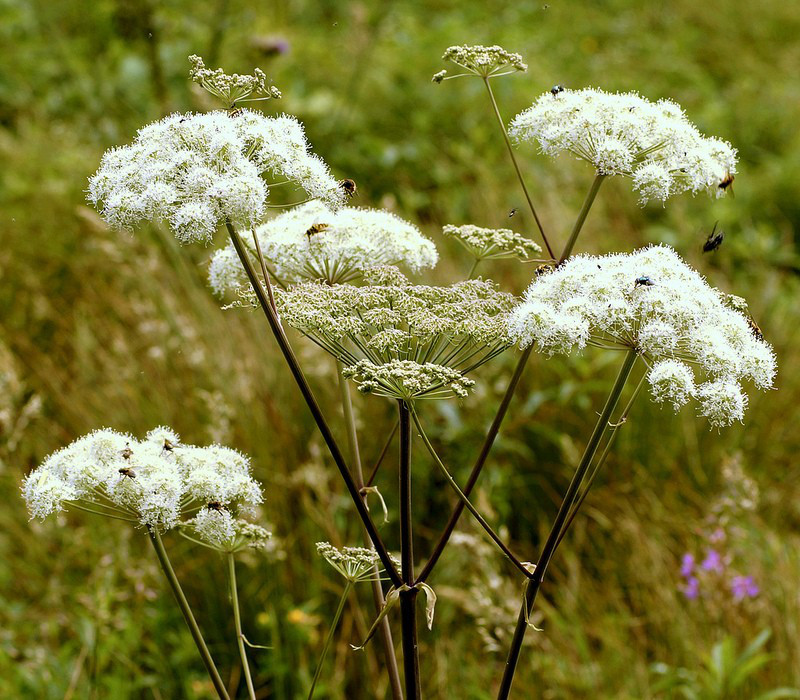
Angelica (botanical name Angelica archangelica) is generally a biennial plant that grows up to a height of anything from 3.3 feet (1 m) to 8.25 feet (2.5 m). This plant may bear flowers two times in a year or for four consecutive years provided the conditions are conducive. Angelica has a tall, purple-green stem that is hollow as well as branched. The leaves of this plant are slightly triangular in shape and are joined to the stem by means of an extended petiole. The flowers appear in clusters in a white-hued terminal umbel and have a sweet, pungent aroma. Angelica bears fruits that have a light yellowish complexion and which enclose seeds that are oval-shaped. The taproot of the plant is succulent – having a brown color on the exterior and white inside. The taproot also has little auxiliary roots.

The plant derives its name from the Medieval Latin ‘herba angelica’(“angelic herb”). It has been named so as it is believed that it possesses special attributes that cure plague and poisoning. Earlier, people thought that this herb protected them from infectious diseases, counting plague, bequeath a long life, keep enchantments and evil spirits at bay and also counteracted mad dog bites. Till recently (as late as the World War I) people munched the root of angelica believing that doing so would defend them from the widespread influenza epidemic prevailing worldwide at that time.

Even today, people value angelica primarily because it has an invigorating action on our digestive system. Since the colonial era, people have candied the fragrant and fairly sweet stems of the plant for delicious treats as well as for using them to decorate pastry. The leafstalks of angelica resemble that of celery and can be consumed raw or after cooking. The seeds and roots of the plant yield essential oils that are used in manufacturing perfumes and also for adding essence to vermouth, gin, as well as a variety of sweet alcoholic drinks (liqueurs), including Chartreuse.

Plant Part Used:

The whole plant.

Health Benefits:

Angelica offers a number of health benefits and, hence, is used to treat various health conditions. This herb warms up the body and also serves as a tonic. The entire angelica plant is used to provide relief from dyspepsia, stomach pain, and gas. In addition, this herb may also prove to be helpful in treating poor blood circulation, as it augments the flow of blood to the body’s peripheral regions. It is especially considered too useful for treating Buerger’s disease, a medical condition wherein the arteries in the legs and feet are constricted. As angelica enhances the blood circulation and promotes expulsion of phlegm, it is warming as well as tonic attributes provide relief to patients suffering from bronchitis and other chest conditions that make the sufferer weak. Generally, the roots of the herb are used to treat respiratory problems. However, sometimes the stems, as well as the seeds, may also be used to treat such conditions.

CULINARY USES:

The stems, leaves, and seeds of angelica also have culinary uses.

The stem of this plant is steamed and buttered before serving it like asparagus. Sliced stems of angelica are also perfect for adding essence to roasted pork.

You may also chop the leaves of angelica and add them to rhubarb to make them sugary. In addition, the leaves of this plant are also an excellent add-on for salads, soups, herbal mixes as well as in cooking stock (bouillon) for shellfish and other fish.

You may also sweeten the tender stems of angelica and use them for garnishing desserts and cakes.

The herb can also be used to prepare a refreshing tea. Brew one teaspoonful (5 ml) of dried up herb or about three teaspoons (15 ml) of the crushed leaves of the plant in one cup (250 ml) of boiling water. Set it aside to infuse and then add lemon or honey to it for taste.

The seeds of angelica have a flavor akin to that of juniper and are occasionally used in place of actual juniper berries while making gin.

CRAFT USE

The eye-catching seed heads of the angelica are used in floral arrangements.

The Habitat of Angelica:

Angelica is native to Europe where it is found growing in damp, mountainous areas that have somewhat temperate climatic conditions. In the United States and Canada, angelica is found growing beside shaded streams as well as inside damp ditches. Often people mistake sweet flag (botanical name Acore calamus) or water hemlock (botanical name Cicuta maculata) to be angelica. However, these two species belong to different plant families.

Angelica naturally grows in damp areas. Hence, if you are cultivating this plant, ensure that the soil remains wet all through the growing season. It has a preference for a somewhat acidic soil and the suggested pH range is anything between 4.5 and 7.0. While angelica has a preference for partial shade, it can thrive in sunlight too, subject to the ground being properly mulched.

Angelica is propagated by means of its seeds, directly sown outdoors in spring immediately when the ground is prepared. In order to ensure proper germination, you should only use fresh seeds. Angelica dislikes being transplanted and, hence, you need to sow the seeds in their permanent positions outdoors.

If you are using purchased seeds, it may be necessary to refrigerate them for about four to five weeks before you sow them. In fact, seed suppliers having a good reputation will usually have seeds stored in refrigerators, so you do not need to refrigerate them again. If you are sowing the seeds during the fall, they would require the basic cold treatment throughout the winter months.

In order to germinate properly, angelica seeds need to be exposed to sunlight and, hence, cover them with a thin soil layer.

Alternately, you may also propagate angelica using its root cuttings. However, plants propagated from the seeds are regarded as superior. Maintain a space of about 0.6 m to 1 m (2 feet to 3 feet) between two plants to enable them to grow freely.

Generally, the flowering stalks of angelica emerge in the latter part of spring during the second year of the plant. If grown in areas having cooler climatic conditions, angelica will grow slowly and is unlikely to produce flowers until it has been in existence for three to four years.

Normally, the angelica plant dies soon after blossoming and producing seeds. However, getting rid of the flowering stalks prior to the seeding by the plant may possibly help it to live on for one or two more growing seasons. On the other hand, if the plants allowed seeding, they are likely to grow again on their own.

Angelica plants are vulnerable to crown rot (a fungal disease of plants marked by the rotting of the stem at the base) and also susceptible to invasion by aphids, earwigs, leaf miners and spider mites.

Constituents:

Angelica contains essential oil, valeric acid, iridoid psoralens. Seeds: furocoumarin. Roots: estrogens, tonics, organic acids, salt minerals (potassium, zinc), coumarin derivatives.

Decoction and Tincture:

Therapeutically, angelica is used in decoction and tincture forms.

Decoction: Prepare the decoction by adding one teaspoon of chopped roots of the plant to one cup (250 ml) of water and boil it for about two minutes. Remove the mixture from the heat and set it aside for about 15 minutes to infuse. For best results, take this decoction three times daily.

Tincture: The standard dosage of angelica tincture is taking it in measures of 2 ml to 5 ml three times daily. […]

Entire post at the Source: Angelica {Angelica archangelica} – Good Witches Homestead
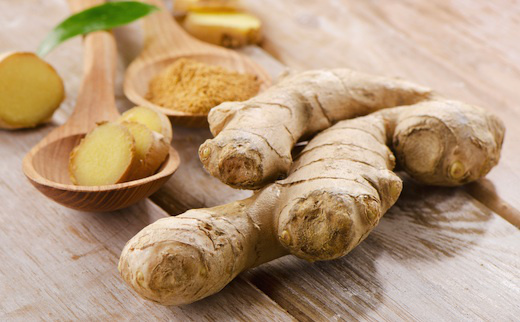
Ginger {Zingiber officinale} – Good Witches Homestead

Ginger {Zingiber officinale}

Also, Known As:

  • African Ginger
  • Ardraka
  • Black Ginger
  • Chiang
  • Gan-Jiang
  • Ginger
  • Nagara
  • Race Ginger
  • Shen-Jiang
  • Sunthi

Zingiber officinale, the official name of the common ginger was coined by the famous eighteenth-century Swedish botanist and general naturalist, Carl Linnaeus. While Latinizing the name, Carl Linnaeus also derived the name Zingiber for the generic term, using the Indian Sanskrit name for ginger – singabera, or shaped like a horn.

About 1,400 species of plants are placed in the family Zingiberaceae and the ginger is just another of these plants. It shares equal honors with other famous family members, the spices turmeric – which is a principal component used in curry; it is also an herbal medicine – and the spice cardamom – used extensively in South Asian cuisine. The ginger has a slender stem; ginger is a perennial plant, about 24 to 39 inches in height. Compared to the second and following stems, the first stems are lengthier and also bear beautiful and fragrant flowers. The ginger flowers are greenish yellow and streaked with purple down the sides. Dark green ginger leaves are characterized by a famous midrib that is sheathed at the growing base. The seeds of the ginger appear in the rare fruiting body.

The underground stem of the ginger is the most familiar part of the plant and it is extensively used for commercial as well as domestic purposes. Often mistakenly called the root of the ginger, the irregular shape and size of the underground section of the stem is the most important part of this herb – the plant stores food reserves in this underground stem. The botanically correct term to apply to the underground stem is a rhizome, even if the ginger will probably always be associated with the term root by common people. Whole new ginger plants can self-generate from budded sections, and property of the rhizome is very different to a root, which will die if split into sections. Cultivation of the ginger has been made possible by these buds in the rhizome and the plant has been cultivated in this way for thousands of years. The habitat most suited to the cultivation of ginger are one with a hot and moist climate with some shade; ginger also prefers soil that is well tilled and rich in loam. The rhizome is white to yellow in color and bears thick lobes – it is also very aromatic, a property used in culinary and herbal processes. An unusual exception to this mild color range is one ginger variety, which has a characteristic blue ring, lying in circles inside the fleshy interior – this is one of the most prized varieties of ginger.

Today, the ginger is the most widely cultivated spice around the world. A lot of countries and regions cultivate this spice and different opinions exist as to who grows the best ginger. Any favoritism of a particular variety of ginger is purely a matter of personal taste, as the ginger appears in countless varieties, shapes, and sizes, India alone is said to have an estimated fifty varieties of this versatile herb. Depending on the conditions of the soil and the manner of its cultivation’s, each and every variety of the ginger possesses its own distinctive flavor and aroma. Africa is reputedly the home of the most pungent ginger, while the milder varieties are grown mainly in China. The general agreements are that culinary applications will likely use milder ginger varieties, while the stronger and more pungent varieties are best to prepare ginger beverages and for use in therapeutic herbal remedies.

Oral anti-coagulants are normally prescribed to individuals who suffer from frequent blood clots to help keep their blood free from clots. The compound known as warfarin sodium commonly called coumadin is one of the most frequently used medications in this regard. This compound is also a potent rat poison and taking it in high doses can cause serious internal hemorrhages in the body, especially if it is used over an extended period of time by the person. The ideal substitute for these synthetic blood thinners is ginger root, which can replace the role of this compound in the body. At least some individuals suffering from such problems who took an average of two herbal ginger capsules two times a day in between meals appears to have benefited.

Plant Parts Used:

Rhizome, root, essential oil.

Ginger Tea for Women:

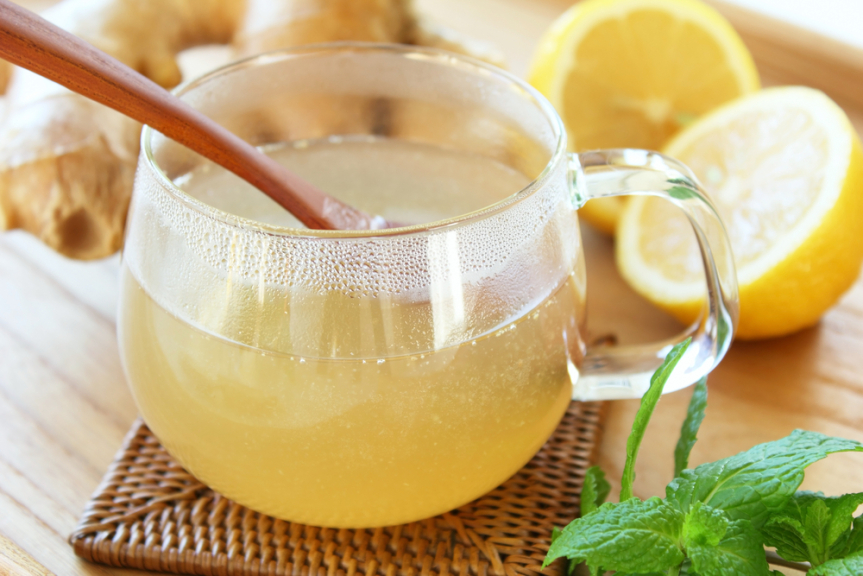
ginger-teaThis ginger tea is extraordinarily healing for all female organs and the intestines, as well as for stressed nerves and a sluggish metabolism. […]
The rest of the post at the Source: Ginger {Zingiber officinale} – Good Witches Homestead

Self-Heal, Heal All {Spring Herb} – Good Witches Homestead

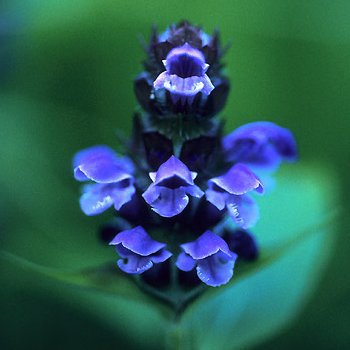
You’d think a plant with a name as auspicious as this one would be dramatic and imposing. Instead, it camouflages itself in your lawn. But it has been used internally and externally since at least the 2nd century in both China and Europe. Its botanical name, Prunella, derives from the German word brunella, which comes from die Braune, meaning quinsy {a throat abscess}, for which it was commonly used in the Middle Ages.

Description:

Self-heal is a creeping perennial that volunteers in moist places like woods, pastures, sub-alpine meadows, and, of course, lawns. It sends up a flexible, branching, flowering stalk that can reach 1 foot tall, with soft oval or lance-shaped leaves and beautiful pink to blue-violet flowers on spikes.
True to its name, this herb traditionally “heals all,” from simple eyestrain to whole-body inflammation.

Preparation and Dosage:

Self-heal is used as a tea, in tinctures, and as an extract in capsules and tablet form. Make a strong infusion, and drink 1 to 3 cups a day. For the tincture, use 1 to 2 droppers full of warm water or tea two to four times daily. Follow the label instructions on other products.

Healing Properties:

Self-heal is a great example of a herb that is used both in traditional Chinese and Western cultures. In Europe, the herb has been used since the Middle Ages and is mentioned in 16th-century herbals as a wound-healing herb and a gargle for diseases of the mouth and tongue.
In China, self-heal has been used since at least the 14th-century as a cleansing herb that normalizes liver enzyme output and reduces fevers. In traditional Chinese medical thinking, each internal organ associated with a sense organ, and the liver is associated with the eyes. Thus self-heal tea can be used as either a wash or a tea to help ease eyestrain, red and itchy eyes, sties, and other eye inflammation. The tea or extract can also help relieve dizziness and headaches when these symptoms are associated with a liver imbalance.
Self-heal is loaded with protective and antioxidant compounds known as phenolics, which act as antioxidants and have anti-inflammatory properties similar to the ones found in pomegranates and green tea. Since the taste is mild and refreshing, the herbal tea or extract can be used regularly as a healthy, calming drink for the liver, the skin, and the whole body.
A number of current studies show that self-heal can protect the blood vessels and has antiviral effects against influenza, herpes sores, and HIV-AIDS.

The entirety of the article at its Source: Self-Heal, Heal All {Spring Herb} – Good Witches Homestead

Yarrow {Achillea millefolium} – Good Witches Homestead

Yarrow {Achillea millefolium}

Family: Asteraceae

It’s said that, as a baby, the great Greek warrior Achilles was dipped in yarrow by his mother, to give him his superhuman strength – but that she held him by his heel. That being the only area not covered, he was of course later slain by an arrow to his Achilles’ heel,” his only weak spot. And don’t forget the medieval teaching that yarrow grew in churchyards as a reproach to the dead who need not have died had they eaten their yarrow. In China, it is believed that even the stalks are powerful; they have been historically used to cast the I Ching.

Description:

Yarrow grows as a low, spreading a mat of finely dissected, aromatic leaves that reach about 1 foot high. Umbrella-shaped clusters of tiny white flowers appear above the foliage in summer on stalks up to 2 feet high. Achillea is native to the entire northern hemisphere {North America and northern Eurasia}. If you want to grow the most potent medicine, stick to the white-flowered species and don’t choose any of the other lovely flower colors that are available in nurseries.

Preparations and Dosage:

Make an infusion by steeping 1/4 cup of the dried flowers in 2 cups of water for 20 to 30 minutes. Drink 1 cup of the tea two or three times daily. This is a mild herb, and it can be taken regularly for 2 to 3 weeks.

A traditional combination of easing fevers and other symptoms of flu is one part yarrow leaf or flower, one part elder flower, and one part peppermint leaf. Infuse the herb combination for 30 minutes and drink it throughout the day as desired.

The leaf is well known for its ability to stop bleeding when applied directly to a wound, and you can carry it dried and powdered in your first aid kit.

Healing Properties:

Yarrow tea is slightly bitter and aromatic and is a famous European remedy used to ease the symptoms of colds, flu, painful digestion, “liver stagnation” {weak bile flow} accompanied by poor fat digestion, and a feeling of fullness after meals, especially fatty ones. Laboratory studies have definitively established that yarrow has anti-inflammatory, antispasmodic {relaxing the smooth muscles found in the uterus and digestive tract}, anti-fever, and antiviral effects. As an extra bonus, yarrow seems to have a calming effect, which can help with PMS and other nervous conditions, and it stops bleeding when applied to a wound.

It turns out that there is a fair amount of variation in the chemistry and biological actions in wild yarrow populations, so we recommend growing your own from seed or from plants obtained from one of our recommended sources rather than purchasing plants from nurseries or gathering them from wild populations.

Safety:

Avoid yarrow during pregnancy and while nursing unless you are under the guidance of an experienced herbal practitioner. Allergic reactions to members of the Asteraceae family, though rare, are known in sensitive individuals. They can manifest as a skin rash {even from just handling the herb, which is more likely with the fresh plant}, digestive upset, or headaches.

In the Garden:

Yarrow is found from sea level to above the timberline in the wild, so you know it is highly adaptable. It thrives in full sun but can tolerate partial shade, loves water but can endure mild drought, is winter hardy, and spreads quickly in cultivated {or disturbed} soil. It does like poor, acidic conditions, so do not fertilize it. Let it dry out between waterings.

You can grow yarrow from seed if you sow in the fall or stratify the seed before planting. {It’s often sown directly.} But root division is another good method and can help control the plant since it has a tendency to spread.

Harvesting Yarrow:

Snip off the flower clusters when it’s in full white bloom {no color varieties, please and thank you}, and then cut the stalk all the way to the ground to encourage further blooming. You can harvest the leaf at any time of year. For drying, you can also cut long flowering stalks and use the hanging method, snipping the flowers off later. Keep the whole flower clusters intact when you store them.

Additional Information on Yarrow:

Also, Known As:

  • Gandana
  • I-chi-kao
  • Milfoil
  • Millefoil
  • Noble Yarrow
  • Nosebleed
  • Old Man’s Pepper
  • Soldier’s Woundwort
  • Stanchgrass
  • Thousand-leaf
  • Thousand-seal
  • Yarrow

See the entire article at its Source: Yarrow {Achillea millefolium} – Good Witches Homestead

Reiki and Palliative Care – Holistic Experiment

By Lucia Santos

Palliative care is a way to improve the quality of life of patients and their families are facing the problems that are often associated with life-threatening illnesses. It provides relief from pain and other distressing symptoms, affirms life and regards dying as a normal process, integrates psychological and spiritual aspects of patient care, and offers a support system to help the patient and their family.

Palliative Care is not the same as hospice, it focuses more broadly on improving life and providing comfort to people of all ages with serious, chronic, and life-threatening illnesses. It can start as soon as the patient is diagnosed with a serious illness, at the same time they continue to pursue a cure. Some patients can recover and move out of palliate care while others can move in and out of palliative care as the need arises.

It’s a holistic alternative that attends to the challenges that the illness poses in every aspect of life. It also extends to family members as well as caregivers. It can help educate family members about the patient’s illness, treatment, and medication; provide care for caregivers; help with transportation issues, meals, and shopping among other things.

Reiki helps assists those who are passing away and preparing to leave the physical plane. It can also be used to help those grieving the loss of loved ones.

It is essential that all Reiki practitioners to examine their beliefs and conduct the research they need to provide evidence for themselves either way so they can be a clear channel. This healing method can help resolve any unfinished business and find resolutions with regard to previous conflict. The sessions can help the recipient have a  peaceful transition.

Reiki and Palliative Care on Animals

Our pets are our family; they are so loyal and take pleasure in helping and bringing joy into our lives. When an animal is dying, Reiki can be used to help not only the animal, but also the family transition with grace and love, honoring the memory and time they had with their cherished pet.

With Reiki, an animal’s symptoms can be eased while providing emotional support. Reiki can help to extend an animal’s life or help them to pass away in peace.

The family may notice that performing Reiki on their beloved animals helps to bring them closet together and communicate more clearly. Reiki can help with any unresolved energy and help heal and balance. By resolving emotional or mental imbalances and releasing any energy that’s not serving its highest good, the animal is free to transition with peace and love.

It’s so important that the family should get Reiki along with their pet. These sessions can help the family be present in order to enjoy the final days with their animals as well as to help them have clarity when making a decision regarding with the welfare of their pet. Helping the family through the grief provides relief for the animal, who might be trying to hold on and prolong their suffering in an effort to help ease the family’s pain.

Source: Reiki and Palliative Care – Holistic Experiment

   NorthWest Herb Symposium        “Botanicals at the Beach” – NorthWest Herb Symposium: “Botanicals at the Beach”

Source:    NorthWest Herb Symposium “Botanicals at the Beach” – NorthWest Herb Symposium: “Botanicals at the Beach”

Source:    NorthWest Herb Symposium        “Botanicals at the Beach” – NorthWest Herb Symposium: “Botanicals at the Beach” – Crooked Bear Creek Organic Herbs

Medicinal and Herbal Wildflowers – Good Witches Homestead

From the beginning of human history, man has considered plants “useful.” Of course, the most obvious use is as a food source, but in all cultures, plants have also figured prominently as medicines. From prehistoric rites to modern medicine, plants have been shown to possess curative properties. Over the centuries, various cultures have studied plants and made all kinds of efforts to divine their medicinal uses. Some experiments have proved disastrous, even fatal. Others seemed miraculous. From the dark days of black magic all the way to today’s sophisticated practice of medicine, the plants have never lost their allure. In fact, today we live in a time of renewed interest in herbal remedies. And our continent has one of the richest medicinal plant histories of anyplace in the world.

Below, you’ll find just a few of the wildflowers that man has used from ancient times forward to aid in his health and provide cures for his illnesses and diseases. It is provided as a source of information and not intended for prescriptive purposes. In fact, many of the same plants used as medicinals are also poisonous if not used properly. (Wildflowers mentioned that pose a serious danger are noted.)

Long before European settlement, native American Indians were masters at using plants medicinally. And today’s modern medicine proves many of their ancient cures. Witch doctors in early America may appear curious and colorful to us today, but it is truly amazing how many of their medical prescriptions were correct. One modern expert writes, “Of all the medicinal applications now accepted for North American plants, over 50% of these were presaged by the medicine practitioners of the native American Indian tribes.”

Meanwhile in Europe, during the Middle Ages, the Herbalists worked to advance the plant studies that had been going on there since the time of the ancient Greeks. During the Middle Ages, with more superstition than science, the herbalists offered their cures, sometimes with disastrous consequences.

The famous Doctrine of Signatures. One of the more bizarre pseudo-sciences that flowered during the early medieval period was medical treatment based on plant structure and appearance. Certain herbalists decided that one could prescribe an herbal cure or treatment based on a relationship between plant parts and body parts. This wild course of the study noted, for example, that parts of the plant Hepatica could be made into a curative concoction for liver ailments. Why? Because the plant has three-lobed leaves that reminded the herbalists of the human liver. Today, Hepatica , the beautiful early spring wildflower we enjoy still carries the name based on its connection to the human liver, yet it’s been shown to have no medicinal value. (Hepatica is the Latin word for “liver”, as is hepatitis.) Most prescriptions based on the Doctrine of Signatures probably only made people sick, since ingesting various non-food plants is usually upsetting. However, others, when poisonous plants were unknowingly used, were fatal.

As medical science progressed and Europeans settled North America, the advancing European medical knowledge of plants was combined with the traditions of Native American medicine. This led to an active exportation of plants from North America, as the settlers learned the new plants’ “secrets” from the Indians.

But this was only the beginning. As modern medicine evolved, plant values were studied and tested, and the results have been amazing.

Today, flowering plants provide almost 25% of the basic ingredients for our modern drugs. This little-known fact makes the study of medicinal plants even more interesting today than ever before. North America has tens of thousands of native plants that have yet to be studied. As Lady Bird Johnson has said, “Surely there are others like digitalis waiting out there.” She was referring to the famous English medicinal wildflower commonly known as Wild Foxglove, but botanically, “Digitalis purpurea.” This is the now-famous plant that is widely used today to treat heart disease. The medicine derived from this plant is usually called, simply “Digitalis”, and has saved untold lives worldwide through its modern applications.

How at least one medicinal plant was “discovered.” The story of the Foxglove is a classic. In 1775, an English physician and botanist named William Withering were asked to treat a patient suffering from dropsy, a broad term that at the time meant “fluid retention.” He had heard of an “old woman in Shropshire” who knew a secret cure which included the foxglove plant. Dr. Withering, after using the secret remedy, which was a concoction of over twenty herbs, found it amazingly successful, but also quickly perceived that only one plant in the mix was working the cure. The whole stew was said to be a diuretic, but Dr. Withering knew that the major cause of dropsy was congestive heart failure. He also knew that foxglove, with its powerful toxic properties in the proper quantity, could strengthen cardiac contraction and enable the heart to pump more efficiently, delivering blood to the rest of the body. Ten years later, Dr. Withering published “10 years of clinical data on patients treated with foxglove.” The rest, as they say, literally, is history–medical history.

From an old woman’s secret cure, through the careful work of an early physician, we have a “wonder drug” direct from a plant that is used today to treat almost every kind of heart disease.

The cure for spider bite becomes environmental monitor. Other stories in herbal and medicinal plants take various paths, as the scientific use of a species is accidentally discovered. Spiderwort, Tradescantia virginiana, a common North American native wildflower with three-petaled purple flowers, was once considered a cure for the bites of spiders, but during modern times has offered scientists other advantages. Botanically, the plant is unusual, being a historic link between the sedges (grass-like wetland plants) and lilies. Moreover, the plant has relatively large chromosomes, making it useful for lab studies in cytology (the structure of cells).

Modern scientific studies of Spiderwort recently rendered an unexpected discovery. Attentive botanists noticed that the plant is extremely sensitive to pollution and radiation which cause its blossoms to change color from blue to pink in a very short period of time! What happens is that the number of cells mutating when in contact with severe pollutants, correlates directly to the level of pollution. So this plant is now used as an inexpensive, but a very accurate device for testing pollution. Where dangerous pollution is expected, spiderworts are planted, and their flower color is closely monitored for changes.

Of course, man cannot exist without plants (since they provide the very oxygen we breathe), so it is no wonder that this interdependence has produced a very long and fascinating history which continues today.

Here are a few examples of various wildflowers and how they’ve been used over the centuries for herbal and medicinal purposes. Plus a few that are stars of the very active boom today in herbal remedies and supplements.  […]

Rest of the article at its Source: Medicinal and Herbal Wildflowers – Good Witches Homestead

Healing & Balancing Your Chakras – Good Witches Homestead

As a herbalist, I prescribe herbal potions and essential oils to my clients as a complement to our healing sessions and an alternative to medication. Over the years, I’ve watched herbs help treat everything from PTSD to depression, anxiety, chronic pain, migraines, obesity, rage, and more.

After about five years of experience with prescribing herbs, I started learning about medicinal-grade essential oils—what a game changer. I now use essential oils in every acupuncture session, and regularly prescribe them for home care. They’re like topical herbs—distilled from the same plants I’ve been studying and prescribing as herbal remedy tinctures for years. The skin is our largest organ, and our body literally ingests much of what we douse it with. Essential oils work with our fascia (which lies just beneath the skin), so the healing properties of the plants are transmitted throughout our entire body. It’s such a sensual, luxurious way to ingest medicine.

Essential oils are particularly great for treating common chakra imbalances—more below, along with the most effective oils that I frequently rely on:

FIRST CHAKRA: ROOT — “I AM” — RED

Our first chakra is our most primal energy vortex of psychic information. It’s the foundation of our chakra system. This red spinning disc resides at the base of our spine and manages our most basic needs: safety, security, trust, fear, pooping, survival, procreation. Located on our lower backs, it governs this area, the large intestine, urinary bladder, and kidneys. […]

Read about all your Chakras at the Source: Healing & Balancing Your Chakras – Good Witches Homestead

The Natural Health Benefits of Gentian Root – Good Witches Homestead

Gentian, one of the “bitter” herbs, has been used by herbalists for over 2,000 years to help stimulate liver function. It was named as a tribute to Gentius, an Illyrian king who was believed to have discovered that the herb had tonic properties. He used the herb for treating wounds and as a natural antidote for various types of poisons. Traditional folk healers believed that gentian root could improve the digestive process by stimulating the flow of saliva, bile, and stomach acids if you took the herb before your meal. During the Middle Ages, it was used as an antidote to certain poisons.

Today, it is used specifically to protect the liver, stimulate its function, help regenerate its cells, and increase the flow of bile. It is also known to inhibit the development of viruses that affect the liver. This should come as no surprise for herbalists, as gentian has been used for centuries to stimulate appetite, improve overall digestion, and treat a host of gastrointestinal issues such as diarrhea, heartburn, stomach aches, and vomiting.

Gentian is also helpful in improving the overall health of the kidneys. It helps with the detoxification process by aiding in the elimination of harmful substances from the body. The root itself also has antiseptic properties which help with the removal of harmful microorganisms that can be found in the digestive system. In fact, the herb has even been used to help eliminate parasitic worms in the intestines. […]

Read the entire article at the Source: The Natural Health Benefits of Gentian Root – Good Witches Homestead

Milk Thistle Uses to Improve Your Health – Crooked Bear Creek Organic Herbs

Milk thistle (Silybum marianum), a member of the Asteraceae family, is a therapeutic herb with a 2000-year history of use in traditional Chinese, European, and Ayurvedic medicine. Originally native to Southern Europe, Asia Minor, and the Mediterranean region, the plant now grows wild throughout the world. In addition to being one of the most commonly used supplements for supporting liver health, milk thistle also offers specialized nutrition for the cardiovascular system, prostate, and gallbladder. High-quality, organic milk thistle is inexpensive, readily available, and should be on your list. Let’s take a look at seven exciting ways milk thistle supports good health.

Source: Milk Thistle Uses to Improve Your Health – Crooked Bear Creek Organic Herbs