Tag: Herbs
A Herbalist Library
Crooked Bear Creek Organic Herbs
When you start on any new craft there are always go-to books. Beginner herbalists often find themselves curious about all the different ways to practice herbalism or ways to just dabble. Whether you’re interested in growing medicinal herbs, creating herbal medicine or becoming a herbal practitioner, there’s a book for you! Here are some staples that you can find.

Herbal Recipes for Vibrant Health by Rosemary Gladstar is one of our all-time favorite herbal books. This book gives simple herbal recipes that can be made at home and support your health through all phases of life.
The Herbal Medicine Maker’s Handbook by James Green is one of the best books around for aspiring herbal medicine makers. Whether you’re making tinctures from your garden or creating herbal wines and vinegar in the kitchen, he’s got a recipe for you. This book is more in-depth than most, but he thoroughly explains all the…
View original post 176 more words
Herbalist Library: Historical References
Our ancestors cultivated a deep, rooted relationship with plants; they harvested plants in a ceremony, made herbal medicines with intention, and passed along traditional plant knowledge to help future generations maintain wellness. In many cultures, this information was shared orally, through stories or an apprenticeship with a local healer. The books we do have on traditional herbal medicines are a treasure to modern day herbalists; they’re a window into our survival as a species and often hold surprising tidbits on how we once used common plants. Below, please find some of our favorite inspirational books from western herbalists that focus on traditional plant remedies, as well as the rich history of herbalism.
A Modern Herbal, Volumes I & II by Sophia Emma Magdalene Grieve are some of the most well respected herbal books of the 20th century. Grieve is thought of as one of the first modern herbalists. During World War…
View original post 268 more words
Herb Lore: (Herbalism)
Hippocrates – ” Let food be thy medicine and medicine be thy food”
For the purpose of this article, herbs are loosely referred to as the category of edible plants which can also be used for Medicinal, Spiritual or Magical purposes.
It seems that on every part of the globe where humans have lived, there has developed a body of herbal knowledge, something which has led to a special relationship developing between herbs and people. The foundation for this relationship is the fact that apart from herbs being acknowledged for their nutritional value, there has been a longstanding recognition that they also possess a variety of curative properties, being amongst the most important tools used by Shamen, Medicine men, Witch doctors, and healers, in general, the world over. Indeed, the World Health Organization (WHO) estimates that 80 percent of the population of some Asian and African countries presently use herbal…
View original post 5,352 more words
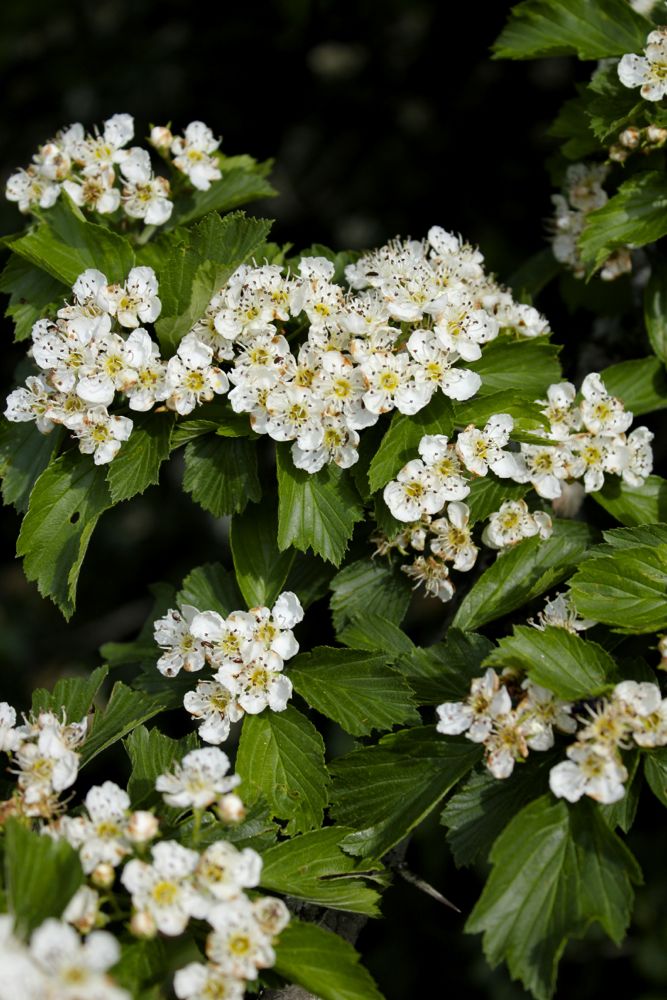
Hawthorn {Crataegus oxyacantha or Crataegus monogyna}
Crooked Bear Creek Organic Herbs
Also, Known As:
- English Hawthorn
- Haw
- Hawthorn
- May
- May Blossom
- Maybush
- May Tree
- Quick-set
- Shan-cha
- Whitethorn
The herb called the hawthorn is one of the best herbal remedies to boost the performance of the heart and the human circulatory system in general. A potent vasodilatory action can be induced in the human body by the flowers, leaves and the berries of the hawthorn. When these parts of the herb are consumed, they open up the arteries to promote circulation and improve the blood supply to all the general tissues in the body. Regular supplementation with this herb can thus help bring some balance blood pressure and it is considered to be an excellent remedy for the treatment of high blood pressure – especially when the condition is connected to hardening in the arteries of the person. Problems such as those connected to poor circulation caused by aging arteries, problems of poor circulation towards the lower body and…
View original post 2,930 more words
Incense
Nettle {Urtica dioica}
Crooked Bear Creek Organic Herbs
Also, Known As:
- Chinese Nettle
- Common Nettle
- Common Stinging Nettle
- Great Nettle
- Great Stinging Nettle
- Hsieh-tzu-ts’ao
- Nettle
- Stinging Nettle
The herb known as the nettle is a small plant reaching about two to three feet in height with an erect stem; it bears dark green leaves that are marked by serrated margins. The nettle gives out small and inconspicuous flowers when in bloom. The nettle has now been designated by international botanists as the Urtica dioica L. and the herb belongs to the plant family Urticaceae. There are many sub-species of this plant and the American variety differs from the typical European sub-species of the nettle called Urtica dioica, the main difference between these two sub-species of the same plant lying in the fact that the European plant bears both male and female flowers – it is dioecious. This classification is also challenged at the same time by certain botanists…
View original post 2,851 more words
Ginger: The Herb To Become Acquainted With For 2018.
Ginger’s Quality:
The quality of the original rhizome must be the primary concern for the person using supplements of ginger in their diet. At the same time, the ginger herb is a valuable supplement in a variety of supplemental forms. At the same time, the value of the rhizome and the supplemental quality will be less if the original material is old, is shriveled, was moldy or chemically treated in anyway, in such cases, the quality of the ginger will obviously not yield the herbal values comparable to a herbal ginger product created using fresh and organically grown rhizomes.
An extensive and exhaustive grading system has been developed over the years, so as to insure that the international supply of ginger products remains top quality – the standards adopted in this grading system are fairly rigorous ensuring only good quality products pass the test. Chemical exposure of ginger products is…View original post 3,886 more words
Essential Oils
If you pass through the natural health aisles of your local grocery store, you’re likely to see small glass bottles of curious liquids with poignant aromas that could fill a room. Scents like lavender, eucalyptus, tea tree oil and orange line the shelves next to oil blends with promising labels like Anxiety Release, Detoxification Aide, Energize, Immune Support, Meditative Mood, and more. While some modern shoppers may be speculative of these products, ancient homemade versions of these single note essential oils and essential oil blends have been used for nearly 6,000 years for everything from traditional medical practices to spiritual rituals.
What are Essential Oils?
Essential oils are highly concentrated fragrant essences extracted from herbs, flowers, fruits, and other plants that give them their unique aromas. They are commonly used in perfume, food flavoring, medicine, massage therapy, and aromatherapy to support a general feeling of well-being. Essential oils also “have a potential…
View original post 3,086 more words
Making A Yule Log/Having A Old Fashioned Christmas
Make this Yule Log use as a handcrafted herbal gift for family and friends this holiday season.
Yule Log Recipe
The Yule log is traditionally burned on New Year’s Eve to usher in good fortune for the coming year. It is created in the spirit of prayer or ritual for the fulfilment of dreams, hopes, and wishes for prosperity, happiness, peace, or whatever you want the New Year to bring. As you create the log, perform each action with intention for your dreams to come true.
1. Start by tying a red ribbon around the middle of a large piece of firewood. There are many items that can be used to decorate the log such as moss, rosemary sprigs, cinnamon sticks, whole nutmeg, rose hips, frankincense resin, fir branches, pinecones, or prayers written down, rolled up, and tied with pieces of string.
2. Attach all of the ornaments with drippings…
View original post 2,547 more words
You must be logged in to post a comment.