Bittersweet … A Tale of Two Sisters

The Herb Society of America's avatarThe Herb Society of America Blog

By Kathleen M Hale, Western Reserve Herb Society

The Sisters’ Shame
We were two daughters of one race;
She was the fairest in the face.
    The wind is blowing in turret and tree.
They were together, and she fell;
Therefore revenge became me well.
    O, the earl was fair to see!

Alfred, Lord Tennyson
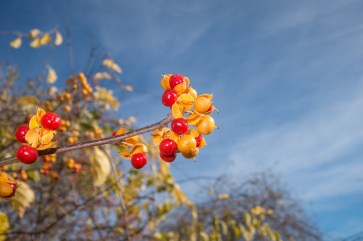
bittersweetA lot of legends of magic, revenge and sorcery begin with two sisters. Sometimes they are friends.  Sometimes they are rivals.  But an unspoken message in many stories is, “Don’t pick the wrong one!” Increasingly, North American gardeners are finding themselves faced with this dilemma.  The choice may be between a native plant and its sometimes seductive, sometimes invasive sister, introduced from elsewhere.

Bittersweet gives us such a story. American bittersweet, Celustrus scandens, is seen everywhere this time of year in wreaths and dried arrangements. It has tiny vivid orange fruits…

View original post 434 more words

Home-Grown and Wildcrafted Smudge Sticks: Plant List and Recipes

Dana's avatarThe Druid's Garden

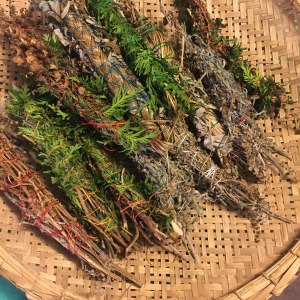
Basket of newly made smudge sticks Basket of newly made smudge sticks

Creating homemade smudge sticks with local ingredients is a wonderful activity to do this time of year.  As the plants die back, you can harvest whatever you aren’t using for other purposes and create a number of beautiful smudges that can be used for many different purposes: clearing, honoring spirits, protection, setting intentions, letting go, bringing in, preparing for ritual or mediation, and much more.

A few years ago, I wrote an initial post on homemade smudge sticks using local ingredients–this has become my most popular post on my blog.  Given that, I wanted to offer a follow-up post with some additional information and share a few smudge stick recipes for specific purposes. For initial instructions on how to make your sticks, please see my first post.  This post expands the plant list that you can use to make smudges and also offers…

View original post 2,497 more words

Making Smudge Sticks from Homegrown Plants and Wildharvested Materials: Step by Step Instructions with Cedar, Rosemary, Sage, Mugwort, and More!

Dana's avatarThe Druid's Garden

I recently posted about my research on Eastern White Cedar, and I wanted to follow-up that post with information on making smudge sticks, inspired by Eastern White Cedar. Smudge sticks are bundles of herbs that are dried and burned for purification and ceremonial uses. They come out of Native American traditions, but today they are broadly used by many for their purification purposes.  I use them as a druid in my ceremonies, to bless and cleanse my house, to cleanse outdoor spaces that are in some kind of energetic funk.  But I also use them practically–as a blessing for my garden at the start of the growing season, as a way to remove hostile energies from my chickens who aren’t getting along, or to pass among friends before sharing a meal.  They are a great way to bring a bit of ceremony and the sacred into the everyday.

Freshly Wrapped Smudges Freshly Wrapped…

View original post 2,564 more words

Add Lemongrass to Your Garden Plans — The Herb Society of America Blog

Lemon grass is probably one of the easiest, cheapest herbs you can grow.

via Add Lemongrass to Your Garden Plans — The Herb Society of America Blog

Sacred Tree Profile: Oak’s Medicine, Magic, Mythology, and Meanings

Dana's avatarThe Druid's Garden

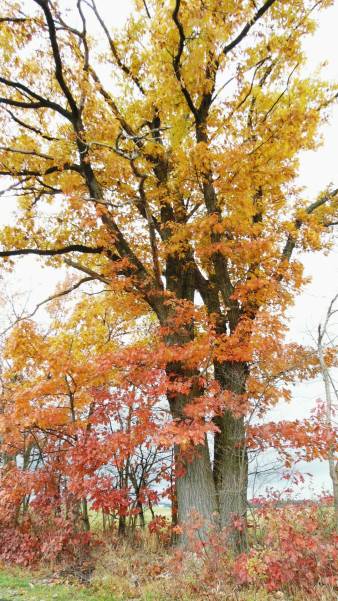
A glorious oak tree in fall colors! A glorious oak tree in fall colors!

There is nothing quite as majestic as an oak, which is likely why ancient druids met in groves of them to perform their ceremonies.   As I write this, I look at my glorious black oaks, white oaks, and burr oaks in the surrounding landscape and their incredible mantle of gold, tan, crimson and oranges.  Where I live, the oaks keep the green on their leaves through most of the fall season, and begin their transition into color just before Samhain. The oaks and beeches, here, are the very last to lose their leaves–if they lose them at all.  Many of the oaks, especially the younger ones, keep their leaves all winter, dry and crackling, and only drop them before they bud out again in the spring.   Their behavior in the fall and winter months is certainly a testament to their energy and…

View original post 2,533 more words

Let’s Create Some Herbal Remedies – When Cold and Flu Season Arrives.

Crooked Bear Creek Organic Herbs's avatarCrooked Bear Creek Organic Herbs

These two recipes are prepared as teas but are not taken in your tea cup – they help with the discomfort of flu season in other ways.

Winter Inhalation

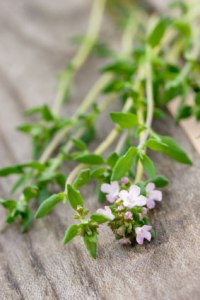
living-herbs-for-cold-flu-thymeThis traditional herbal steam helps open your sinuses, discourages bacterial and viral growth, and reduces pain and inflammation. Remember to stay a comfortable distance from the steaming pot to avoid burning your face.

8 – 12 teaspoons fresh or 4 teaspoons dried eucalyptus leaf {Eucalyptus globulus}

2 – 3 tablespoons fresh or 1 tablespoon dried peppermint leaf

2 – 3 tablespoons fresh or 1 tablespoon dried thyme herb

3 cups purified water

Essential oils of the herbs above {optional}

Place the eucalyptus, peppermint, thyme, and water in a saucepan and stir to thoroughly combine. Bring to a boil, reduce the heat, and simmer, covered, for 5 to 10 minutes. Remove from the heat and uncover. Drape a large towel…

View original post 371 more words

Food as Medicine Update: Sweet Potato (Ipomoea batatas, Convolvulaceae)

Crooked Bear Creek Organic Herbs's avatarCrooked Bear Creek Organic Herbs

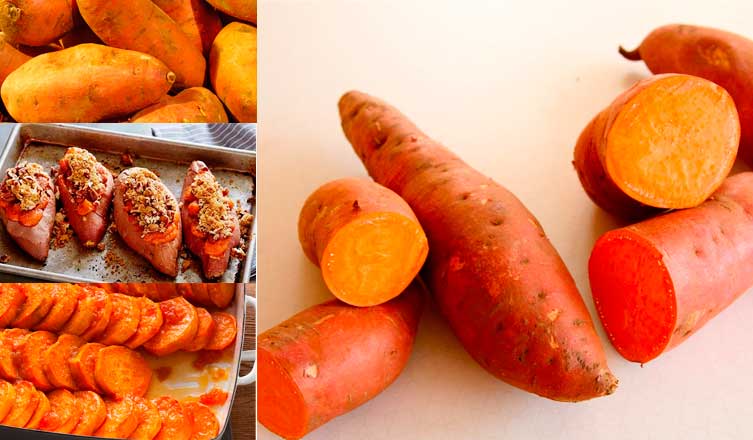
The sweet potato (Ipomoea batatas, Convolvulaceae) is a trailing, herbaceous perennial in the morning glory family.1,2 It is indigenous to Central and South America and grows best in subtropical climates, spreading along the ground and producing oblong, tuberous roots. There are more than 400 sweet potato varieties, and most have yellow-brown or copper-colored skins with bright orange or yellow-red flesh.3 Orange-fleshed sweet potatoes (OFSPs) are the most common varieties consumed, but white, cream, yellow, pink, and deep purple varieties also exist. The sweet potato plant has alternate, heart-shaped leaves and produces funnel-shaped white, pink, or rose-violet flowers that appear in clusters in the leaf axils as the plant matures.4

Taxonomic confusion can arise over the common name “yam” that often is given to sweet potatoes in the market. Botanically speaking, true yams belong to the genus Dioscorea (Dioscoreaceae) and are much less common in the United…

View original post 2,927 more words

November, Autumn, Fall

Crooked Bear Creek Organic Herbs's avatarGood Witches Homestead

“The name ‘November’ is believed to derive from ‘novem’ which is the Latin for the number ‘nine’.  In the ancient
Roman calendar November was the ninth month after March.  As part of the seasonal calendar November is the
time of the ‘Snow Moon’ according to Pagan beliefs and the period described as the ‘Moon of the Falling Leaves’
by Black Elk.”

Samhain:

“This association of death with fertility provided the theological background for a great number of end-of-harvest festivals celebrated by many cultures across Eurasia.  Like Samhain, these festivals (which, for example, included the rituals of the Dyedy (“Ancestors”) in the Slavic countries and the Vetrarkvöld festival in Scandinavia) linked the successful resumption of the agricultural cycle (after a period of apparent winter “death”) to the propitiation of the human community’s dead.  The dead have passed away from the social concerns of
this world to the primordial chaos of the Otherworld where all fertility has its roots…

View original post 796 more words

The Samhain of our Lives

Dana's avatarThe Druid's Garden

Just last week, we had our first hard frost. After homesteading for a number of years, you grow to be vigilant for the signs of the first frost. The air smells different somehow in the two or so weeks leading up to it. The bird and wildlife patterns change.  The nights have a crisp bite to them that they didn’t even a few days before. And then, just like magic one day, the frost is there, glistening in the morning light. The garden radically changes overnight–even for those things you covered–the entire landscape lies in disarray.

Sunrise at First Frost Sunrise at First Frost

I could feel it on the air, and for the last few mornings, have been going to to see if it had arrived. That morning, I turned the corner and first saw it first on the strawberry patch–white and glistening. The frost is beautiful, magical, and yet, destructive. While the…

View original post 1,466 more words

A Druid’s Guide to Herbalism, Part II: Preserving and Preparing Sacred Plant Medicine

Dana's avatarThe Druid's Garden

The moonlight shines through the window in my kitchen as I carefully use a mortar and pestle to grind dried herbs for making tea.  Candlelight softly illuminates the space, and I have my recipe book with me, ensuring that I record everything that I’m doing for future use. Magic is in the air; working in a sacred space at a sacred time on the Fall Equinox ensures that these medicines will be potent, effective, and magical. On the counter, I’ve already finished my fresh New England Aster flower tincture; this keeps my lungs in good health and helps me manage my chronic asthma without pharmaceuticals. A pot of olive oil is infusing with herbs is on the stove; I am getting ready to add beeswax and pour it off into small jars.  This healing salve will be for friends and family as Yule gifts.  The kitchen is bursting with good…

View original post 2,609 more words