
Who Knew That The Chicken Mushroom Could Have An Endangered Look-Alike?

Greetings!

Within the world of mushroom hunting exists a regionally-dictated and arbitrary list known as the “foolproof four.”  Such an assemblage includes choice edible fungi that are easily identified.

Chicken Of The Woods, with its vivid colors and meaty texture, is one wild mushroom whose name is frequently included in “foolproof four” lists across North America.  Ask any seasoned mushroom hunter, and he or she will tell you that few wild fungi resemble Chicken Of The Woods.

But few doesn’t always mean zero.

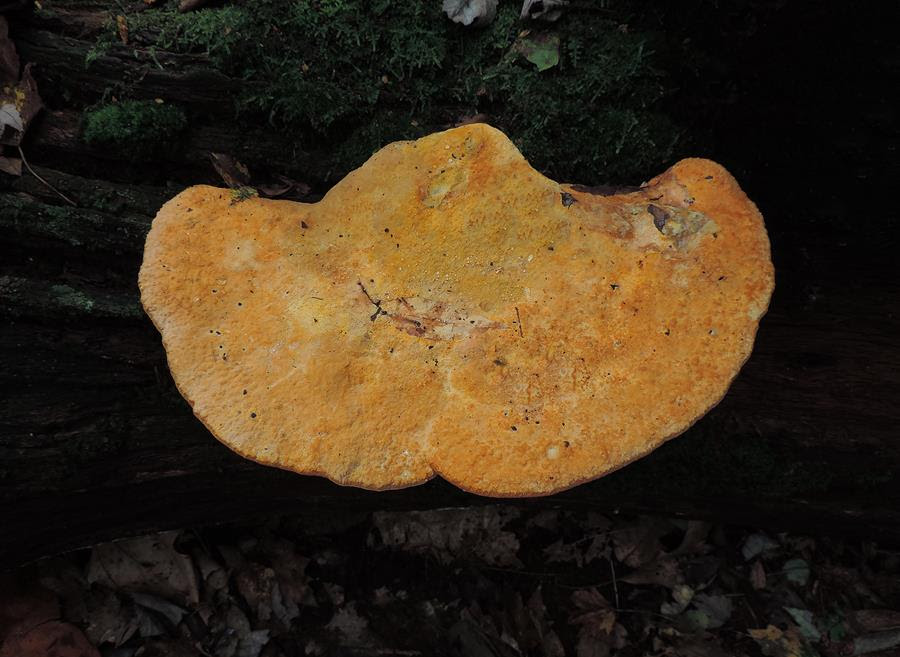
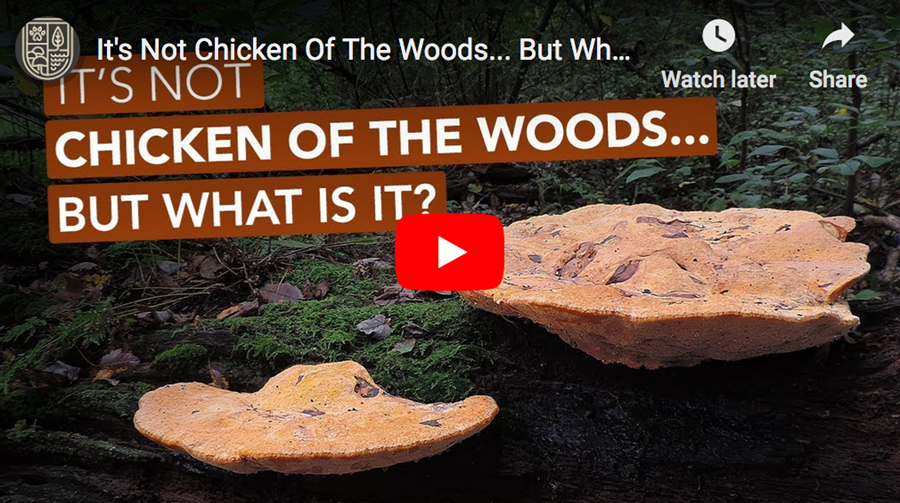
There are mushrooms that, at least from a distance, can certainly resemble Chicken Of The Woods, and featured in the following video (and pictured above) is one such look-alike that’s actually considered to be critically endangered in some forests around the world.

If you’re interested in learning more about this bright orange fungus that can indeed resemble Chicken Of The Woods, check out the brand new video!

And in case you missed it, I released another brand new video last week without sending an accompanying email.

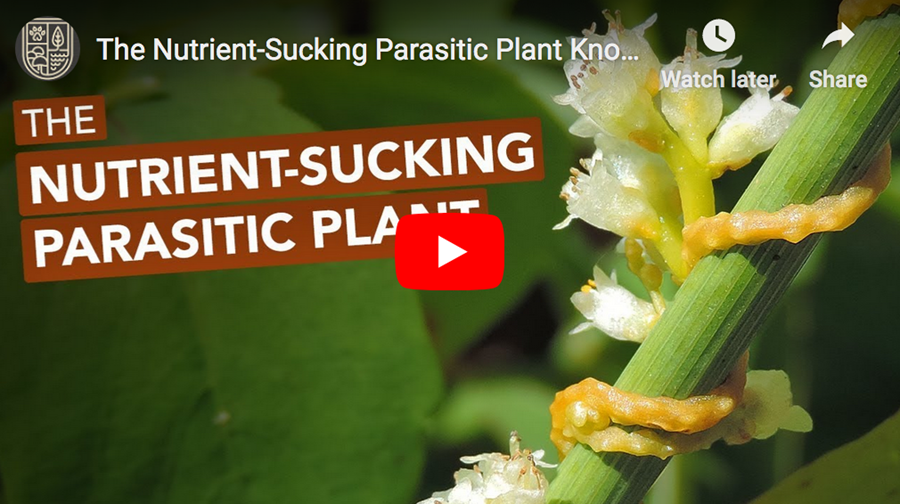
This time, we’re talking about a common plant that undoubtedly lives an unconventional life.  With names like Devil’s Guts, Strangle Weed, and Love Vine, this wild plant is despised by many people and surprisingly cherished by others.

Check out the video if you haven’t seen it already!

Thanks for reading and watching, and as always, thank you for your support!

-Adam Haritan

A Deeper Look At Forest Roots

Black and Blue Cohosh Forest

Sandy loam, a substance created by the breakdown of minerals (rock) mixed with the breakdown of carbon (tree or grass detritus). Sandy loam is what we all want, because it is the best all around substrate for growing the plants we love the most: GoldensealGinsengBlack and Blue CohoshWild YamTwinleafBloodroot, Stonerooot, Mayapple — the entire interconnected clan of powerfully medicinal shade-loving forest roots. My book “Growing At-Risk” gives a chapter on each of these (and other) herbs of the hardwood forest biome. Let’s look a bit deeper into what can be done to bring these entities down home and help them prosper!

Survey the growing area. It may be a woodland with trees, brush and diverse broadleaf species already intact. If this is the case, identify areas overgrown by weedy species or heavily shaded by dead wood or thin-able trees. Such areas have often been left undisturbed for some time, and the soil may be rich and undisturbed. Clear away dead wood and crowded trees, giving access to the forest floor and providing more light to the growing beds. Forest roots like dappled shade, where sunlight moves across the moist and humus-laden soil in amorphous patches.

After all, even shade-loving herbs eat light! Remove existing weedy species and push your spade into the ground. If you have at least 6 inches of good dirt, then it’s a go. Pull the existing mulch away from the planting bed, which should be at

Mayapple Forest

least 4 feet wide, arranged with a path to the side to guide forest creatures and humans away from the planting, not over the top of the sensitive plants. Pile the mulch in the path, and plant the dormant roots in the bed, then rake the mulch back over the top of the bed. Mark the bed with a heavy stake and a label giving the date and the species planted there. Metal tags may be used for this, so that they do not fade or disintegrate with time. You will be oh-so-happy that you marked your planting spot!


Read full article via Ricoh’s Blog: A Deeper Look at Forest Roots

August (and Blackberry Jam)

Staghorn Sumac Sugar Fritters — Gather Victoria

A Bunyol is a Spanish Sugared fritter, so these are Staghorn Sumac Sugar Bunyols. Imagine a warm doughnut (without the hole) rolled in a silky lemony tasting icing sugar and you’ve got the idea. A bunyol (or buñuelo) is a small yeasty bun traditionally enjoyed in Spain on All Saints Day (Nov.1st) which is dedicated to the memory of the…

via Staghorn Sumac Sugar Fritters — Gather Victoria

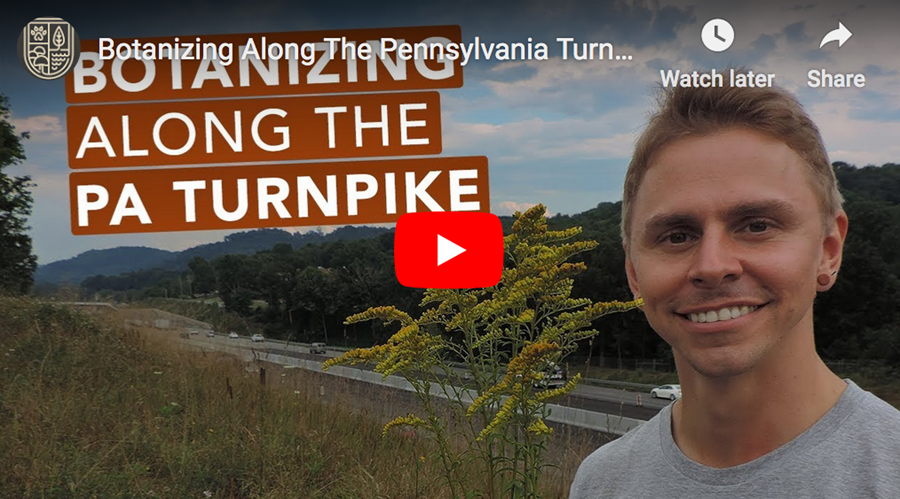
Botanizing Along The Pennsylvania Turnpike (New video!)

Greetings!

First, I’d like to say “thanks!” to everyone who registered for the upcoming Midwest Wild Harvest Festival in Prairie du Chien, Wisconsin.  The event has officially sold out, though if you’re looking for additional opportunities to learn foraging (specifically mushroom foraging), look no further than the annual Gary Lincoff Memorial Foray on September 21st in Pittsburgh.

Tickets are still available for this latter event in which I, along with Bill Russell (author of Field Guide to Wild Mushrooms of Pennsylvania and the Mid-Atlantic) and Rick Kerrigan (the foremost authority on North American Agaricus mushrooms) will be presenting during the afternoon lecture sessions.

And now on to this week’s brand new video!

I get the feeling that most people wouldn’t consider major highways to be prime habitats for botanical exploration.  Interestingly, however, areas that are perpetually kept in an early stage of ecological succession — especially areas that receive ample amounts of sunlight — can harbor incredible numbers of plant species.

Such is the case with the Pennsylvania Turnpike — a 360+ mile highway that traverses the entire state.

I recently spent some time exploring an area alongside the Pennsylvania Turnpike in search of native plants that thrive during the warmest weeks of the year.  And of course, I decided to film the experience.

If you’re interested in seeing what it’s like to botanize along the Pennsylvania Turnpike in mid-August, check out the brand new video!


Bad hair day or fungal overgrowth?  Unfortunately for this spider engulfed in mycelium, things aren’t looking too good.  Have you ever seen something like this in your neck of the woods?  Check out this Instagram post to learn more!

Thanks for reading and watching, and as always, thank you for your support!

-Adam Haritan

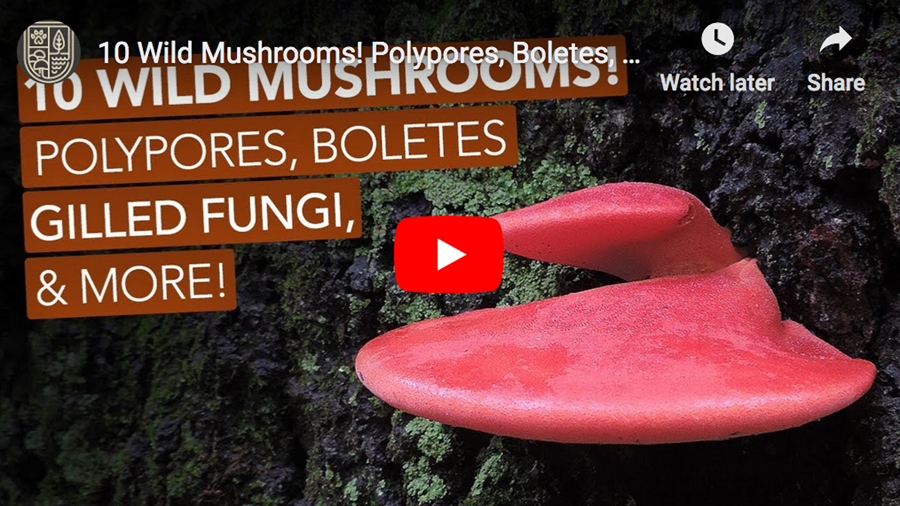
10 Wild Summer Mushrooms — Polypores, Boletes, Gilled Fungi, & More!


Greetings!

This summer season has been full of programs, traveling, turnpike tolls, ticks, and of course… mushrooms!  A big “thank you!” goes out to everyone who has attended a recent event in which I’ve led a walk or have given a presentation.

I’m excited to announce that I’ll be participating in two upcoming events this September.  On Saturday, September 21st, the Western Pennsylvania Mushroom Club is hosting its annual Gary Lincoff Memorial Foray.  I, along with Bill Russell (author of Field Guide to Wild Mushrooms of Pennsylvania and the Mid-Atlantic) and Rick Kerrigan (the foremost authority on North American Agaricus mushrooms) will be presenting during the afternoon lecture sessions.

Also, I’ll be leading mushroom programs at the annual Midwest Wild Harvest Festival in Prairie du Chien, Wisconsin from September 27th-29th.  Additional instructors for this year’s festival include Samuel Thayer, Ellen Zachos, Leda Meredith, and Erica Davis.

More events are forthcoming.  Stay tuned!

And now on to this week’s brand new video!

One of the benefits of traveling during the summer season is seeing, documenting, and filming different kinds of fungi that grow in varied habitats.

Over the past several weeks, I’ve been physically in the presence of hundreds of mushrooms (over 400 species just this past weekend alone!) and I’ve enjoyed immensely their unique shapes, sizes, smells, and spores.

For this week’s video, I thought I’d narrow down the list a bit and showcase some of the more fascinating fungi that I’ve recently encountered.

If you’re interested in learning a few neat things about 10 different mushrooms (all of which may be growing in your neck of the woods!), check out the brand new video!


Even during dry periods, a hardy group of mushrooms can reliably be found.  Pictured here is one such species that fruits in seemingly fungally-barren woods during the summer and autumn months.  Check out this Instagram post to learn more!

Thanks for reading and watching, and as always, thank you for your support!

-Adam Haritan

Raspberry Patties en Surprise — A Hundred Years Ago

I’m always intrigued by hundred-year-old recipes that include drawings of the finished product since such recipes are few and far between. So when I recently came across a drawing of a beautifully presented recipe for a raspberry dessert called Patties en Surprise in a 1919 advertisement for Minute Tapioca, I decided to give it a […]

via Raspberry Patties en Surprise — A Hundred Years Ago

A Forest Grown Future for Pennsylvania’s Precious Ginseng — Good Witches Homestead

In Pennsylvania’s lush, green Appalachian foothills, our North American ginseng thrives. It’s here in these undulating woodlands that Randy has tended our certified organic and forest grown ginseng for more than 30 years. “There are very few people who are cultivating the plant in its wild habitat,” said Jennifer, Mountain Rose Herbs’ Chief Operations Officer. “It’s a […]

via A Forest Grown Future for Pennsylvania’s Precious Ginseng — Good Witches Homestead

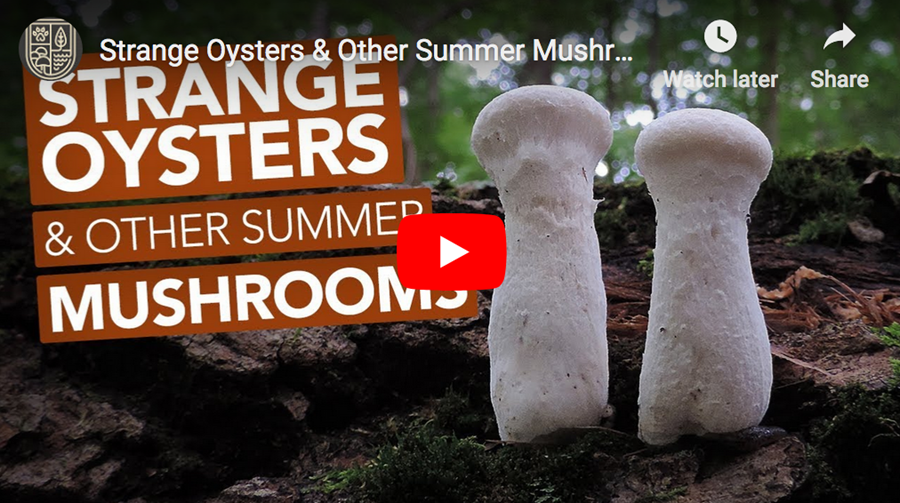
Strange Oysters & Other Summer Mushrooms (New Video!)

Greetings!

First, I want to say “thank you!” to every person who has attended one of my foraging programs this year.  One of the best parts of traveling to new areas is meeting and spending time with an incredible number of wonderful people who are thrilled to learn new plants and mushrooms.  I’ve had a blast so far this year hopping around different states and I certainly don’t plan on stopping any time soon!

As a reminder, I’ll be participating in the West Virginia Mushroom Foray from July 19th through the 21st at Blackwater Falls State Park in Davis, West Virginia.  While my Friday morning walk has already filled to max capacity, I’ll be offering a presentation on Saturday for all participants.

Additional instructors this year include such notable authors as Arleen Bessette, Walt Sturgeon, and John Plischke III.

You can learn more about the event by clicking here!

And now on to this week’s brand new video!

Fungally speaking, summer is off to a fruitful start. The ample rains and warmer temperatures have been very conducive to fungal activity here in the Northeast, and if similar conditions persist, 2019 could be a banner year for many summer mushroom species.

While on a recent walk through a local wooded area, I encountered quite an array of mushrooms — some edible, some not so edible, but all fascinating in their own right.

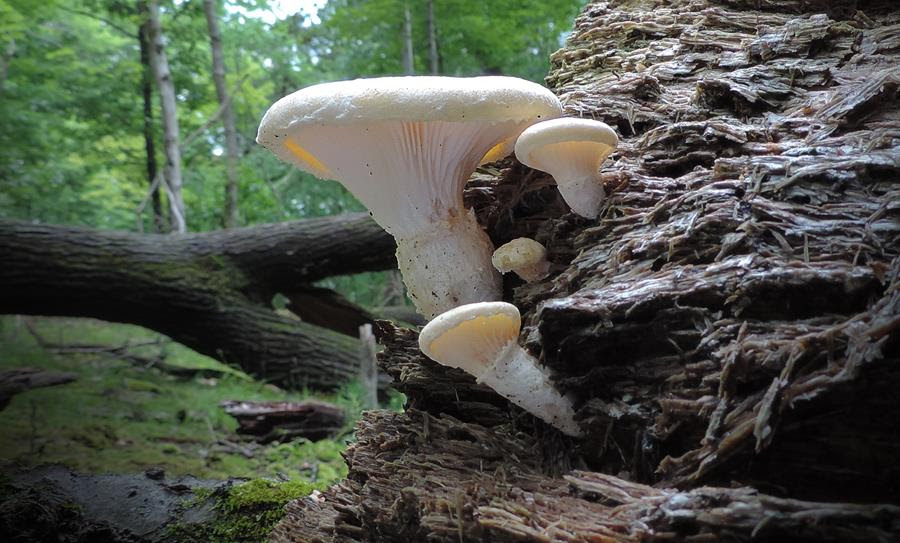
One species in particular caught my eye because of its close resemblance to oyster mushrooms, and upon closer inspection, its true identity was revealed to me.

Have you ever seen a mushroom that looks like this?  Would you consider it to be an oyster mushroom or something else?

Check out the new video to learn more!

Amongst thunderstorms, cloudy skies, and rainbows, this beautiful mushroom contributes significantly to the array of phenomena that characterize the early summer season. Few mushrooms are as photogenic as this one, and if you’d like to learn who this unique fungus is, check out the recent Instagram post!

Thanks for reading and watching, and as always, thank you for your support!

-Adam Haritan

Sonoran Sweetness: A Gathering

Crooked Bear Creek Organic Herbs's avatarCrooked Bear Creek Organic Herbs

The cherished time of year in the Sonoran desert is now upon us.  While the desert heats up to temperatures above 110 F, many run for cooler, moister climes and foreign visitors are scorched in a short time.  This heat is necessary, it is a natural process inherent in our desert’s ecology.  To eliminate it in some way would be to lose one of the greatest gifts this desert has to offer us.  Without the intense heat, the fruit of our Saguaro cactus (Carnegiea gigantea) would not mature properly.  Not many people today know the characteristic sweet taste of the fruit of the Saguaro cactus, known as bahidaj in the Tohono O’odham (native peoples of the Sonoran desert region) language.  It is the O’odham people (often referred to as Papago) who have preserved the knowledge on how to prepare such things as Saguaro syrup (bahidaj sitol), Saguaro jelly…

View original post 1,329 more words