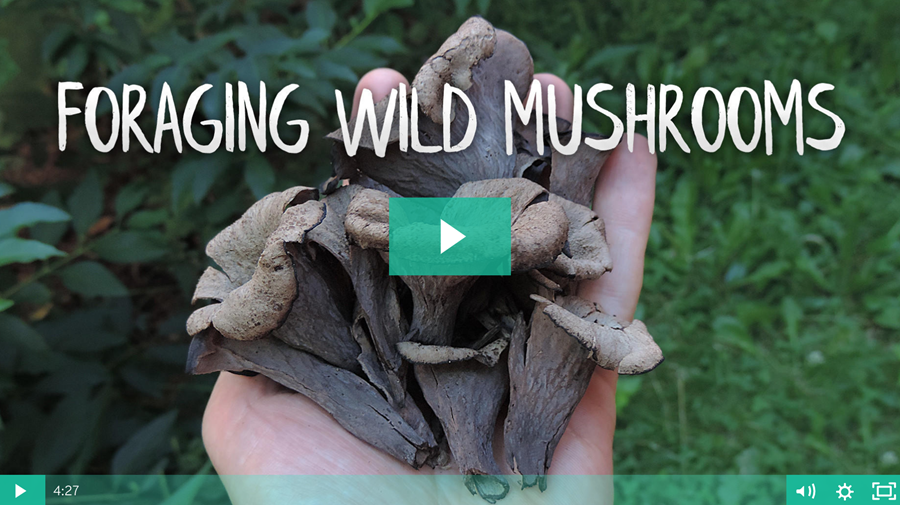

Foraging Wild Mushrooms — Online Course Registration Open For Limited Time

Greetings!

In anticipation of the winter mushroom season, and at the request of those eager to pursue educational opportunities during the winter months, I decided to open the doors to Foraging Wild Mushrooms for the next 5 days.

This 4-season online course is designed to help you safely, successfully, and confidently forage wild mushrooms from the forest, from the field, and even from your own backyard!

Whether you’re interested in foraging for food, for medicine, for study, or just for fun, Foraging Wild Mushrooms covers the most important lessons to get you started.

In addition to over 70 step-by-step exclusive and instructional videos included within the course, you’ll also receive:

  • Supplemental handouts covering mushroom anatomy, terminology, and biology that you can download and print for easy viewing.
  • A 42-page guide to medicinal mushrooms that summarizes the latest research on the most popular medicinal fungi and features over 75 peer-reviewed references.
  • Immediate and lifetime access to all materials.

Additionally, I’m equally (if not more) excited to let you know that a portion of all proceeds derived from course sales will be donated to the Pennsylvania Parks & Forest Foundation — a nonprofit organization whose mission it is to inspire stewardship of Pennsylvania’s beautiful state parks and forests.

As you may or may not know, a good bit of Learn Your Land’s educational programming is filmed on-site within many of Pennsylvania’s state parks and forests.  To express gratitude, and to ensure that these wild places exist for generations to come, I find it imperative to support organizations that in turn directly support the forests.

Therefore, a portion of all proceeds derived from this enrollment period will be donated to the Pennsylvania Parks & Forest Foundation.

Please note that enrollment for Foraging Wild Mushrooms is open for 5 days only — from today until Sunday, December 15th at midnight.  After that, enrollment will be closed.

To learn more about the course, check out this video which gives an overview of what you can expect.

I hope to see you in there!
—Adam Haritan

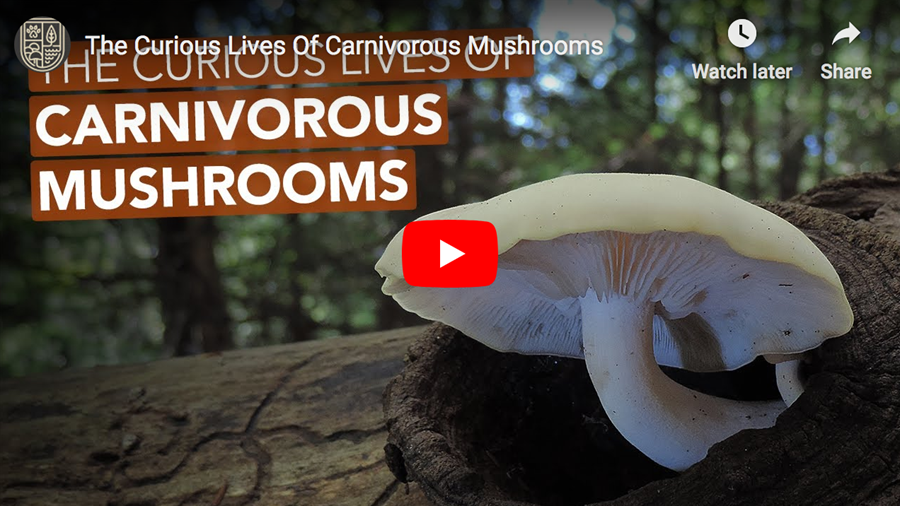
The Curious Lives Of Carnivorous Mushrooms (New Video!)


Greetings!

Before I share this week’s brand new video with you, I’d like to mention that I’ll be sending out another email tomorrow — Wednesday, December 11th — with a special announcement inside.

If you’re interested in reading more about the announcement, be sure to check your inbox tomorrow!

Moving forward, let’s discuss something that sounds a bit more like science fiction than fact.

Carnivorous mushrooms.

Many people are unaware that fungi have the ability to capture and consume living members of the animal kingdom.  Interestingly, researchers have been studying the topic of carnivorous fungi for over a century.

More than just a quirk of nature, carnivorous fungi represent hundreds of species that commonly inhabit woods, forests, and fields.  They’re so common that, if you’re a fan of wild edible mushrooms, there’s a good chance you’ve eaten a carnivorous species on at least one occasion.

As is my habit, I decided to film a video in celebration of these accomplished hunters and trappers.

If you’re interested in learning more, check it out!


While recently spending some time in sunny San Diego, I had the unique opportunity to visit what is considered to be the rarest pine tree in the United States.  To learn more about this 5-needled, cliff-dwelling species, check out the recent Instagram post!

Thanks for reading and watching, and remember… be sure to check your inbox tomorrow for the special announcement!

-Adam Haritan
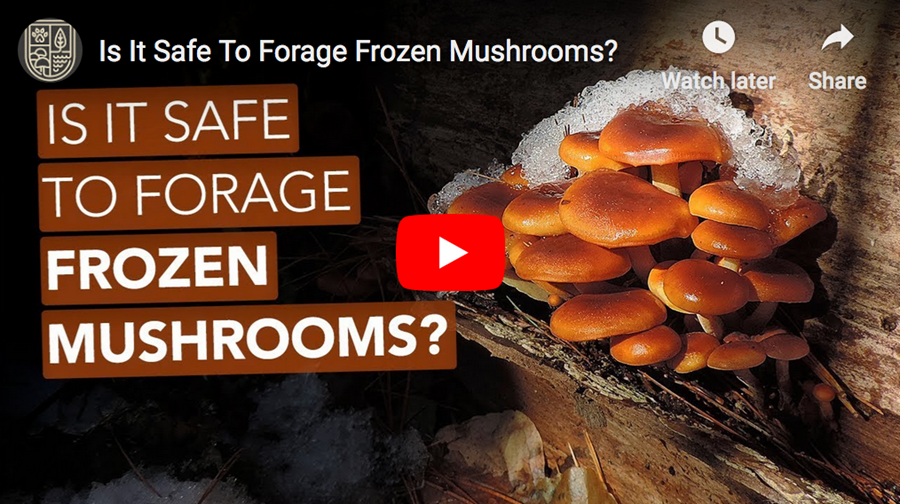
Is It Safe To Forage Frozen Mushrooms?

Greetings!

A wintry cold snap, even during the weeks of mid-autumn, can mean different things to different people.

To mushroom hunters, a cold snap any time of the year equates to one or more of the following:

—No mushrooms (Too cold to even bother checking.)
—Fewer mushrooms (Most of which are inedible.)
—Frozen mushrooms (Some of which are choice edible species.)

All three selections are valid, though it is the last option that I’d like to address in this email and in the following video.

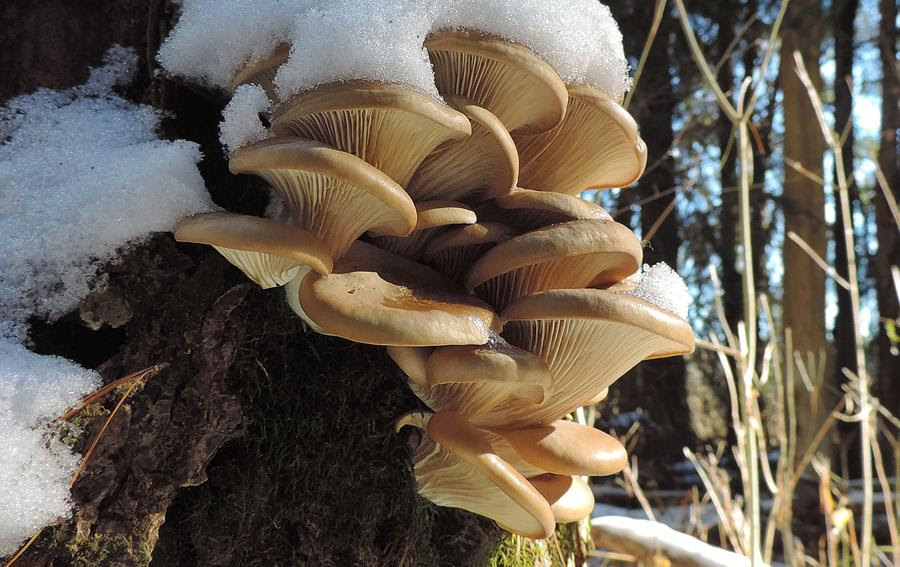
You see, quite a few edible mushrooms survive and reproduce in cold temperatures.  It is therefore not uncommon to find edible fungi frozen solid to their substrates.

Recently, I’ve received numerous questions regarding the practice of foraging frozen mushrooms.

Is it safe to do so?  What if the mushroom has been on a tree for weeks?  Does the freeze/thaw cycle alter its texture?

These are all great questions that I address in the following video.  Additional topics discussed in the video include the ability of fungi to produce anti-freeze agents, the destructive effects of freezing on a cellular level, and lots more!

You can check out the brand new video here.

Also, I was recently invited to speak on the topic of mushrooms and gut health with Peggy Schirmer from Gut Feelings.

Fungi, as it turns out, aren’t just residents of forests, fields, parks, and lawns.  They also reside on and inside each and every one of us.

In this interview, we discuss — among many things — the gut mycobiome.  You can check out the interview here.

Thanks for reading and watching, and as always, thank you for your support!

-Adam Haritan

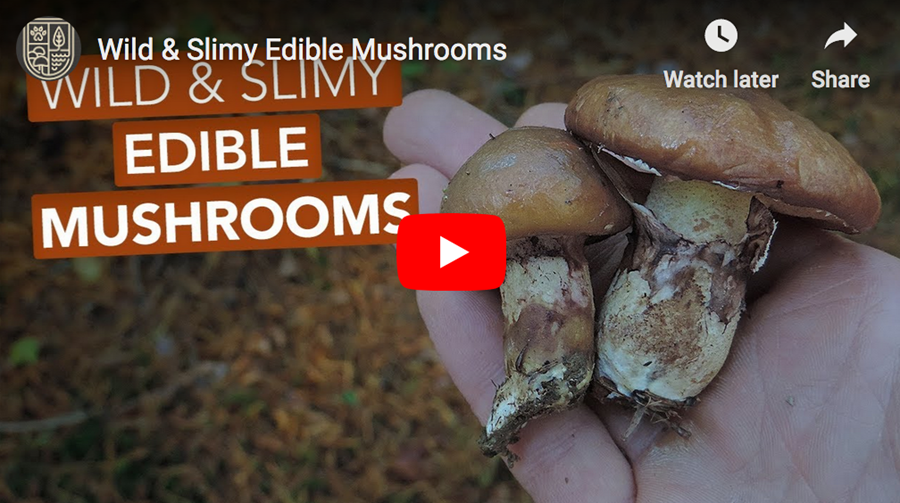
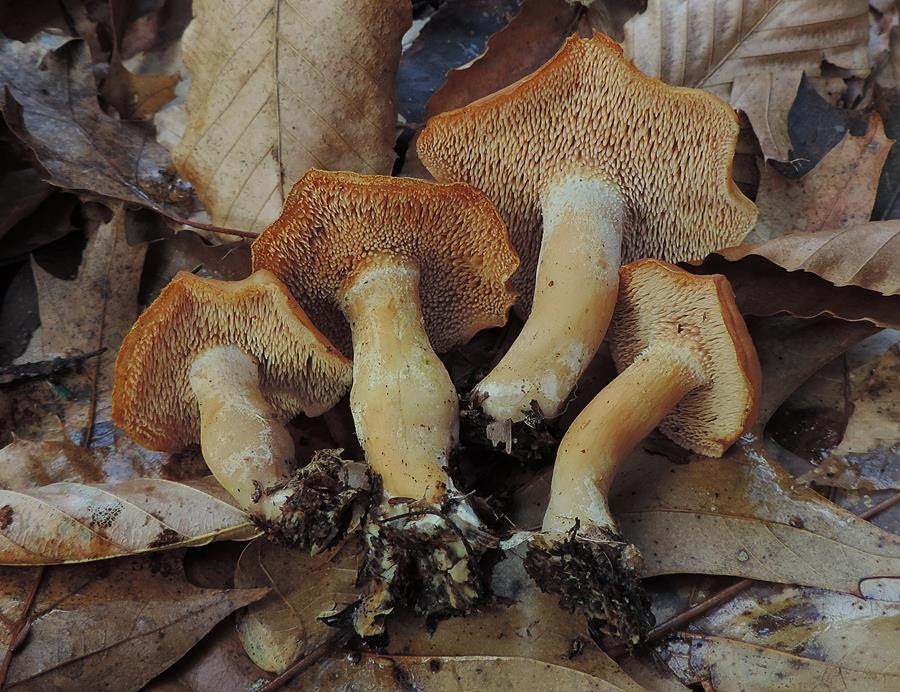
Wild & Slimy Edible Mushrooms (That Are Surprisingly Tasty!)

As the year draws to a close, the fungal kingdom participates in a kind of grand finale that is best experienced within a conifer forest.

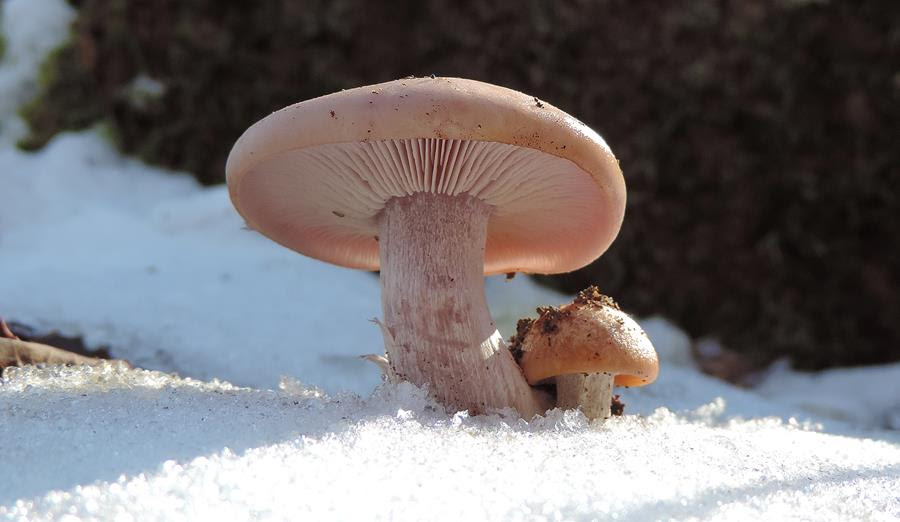
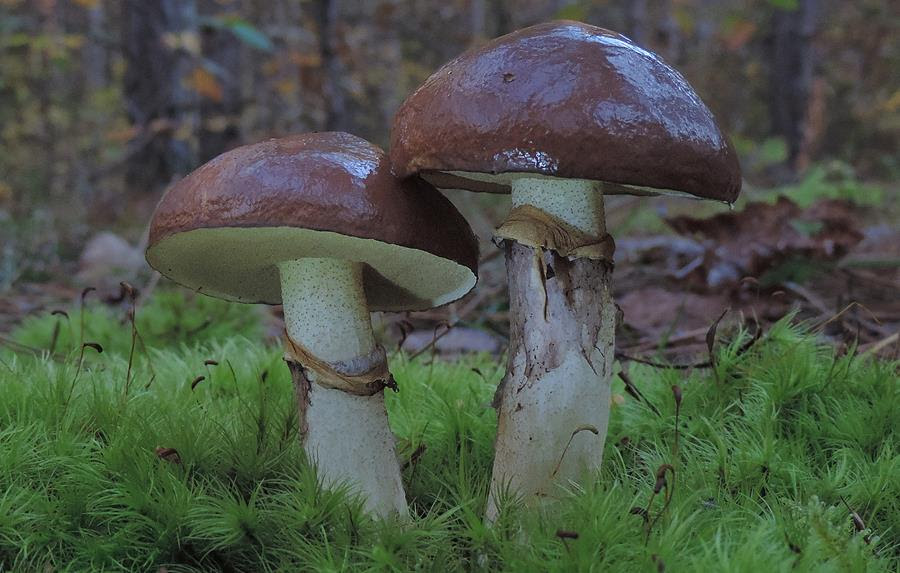
Under dense canopies of pines, troops of ochre-colored mushrooms push their way through the soil.  These particular fungi characteristically wear slimy coats adorned with seasonal debris including pine needles, unlucky insects, and additional forest offerings.

Such a performance is not to be missed, as many of these mushrooms are edible and among the last of the mycorrhizal fungi to appear in temperate climates before temperatures plummet and the ground freezes.

Over the past few weeks, I’ve made several trips to conifer-rich woodlands in order to witness this end-of-the-year fungal grand finale.

And on almost every occasion, slimy mushrooms were in no short supply.

If you’re interested in learning more about these wild edible mushrooms whose golden days are numbered, check out the brand new video!

I was recently invited to speak with the hosts of The Survival Show Podcast on the topic of wild mushrooms.  In this episode, we cover the “foolproof four,” tips on getting started, whether or not mushrooms make great survival food, and lots more.  Here are 3 ways to listen to the interview:

Thanks for reading and watching, and as always, thank you for your support!

-Adam Haritan
Sacred Tree Profile: Black Locust’s Medicine, Magic, Mythology and Meanings

Dana's avatarThe Druid's Garden

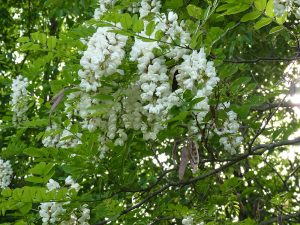
Black locust in bloom

Black Locust (Robinia pseudoacacia) is a spiny, scraggly tree that is found abundantly along the US East Coast. Very little is written about this tree from a magical or mythological perspective, although certainly, anyone who works wood or practices permaculture is aware of the more tangible benefits this tree provides. In today’s post, we explore this amazing tree and start building some more specific magical knowledge to incorporate this tree into local druidic or nature-spirituality practices.

My parents’ land in Western PA, land where I grew up, consisted primarily of old potato fields.  We had two sets of tree lines where the farmers had let the trees grow; these lines were full of huge cherry and maple trees grew.  In between those tree lines as the land sloped down the mountain were open areas populated with blackberry bushes, hawthorn, and black locusts–several acres of them…

View original post 2,141 more words

How to Make Elderberry Syrup for Immune Health

Crooked Bear Creek Organic Herbs's avatarGood Witches Homestead

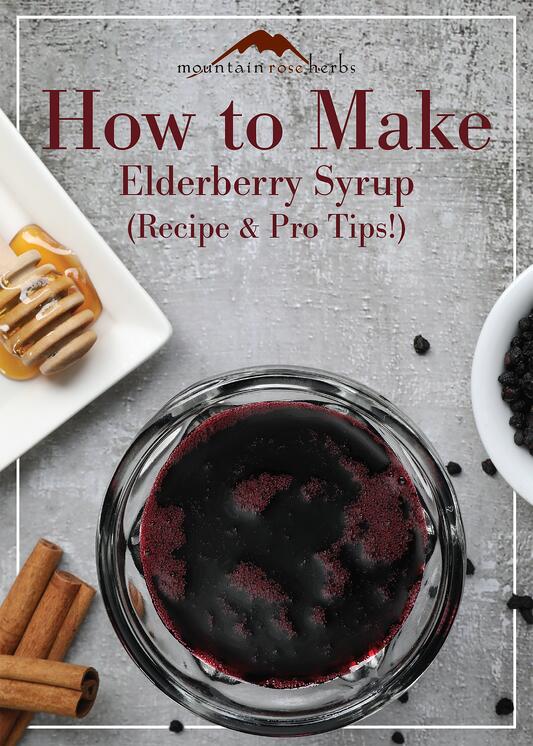
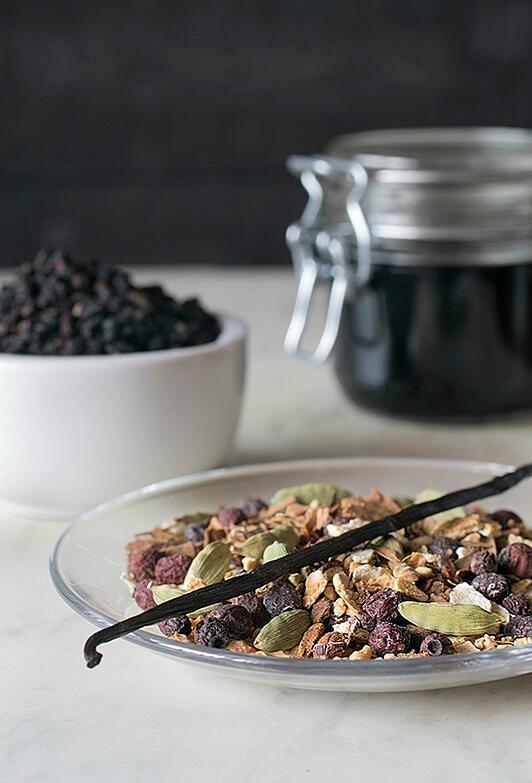
Each year as winter approaches, I reliably find my patients asking me about the best herbal remedies to use during the cold weather months. One of the most common questions I encounter is, “What nutritional preparations can I use to help keep my family strong and healthy throughout the sniffle season?”. There’s a wide array of herbs well-suited to addressing specific and general winter wellness goals, but one of my favorite, tried-and-true choices for general immune support is the elderberry.

And while there are lots of ways to enjoy the healthful benefits of elderberries, one of the best-loved is that longtime herbal apothecary staple, elderberry syrup.

Elderberry Syrup Benefits

The berries, flowers, and bark of the elder (Sambucus) plant have long been prized by herbalists across the globe, and modern studies have also substantiated the berries’ ability to help maintain normal, healthy functioning of our immune system*. This makes elderberry an…

View original post 1,163 more words

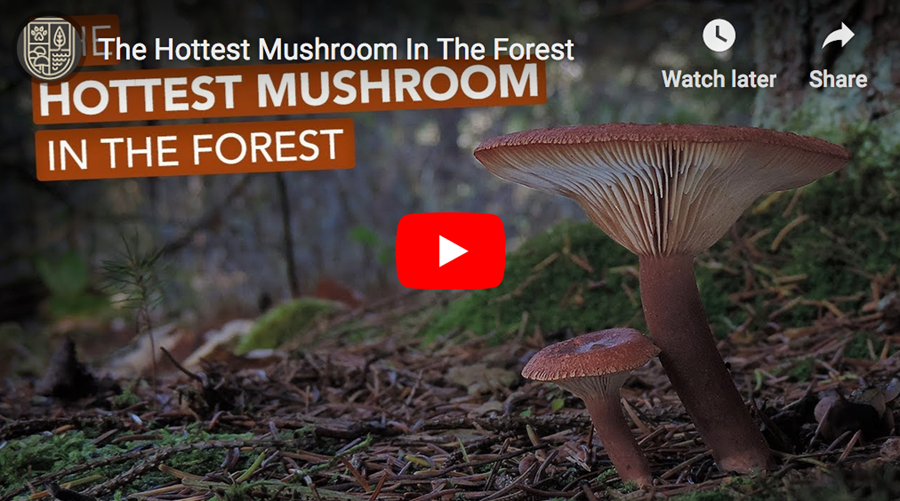
The Hottest Mushroom In The Forest

Greetings!

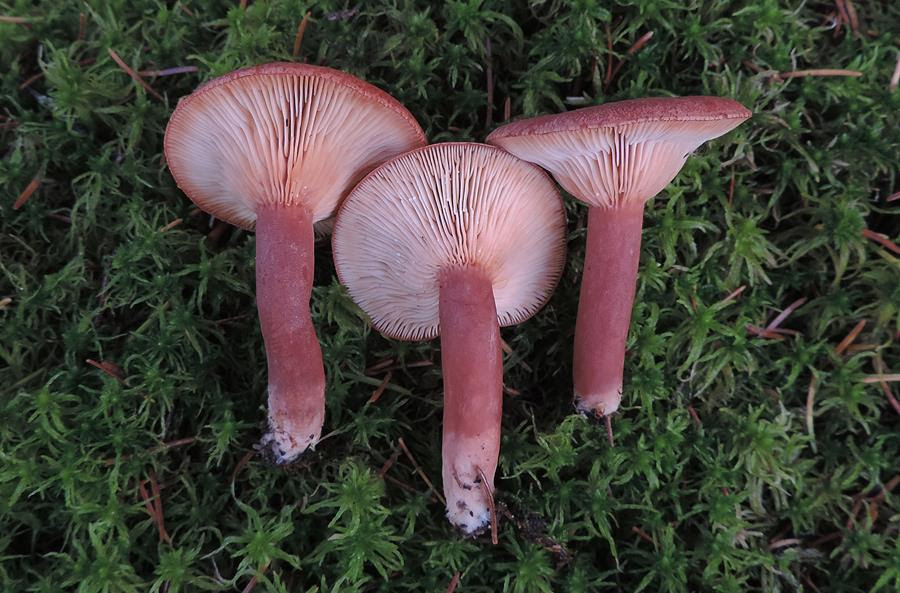
An interesting quality about wild mushrooms is that more than a few of them will burn your mouth.

This may come as a surprise to those of us who have only eaten store-bought mushrooms — most of which, while certainly tasty, are rather mild-mannered.

Beyond the grocery store walls and out in a wild forest, however, there are particular wild mushrooms whose flavors range from hot, to really hot, to excruciatingly hot.  Researchers aren’t even entirely clear as to why certain mushrooms demonstrate these qualities while other fungi — even poisonous species — can be flavorless.

In this brand new video, we discuss what many people consider to be thehottest mushroom in the forest, as well as some proposed theories behind such quirks in nature.

If you’re interested in learning more about this very common (and very hot!) wild mushroom, check out the video!

Speaking of store-bought food, here’s a species that commonly inhabits grocery store shelves as well as wild spaces outside the supermarket.  Known to many of us as the Goji Berry, this wild edible nightshade is fruiting in eastern North America this month.  Check out this Instagram post to learn more!

Thanks for reading and watching, and as always, thank you for your support!

-Adam Haritan

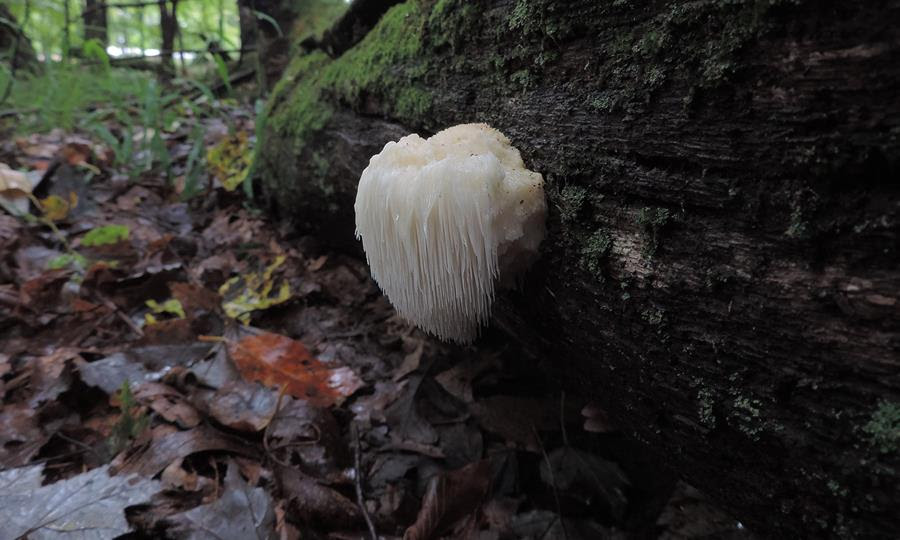
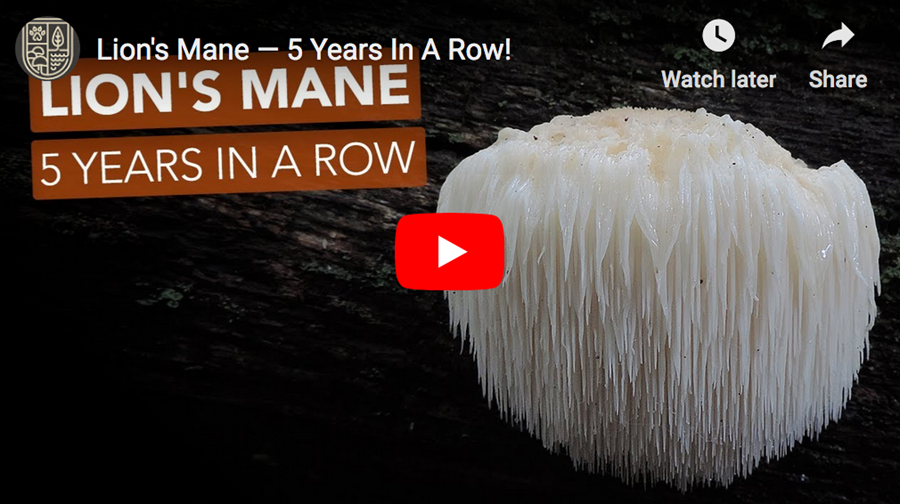
Lion’s Mane Mushroom — Same Spot, 5 Years In A Row (new video!)

Greetings!

Many years ago, a large white oak tree succumbed to windsnap on a hillside located a few miles from my home.  The standing snag remains, though the rest of the tree lies scattered on the forest floor leading down to a creek.

Since its death, this tree has given life to various fungal species.  Crust fungi adorn bits and pieces of the bark all year round, while cap-and-stem mushrooms appear transiently after seasonal rains.

Among the dozens of fungi that inhabit this fallen oak tree is one species that cannot be ignored.  More than JAM (“just another mushroom”), this particular species is touted for its exquisite taste and medicinal potential.

For the past five years, I’ve paid special visits to the deceased oak tree in search of this delicious, late-season mushroom.  And for the past five years, I’ve never been let down… even during prolonged dry spells.

Check out the newest video to learn more!

I was a recent guest on the Bent Over Wellness Podcast hosted by Isidora Romantini.  In this interview, we discuss ecological roles of fungi, medicinal mushrooms, the importance of learning your land, and lots more.  Check it out!

Thanks for reading and watching, and as always, thank you for your support!

-Adam Haritan

Food as Medicine: Black Chokeberry (Aronia melanocarpa, Rosaceae)

Crooked Bear Creek Organic Herbs's avatarCrooked Bear Creek Organic Herbs

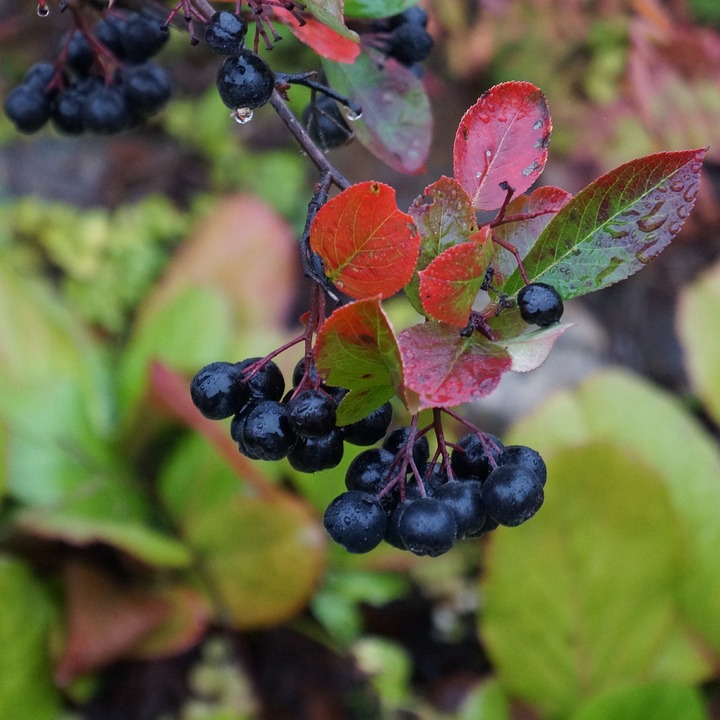
Black chokeberry (Aronia melanocarpa), also known as aronia berry, is a member of the economically important rose (Rosaceae) family, which includes other pome-producing plants like apple (Malus spp.), pear (Pyrus spp.), and quince (Cydonia oblonga). A pome is a fruit produced by the Malinae subtribe within Rosaceae. The genus Aronia includes two species of shrubs that are both native to North America: A. melanocarpa (black chokeberry) and A. arbutifolia (red chokeberry).1 Aronia melanocarpa grows to a height of 4-8 feet (1.2-2.4 meters) and is a cold-hardy, deciduous, thicket-forming shrub that prefers full sun and woodland edges.2,3 Black chokeberry’s natural range extends from the northeastern part of North America and the Great Lakes region to the Appalachian Mountains.1

In spring, black chokeberry shrubs produce clusters of white-to-pink flowers that are 2-2.5 inches long and each form 10-15 pea-sized, purple-black pomes after…

View original post 3,344 more words

Sacred Tree Profile: Chestnut’s Magic, Medicine, Mythology and Meaning (Castanea dentata)

Dana's avatarThe Druid's Garden

Basket of abundant chestnuts!

Just a few weeks ago, I went and checked the local chestnut trees that are in a field near where I live.  Ever since I moved to the new homestead, I have been eagerly visiting these trees.  Last year, they dropped plenty of husks but with only shriveled nuts inside. This year, I was extraordinarily pleased to find that both trees had produced a bumper crop of the delicious nuts–some almost 2″ across, but most smaller, almost all worm-free, and delicious. I eagerly filled my basket with the nuts, stepping carefully around the extremely prickly husks.  I sat with each of the trees and we conversed as I harvested the nuts. I took home 25 lbs of nuts that day, and these nuts will sustain myself, my geese (who love them), and my friends and family for many a Samhain, Thanksgiving, and Yule feast!  Chestnut trees…

View original post 2,037 more words