A Day In the Garden – Urban Moonshine

Crooked Bear Creek Organic Herbs's avatarCrooked Bear Creek Organic Herbs

GO INTO THE GARDEN EVERY DAY, NO MATTER WHAT.

That’s the promise I made at the start of the season. It will be a daily ritual, a practice to keep me in tune with the growth and health of the garden, and a sure way not to miss a bit of garden gossip. Like a bustling city full of honking horns, buses whizzing by, and street conversations half-heard, there is endless activity to observe. Cucumber beetles rapidly working to destroy the cucumber crop. Birds ravishing the cherry tree singing loudly to their friends to join in on the feast. Earthworms patiently turning the soil underfoot. Never a dull moment, but you need to go to the garden every day to keep up.

That has been my biggest lesson gardening this year. If you’re not there to enjoy the first ripe strawberries, the squirrels will be happy to take on that…

View original post 1,040 more words

Food as Medicine: Moringa (Moringa oleifera, Moringaceae)

Crooked Bear Creek Organic Herbs's avatarCrooked Bear Creek Organic Herbs

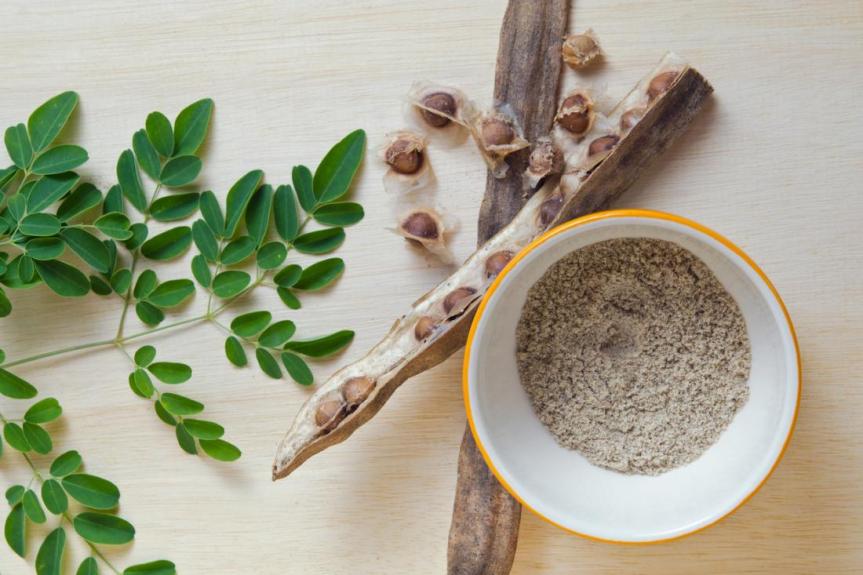
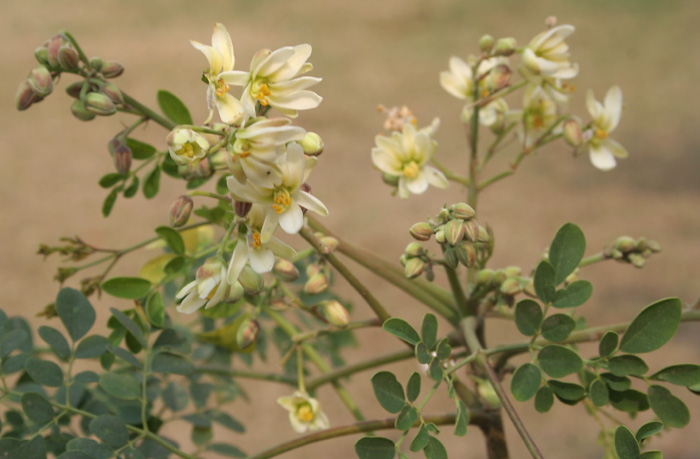
Moringa oleifera is one of the 12 known Moringa species in the horseradish tree family (Moringaceae) that flourish in drier parts of the world.1 Nine species occur in eastern Ethiopia, northern Kenya, and Somalia, of which eight moringa flowersare endemic to Africa, and three species occur in India.1,2 Belonging to the Brassicales order, this plant family is distantly related to cruciferous vegetables like arugula (Eruca vesicaria ssp. sativa, Brassicaceae) and broccoli (Brassica oleracea var. italica, Brassicaceae) and contains many of the same nutrients and sulfurous phytochemicals.1,3 Moringa species grow as stout-stemmed trees or shrubs. Some species are known as bottle trees and have a large root system that enhances water storage and aids the trees’ survival during periods of drought.1 Members of the Moringa genus have corky gray bark and distinct bi- or tri-pinnately compound leaves that have conspicuous swellings, or pulvini, at…

View original post 4,254 more words

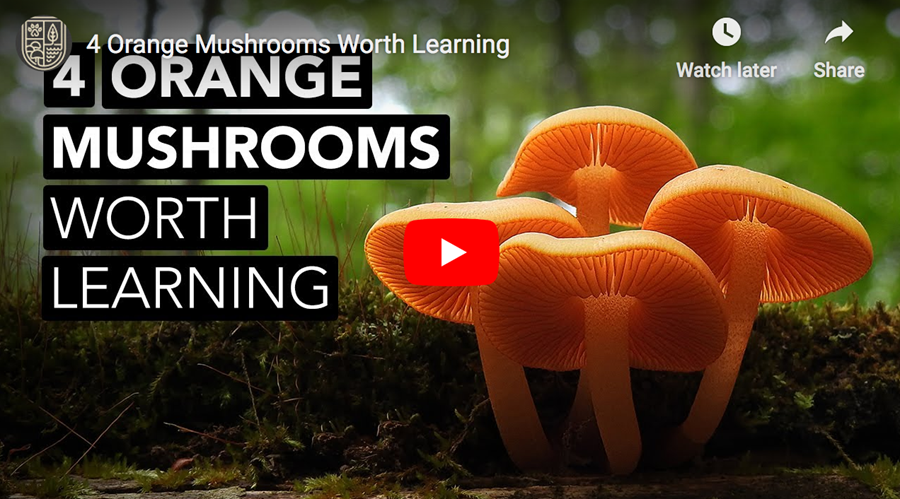
4 Fascinating Orange Mushrooms Worth Learning

Greetings,

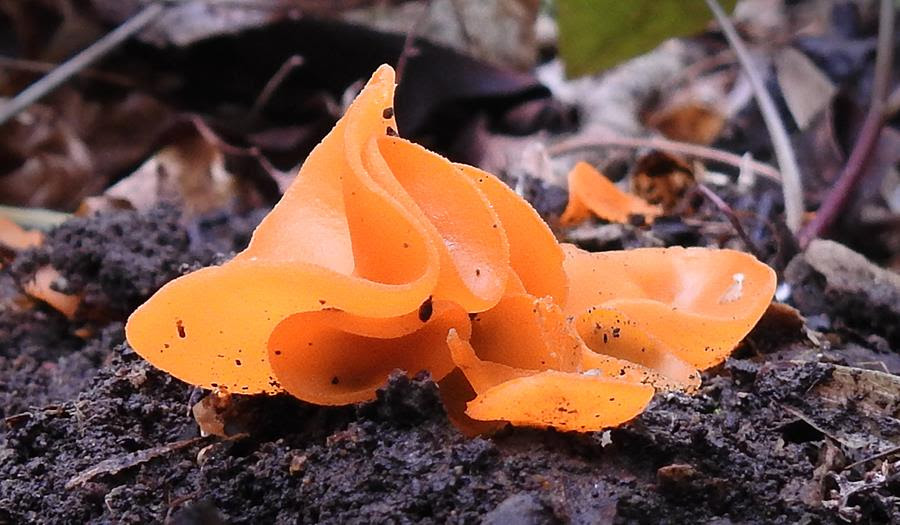
Orange is not the first word that comes to mind when most people think about a hemlock forest.  Greens, grays, tans, and browns are instead the colors that typify these densely shaded areas — especially as the early days of summer approach.

With careful observation, however, and with a directed focus on the fungal world, any color can easily make itself known in a dark forest.

On a recent walk through one of these areas, the only mushrooms that I encountered were orange.  Of course, I thought nothing of it upon seeing the first orange species, and I wasn’t too surprised after finding a second orange mushroom either.

But then I found a third, and eventually a fourth.

And I inevitably thought to myself, “Someone should document this.”

Fortunately, I brought my camera along for the adventure and decided to film the orange mushrooms that were appearing in succession.  All four mushrooms are fascinating, though a few of them are often overlooked and underappreciated despite their brilliant coloration.

If you are interested in learning more about orange mushrooms that may be growing in a forest near you, check out the new video.

When I am not looking down at the forest floor for plants and mushrooms, I am looking up into the canopy for birds of all colors.  Fortunately, I live in a region characterized by its avian diversity, and if you are interested in seeing some of the birds that have recently posed for my camera, check out the Learn Your Land Instagram page.

Thanks for reading, and thanks for your continued support!

-Adam Haritan

Marchpane Cookies for the Rose Queens — Gather Victoria

Marchpane was one of the most popular Tudor confections – at least for those who could afford it. Created from costly ground almonds, sugar and rosewater, moulded into shapes and baked, decorated with coloured glazes, gilded fruit and “comfits”, then assembled into elaborate centrepieces, it was found only on the most aristocratic and royal tables. …

via Marchpane Cookies for the Rose Queens — Gather Victoria

Wild Food Profile – Eastern Hemlock Buds: Fresh Eating, Tea, and Eastern Hemlock Bud Dressing

Dana's avatarThe Druid's Garden

Eastern Hemlock is one of my very favorite trees.  The tall, regal personal, the needles and branches that offer a bluish light beneath them as the sun shines, the cathedral-like quality of the ancient ones. This time of year, you can see the bright green buds on the Eastern Hemlock that represent the growth of the tree for this season.  As the buds grow older, they darken to the beautiful viridian green that is characteristic of the Eastern Hemlock tree. But, for the short window of time when the trees are budding–right now–Eastern Hemlock buds are a delicious treat.

Harvesting Eastern Hemlock buds

We happen to have many of these trees on our property, and some of the branches are starting to grow into our paths and have to be trimmed back. There are thousands of beautiful tiny green buds on each of the branches to be trimmed, which…

View original post 912 more words

Be On The Lookout For This Elusive & Bizarre Edible Mushroom

Greetings,

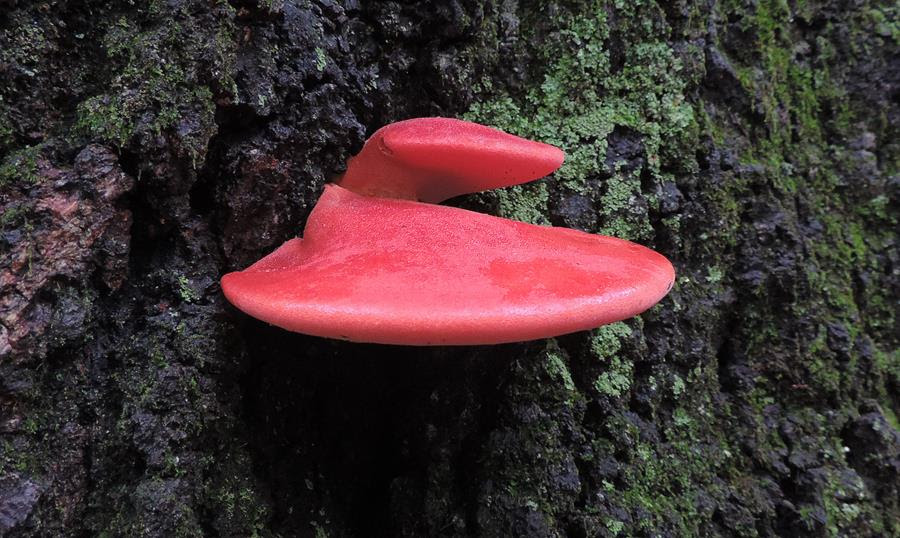
Over the next few months, a strange wild mushroom will manifest from the trunks of oaks and other deciduous trees.  At first glance, this fungus resembles a scarlet-colored spaceship.  Upon closer inspection, however, and especially upon internal inspection, this mushroom literally looks like raw meat.

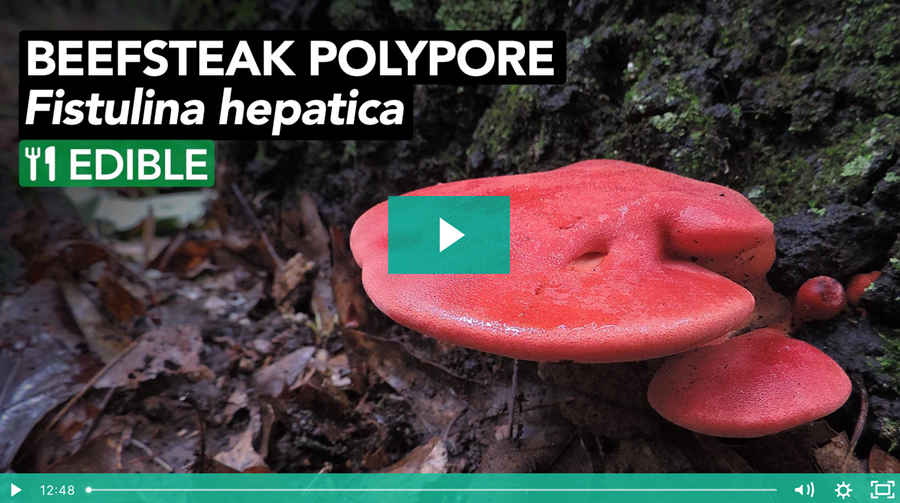
The Beefsteak Polypore is a mushroom unlike any other.  In some parts of Europe, this species is considered rare.  Here in North America, summer and autumn sightings of the Beefsteak Polypore aren’t infrequent, though they’re not incredibly common either.  The underside of this mushroom is comprised of tiny tubes that aren’t connected to one another, and the mushroom’s taste is mildly acidic… almost reminiscent of a tangy portobello mushroom.

Needless to say, the Beefsteak Polypore is one mushroom worth adding to your must-see list of 2020.

To learn more about this fascinating fungus, you can view the following video for the next few days.  This video is one of over 70 exclusive videos featured in Foraging Wild Mushrooms — a four-season online course designed to help you confidently and successfully forage wild mushrooms.

Registration for Foraging Wild Mushrooms is open until Monday, May 25th at midnight.  After May 25th, registration will be closed.

If you’ve ever considered harvesting wild mushrooms but didn’t know where to start, or where to go, or how to discern between edible and poisonous species, Foraging Wild Mushrooms will equip you with the skills necessary to ensure that your harvests are safe and successful.

To get a sneak peek into the kinds of content found within the course, please enjoy this video.

A portion of all proceeds derived from course sales will be donated to the Western Pennsylvania Conservancy — a nonprofit organization whose mission it is to protect and restore exceptional places and forests for the benefit of present and future generations.

Thanks for reading and watching, and thanks for your continued support.

-Adam Haritan

Foraging Wild Mushrooms — Online Course Is Open For Enrollment

Greetings,

I’m very excited to announce that Foraging Wild Mushrooms is open for enrollment for the next 7 days.

This 4-season online course is designed to help you safely, successfully, and confidently forage wild mushrooms from the forest, from the field, and even from your own backyard.

Whether you’re interested in foraging for food, for medicine, for study, or just for fun, Foraging Wild Mushrooms covers the most important lessons to get you started.

In addition to over 70 step-by-step exclusive and instructional videos included within the course, you’ll also receive:

  • Supplemental handouts covering mushroom anatomy, terminology, and biology that you can download and print for easy viewing.
  • A 42-page guide to medicinal mushrooms that summarizes the latest research on the most popular medicinal fungi and features over 75 peer-reviewed references.
  • Immediate and lifetime access to all materials.

Additionally, I’m equally excited to let you know that a portion of all proceeds derived from course sales will be donated to the Western Pennsylvania Conservancy — a nonprofit organization whose mission it is to protect and restore exceptional places and forests for the benefit of present and future generations.

Since 1932, the Western Pennsylvania Conservancy has protected more than a quarter-million acres of natural places.  To express gratitude, and to ensure that these and many more wild places exist for generations to come, I find it imperative to support organizations that in turn directly support the land.

Therefore, a portion of all proceeds derived from this enrollment period will be donated to the Western Pennsylvania Conservancy for use in land conservation.

Please note that enrollment for Foraging Wild Mushrooms is open for one week only — from today until Monday, May 25th at midnight.  After that, enrollment will be closed.

To learn more about the course, check out this video which gives an overview of what you can expect.

I hope to see you in there!
—Adam Haritan

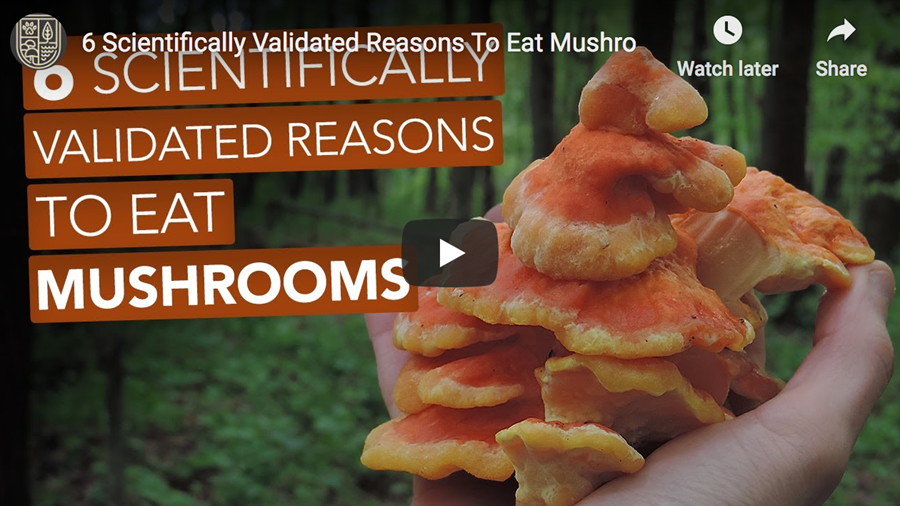
6 Scientifically Validated Reasons To Eat Mushrooms

Greetings,

The spring mushroom season is well underway for many of us, and although morels have called it quits in more than a few parts of the country, plenty of additional edible mushrooms will faithfully appear over the next several months.

In anticipation of the late spring/early summer mushroom season, I’m excited to announce that registration for my online course will open on Monday, May 18th.

Foraging Wild Mushrooms is a four-season course designed to help you confidently and successfully forage wild mushrooms.  This course is presented entirely online and it features over 70 exclusive videos that cover all the essentials for beginner-level mushroom hunters, including mushroom ecology; mushroom biology; common edible mushrooms; medicinal mushrooms; poisonous mushrooms; cooking techniques; medicine-making; and more.

Registration for Foraging Wild Mushrooms will be open for one week only, from midnight on May 18th to Monday, May 25th.  After May 25th, registration will be closed.

Upon registration, you can watch the videos at your own pace and you will have access to the course forever.

If you are interested in signing up for Foraging Wild Mushrooms, mark your calendar for Monday, May 18th and visit this link.  All additional information — including course outline and tuition — will be posted on Monday.

In the meantime, please enjoy the following video featuring 6 scientifically validated reasons to eat mushrooms.  This video is one of the lessons included in Foraging Wild Mushrooms, and while all content within the course is available only to registered students, I thought I’d share this video with you because of the pertinent information contained within it.

Thanks for reading and watching, and I hope to see you on May 18th!

-Adam Haritan

Are You A Forager? New Forager Course — Good Witches Homestead

As herbalists, we have a lot of passions, and foraging is top of the list! With spring in full swing and summer inching closer, we are enjoying our foraging forays and plan for even more time in the fields and forests as the green world bursts into a riot of growth! To make the most […]

via Are You A Forager? New Forager Course — Good Witches Homestead

Sorrel – Herb of the Month — Crooked Bear Creek Organic Herbs

Originally posted on The Herb Society of America Blog: By Maryann Readal Sorrel (Rumex acetosa), a tart, lemony herb, is used today primarily in cooking. However, you may have to grow your own sorrel or visit a farmer’s market or specialty store in early spring if you want to make any recipe with it. Chopped…

via Sorrel – Herb of the Month — Crooked Bear Creek Organic Herbs