Original design for Nature’s Harvest Urban Permaculture Farm
Six years ago, I shared about Natures Harvest Urban Permaculture Farm, a front-yard garden located in the Detroit metro area. When I shared this post, Linda was in her first year of gardening in this new location, and was regularly selling her produce at a local farmer’s market and engaging with her community. Here are links to my first two posts about her incredible garden that discusses the original process, design: Nature’s Harvest Urban Permaculture Farm and Return to Nature’s Harvest Urban Permaculture Farm.
A few weeks ago, when I was visiting Linda, I shared some photos of her garden to my social media, and many people responded by saying “she must not have a homeowners association”, “ how did she not get in legal trouble?”, or “my township would make me tear that down!” The questions and comments of…
Harvested dock seed with a ready-to-harvest yellow dock plant
This past month, I had a chance to visit Silver Acres, my friend’s 5 acre farm in the thumb of Michigan, where she is practicing rewilding, restoration agriculture, and permaculture. We were walking through her field and found a good deal of yellow dock that was in seed form–which for the Midwest US, usually happens around Lughnasadh (August 1st) and continues to the Fall Equinox. While I’ve eaten the young leaves and used the roots as medicine, I haven’t had a chance to try making any seed flour yet–so we set about our task joyfully. I’m quite impressed by how easy this flour is to make (compared to say, acorn flour) and it cuts nicely with other flours.
Foraging for wild foods is not only a fantastic way to connect deeply with the land but also allow us to reconnect…
Foraging for wild foods, mushrooms, and wild medicines is something that is growing as a pastime for many people. The joy of foraging from the land connects us to our ancient and primal roots and allows us a chance to build a more direct connection with nature. But with any practice rooted in nature comes the need for balance and responsibility. Thus, the following principles can help wild food foragers and wild food instructors harvest ethically, sustainably, and in a way that builds wild food populations rather than reduces them. I share both the principles in text below as well as graphics. The graphics are (full size and web-sharable versions, see links) and they are licensed under a Creative Commons license. Anyone who teaches plant walks or wants to use them in foraging, wild foods, and herbalism practice is free to download them, print them, and share them! The…
Hot! Hot! HOT! – but not the hottest! Cayenne pepper, Capsicum annuum, is hot, but it reaches only 30,000 – 50,000 Scoville Heat Units (SHU) on the Scoville Heat Scale. For comparison, the ‘Carolina Reaper’ pepper reaches 1.4M – 2.2M SHU, and the jalapeño pepper just a meager 2,500-8,000 SHU. The Scoville Scale was developed by pharmacist Wilbur Scoville in 1912 to determine heat levels based on subjective sensitivity to capsaicinoids in peppers. Although modern lab methods are used today to determine the heat level of peppers, the Scoville Scale is still the common way to classify pepper heat intensity (Mountain Rose Herbs, 2021).
Cayenne pepper, a member of the Solanaceae, or nightshade, family, is native to tropical North and South America. The term “cayenne pepper” can generically refer to any of a number of peppers within the Capsicum annuum Cayenne Group, which is characterized by being…
It is summer and a perfect time to learn about summer savory, Satureja hortensis. If you have this spicy herb growing in your garden, plan to start using it this summer. It is an easy-to-grow, low-growing annual with white to pale pink flowers and narrow leaves. When in full bloom, the plant looks to be “covered with snow” (Clarkson, 1990). Summer savory requires full sun and good drainage, and can easily be started from seed. It may reseed if given enough sun and water. The leaves are very fragrant and have a warm, peppery taste, which is stronger before the plant flowers. Trim summer savory throughout the summer to encourage new growth. The leaves dry easily and can be stored for later use. Winter savory, Satureja montana, is its stronger, perennial cousin.
Like mint, sage, rosemary, thyme, and oregano, summer savory is in the Lamiaceae…
From place to place, season to season, and year to year,
the colorful mixtures and combinations of flowering herbs
are influenced by permutations of weather, grazing,
competition with grasses, and seed abundance.
~David S. Costello
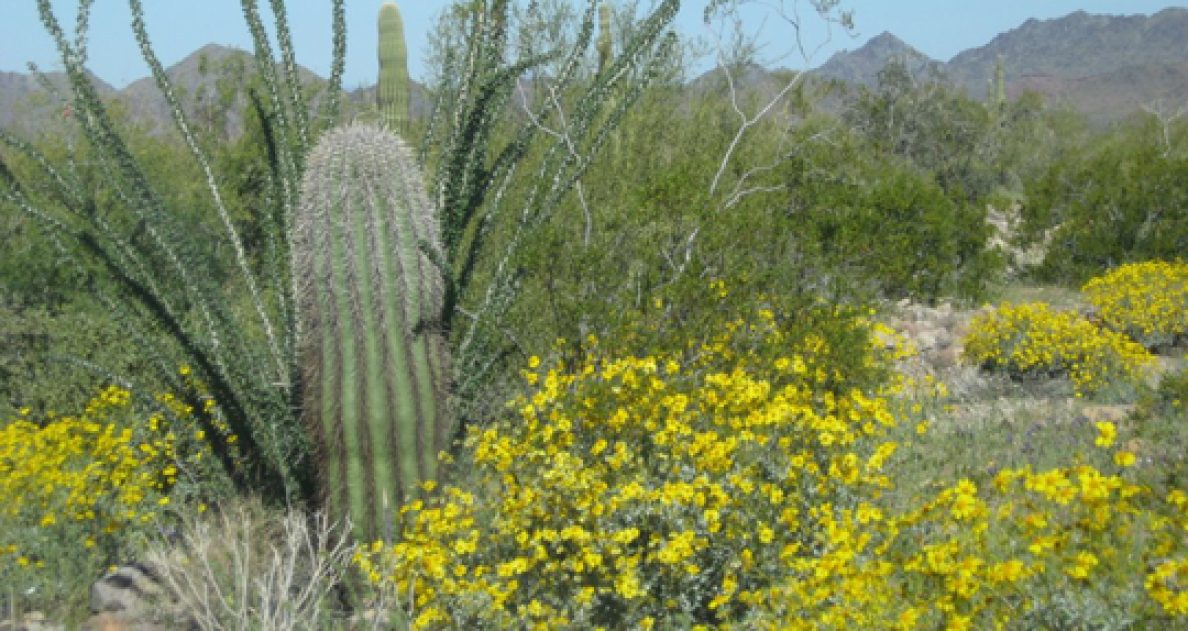
Since childhood the words “For amber waves of grain, For purple mountain majesties, Above the fruited plain” colored my impression of the landscape of the western part of our country. Visits to grandparents, aunts and uncles, and masses of cousins didn’t disappoint my vision. It wasn’t until adulthood that I fully understood that those words were essentially a drone fly-over.
For some of us, it takes paying attention not only to the larger landscape, but to the details as well to appreciate the enormous botanical diversity of our country. From the tallest coast redwood (Sequoia sempervirens) to the tiny littleleaf pyxie moss (Pyxidanthera brevifolia)and its 1/4-inch flowers peering…
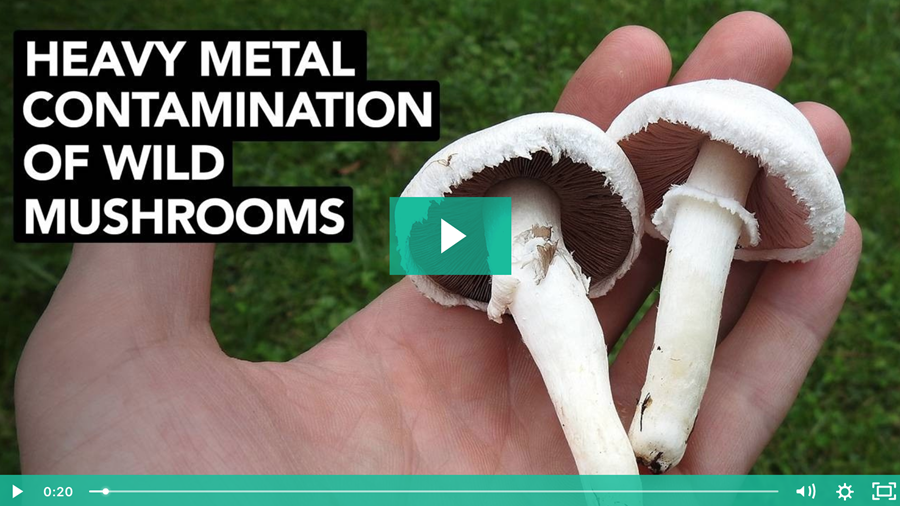
Harvesting edible mushrooms that are contaminated with impurities is disappointing and potentially dangerous.
One of the most common questions I receive from concerned foragers is this:
“I hear that mushrooms bioaccumulate all kinds of substances. How do I know that the edible mushrooms I’ve harvested are safe for consumption?”
This is an issue that requires a lot of attention. Fungi, like many living organisms, can harbor all kinds of contaminants, including synthetic chemicals (e.g., pesticides and herbicides), radionuclides, and heavy metals.
While many factors remain outside the personal control of foragers, several actions can be taken to mitigate harm caused by these contaminants.
To shed light on heavy metal contamination, I created a video in which I answer 6 important questions. Information in the video includes:
The most problematic heavy metals.
Habitats that are known to be contaminated.
Edible mushrooms that hyper-accumulate heavy metals.
Specific parts of mushrooms that are most likely to concentrate heavy metals.
Cooking techniques we can implement in the kitchen to reduce contamination.
…and lots more.
The following video is one of over 80 exclusive videos featured in Foraging Wild Mushrooms — a four-season online course designed to help you confidently and successfully forage wild mushrooms.
Registration for Foraging Wild Mushrooms is open until Monday, May 24th at midnight. After May 24th, registration will be closed.
If you’ve ever considered harvesting wild mushrooms but didn’t know where to start, or where to go, or how to discern between edible and poisonous species, Foraging Wild Mushrooms will equip you with the skills necessary to ensure that your harvests are safe and successful.
To get a sneak peek into the kinds of content found within the course, check out this video.
Please note that this video is available until Monday, May 24th, and will only be available to registered students afterwards.
Thanks for reading and watching, and thanks for your continued support.
Sponsored by The New York Unit
by Jen Munson, HSA Education Chair
The Herb Society embraces spices as herbs, but what distinguishes an herb from a spice? An herb is the leafy part of a plant, whereas a spice is the “hard” part. So, herbs might include oregano, sage, rosemary, sorrel, and basil, to name a few. Spices, on the other hand, include the bark, root, or seed…think of cinnamon, black pepper, cloves, and nutmeg. Notable exceptions to the herb vs. spice conversation are coriander and dill. Coriander and dill seed are the seeds of the cilantro and dill plants, respectively.
While herbs take the culinary spotlight for delivering immense flavor to our food, spices often get relegated to fall holidays when cinnamon, allspice, and other favorite spices get used. However, spices can be enjoyed year-round to ramp up the flavor in food. To learn more, join us on Tuesday…
The spring mushroom season is well underway for many of us, and although morels have called it quits in more than a few parts of the country, plenty of additional edible mushrooms will faithfully appear over the next several months.
In anticipation of the late spring/early summer mushroom season, I’m excited to announce that registration for my online course will open on Monday, May 17th.
Foraging Wild Mushrooms is a four-season course designed to help you confidently and successfully forage wild mushrooms. This course is presented entirely online and it features over 70 exclusive videos that cover all the essentials for beginner-level mushroom hunters, including mushroom ecology; mushroom biology; common edible mushrooms; medicinal mushrooms; poisonous mushrooms; cooking techniques; medicine-making; and more.
Registration for Foraging Wild Mushroomswill be open for one week only, from midnight on May 17th to Monday, May 24th. After May 24th, registration will be closed.
Upon registration, you can watch the videos at your own pace and you will have access to the course forever.
If you are interested in signing up for Foraging Wild Mushrooms, mark your calendar for Monday, May 17th and visit this link.All additional information — including course outline and tuition — will be posted on Monday.
I look forward to seeing you on Monday! -Adam Haritan
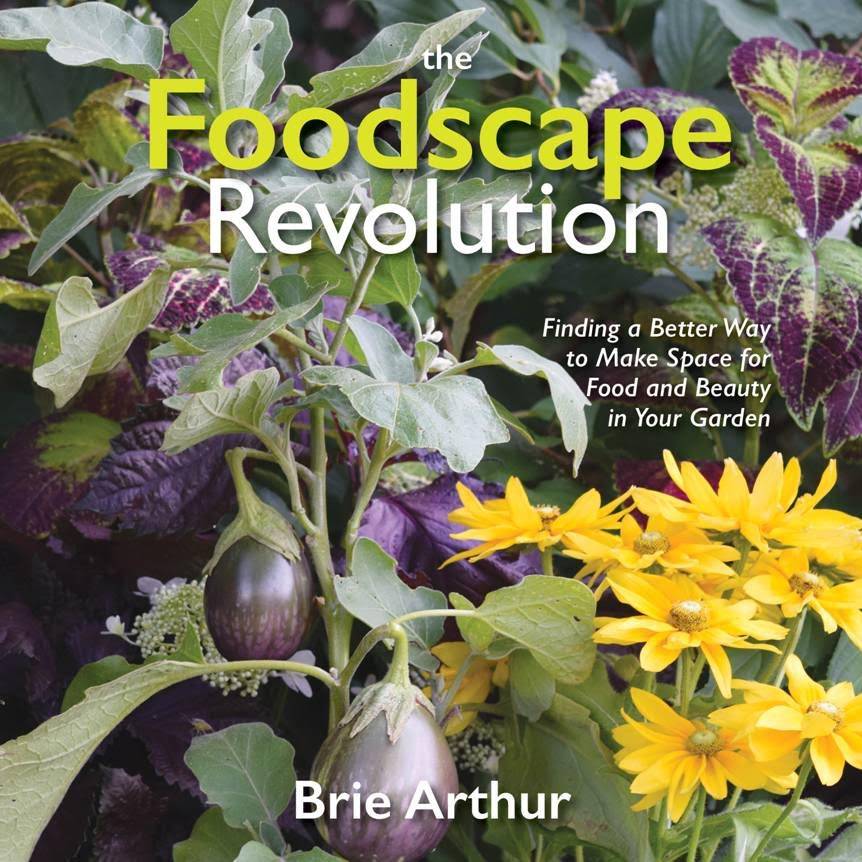
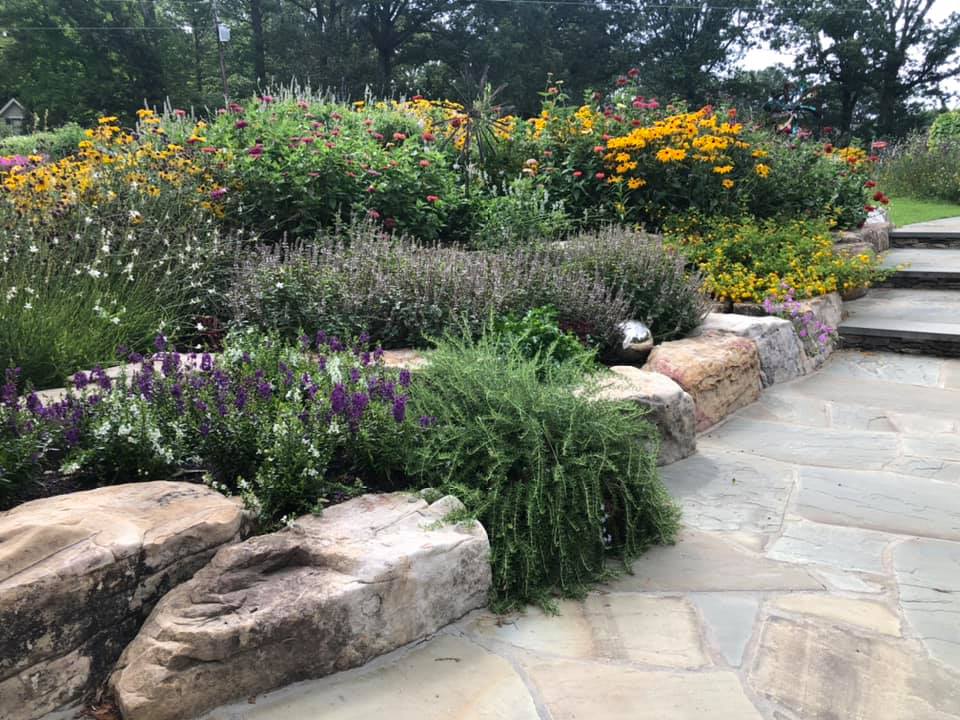
Foodscaping–it’s so simplistic. In its most basic form, it is landscaping with an edible twist. It’s the intersection of the purely ornamental garden with the purely edible or vegetable garden. Herbs, vegetables, berry-producing bushes, and fruit trees intertwine with ornamentals to become design elements.
Join us for Foodscaping with Herbs with bestselling author Brie Arthur on Friday, May 14th from 12pm to 1:30pm ET. Brie will share creative ideas about foodscaping with herbs in this lively, virtual session. Lemongrass suddenly becomes a replacement for other tall grasses, providing beauty and enjoyment. Blend Thai basil with lemon basil for a stunning border. Use chives and garlic for structure and as natural pest deterrents. Discover how to plant beautiful and bountiful designs for year-round use, and learn easy-to-apply strategies to deter browsing mammals, including voles!
Food in our landscapes is not new. Cottage gardens and the…

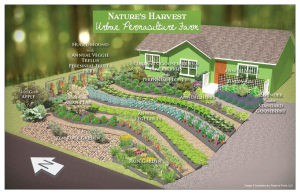 Original design for Nature’s Harvest Urban Permaculture Farm

 Cayenne pepper, a member of the Solanaceae, or nightshade, family, is native to tropical North and South America.
 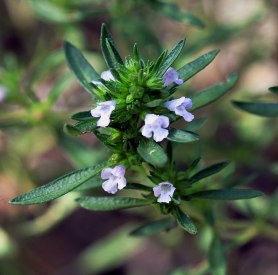 It is summer and a perfect time to learn about summer savory,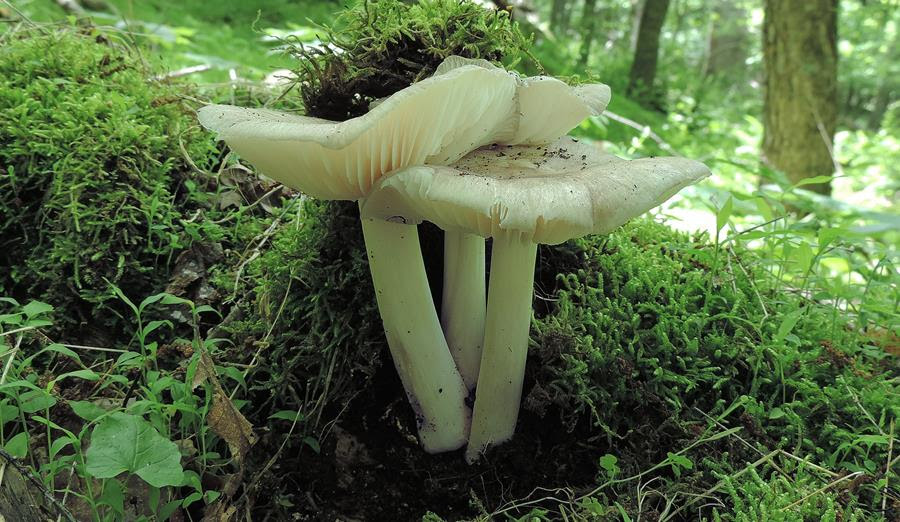
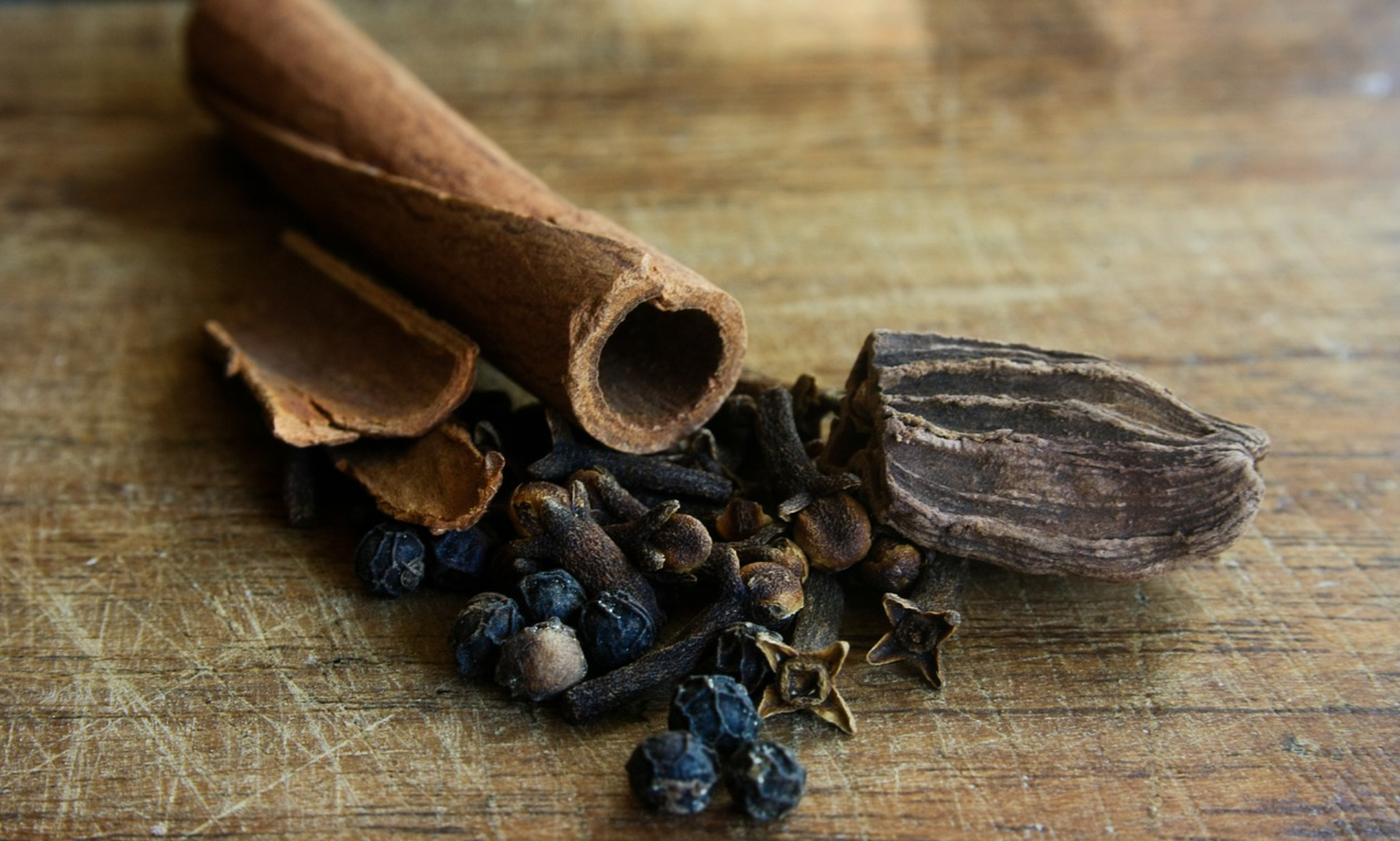 The Herb Society embraces spices as herbs, but what distinguishes an herb from a spice? An herb is the leafy part of a plant, whereas a spice is the “hard” part. So, herbs might include oregano, sage, rosemary, sorrel, and basil, to name a few. Spices, on the other hand, include the bark, root, or seed…think of cinnamon, black pepper, cloves, and nutmeg. Notable exceptions to the herb vs. spice conversation are coriander and dill. Coriander and dill seed are the seeds of the cilantro and dill plants, respectively.

 Foodscaping–it’s so simplistic. In its most basic form, it is landscaping with an edible twist. It’s the intersection of the purely ornamental garden with the purely edible or vegetable garden. Herbs, vegetables, berry-producing bushes, and fruit trees intertwine with ornamentals to become design elements.
  Food in our landscapes is not new. Cottage gardens and the…
 Paths I Walk
You must be logged in to post a comment.