Imbolc–the first signs of spring (artwork by myself and my father, Mark Driscoll)
In a traditional neopagan Wheel of the Year, Imbolc is the holiday that offers the first signs of spring. Most traditionally, this is when the ewes began to lactate, and the snowdrops appeared on the landscape in the British Isles. In the age of climate instability, traditional seasonal interpretations become challenged for many reasons–not the least of which are climate disruptions. So how might we bring the holiday of Imbolc into the 21st century and think about what this holiday means to us today?
As I’ve discussed in earlier posts in this series, the 21st Century, the Age of the Anthropocene, offers us a set of unprecedented challenges and yet opportunities. As a permaculture designer, I think it’s important to recognize that while the problems we already face are unavoidable, these problems give us a…
For most of us, our garden tools are cleaned and stored, the holidays have passed, and we have a little more time to simply enjoy what we find in meadows, forests, fields, and even in our own backyards. Lichens can fill a part of the void we may be feeling. Their curious forms and means of growing and spreading, with which many of us are unfamiliar, can fill our minds with the wonders of things we normally pass without notice.
There are more than 5,000 species of lichen and lichen-dependent fungi in North America, with colors ranging from blues, lavender, yellow, red, orange, and gray to many beautiful greens. Color in lichens can depend on whether they are wet or dry. A major paint company even created a color they call Lichen to mimic the natural, earthy beauty of the organism. Perfectly described by Ed Yong in…
Happy Winter Solstice! I’m sharing this recipe from the Gather Victoria Winter Magic ECookbook because it encapsulates the archetypal drama of the season – the rebirth of the light. And that meant plenty of cakes, cookies, and confections for the old winter witches like Frau Holle! Their symbols are very much alive in our holiday…
This is a good question to ponder, but it’s a difficult question to answer unless clarification is provided.
How much land are we talking about? And what is the time frame in question?
Even with such clarification, answers do not come easy. The original question often persists and we are prompted to further refine our inquiry.
What did the eastern forests look like 300 years ago? Which trees were present, and what was the composition of the trees in these earlier forests?
American chestnut, it turns out, can help us answer those questions.
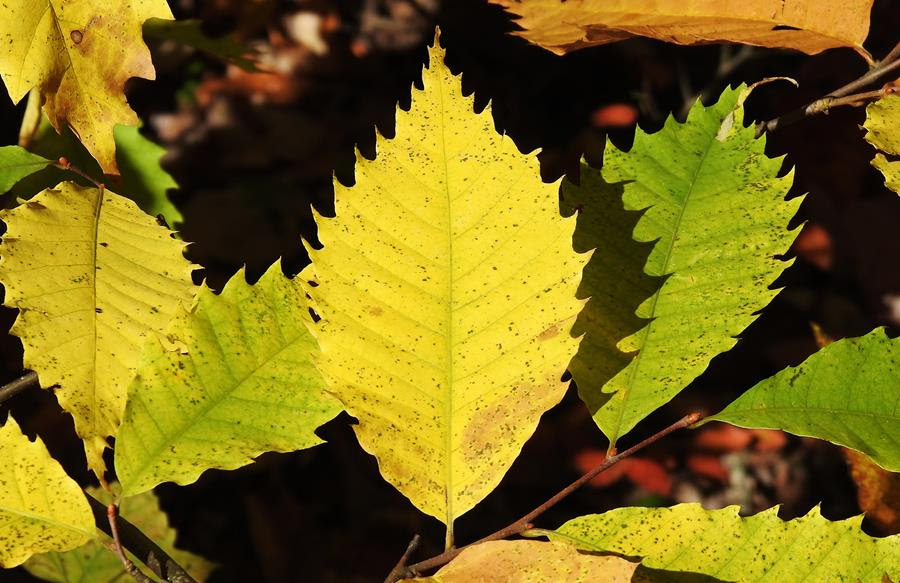
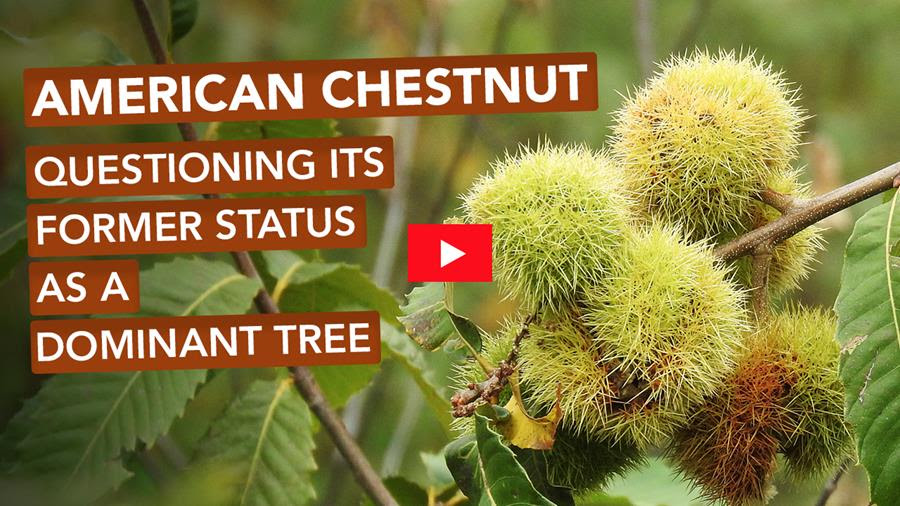
American chestnut (Castanea dentata) is a tree whose numbers have dwindled over the past 100 years. A fungal disease known as chestnut blight has been the major culprit, but other factors have contributed to the decline of mature American chestnut trees in eastern forests.
When we study accounts of American chestnut, we routinely hear the same thing: “American chestnut was a dominant tree in eastern North America prior to the introduction of chestnut blight.”
We also hear this: “One in every four hardwood trees in eastern North America was an American chestnut.”
Believing both statements to be true, we might imagine an unbroken expanse of chestnut trees in eastern North America. The proverbial squirrel might have been able to travel from Maine to Florida on chestnut tree limbs without ever touching the ground.
But was that ever the case? Was American chestnut really the most dominant tree in eastern North America?
Or, have the claims been exaggerated? Could it be possible that American chestnut was not so dominant of a tree in these earlier forests?
That’s the topic of this week’s brand new video. If you are interested in learning what the land might have looked like in the not too distant past, check it out!
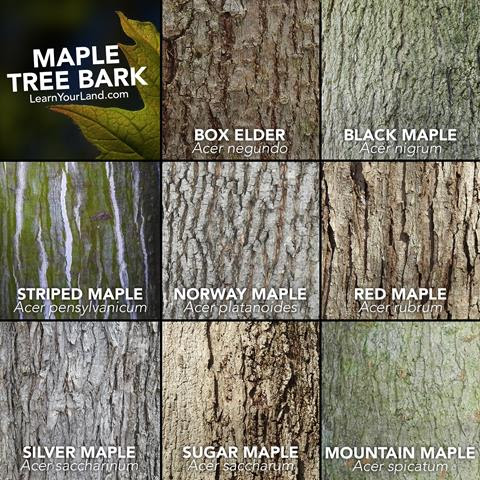
Most maples are leafless this time of year in eastern North America. Fortunately, bark features are still available and very useful for proper identification. Check out these side-by-side images of 8 different maple trees to assist you with your winter identification skills.Click to view post
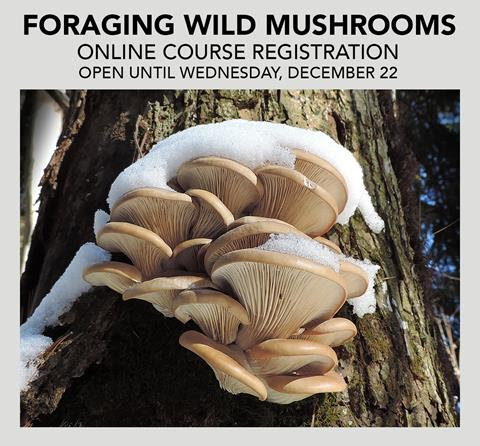
If you are eager to pursue educational opportunities during the winter months, check out Foraging Wild Mushrooms.This 4-season online course is designed to help you safely, successfully, and confidently forage wild mushrooms from the forest, from the field, and from your own backyard.Click to learn more
Thanks for reading and watching, and thanks for your continued support!
The spice that we call cloves comes from the clove tree, Syzygium aromaticum. This evergreen herbal tree is in the Myrtle (Myrtaceae) family and is native to the Molucca Islands in the Pacific Ocean. These islands were once called the Spice Islands and now are a part of Indonesia.
The tree needs a warm, humid climate, and deep, loamy soil to grow well. It is said that it also needs to see the sea in order to thrive. It does indeed grow well near the coasts of tropical islands. The clove tree can reach a height of 26 – 40 feet and begins to flower when it is about five years old. At 20 years, it is ready to begin harvesting the cloves, which are the unopened flower buds, growing in clusters of 10 – 15 buds. The tree continues to produce cloves for more than 80 years…
When I think of herbs for Christmas, I always think of the Simon and Garfunkel “Scarborough Fair” song: “Are you going to Scarborough Fair? Parsley, sage, rosemary, and thyme.” Sure, there is peppermint and plenty of spices, but these herbs seem to be the most popular during the holidays. I think that is because these plants are still green in the garden. In my USDA Hardiness Zone 7 Virginia garden, I can still pick these plants in December to use in the kitchen. My mint plants, always in containers, overwinter well, and I can harvest spearmint and peppermint.
When using these herbs, don’t just think of flavor and cooking. Think of the plant itself, the structure, size, weight, and texture of the branches and leaves. Think of how the stem or leaf can be used to decorate the dish and your table.
By Beth Schreibman-Gehring, Chairman of Education for The Western Reserve Herb Society unit of The Herb Society
Originally published on January 30, 2019
Last winter the urgent care center diagnosed me with the flu, and I’ve never been quite as sick as I was for that month. I spent several days in bed and used all sorts of herbal remedies to support healing. Daquil/Nyquil just made me feel worse and went straight into the garbage.
I started with homemade bone broth. Herb and spice-spiked chicken broths are well known to promote the movement of nasal congestion and are thought to have anti-inflammatory and anti-viral properties. I felt better with every bowl I ate, proving the old adage: Let your food be your medicine.
For a powerful immune-boosting soup I took cues from the Legend of the Four Thieves. In this story, aromatherapy, herbal, and alchemical worlds collide and take…
After a brief email exchange with a colleague last fall around this same time, I set off to collect some fallen treasures from the forest floor from a tree I had never collected from before. The fruit was large and aromatic, but I was unfamiliar with its culinary use. Suddenly the sweet scent of ripening flesh let me know that the bounty was close, and true to smell, the six-inch long, bright yellow fruits of the Chinese quince (Pseudocydonia sinensis) were scattered beneath a tree. Much larger than its cousin, the common quince (Cydonia oblonga),which is used often in fruit production and tree grafting, the Chinese quince has a reputation for being rather astringent, and I had never thought of cooking with it.
After informing my colleague that the harvest was complete, I inquired as to how he planned on using the crop. He explained…
Have you heard of St. John’s bread or locust bean? These are all names for the carob tree, Ceratonia siliqua. This herbal tree is a native of the Mediterranean region and is also grown in East Africa, India, Australia, and California. It can grow in USDA Plant Hardiness Zones 9-11 – places with dry, Mediterranean-type climates. Carob is disease and pest resistant, tolerates dry, poor, rocky soils, and is drought tolerant due to a very deep taproot (125 feet) that enables the tree to survive in arid climates. It is in the pea family (Fabaceae), and like other members of this family it fixes nitrogen, improving the fertility of the soil in which it is planted.
Carob is a multi-stemmed, evergreen tree that can reach 50 feet high and 50 feet wide, and its broad, dark green leaves make it a good shade tree. It is…
I had what seemed like a simple question: How and why did cardamom, the spice native to southern India, become such an essential and beloved baking spice in snowy Scandinavia? I have Swedish ancestry, and absolutely love cardamom bread and other baked goods made with cardamom. In Scandinavian culture, cardamom often represents comfort and home and family and holiday treats–similar to how we in the U.S. view cinnamon, perhaps. (Of course, cinnamon is also of South Asian origin!) I started with some hazy knowledge of the history of the spice trade–that cinnamon, cardamom, nutmeg, cloves, pepper, and ginger spread throughout the world from their places of origin via complex trade routes over the course of many centuries, contributing to the rise and fall of various empires and economies. But I was curious why cardamom, in particular, took root in Scandinavia of all places. Researching that question took…

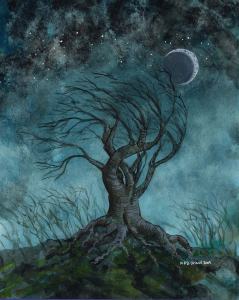 Imbolc–the first signs of spring (artwork by myself and my father, Mark Driscoll)


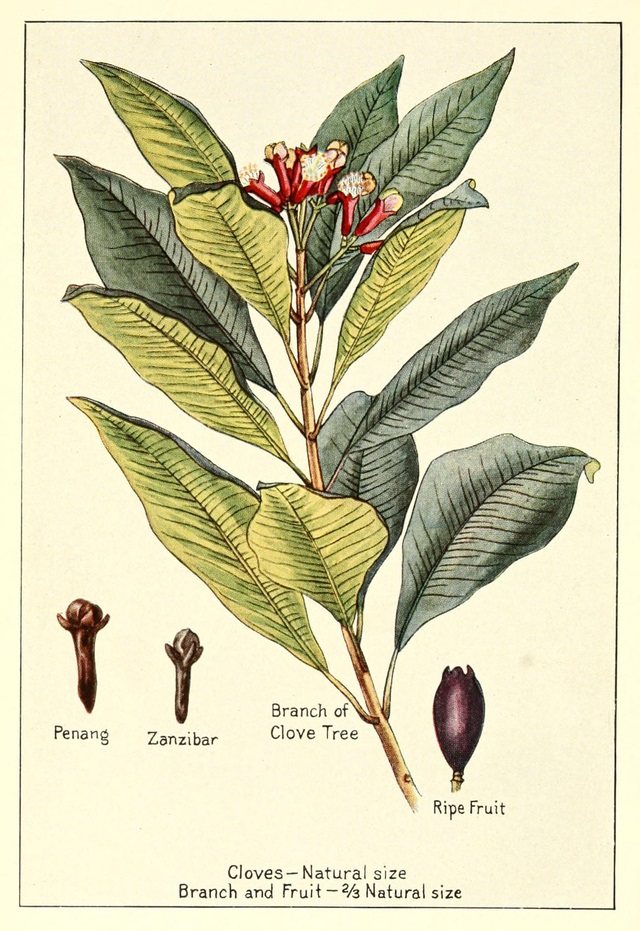 The spice that we call cloves comes from the clove tree,
  When I think of herbs for Christmas, I always think of the Simon and Garfunkel “Scarborough Fair” song: “Are you going to Scarborough Fair? Parsley, sage, rosemary, and thyme.” Sure, there is peppermint and plenty of spices, but these herbs seem to be the most popular during the holidays. I think that is because these plants are still green in the garden. In my USDA Hardiness Zone 7 Virginia garden, I can still pick these plants in December to use in the kitchen. My mint plants, always in containers, overwinter well, and I can harvest spearmint and peppermint.
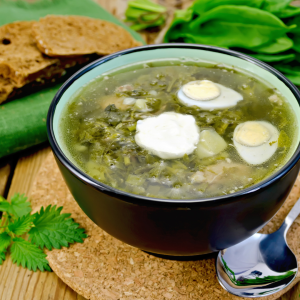 Last winter the urgent care center diagnosed me with the flu, and I’ve never been quite as sick as I was for that month. I spent several days in bed and used all sorts of herbal remedies to support healing. Daquil/Nyquil just made me feel worse and went straight into the garbage.
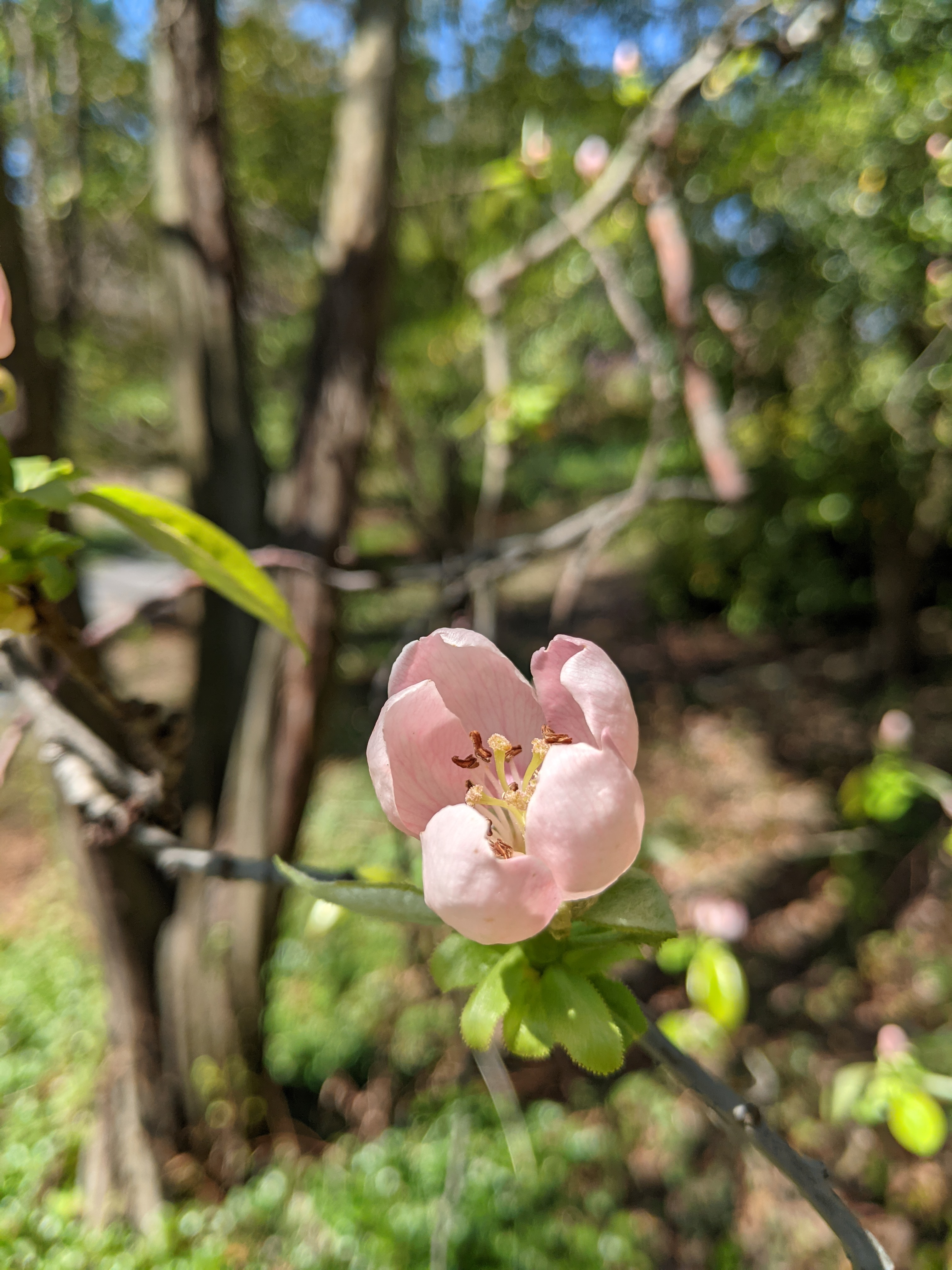 After a brief email exchange with a colleague last fall around this same time, I set off to collect some fallen treasures from the forest floor from a tree I had never collected from before. The fruit was large and aromatic, but I was unfamiliar with its culinary use. Suddenly the sweet scent of ripening flesh let me know that the bounty was close, and true to smell, the six-inch long, bright yellow fruits of the Chinese quince
  Have you heard of St. John’s bread or locust bean? These are all names for the carob tree,
 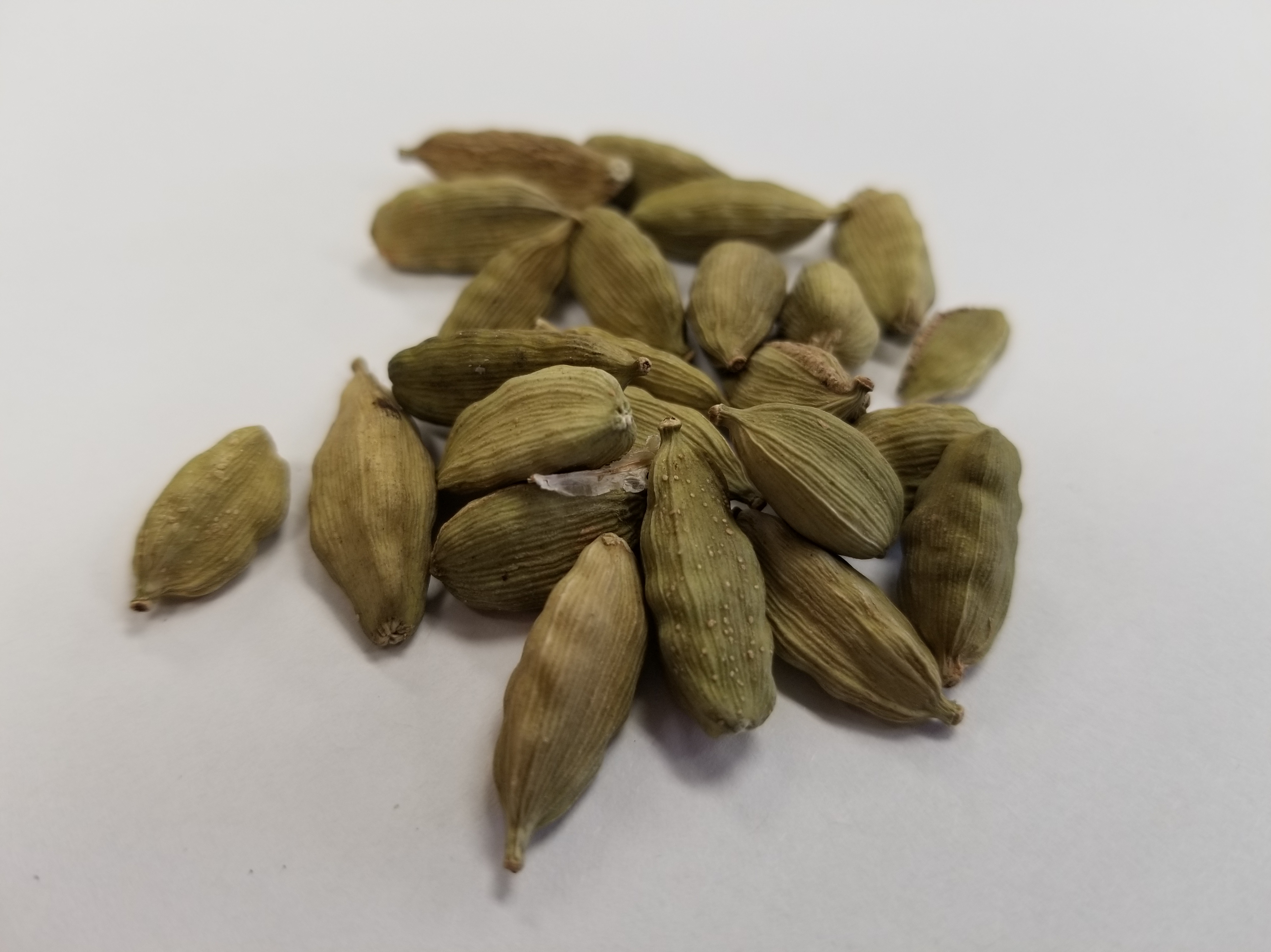 I had what seemed like a simple question: How and why did cardamom, the spice native to southern India, become such an essential and beloved baking spice in snowy Scandinavia? I have Swedish ancestry, and absolutely love cardamom bread and other baked goods made with cardamom. In Scandinavian culture, cardamom often represents comfort and home and family and holiday treats–similar to how we in the U.S. view cinnamon, perhaps. (Of course, cinnamon is also of South Asian origin!) I started with some hazy knowledge of the history of the spice trade–that cinnamon, cardamom, nutmeg, cloves, pepper, and ginger spread throughout the world from their places of origin via complex trade routes over the course of many centuries, contributing to the rise and fall of various empires and economies. But I was curious why cardamom, in particular, took root in Scandinavia of all places. Researching that question took…

You must be logged in to post a comment.