What They All Have in Common . . . New Moon in Aquarius

By Brana Mijatovic, Ph.D.

Take a look at the crystals in this email: what do they have in common?
You guessed it — all are offbeat, original, unusual . . . one could even say — physically impossible — and yet that is how they naturally developed!
What they have in common is that they apparently did not get the memo on how to grow in expected ways, like other crystals . . .
This is how you may want to think of yourself after this New Moon / partial Solar Eclipse in Aquarius.
This New Moon / partial Solar Eclipse in Aquarius is on Thursday, Feb 15 at 4pm encourages us to open up to
  • new ways of thinking about our hopes, wishes, and dreams
  • expressing ourselves in all the ways that make us unique
  • change in how we view and how we build the supportive structures in our lives
  • investigate the possibilities for communicating our ideas at a larger scale
  • looking into new ways through which we can spread progressive ideas
  • envisioning a creation of communities that will promote greater awareness of all that is beneficial for humanity
  • working together and collaborating in new ways for higher ideals and a greater good
Crystals to help with these are Herkimer Diamond, Moldavite, Chevron Amethyst, Chrysocolla, Clear Quartz (Scepter formation) . . .

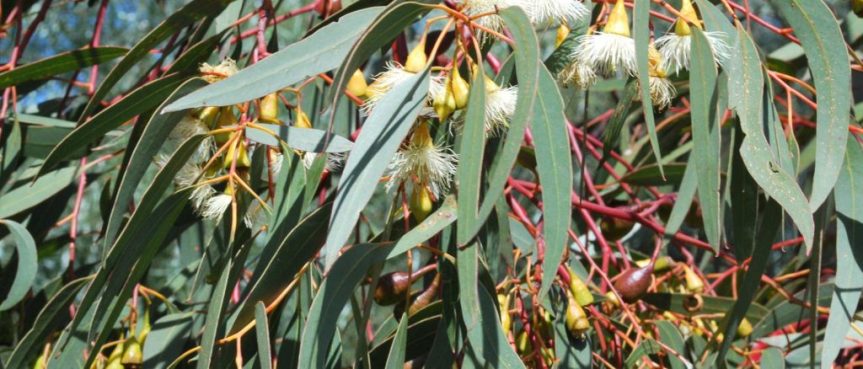
Plant Profile: Eucalyptus {Eucalyptus globulus}

Crooked Bear Creek Organic Herbs's avatarCrooked Bear Creek Organic Herbs

Also, Known As:

  • Blue Gum
  • Blue Gum Tree
  • Eucalyptus
  • Fever Tree

The familiar tree known as the eucalyptus is indigenous to Australia. This popular quick growth tree is now cultivated in many other countries. The tree is one of the quickest growing tree species around; it is also among the world’s biggest and tallest trees. The eucalyptus grows successfully in many places with varied soils and climate. When fully grown, some sub-species of this tree can cross two hundred fifty feet in height. The eucalyptus is an efficient dry land tree, putting out a vast network of roots underground to probe for water. The efficient ability of the eucalyptus at scrounging water from the soil has been applied to great effect in draining marshy and waterlogged areas in land reclamation programs. This characteristic of the tree has proven to be of the greatest help in the complete reclamation of water bogged malarial…

View original post 2,889 more words

Wild Horses Found Shot in South-Central Wyoming

R.T. Fitch's avatarStraight from the Horse's Heart

as published in the Casper Star Tribune

BLM Investigating

photo by Carol Walker of Wild Horse Freedom Federation and Living Images

The Bureau of Land Management is investigating the shooting of five wild horses in south-central Wyoming’s Red Desert, the agency said in a statement last week.

Three horses were found shot in early November and two more in mid-January in a similar location.

“Preliminary findings suggest all five horses were shot,” the statement said.

The horse were found both on Green Mountain and near the Three Forks/Atlantic City Road in the Pickett Lake area. The BLM is working with the Fremont County Sheriff’s Department and the Wyoming Game and Fish Department to investigate the incident.
Wild horses and burros are protected under federal law, and the BLM is responsible for managing the animals on government land. The animals have been the source of controversy in Wyoming, with…

View original post 110 more words

Third New Moon of Winter

Home Remedies for Pneumonia?

Crooked Bear Creek Organic Herbs's avatarCrooked Bear Creek Organic Herbs

Pneumonia is an inflammatory disorder of the lungs caused by an infection of the airways. It is a serious condition, and home remedies cannot be used to treat it. However, they can help ease the symptoms.

Pneumonia infections can be critical and may even be life-threatening in some cases. It is essential to visit a doctor for a diagnosis, as well as to monitor symptoms and avoid any complications.

Using a blend of medical treatments and home remedies may help many people manage their symptoms more easily.

Fast facts on pneumonia:

  • Infections by viruses, fungi, bacteria, and other harmful organisms cause pneumonia.
  • Many of the germs that can cause pneumonia are common in the environment.
  • Healthy lifestyle choices may help reduce the risk of developing pneumonia.

Causes and symptoms

Common symptoms of pneumonia include fever, chills, fatigue, and achiness.

People often contract pneumonia from someone else or through a lingering…

View original post 1,222 more words

Crocus Lore

Crooked Bear Creek Organic Herbs's avatarGood Witches Homestead

COMMON NAME:  Crocus
GENUS:  Crocus
Species, Hybrids, Cultivars:
Blue; C. biflorus, C. imperati, C. siebert, C. tomasinianus, C. versicolor; yellow: C. aureus, C. chrysanthus, C. korolkowii, C. sulphureus concolor, C. susianus; white: C. fleischeri, C. laevigatus, C. speciosus {fall}. Dutch crocus cultivars-blue: Enchantress, Pickwick, Queen of the Blues, Remembrance, Striped Beauty; white: Jeanne d’Arc, Peter Pan, Snowstorm; yellow: Golden Yellow, Yellow Mammoth.
FAMILY: Iridaceae
BLOOMS: Winter, spring, fall
TYPE: Perennial
DESCRIPTION: A multitude of crocuses are available today in colors ranging from white to blue, purple, and yellow, and with blooming seasons in late winter, early spring, and autumn. The leaves are linear and grasslike; the blossoms cup-shaped and proportionally large. Winter-blooming varieties generally grow to a height of 3 inches. Spring-and fall-blooming species are usually a bit taller, 4 to 5 inches.
CULTIVATION: Crocuses grow from corms, which should be planted 3 to 4 inches deep in early…

View original post 619 more words

A Druid’s Meditation Primer

Dana's avatarThe Druid's Garden

In this time as the light is coming back into the world, the time surrounding Imbolc, I find myself often going deeply inward for healing and strength and turning towards meditation as a guide for spiritual balance.  This deep winter period is, of course, coming on the heels of the frenzied holiday season where many of us get burned out by the amount of hustle and bustle.  Further, many of the demands of modern living, particularly for those working wage-earning jobs, require us to move faster, be always “connected” and present with new technology, and have an increasingly fast stream of information pouring in and out of our heads. This can lead to long-term drain on the spirit. In this quiet time of the year, amidst the snows and frozen earth, various meditation techniques allow for rest, centering, and rejuvenation.

The quiet that nature provides... The quiet that nature provides…

Meditation offers us…

View original post 2,286 more words

Winter Jasmine Lore

Crooked Bear Creek Organic Herbs's avatarGood Witches Homestead

Common Name: Winter Jasmine
Genus: Jasminum
Species, Hybrids, Cultivators:
J. nudiflorum. J.polyanthuvigorous
vine; grown indoors; sprays of white blossoms.
J. mesnyi-primrose jasmine; evergreen vine with long, arching branches; lemon yellow flowers, February-April.
J. officinale-poet’s jasmine; small, white fragrant flowers in summer; not suitable for extremely cold climates; glossy, semi-evergreen leaves
Family: OLEACEAE
Blooms: Winter
Type: Perennial
Description: Bright yellow flowers on some species of this vine brighten up the winter garden. It can also be grown as a shrub. The flowers are 3/4 to 1-inch across and generally appear before the leaves, which are deciduous. The vines are graceful, green, and slender.

jasmine-770x513

Cultivation: Winter jasmine needs full sun or partial shade but is adaptable to a wide range of conditions. It is considered hardy and easy to grow, and most species withstand cold particularly well. Selective pruning of dead branches will improve the health and appearance of the plant.
Of…

View original post 282 more words

Plant Profile: Yerba Mansa

Crooked Bear Creek Organic Herbs's avatarCrooked Bear Creek Organic Herbs

Anemopsis californica

Also, Known As:

  • Lizard’s Tail
  • Queue de Lézard
  • Swamp Root
  • Yerba Mansa
  • Yerba Manza

Usually, the yerba mansa, scientific name Anemopsis californica, is depicted as a perennially growing herb. Native to the United States, this herb grows most actively during the spring and summer. The foliage of this plant is green and it produces unremarkable white blooms along with plenty of prominent brownish fruits or seeds. The yerba mansa produces maximum blooms at the onset of spring while the fruits and seeds are produced from the beginning of spring to the end of the season.

The yerba mansa is found growing in stands in marshes and boggy swamps, along river banks. For instance, this herb is found growing naturally along the Colorado River and downstream into some places in Mexico like Chihuahua and Sonora. This plant does not grow very tall and bears smoothed and slightly juicy leaves whose…

View original post 2,485 more words

Plant Profile: Chuchupate, Oshá

Crooked Bear Creek Organic Herbs's avatarCrooked Bear Creek Organic Herbs

Ligusticum porteri – Chuchupate, Oshá

Other Names:  Bear Root, Colorado Cough Root, Chuchupate, Hunawpi, Nawpi, Wasike, Shush, Chuchupaste, Porter’s Lovage

Ligusticum_porteri_-_Chuchupate_Osha_largeOrigin:  Chuchupate is found primarily from the Rocky Mtns. south down into the Cordillera of Mexico. Widely used by peoples of the Southwest and Mexico with a far-reaching significance in their cosmology. The plant is greatly varied in terms of size, scent, growth characteristics, and adaptability to the environment. It is not grown commercially, but is prolific in the mountains of Colorado, primarily SW Colorado.

Energetics:  Hot & Dry. Pungent, spicy sweet, bitter. Vital Stimulant. Tonic.

Properties:  Stimulating diaphoretic, stimulating expectorant, circulatory stimulant, antiviral, carminative, aromatic bitter, digestive, antimicrobial, styptic, anodyne, antiseptic, emmenagogue

Uses:  Cough, sore throat, colds, influenza, bronchitis, fever, empacho, indigestion, injured joints/tendons/ligaments, bruises, toothache, snake bite, wounds, stings, or spider bites.

Appearance, Habitat & Poison Relatives

Ligusticum porteri has opposite or whorled…

View original post 1,934 more words