
Plant Spirit Communication, Part I: Your Native Langauge

Dana's avatarThe Druid's Garden

When I was  new to my first job, a colleague had given two of us both who had been recently hired an elephant ear plant seedling for our offices. Our offices were next to each other, both with the same window. Each plant was planted in an identical pot and in identical soil. My elephant ear plant grew quite large and beautiful, while my colleague’s plant kept sending up small shoots and dying back. Finally, she said to me, “Why is your plant doing so much better than mine?” And I responded as a druid, totally without thinking, “I just talk to the plant and it tells me what it needs.” She rolled her eyes at me, let out an exasperated sigh, and walked away. She was never a very pleasant person, but she was particularly nasty to me for some time after that. Perhaps she thought I was mocking…

View original post 1,837 more words

Herbal Meditations and Magic for Thriving in a Neo-Colonial World

Ancestral Arts's avatarAncestral Apothecary

Guest student post by Avani Mody


Sunrise:

There is an incomparable beauty to sunrise. The time of the gods, as it is described in Ayurvedic traditions. As a child my father told me, walk barefoot on the earth and take in the green grass at sunrise, to strengthen my eyes. The combination of a luscious green and morning sunlight, calmed my eyes and mind. During my recent, formal herbal education, this advice remains in my psyche. The colors, beauty and feel of the plants, indeed calm my mind, and strengthen my vision my ability to see in multiple dimensions. Plant meditations are one of the ways I like to spend time with plants and imbue myself with their serenity.

Neo-Colonial Herbalism:

Learning herbal medicine that is rooted in traditional cultures, resilience and a holistic worldview is complex and profound. In our contemporary society, and perhaps especially here in the…

View original post 900 more words

Native American Herbs of the Northeast

Crooked Bear Creek Organic Herbs's avatarCrooked Bear Creek Organic Herbs

A look to the past reveals some of the most important plants used by Eastern woodland tribes – and an inestimable connection to nature.

My adventure into the historical uses of many Native American plants began when Maine native Kerry Hardy, author of Notes on a Lost Flute: A Field Guide to the Wabanaki, presented a program for Western Maine’s Greater Lovell Land Trust, billed as “Native American Plant Medicine” last summer. So many plants and so many uses! I was intrigued to find out more about these plants and explore the wealth of medicinal knowledge from Eastern Woodlands tribes like the Mohawk, Wyandot {Huron}, and Iroquois. From Hardy’s work, as well as from the research of author Charlotte Erichsen-Brown, I enjoyed a glimpse into how these tribes looked to nature for healing – and how early pioneers benefited from their knowledge.

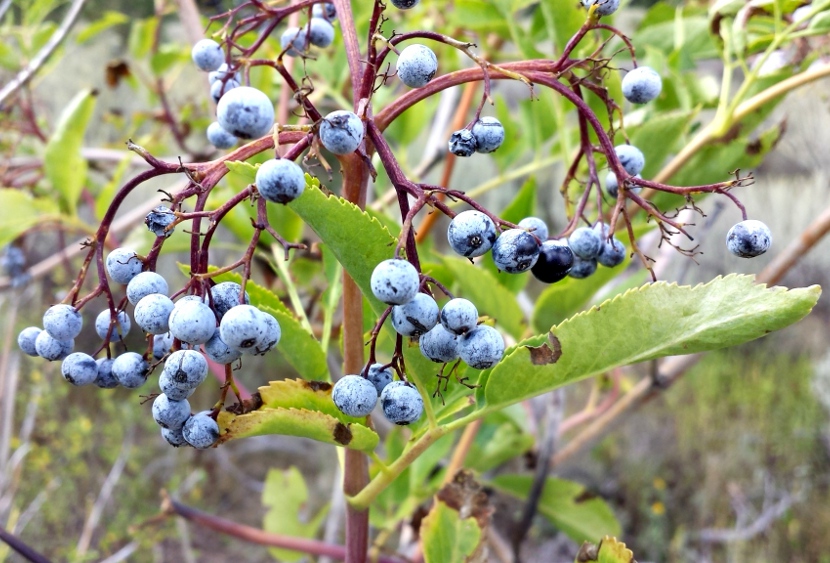
elderberries-af-canyon-3-2013-09-05

The Essential Elderberry

Hardy’s book focuses on…

View original post 2,088 more words

A Druid’s Guide to Connecting With Nature, Part III: Nature Engagement

Dana's avatarThe Druid's Garden

Leading you in deeper! Leading you in deeper!

I’ve heard a lot of conversation in the nature spirituality community, including the druid community, about not touching nature, leaving it alone, to simply “be”.  I remember one influential druid speaking at an event and saying, “The best thing you can do in nature is pick up the garbage and get out.”  From a certain standpoint, this perspective makes a lot of sense. It is the same perspective held by many conservationists trying to preserve pristine lands or lands that have been replanted and are healing; the best thing that can be done is figure out how to keep people from mucking them up, pick up garbage, and leave them undisturbed. Because people have a tendency to come in, move things about, pick things, disrupt ecosystems, and generally cause havoc.  Or worse, much, much worse. Further, in a world where most humans can’t identify even five…

View original post 2,628 more words

Now’s The Time To Harvest This Great North American Superfood!

Greetings!

I’m excited to partner with Forager’s Harvest in Bruce, Wisconsin for an evening mushroom walk on Thursday, August 9th.  We’ll explore the area in search of summer mushrooms, as well as identify mushrooms that participants bring to the program.  If you’re in the Midwest this August 9th, I’d love to meet you!  More information can be found here.

Next, let’s talk about foods that are super…

When many people think of the word “superfood,” images of expensive powders, fancy juices, and exotic herbs come to mind.

When I think of the word “superfood,” images of local plants, backyard weeds, and brambly fruits come to mind.

As nature would have it, North America (and every habitable continent!) is replete with a cornucopia of superfoods manifested as wild fruits, nuts, seeds, and herbs.

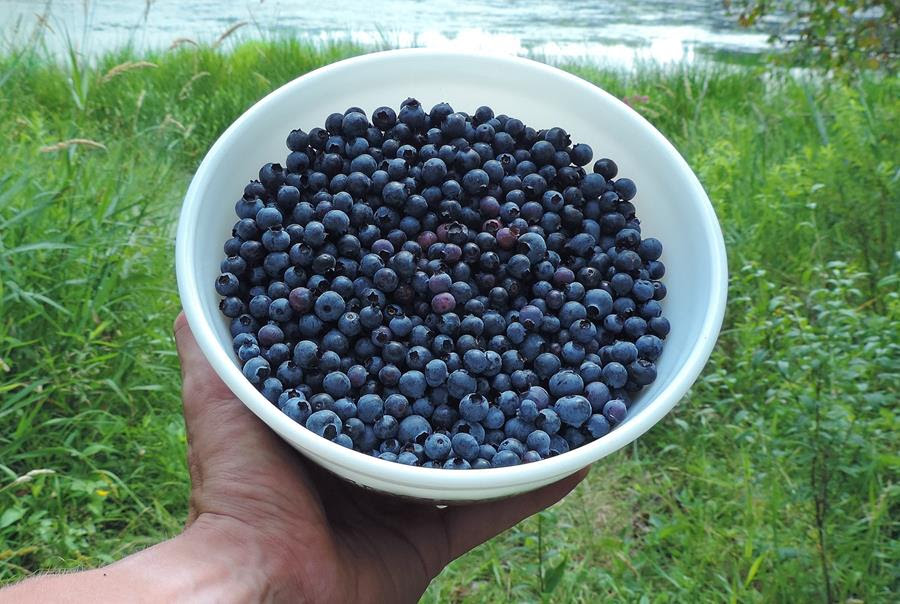
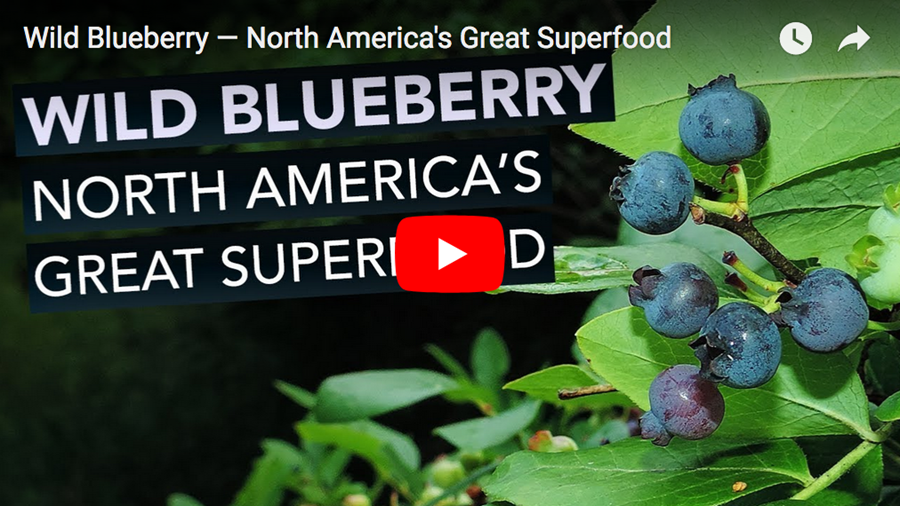
The wild blueberry is one common fruit that, despite its ubiquity, is certainly a superfood in every sense of the word.  Tasty, abundant, and brimming with health-promoting compounds, its value to both humans and wildlife cannot be overstated.

I recently spent some time in the company of a few wild blueberry shrubs and decided to document the experience.  If you’re interested in learning why I recommend the wild blueberry as a regular component of the human diet (and garden!), check out the brand new video!

Have you been finding any choice edible mushrooms lately?  Here’s a list of 8 edible fungi you’re likely to encounter during the warmest weeks of the year… especially after a good rainfall!

Thanks for reading and watching, and as always, thank you for your support!

Adam Haritan

Friends of Forest Farming

Crooked Bear Creek Organic Herbs's avatarCrooked Bear Creek Organic Herbs

As armies of amateur wildcrafters pluck Appalachian ginseng, goldenseal, and other medicinal herbs to near extinction, a coalition of universities, nonprofits, and “forest farmers” are working on a solution that will not only help preserve these wild herbs but also prevent supplement adulteration.

The Appalachian Beginning Forest Farmer Coalition includes Virginia Tech, Penn State, and North Carolina State University; the U.S. Department of Agriculture, Pennsylvania Bureau of Forestry, and other government organizations; nonprofits like United Plant Savers and the Blue Ridge Woodland Growers; and Appalachian landowners and farmers. Together, these entities are developing a model called “forest farming” for cultivating traditionally wildcrafted herbs, including black cohosh {Actaea racemosa}, goldenseal {Hydrastis canadensis}, bloodroot {Sanguinaria canadensis}, ginseng {Panaxquinquefolius}, blue cohosh {Caulophyllum thalictroides}, stoneroot {Collinsoniacanadensis}, wild yam {Dioscorea villosa}, and wild indigo {Baptisia tinctoria}.

During…

View original post 614 more words

A Druid’s Guide to Connecting with Nature, Part II: Nature Wisdom

Dana's avatarThe Druid's Garden

One of my favorite mushrooms- the Chicken of the Woods One of my favorite mushrooms- the Chicken of the Woods

As any mushroom hunter knows, mushrooms are tricksy little buggers.  What one looks like in one setting may not necessarily be what one looks like in another, depending on soil conditions, moisture, sun, size of the mushroom, insect damage, and/or regional variation. Mushroom species can vary a lot, even from one small region to another, and that variation can spell trouble for someone who hasn’t yet gained the wisdom to understand such variation.  Mushroom books offer perhaps 1-2 photos of mushrooms, and a good book will also offer a mushroom hunter the “keys” (features that distinguish one mushroom from another, like attached gills, color, etc).  However, only lived and true experience can help you not make a dangerous mistake when it comes to the mycelium kingdom.  The difference here, I think, epitomizes two key things: the different aspects of nature…

View original post 1,978 more words

Pantry Profile: Basil {Ocimum basilicum}

By Crooked Bear Creek Organics

Crooked Bear Creek Organic Herbs's avatarCrooked Bear Creek Organic Herbs

Bright green, tall, and aromatic, basil is a beauty. An ancient plant with a long history and strange folklore, its sweet, peppery flavor has been used for centuries in cuisine and medicine.

Basil is native to Africa and Southeast Asia and was eventually cultivated in the Middle East and the Mediterranean. Roman scholar Pliny the Elder described basil’s {now well-known} benefits as a carminative and digestive, explaining its effectiveness in relieving flatulence, colic, and nausea. It also has a long history of use for coughs associated with colds, and the leaves were routinely used topically as an insect repellent and poultice to relieve bug bites and stings.

Much myth and legend surrounded this plant we now consider a simple culinary herb. The ancient Egyptians believed basil would entice the god Osiris to open the gates of the afterlife. In his book the English Physician Enlarged, 17th-century botanist Nicholas Culpeper…

View original post 859 more words

Pantry Profile: Chives {Allium schoenoprasum}

By Crooked Bear Creek Organics

Crooked Bear Creek Organic Herbs's avatarCrooked Bear Creek Organic Herbs

With its bright green stalks and vibrant, lavender-pink and spiky blossoms, chives are a lovely ornamental plant and herb garden staple. Found fresh in the yard in summer and dried in cupboards in the cooler months of fall and winter, chives hold surprising medicinal and nutritional benefits. A member of the Amaryllidaceae family {Amaryllis}, which includes familiar alliums garlic and onions, chives have a mild and pleasant onion-garlic flavor.

Chives have played a role in medicine and protection for more than 5,000 years. The ancient Romans used chives to relieve sore throats, lower blood pressure, and increase urination, while Traditional Chinese Medicine turned to it for coughs, colds, and congestion. In the Middle Ages, it was a popular remedy for melancholy.

A traditional Romani custom was to use chives in fortune telling and to hang them in the home to ward off disease and evil influences. Planting chives in the…

View original post 638 more words

Mahonia & Lavender Oat Bars: Berry Delicious! — Gather Victoria

Mahonia & Lavender Oat Bars …

20180703_164848.jpg


You may not have heard of Mahonia berries but I know you’d love them – and they’re likely growing near you. Mahonia japonica and Mahonia bealei are both extremely common ornamental shrubs found in a wide variety of urban spaces – and in early July both are laden with deep blue dusky berries hanging in fat grape-like clusters.…

via Mahonia & Lavender Oat Bars: Berry Delicious! — Gather Victoria