Remembering Who We Are: Chinese Botanical Guides

Remembering Who We Are …

Ancestral Arts's avatarAncestral Apothecary

Bekah gets to know the plants of her grandmother’s village in Guangdong, China.

As part of our studies in the Cecemmana program, we as students are encouraged to study our ancestral medicines. We are encouraged to ask questions like: who were the healers in our families? What plant medicine did they use? What healing foods did they eat? What healing songs did they sing? In the first two years of Cecemmana, we as students researched the answers to these and other questions and then presented our findings. In my first year of Cecemmana, I looked forward to learning more about the herbal medicine practices of my Chinese heritage.

I found that before I could get to know the plants, though, I had to better understand my family. Growing up in a mixed race household in a predominantly white community, my sister and I grew up feeling disconnected from our Chinese…

View original post 1,270 more words

The Wild Mushroom That Tastes Like Garlic

By Adam Haritan

Greetings!

One of the best parts about being a nature enthusiast is getting to meet other nature enthusiasts around the country.  Over the next few months, I’ll be giving talks and leading walks throughout the Northeast and I’d love to meet you!  Here’s the most recent schedule of upcoming events:

July 20-21:  Shelly Conrad – Gary Lincoff 2018 Memorial Foray in Davis, WV
July 26-29:  NEMF Mushroom Foray in Geneseo, NY
August 10-12:  Mushrooms as Food & Medicine in Bruce, WI
September 7-9:  Michigan Mushroom Hunters Club — Fungus Fest in Twin Lake, MI
September 9:  Wild Edibles Walk & Mushroom Outing in Owosso, MI
September 21-23:  Midwest Wild Harvest Festival in Prairie du Chien, WI

For more information on these events, check out the Learn Your Land event calendar.

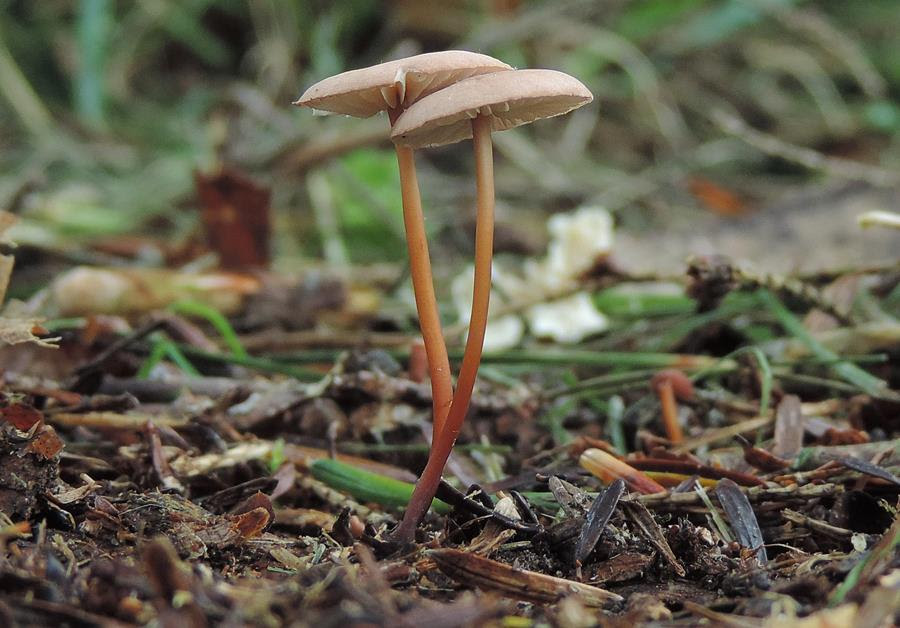
Moving forward, let’s talk about the garlic mushroom.  This edible fungus smells and tastes like garlic, and you can use it as a substitute for garlic in meals.

Strangely enough, this alliaceous mushroom hasn’t made its way into supermarkets, though fortunately it can be found growing profusely underneath coniferous and hardwood trees around the world.  Perhaps it’s even growing in your backyard.

To learn more about this marvelous little mushroom, check out the brand new video!

Speaking of marvelous species, wild orchids are at the top of the list.  This particular orchid is blooming right now, though if you’re interested in observing its flower, be prepared to get your feet wet.  Check out this recent Instagram post to learn more!

Thanks for reading and watching, and as always, thank you for your support!

-Adam Haritan

The Forager’s: Foraging for Summertime Herbs

The Forager’s: Foraging For Summertime Herbs …

Crooked Bear Creek Organic Herbs's avatarCrooked Bear Creek Organic Herbs

Go beyond the confines of the garden and into the wild to find some of nature’s most valuable medicine.

Summer is the perfect time to stock up on nature’s healing gifts. But all too often we walk right by these treasures, not recognizing them as valuable plants. Learning how to identify and then use a variety of edible and medicinal plants in your region can open up a world of botanicals, not only providing you with access to important medicine but also helping you familiarize yourself with the wilderness that abounds.

Five Rules for Sustainable Foraging

Before you head out into the fields and forests to harvest plants, you need to know a bit about foraging ethics, as well as the dangers that certain plants can pose. In an environmentally fragile world, you want to proceed without taking from nature in ways that are harmful.

  1. Properly identify the plant

View original post 2,338 more words

Getting to Know Lyre-Leaf Sage

Getting to know Lyre-leaf Sage …

Crooked Bear Creek Organic Herbs's avatarCrooked Bear Creek Organic Herbs

Having fallen into disuse, this North American species is making a comeback thanks to some notable herbalists and a nod from the Herb Society of America.

Graceful, light-blue wildflowers border the roads and cover swaths of meadows in periwinkle, from the Mid-Atlantic to Missouri and from Florida to Texas. Known as “just a roadside weed” or invasive species, lyre-leaf sage has a lengthy history. A much-valued wild edible and medicinal plant of indigenous people, and a time-honored remedy in the southern folk traditions, this North American sage has been chosen by the Herb Society of America as the Notable Native Herb of 2018.

lyre leaf sage

Lyrata in the Garden

A beautiful, wild, flowering plant, lyre-leaf sage {Salvia lyrata} is part of the Lamiaceae {mint} family along with rosemary and oregano, and it’s closely related to garden sage {Salvia officinalsi}.

The only sage native to the United States, it has reportedly grown as…

View original post 2,060 more words

Elder Mountain’s Folk Smudge – Autumn 2018

Elder Mountain’s Folk Smudge …

6 Bug Repellent Patio Plants

Six Bug Repellent Patio Plants …

Crooked Bear Creek Organic Herbs's avatarCrooked Bear Creek Organic Herbs

We love to spend our summer days outside with family and friends, but pesky bugs are quick to drive a party indoors. For a chemical-free way to keep insects at bay this season, we asked the experts from our green goods team to recommend their favorite bug repellent plants. Planted near the doorway or transformed into essential oils, these six natural options deter mosquitoes, flies, and more uninvited guests in the summer garden.

1. Lemon Balm (Melissa officinalis): Like many members of the mint family, this herb provides protection against summertime mosquitoes. To make a quick, all-natural bug repellent, crush a handful of lemon balm leaves and rub onto any exposed skin. If you’ve already suffered a bug bite, its soothing oils can limit itching as well. This easy-to-grow herb also has a number of additional applications, from infused teas and vinegar to green salads.

2. Ageratum ‘Artist…

View original post 326 more words

Wild Food Profile: Milkweed + Fried Milkweed Pod Recipe

Wild Food Profile …

Dana's avatarThe Druid's Garden

Monarch catepillar enjoying a milkweed feast--they know the good stuff when they see it! Monarch caterpillar enjoying a milkweed feast–they know the good stuff when they see it!

I love the summer months for foraging wild foods.  One of my very favorite wild foods is Common Milkweed (asclepias syriaca).  Around here, the pods are just beginning to form–and its a great time to explore this delightful wild food.  They have a light vegetable taste, maybe something like a sugar snap pea–very tasty and delicious.  In fact, this is one of the best wild foods, allowing you to have four different harvests from the plant at four different times during the spring, summer, and early fall.

Ethical Harvesting and Nurturing Practice

With the excitement of harvesting from common milkweed, however, comes a serious responsibility.  New farming techniques over the last 20 years have eliminated many of the hedges that used to be full of milkweed.  Because of this issue, the monarchs have been in serious…

View original post 914 more words

Southwest Herb Gardening: What To Plant In June, and Watering In June

By Crooked Bear Organics

Crooked Bear Creek Organic Herbs's avatarCrooked Bear Creek Organic Herbs

We recommend most plants be planted in the fall or spring. However, if you must plant during the summer months watering may need to be more frequent and you must be diligent about observing your newly planted plants for signs of water stress. Follow the guidelines in the Watering section.

Many cacti and warm-season succulents can still be planted in the summer. When transplanting cacti and succulents, mark either the south or west side and plant facing the orientation you marked to avoid the burning of tender tissues. Most nurseries will mark the side of the container to help you determine proper planting orientation. However, if the original orientation is not known, newly planted cacti and succulents need to be covered with shade cloth if the plant surface appears to yellow or pale suddenly. Use a shade cloth rated between 30-60% as anything higher will block most of the sunlight and…

View original post 1,557 more words

Southwest Herb Gardening: June In The Low Desert

By Crooked Bear Organics

Crooked Bear Creek Organic Herbs's avatarCrooked Bear Creek Organic Herbs

June in the low desert is generally the driest and hottest month. Desert gardeners often must begin their garden activities in the early morning or at sunset to avoid the intense sunlight. Plants must endure the intense heat throughout the day. Many native and desert-adapted plants have numerous adaptations that enable them to live successfully in the desert, such as succulence, drought-deciduousness, and small leaves, to name a few examples. Even with these numerous adaptations, desert plants sometimes need a little help to keep them healthy and thriving in your garden. Native and desert-adapted plants that were newly planted and those that are not established in the landscape need to be watered until they become established in the landscape and can then survive with natural rainfall. Even established plantings will need an occasional supplemental watering during long periods of drought to keep them healthy and stress-free.

Summer is the prime…

View original post 1,684 more words

The Spice Pantry: Queen of the Spices, Cardamon

By Crooked Bear Organics

Crooked Bear Creek Organic Herbs's avatarCrooked Bear Creek Organic Herbs

Cardamom – The Queen of Spices

My favorite spice in the house!

Cardamom is the Queen of Spices and has grown lavishly under the tropical canopy on hillsides in the Ghat Mountains on the Malabar Coast of southern India to be harvested by hand and shipped around the world.  The cardamom familiar to India and the western world is called green cardamom and it, along with several other types such as giant cardamom, black cardamom, and bastard cardamom, have been used for cooking, perfumery, incense, and medicine since very early in history.

cardamon flowers

Ancient Egyptians used it frequently for perfume along with frankincense, myrrh, cinnamon, and cassia, and had a recipe for an ointment called “Oil of Lilies” that included the scent from 1000 lilies. It is often mentioned as one of the ingredients of the ancient incense kyphi. Cardamom essential oil is one of the oldest essential oils known in perfumery…

View original post 1,291 more words