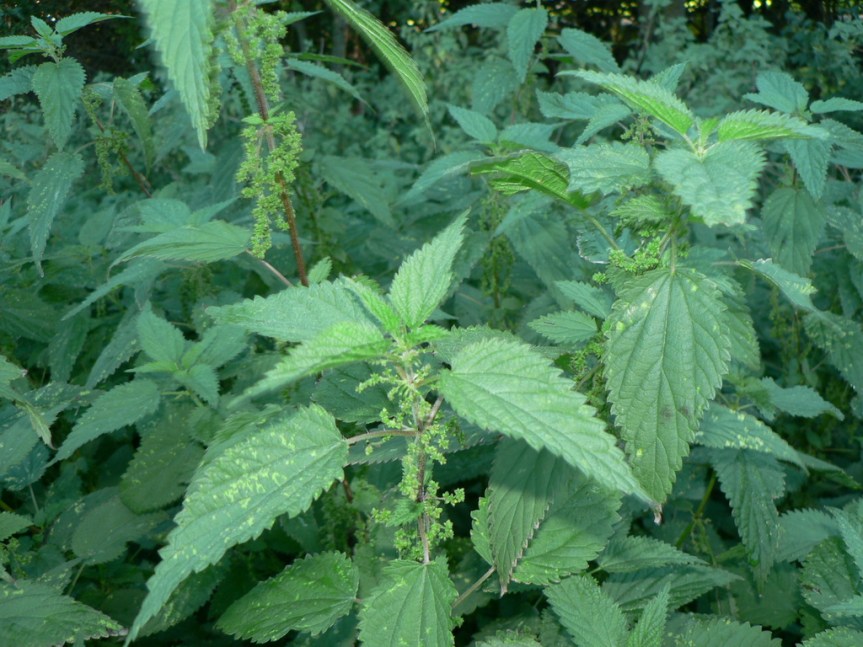
Food as Medicine: Stinging Nettle (Urtica dioica, Urticaceae)

Crooked Bear Creek Organic Herbs's avatarCrooked Bear Creek Organic Herbs

Urtica dioica (Urticaceae) is commonly known as nettle, common nettle, or stinging nettle. The species is an herbaceous perennial with a spreading growth habit. Growing 4-6 feet tall, stinging nettle produces numerous erect and wiry stems that hold up its opposite, roughly textured, serrated leaves.1-4 It produces small, inconspicuous greenish-brownish flowers that emerge as axillary inflorescences.The stems and undersides of leaves are covered with hairs called trichomes. When touched, these stinging trichomes inject a chemical cocktail that typically causes localized skin irritation as well as a painful, tingling sting from which the species has derived its most common name, stinging nettle.1,5

The Urticaceae family contains about 500 known species, distributed mainly in tropical areas.1 The genus Urtica, whose name comes from the Latin uro (to burn) and urere (to sting), consists of both annual and perennial herbaceous plants known for the burning properties of the…

View original post 3,981 more words

Plant Spirit Communication Part IV: Medicine for the Body and the Soul

Dana's avatarThe Druid's Garden

In the last few weeks, we’ve considered various ways in which we might communicate with plant spirits, work with them, and engage in spirit journeys with them. In this post, I am beginning to make the transition to talk about plant medicine and herbalism for a few weeks–both medicine of the body and medicine of the soul. I think that herbal medicine is something incredibly powerful to add to any earth-based spiritual based practice, both to keep you in good health and to create inter-dependency between you and the living earth. In order to do that, I wanted to talk today about plant spirits and the connection between medicine for the body and medicine for the soul. To do this, we’ll delve into animism and an animistic worldview as well as consider deepening plant relationships.

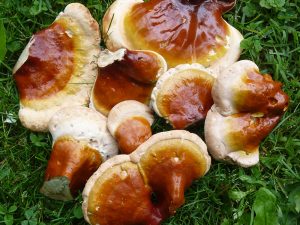
Amazing reishi! Amazing reishi!

Medicine of the Body

Plants have physical bodies and various…

View original post 2,377 more words

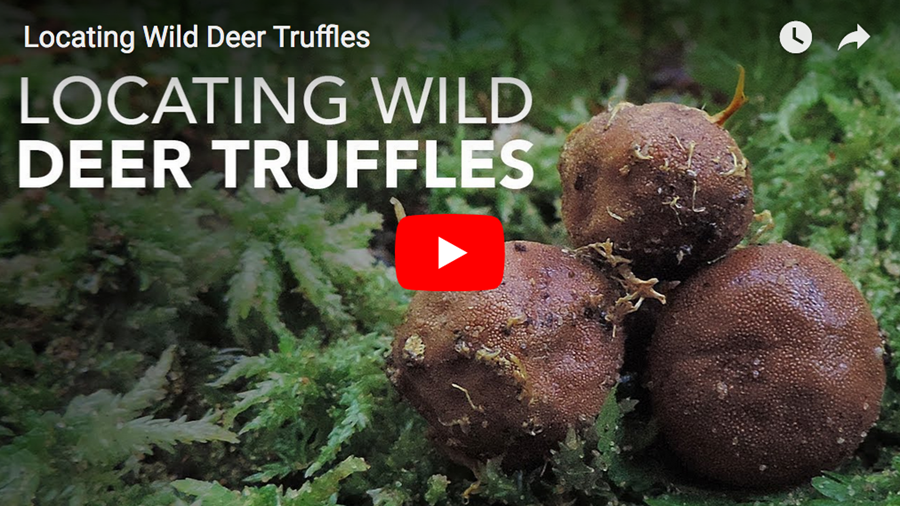
Locating Wild Deer Truffles ~ And Other Fascinating Fungi!

Greetings!

First, I’d like to say “thank you!” to everyone who attended a Learn Your Land event over the past few months.  It’s always a wonderful experience meeting nature enthusiasts around the country!  I still have plenty of events scheduled throughout the upcoming months.  If you’re local to any of these areas, I’d love to meet you!

September 8, Muskegon, MI: Michigan Mushroom Hunters Club — Fungus Fest
September 9, Owosso, MI: Wild Edibles Walk & Mushroom Outing
September 21-23, Prairie du Chien, WI: Midwest Wild Harvest Festival
October 8, Pittsburgh, PA: Botanical Society of Western PA evening presentation
November 5, Clemson, SC: South Carolina Upstate Mycological Society evening presentation
November 7, Atlanta, GA: Mushroom Club of Georgia evening presentation

For more information on these events, check out the Learn Your Land event calendar.

Moving forward, let’s talk about deer truffles.

These fungi exist a few inches below the surface of the earth in a mutualistic association with various trees.  What’s more, deer truffles are valued food sources for a variety of forest-dwelling animals.

Because they grow underground, deer truffles are among the most elusive fungi in the world.  However, there is a simple trick to finding them, and if you’re interested in finding your very own deer truffles this season, check out the brand new video!

Stinkhorns aren’t your typical mushrooms.  One look at them (and a quick whiff of them!) should hint at their uniqueness.  Pictured here are a few interesting stinkhorns I recently found in a local forest.  Check out this recent Instagram post to learn more!

Thanks for reading and watching, and as always, thank you for your support!

-Adam Haritan

Plant Spirit Communication, Part II: Communication in Many Forms

Dana's avatarThe Druid's Garden

I remember taking a drive with some friends and friends-of-friends some years ago. As we were driving through a really nice forest preserve with some old trees, one of my friends in the car said, “There’s so much money there in the trees, some of them would be worth more than $1500.” He went on to talk about how his family had recently logged their property and earned over $25,000. Other people in the car jumped in and talked about the forest’s beauty and argued against him; and I just listened. Finally, I responded and said, “Every living being has a spirit. I hope that forest stands forever. They deserve to live as much as you or I.” Before this conversation had started, I was listening to the singing of that forest, so happy, so safe to be preserved. This experience stayed with me, and was a good reminder about…

View original post 2,288 more words

Our Pantry Profile: Rosemary

Crooked Bear Creek Organic Herbs's avatarCrooked Bear Creek Organic Herbs

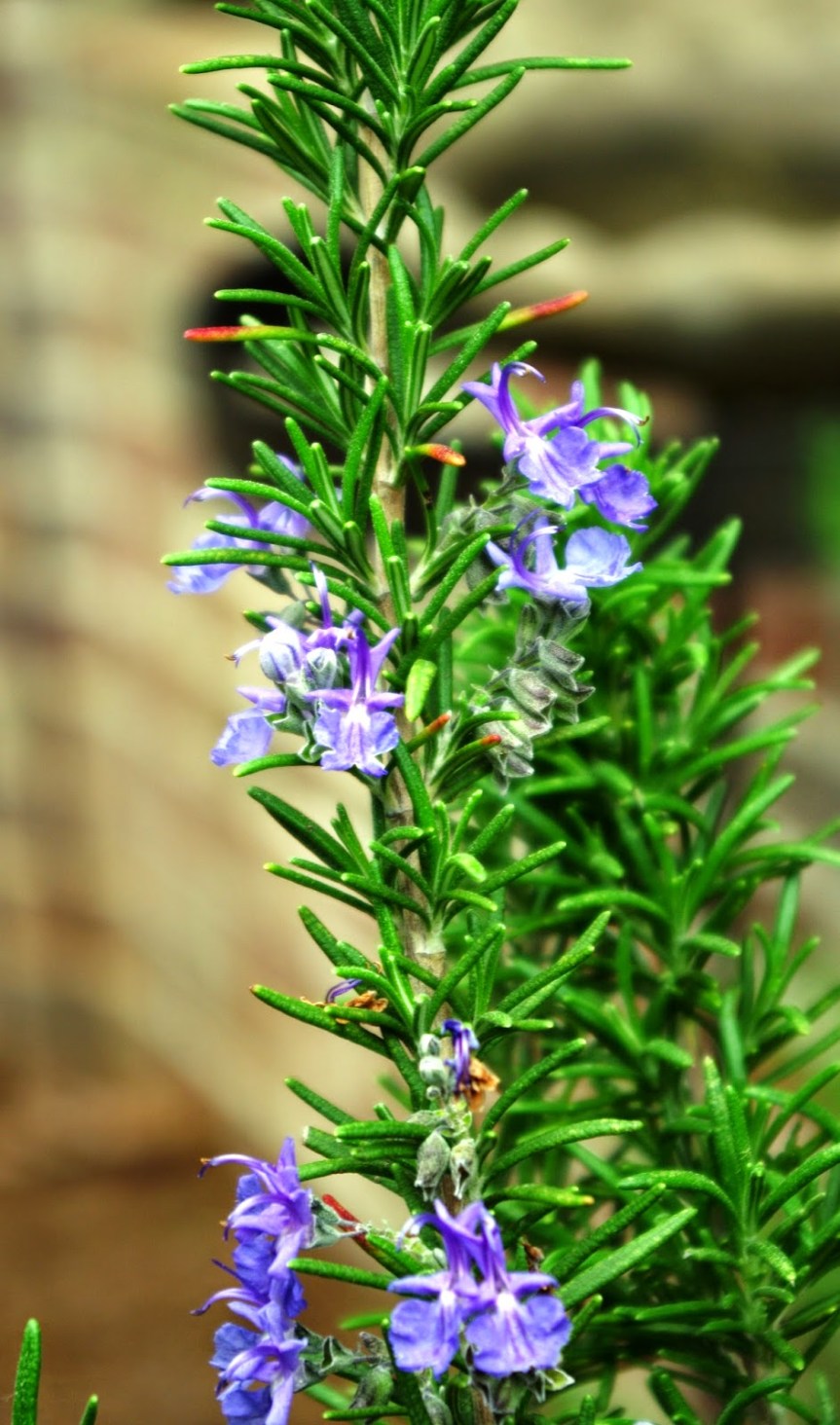
Rosemary {Rosmarinus officinalis}

The name Rosmarinus loosely translates to “dew of the sea,” given to rosemary because of its affinity for the wind-swept cliffs of the Mediterranean coast, where it originates. Beloved for centuries for its aroma and health benefits, this strongly aromatic member of the mint family is now cultivated worldwide.

Greek scholars wore garlands of rosemary to improve their memory and concentration, and many ancient herbalists recommended rosemary for failing mental acuity. During the Middle Ages, some would wear it around the neck to protect from the plague. Thirteenth-century Queen Elisabeth of Hungary claimed at 72 years of age, crippled with gout and rheumatism, that she had regained her beauty and strength by using “Hungary Water” {largely rosemary-infused}, compelling the King of Poland to propose marriage to her. Along with juniper, rosemary was frequently burned by the tub-full to disinfect the air from disease, from ancient times through…

View original post 827 more words

Our Pantry Profile: Thyme

Crooked Bear Creek Organic Herbs's avatarCrooked Bear Creek Organic Herbs

Thyme {Thymus vulgaris}

Common garden thyme has been used for protection, courage, food, and medicine since the beginning of recorded history. A low-growing, aromatic shrub native to the rocky hills of the Mediterranean and Southern Europe, it’s now a staple of herb gardens around the world.

Roman soldiers bathed in thyme to maintain their courage and strength before a battle, and in medieval times, departing knights received thyme-embroidered scarves from their lady loves to keep up spirits and inspire courage. A popular belief was that thyme tea prevented nightmares and even encouraged dreams of fairies. Carrying thyme warded off evil spells and witchcraft, while sewing thyme and fern into the hem of a dress kept the Devil from taking a woman as his bride. Placing a sprig of thyme in one shoe and a sprig of rosemary in the other on the Eve of St. Agnes {January 20} was said…

View original post 827 more words

Food as Medicine: West Indian Lemongrass (Cymbopogon citratus, Poaceae)

Crooked Bear Creek Organic Herbs's avatarCrooked Bear Creek Organic Herbs

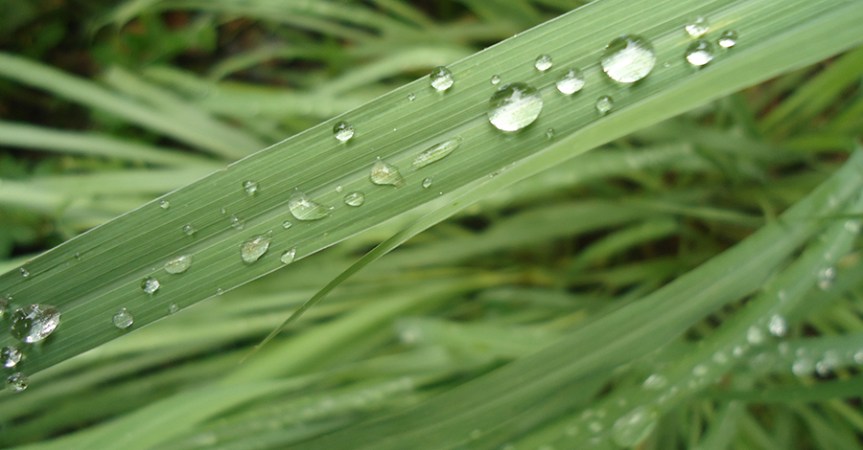
West Indian lemongrass (Cymbopogon citratus, Poaceae) is an aromatic tropical perennial with long, slender, light green leaves that grow in groups with bulbous and fibrous stems at the base of the plant.1-3The grass can grow from two to six feet tall, and its leaves are approximately one inch wide with slightly toothed, saw-like margins.2 West Indian lemongrass likely originated from India, Malaysia, or Sri Lanka.1,2,4,5 It is now cultivated in tropical and subtropical countries.4 The largest exporter of lemongrass leaves and stalks is Guatemala,5 while India is the largest producer of lemongrass essential oil, 80% of which is exported annually.6Lemongrass grows well in warm and humid areas with plenty of sunshine and moisture.4 The leaves and fleshy part of the stem are used for flavoring teas and broths in many Asian cuisines, and its essential oil is used in…

View original post 2,696 more words

Plant Spirit Communication, Part I: Your Native Langauge

Dana's avatarThe Druid's Garden

When I was  new to my first job, a colleague had given two of us both who had been recently hired an elephant ear plant seedling for our offices. Our offices were next to each other, both with the same window. Each plant was planted in an identical pot and in identical soil. My elephant ear plant grew quite large and beautiful, while my colleague’s plant kept sending up small shoots and dying back. Finally, she said to me, “Why is your plant doing so much better than mine?” And I responded as a druid, totally without thinking, “I just talk to the plant and it tells me what it needs.” She rolled her eyes at me, let out an exasperated sigh, and walked away. She was never a very pleasant person, but she was particularly nasty to me for some time after that. Perhaps she thought I was mocking…

View original post 1,837 more words

Herbal Meditations and Magic for Thriving in a Neo-Colonial World

Ancestral Arts's avatarAncestral Apothecary

Guest student post by Avani Mody


Sunrise:

There is an incomparable beauty to sunrise. The time of the gods, as it is described in Ayurvedic traditions. As a child my father told me, walk barefoot on the earth and take in the green grass at sunrise, to strengthen my eyes. The combination of a luscious green and morning sunlight, calmed my eyes and mind. During my recent, formal herbal education, this advice remains in my psyche. The colors, beauty and feel of the plants, indeed calm my mind, and strengthen my vision my ability to see in multiple dimensions. Plant meditations are one of the ways I like to spend time with plants and imbue myself with their serenity.

Neo-Colonial Herbalism:

Learning herbal medicine that is rooted in traditional cultures, resilience and a holistic worldview is complex and profound. In our contemporary society, and perhaps especially here in the…

View original post 900 more words

Native American Herbs of the Northeast

Crooked Bear Creek Organic Herbs's avatarCrooked Bear Creek Organic Herbs

A look to the past reveals some of the most important plants used by Eastern woodland tribes – and an inestimable connection to nature.

My adventure into the historical uses of many Native American plants began when Maine native Kerry Hardy, author of Notes on a Lost Flute: A Field Guide to the Wabanaki, presented a program for Western Maine’s Greater Lovell Land Trust, billed as “Native American Plant Medicine” last summer. So many plants and so many uses! I was intrigued to find out more about these plants and explore the wealth of medicinal knowledge from Eastern Woodlands tribes like the Mohawk, Wyandot {Huron}, and Iroquois. From Hardy’s work, as well as from the research of author Charlotte Erichsen-Brown, I enjoyed a glimpse into how these tribes looked to nature for healing – and how early pioneers benefited from their knowledge.

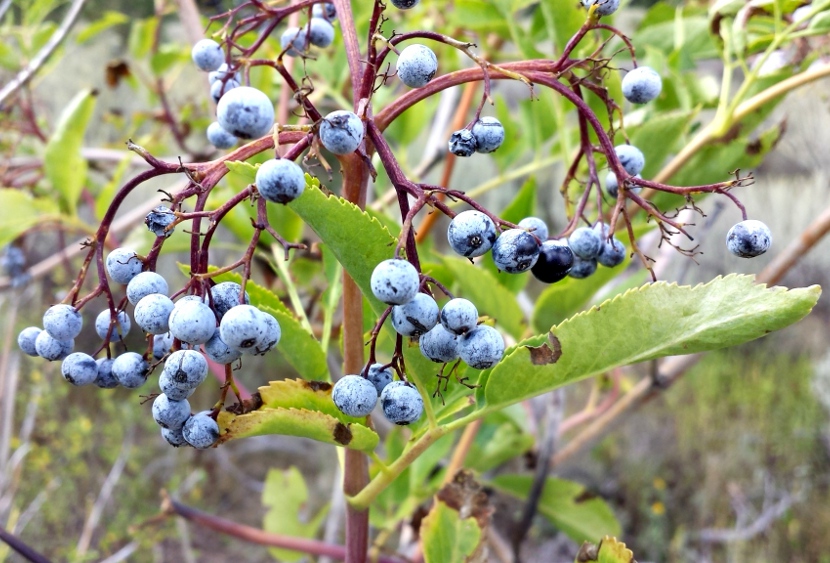
elderberries-af-canyon-3-2013-09-05

The Essential Elderberry

Hardy’s book focuses on…

View original post 2,088 more words