Food as Medicine Update: Sweet Potato (Ipomoea batatas, Convolvulaceae)

Crooked Bear Creek Organic Herbs's avatarCrooked Bear Creek Organic Herbs

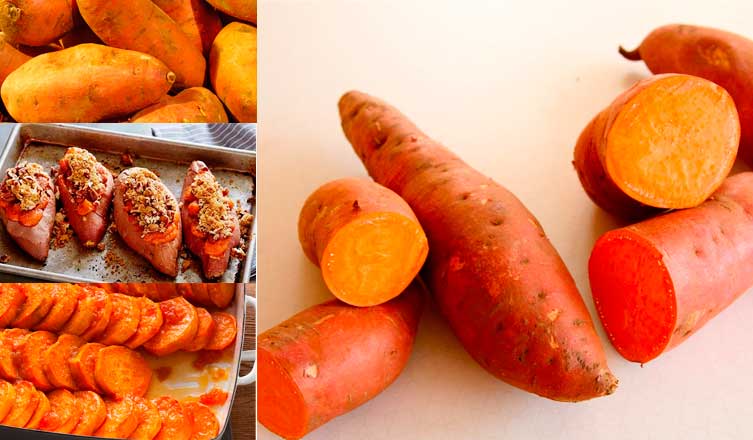
The sweet potato (Ipomoea batatas, Convolvulaceae) is a trailing, herbaceous perennial in the morning glory family.1,2 It is indigenous to Central and South America and grows best in subtropical climates, spreading along the ground and producing oblong, tuberous roots. There are more than 400 sweet potato varieties, and most have yellow-brown or copper-colored skins with bright orange or yellow-red flesh.3 Orange-fleshed sweet potatoes (OFSPs) are the most common varieties consumed, but white, cream, yellow, pink, and deep purple varieties also exist. The sweet potato plant has alternate, heart-shaped leaves and produces funnel-shaped white, pink, or rose-violet flowers that appear in clusters in the leaf axils as the plant matures.4

Taxonomic confusion can arise over the common name “yam” that often is given to sweet potatoes in the market. Botanically speaking, true yams belong to the genus Dioscorea (Dioscoreaceae) and are much less common in the United…

View original post 2,927 more words

The Samhain of our Lives

Dana's avatarThe Druid's Garden

Just last week, we had our first hard frost. After homesteading for a number of years, you grow to be vigilant for the signs of the first frost. The air smells different somehow in the two or so weeks leading up to it. The bird and wildlife patterns change.  The nights have a crisp bite to them that they didn’t even a few days before. And then, just like magic one day, the frost is there, glistening in the morning light. The garden radically changes overnight–even for those things you covered–the entire landscape lies in disarray.

Sunrise at First Frost Sunrise at First Frost

I could feel it on the air, and for the last few mornings, have been going to to see if it had arrived. That morning, I turned the corner and first saw it first on the strawberry patch–white and glistening. The frost is beautiful, magical, and yet, destructive. While the…

View original post 1,466 more words

A Druid’s Guide to Herbalism, Part II: Preserving and Preparing Sacred Plant Medicine

Dana's avatarThe Druid's Garden

The moonlight shines through the window in my kitchen as I carefully use a mortar and pestle to grind dried herbs for making tea.  Candlelight softly illuminates the space, and I have my recipe book with me, ensuring that I record everything that I’m doing for future use. Magic is in the air; working in a sacred space at a sacred time on the Fall Equinox ensures that these medicines will be potent, effective, and magical. On the counter, I’ve already finished my fresh New England Aster flower tincture; this keeps my lungs in good health and helps me manage my chronic asthma without pharmaceuticals. A pot of olive oil is infusing with herbs is on the stove; I am getting ready to add beeswax and pour it off into small jars.  This healing salve will be for friends and family as Yule gifts.  The kitchen is bursting with good…

View original post 2,609 more words

A Druid’s Guide to Herbalism, Part I:Harvesting by the Sun, Moon, and Stars, and Sacred Intent

Dana's avatarThe Druid's Garden

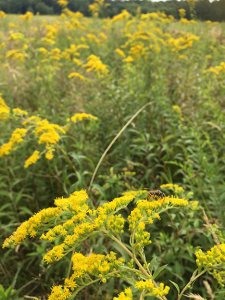
Field of Goldenrod in Fall Field of Goldenrod in Fall
A field of goldenrod, nettle, and aster greet me on this warm post- Fall Equinox day.  As the moon comes up with a sliver in the afternoon sky, I joyfully take my basket and harvest knife into the field for my fall plant preparations. The breeze has change on the air–winter is coming soon, and the sacred medicines I prepare will bring my family nourishment and strength for the coming dark half of the year. As we are well into the harvest season at this lovely Fall Equinox, I thought I’d take the time to talk about harvesting and preparation by the sun and moon and honoring the harvest. Next week, I’ll talk about the most basic plant preparations and we’ll end this series with talking about energetic preparations through the creation of flower and leaf essences.  That is, we’ll talk about the medicine of…

View original post 1,533 more words

Food as Medicine: Cherry (Prunus avium and P. cerasus, Rosaceae)

Crooked Bear Creek Organic Herbs's avatarCrooked Bear Creek Organic Herbs

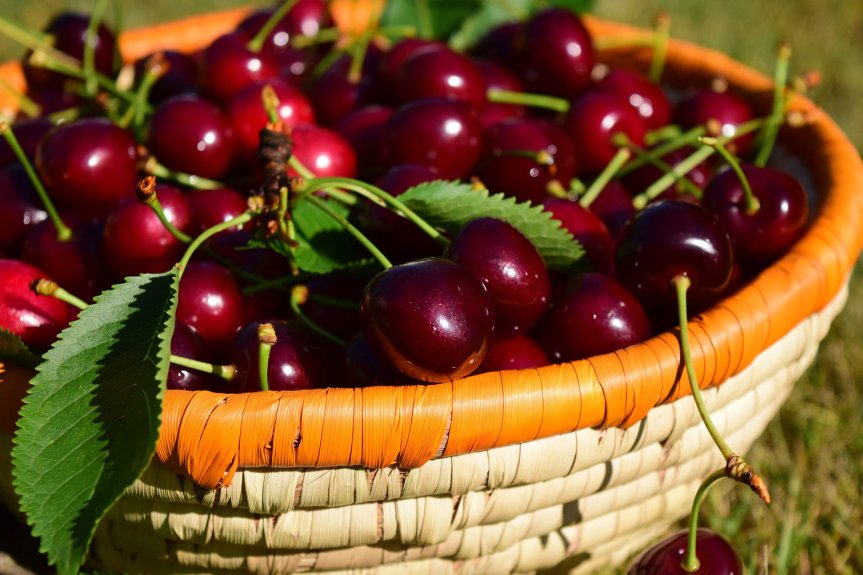
Take advantage of the fleeting cherry season to explore the fruit’s sweet side, sour side, and beneficial side. Due to their anti-inflammatory properties, cherry fruit and cherry bark have been used to treat and support a wide variety of chronic inflammatory conditions. In addition, the fruit’s rich phenolic compound content has been studied for their potential benefits for sleep disorders, exercise recovery, and cognitive function.

Known for both their ornamental beauty and sweet and tart fruits, cherry (Prunus spp.) trees are among the 3,400 species that belong to the economically important rose (Rosaceae) family. This botanical family also includes other fruit-bearing trees such as apples (Malus spp.) and pears (Pyrus spp.), as well as herbaceous perennials like strawberries (Fragaria spp.) and brambles like blackberries (Rubus spp.) and raspberries (Rubus spp.).1

Cherry fruits are produced by various trees…

View original post 3,878 more words

Sacred Tree Profile: Apple’s Medicine, Magic, Mythology, and Meanings

Dana's avatarThe Druid's Garden

“Nothing gives more yet asks for less in return, than a tree: particularly, the apple” –Johnny Appleseed

“As the apple-tree among the trees of the wood, so is my loved one among the sons. I took my rest under his shade with great delight, and his fruit was sweet to my taste.” – The Song of Solomon

Spirit of the Apple - from the Plant Spirit Oracle (www.plantspiritoracle.com) Spirit of the Apple – from the Plant Spirit Oracle (www.plantspiritoracle.com)

All summer long, we have had so much rain and thunderstorms.  Penn Run, a small creek behind my home, once again overflowed, raising several feet for a time.  When the waters had subsided, I was delighted to find delicious wild apples lining the banks–the river had carried them to me as a blessing for this wonderful Fall Equinox!  It reminded me that I have been wanting to write of the apple–of her magic, of her folklore, and of her abundance=. And so…

View original post 2,594 more words

HERBS of NEPTUNE

Fall Flora & Fungi Outing with Adam Haritan ~ New event scheduled!

Greetings!

I am excited to announce that I will be leading the Fall Flora & Fungi Outing on Sunday, October 14th at Cook Forest State Park in Western Pennsylvania.  And of course, I’d love for you to join us!

Autumn is the perfect season to explore Pennsylvania’s colorful land in search of interesting and useful plants, mushrooms, and trees.  We will spend the first part of this event in a mature oak forest learning the techniques involved in harvesting and processing acorns.  This year has already proven to be a banner year for many species of oaks whose acorns have been falling incessantly in Western Pennsylvania.  Participants will learn the steps involved in turning acorns into edible, delicious flour.  We will also search the area for oak-loving mushrooms of all types.

During the second part of the event, we will visit the old growth area of Cook Forest and explore the valley in search of mushrooms.  This particular section of the park is home to some of the oldest and tallest hemlock and pine trees in the Northeast.  Participants will learn the basics of mushroom hunting, including mushroom ecology and biology, edible species, medicinal species, and poisonous species.

Throughout the day, we’ll also discuss various plants — including the edible, medicinal, and poisonous species — that inhabit the old growth forest.

Interested?  Here are more details:

What: Fall Flora & Fungi Outing with Adam Haritan
When: Sunday, October 14th, 2018
Where: Cook Forest State Park, Western Pennsylvania
Time: 9:30 AM — 4:30 PM

The program is geared toward adults and will entail moderate hiking.

Please note that in order to maximize your learning experience, space is limited and registration with payment in advance is required to secure your spot.

To purchase your ticket, and to learn more about the outing, please visit the following link.

Fall Flora & Fungi Outing with Adam Haritan

I’d love to see you there!
—Adam Haritan


Watch Webinar on Native Wildflowers

The Herb Society of America's avatarThe Herb Society of America Blog

By Jen Munson, HSA Education Chair

ginseng American ginseng (Panax quinquefolius) a globally rare plant species

The diversity of the world’s plants has dwindled and/or is threatened. In fact the International Union for the Conservation of Nature estimates that 54 percent of the 19,000 plant species they have identified are at risk. In New England it is estimated that almost 20 percent of New England’s native plants are on the verge of being lost and  another 5 percent has already disappeared. Native plants are under threat from invasive species, habitat loss, climate changes among other impacts.

The New England Wildflower Society seeks to preserve New England native plants. Based at the Garden in The Woods botanic garden in Framingham, Massachusetts, their mission is, “to conserve and promote the region’s native plants to ensure healthy, biologically diverse landscapes.” They secure and preserve seeds from rare plants to protect genetic diversity…

View original post 196 more words

Building Soil Fertility with Fall Gardening at the Equinox

Dana's avatarThe Druid's Garden

Leaves - nutrients AND enjoyment! Leaves – nutrients AND enjoyment!

In the druid wheel of the year, we have three “harvest” festivals.  Lughnasadh, the first harvest.  So much of the garden produce starts to be ready at this time–and also at this time, the garden is still at its peak, but quickly waning. In the weeks after , our pumpkin patch died back with beautiful orange pumpkins and said “ok, I’m done for the year!” Then we have the Fall Equinox, where things are continuing to be harvesting, but many of the plants are in serious decline. By Samhain, everything is dead, the hard frosts have come and the land goes to sleep. It seems then, on the surface, that what we should be doing in the fall is primarily harvesting and sitting on our laurels and watching fall and winter come.

However, as a gardener and homesteader, my busiest time, by far, is the…

View original post 2,163 more words