Camellia sinensis – Herb of the Month

The Herb Society of America's avatarThe Herb Society of America Blog

By Maryann Readal

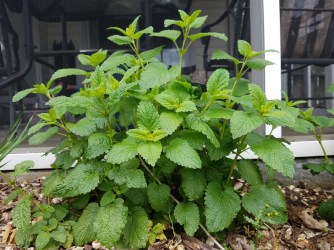
Camellia_sinensis_Bois_Cheri by Pancrat via Wikipedia CommonsTea is the most widely consumed beverage in the world, after water. Countless books have been written about tea, which is the leaf product of this herbal shrub, Camellia sinensis. The history of C. sinensis and its product goes back almost 5,000 years, and it is believed to be one of the oldest plants cultivated by humans. C. sinensis is truly a plant that has been responsible for wars, influenced social customs worldwide, inspired religious practices, and, of course, has lifted many troubled and tired spirits with its medicinal properties. 

Camellia sinensis is an evergreen shrub or small tree that is usually trimmed to about six feet when cultivated for its leaves. It thrives in acidic, rich soil where rainfall is adequate throughout the year, and grows in dappled shade to full sun. It is winter hardy in zones 7-9 when grown as a landscape shrub…

View original post 1,145 more words

Herbal Hacks, Part 4: Herbs for the Home

The Herb Society of America's avatarThe Herb Society of America Blog

This is our last installment of reader-submitted herbal hacks – herbs for the home. We hope they’ve inspired you to use herbs in new and creative ways. Enjoy!  

bees-insects-pollen-lavender-flowers-garden_Creative commons via Pxfuel

When your “Italian herbs” (whether store-bought or home-mixed) reach the end of their tasty usefulness, place them in the coffee grinder and pulverize. Then, mix equal parts herbs and baking soda and strew over your wool carpet. Let sit for one hour or overnight, then vacuum. It is surprisingly deodorizing and refreshing! – Lisa de Vries

20210503_162231Got a big patch of lemon balm in the garden? Freshen up your sink disposal after trimming the lemon balm leaves to use in salads! Stuff the stems down the drain and whirr away for lemony freshness. – Peg Deppe
I drop lavender essential oil on wool dryer balls for a fresh fragrance on my laundry. – Cynthia Wheeler

I fill large tea bags with lavender…

View original post 387 more words

Sacred Trees in the Americas: Tamarak / Larch – Larix laricina – Magic, Medicine, and Mythology

Dana's avatarThe Druid's Garden

I remember when I first saw a Tamarack tree.  It was growing in a bog where I was hiking in late fall.  I looked at the Tamarack tree in its golden splendor and wondered if the tree was sick or had gotten too wet–was this confier dying?  It had knobby cones and branches, sitting there looking like it was in its death throes.  When I commented on it to my friend, she responded, No, that’s just the tamarack tree, a friend of mine said, and we examined the tree growing on the edge of a beautiful wetland.  Sure enough, a few weeks later, the tree was bare for the winter and only grew back in the spring. The Tamarack tree has a special place in the ecology in North America, especially as a mid-succession tree in very wet and swampy areas.

The Tamarack tree is known by many names: the…

View original post 1,782 more words

2021 Virtual Educational Conference and Annual Meeting of Members

The Herb Society of America's avatarThe Herb Society of America Blog

By Jen Munson, Education Chair

Registration is now open for The Herb Society of America’s 2021 Virtual Educational Conference and Annual Meeting of Members (Virtual EdCon). This year, we are meeting online from June 10th – 12th and our host is Zoom. For our seasoned attendees, this is a safe way to celebrate the accomplishments of HSA award winners, recognize our new Rosemary Circle and Golden Sage Members, and enjoy educational programming in a socially distanced format. For first-time guests, our Virtual EdCon is a unique way to participate in our signature conference via a simulated experience. 

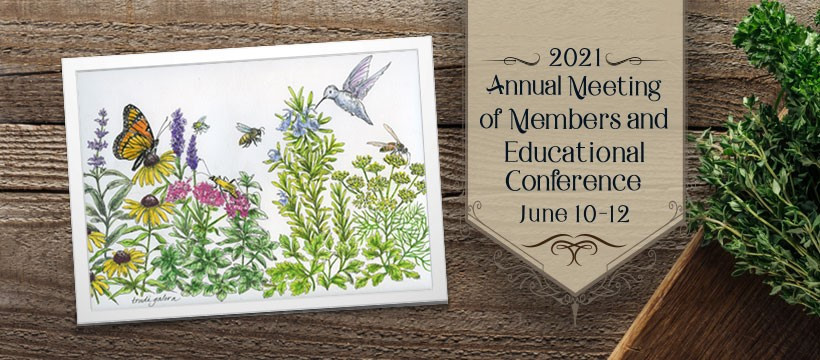
Conference Blog Image 1During our Virtual EdCon, you will have the opportunity to enjoy nine outstanding programs featuring presenters from all parts of the country and beyond. Notable HSA member, Deni Bown, joins us from Spain to kick off the educational programming portion of the conference with a keynote titled “Herbs R Us.” Don Haynie, a returning…

View original post 196 more words

HSA Webinar: Exploration of Spice

The Herb Society of America's avatarThe Herb Society of America Blog

Sponsored by The New York Unit
by Jen Munson, HSA Education Chair

spice imageThe Herb Society embraces spices as herbs, but what distinguishes an herb from a spice? An herb is the leafy part of a plant, whereas a spice is the “hard” part. So, herbs might include oregano, sage, rosemary, sorrel, and basil, to name a few. Spices, on the other hand, include the bark, root, or seed…think of cinnamon, black pepper, cloves, and nutmeg. Notable exceptions to the herb vs. spice conversation are coriander and dill. Coriander and dill seed are the seeds of the cilantro and dill plants, respectively. 
While herbs take the culinary spotlight for delivering immense flavor to our food, spices often get relegated to fall holidays when cinnamon, allspice, and other favorite spices get used. However, spices can be enjoyed year-round to ramp up the flavor in food. To learn more, join us on Tuesday…

View original post 472 more words

Free Webinar: Equity and Wild-Harvested Plants Co-Hosted by the FairWild Foundation – American Botanical Council

Crooked Bear Creek Organic Herbs's avatarCrooked Bear Creek Organic Herbs

We are happy to announce the next webinar in the Sustainable Herbs Program (SHP) Toolkit Webinar Series: Equity and Wild-Harvested Plants: Building Mutually Beneficial Relationships.

This webinar will discuss what it takes to create and maintain mutually beneficial long term trade relations among those wild-harvesting plants for the global supply network, including equitable sharing of the costs of sustainable production. The speakers will talk about what these trade relationships entail, the responsibilities of buyers, and the role of standards and certifications like FairWild.

Speakers include: Marin Anastasov, Sourcing Manager at Pukka Herbs; Peter Rangus, Business Development Manager of Arxfarm, Slovenia; and Bryony Morgan, Executive Officer of the FairWild Foundation. Guest discussants include: Krystyna Swiderska, Principal Researcher in IIED’s Natural Resources Group, and Elizabeth Bennett, Associate Professor of International Affairs, Lewis & Clark College.

Equity and Wild-Harvested Plants: Building Mutually Beneficial Relationships
Thursday, May 20…

View original post 29 more words

HSA Special Program: Foodscaping with Herbs

The Herb Society of America's avatarThe Herb Society of America Blog

by Jen Munson, HSA Education Chair

image-assetFoodscaping–it’s so simplistic. In its most basic form, it is landscaping with an edible twist. It’s the intersection of the purely ornamental garden with the purely edible or vegetable garden. Herbs, vegetables, berry-producing bushes, and fruit trees intertwine with ornamentals to become design elements. 

Join us for Foodscaping with Herbs with bestselling author Brie Arthur on Friday, May 14th from 12pm to 1:30pm ET. Brie will share creative ideas about foodscaping with herbs in this lively, virtual session. Lemongrass suddenly becomes a replacement for other tall grasses, providing beauty and enjoyment. Blend Thai basil with lemon basil for a stunning border. Use chives and garlic for structure and as natural pest deterrents. Discover how to plant beautiful and bountiful designs for year-round use, and learn easy-to-apply strategies to deter browsing mammals, including voles!

Brie Arthur - 2Food in our landscapes is not new. Cottage gardens and the…
View original post 309 more words

Land Healing at the Druid’s Garden: Replanting, Forest Healing, and Refugia Update

Dana's avatarThe Druid's Garden

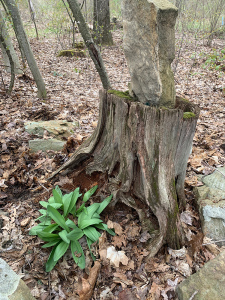
Ramps planted in my Grove of Renewal

Today I wanted to take some time to share some of the updates on the land healing and permaculture practices we are enacting at the Druid’s Garden Homestead.  As I’ve shared in earlier posts, when we purchased this land four years ago, the family who owned it just before us selectively logged about 3 acres, leaving the forest an absolute mess.  The land otherwise was perfect–we have our own spring, a nice sunny area for gardens….and three acres of land in desperate need of healing.  Since land healing is one of my primary forms of spiritual practice, I rolled up my sleeves and purchased the land! As this ongoing land healing project takes shape, I try to check in on the blog every once in a while to share new insights, techniques, and experiences.  Today I want to spend some time offering updates…

View original post 2,117 more words

Pineapple Mint – Herb of the Month

The Herb Society of America's avatarThe Herb Society of America Blog

A Two-Color Mint

by Maryann Readal

The Herb Society of America’s Herb of the Month for May is pineapple mint, Mentha suaveolens ‘Variegata’.

With its lime green leaves edged with a creamy white ruffle, pineapple mint is a perfect plant for the spring garden. This mint is a variegated cultivar of apple mint (Mentha suaveolens). However, its taste and smell does not remind one of apple mint. It has a sharp initial taste that fades into a light fruity flavor. Like other mints, pineapple mint thrives in a moist, rich soil. It does well in sun or in partial shade. In the south, it may need to be grown in partial shade. Also similar to other mints, pineapple mint can be a fast spreader, so containing it in a pot is a good way to control its growth. It is a nice plant to add to a hanging…

View original post 588 more words

Spring Plantain Herbal Infusion | The School of Aromatic Studies — Crooked Bear Creek Organic Herbs

It’s finally spring and all around there are cleavers, violet flowers, chickweed, plantain, and a few other early spring medicinal plants in the area around us. I am sure if you look around your yard or in a field yet to be touched by modern-day‘ weed killers’ you will stumble upon plantain.  Today we… Continue […]

Spring Plantain Herbal Infusion | The School of Aromatic Studies — Crooked Bear Creek Organic Herbs