The Essence of Your Essential Oils

Crooked Bear Creek Organic Herbs's avatarGood Witches Homestead

About Your Essential Oils…

The Essence…

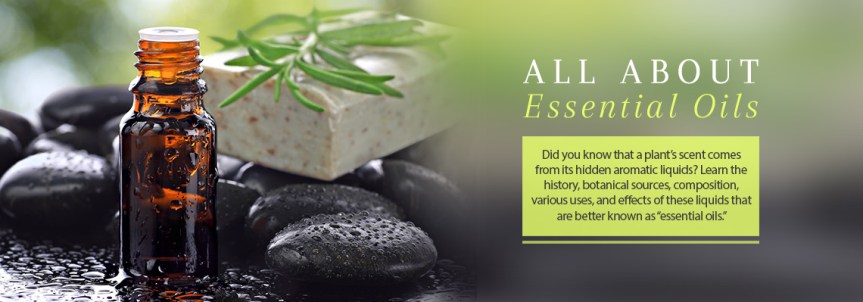
    • Essential oils are organic, volatile, liquids that are secreted by tiny structures in a plant’s various parts such as the seeds, leaves, fruits, flowers, resins, and woods.
    • An essential oil gets its name from the plant from which it is derived.
    • These oils were given the name “essential,” because they were believed to capture a plant’s essence, that is its odor and flavor. They lend plants their distinctive fragrance.
    • Essential oils act like their original plant’s defense mechanism and are more powerful due to the concentration of healing compounds collected in the oil.
    • The specific ratio of the constituents in an essential oil gives it its specific wellness-enhancing and therapeutic qualities.
    • Fragrance oils are artificial and synthetically created by chemists, thus they do not contain the same therapeutic benefits as essential oils.
    • It is best to avoid essential oils under specific circumstances, especially when…

View original post 2,907 more words

The Practice of Aromatic Alchemy

Crooked Bear Creek Organic Herbs's avatarGood Witches Homestead

When we approach an essential oil with concentration and mindfulness it begins to reveal hidden dimensions of beauty, power, and intelligence that are not ordinarily noticed. As we integrate these new perceptions into a greater awareness of our own physiological reactions to the plant’s essence, we begin to understand how we are deeply connected to all of life, specifically to the photosynthetic beings that give us nourishment and medicines. By exploring this biological unity through our own senses, we come to realize directly that the processes of life occurring in and around us are truly the expressions and manifestations of an underlying miraculous and profound consciousness, as so eloquently described by the language of Ayurveda. For that reason, we call this practice “Aromatic Alchemy.”

Shop Plant Therapy Today.

There are two basic ways to use essential oils with meditation practice. The first is to use the oils to enhance meditative states, and the second…

View original post 1,359 more words

WHAT ARE HERBAL TINCTURES?

Crooked Bear Creek Organic Herbs's avatarGood Witches Homestead

January is here with its fresh start, and we are enjoying our snowy Utah landscape, cozy fires and turning inward. This time of year is about resetting, refreshing, finding balance and focusing on self-care and the care of loved ones. This is a wonderful time to start new healthy habits that can stay with you all year long. It’s also a great opportunity to share the beauty and accessibility of herbal tinctures with friends and family, resolving to build good health within your community!

When we think about using herbs in our everyday life, there are a few ways that come to mind; fresh harvest from the garden, herbal infusions (tea) and herbal tinctures. While many of you know what a tincture is and use them often, many folks don’t, and our goal is to get more people comfortable using plant medicines and to be inclusive in our information; we…

View original post 656 more words

Thinking About Planting a Dye Garden?

Crooked Bear Creek Organic Herbs's avatarGood Witches Homestead

Traditional dye plants offer intriguing materials for the gardener who is also a spinner or weaver, or who just wants to experiment with the vast usefulness of the natural world. Nature has its own subtle palette of colors and this little garden represents a few of the dozens of plant dye possibilities, which even include some nuts, fruits, vegetables, and other common foods.

And even if you’re more inclined to pick up some easy powdered dye at the corner store than to make a dye bath from the plants in your garden, you still might appreciate this connection to history and tradition. All of these plants are desirable garden plants.

About Dye Plants

A separate garden isn’t necessary to grow dye plants, as you can incorporate them into an existing flower border or bed (and you might unknowingly be growing dye plants already), but this small corner bed can give…

View original post 901 more words

Already Thinking About Designing A Herb Garden?

Crooked Bear Creek Organic Herbs's avatarGood Witches Homestead

There are many books written on the various types of herb gardens. Invest in at least one good book on growing herbs that includes garden tips, what herbs to use for what purpose, and harvesting guidelines. Several types of gardens with plant suggestions are outlined below. You may notice that some herbs appear in more than one garden type. This is because herbs are versatile and have many uses.

Culinary Herb Gardens

Historically, a culinary garden is planted as close to your kitchen door as possible. This allows you to step outside and harvest the particular herb you need for the dish you are preparing. If you have too much shade, or your hardscaping won’t allow you to plant right outside your door, you can add culinary herbs to the vegetable garden or plant a container garden instead. Culinary gardens are generally governed by what the planter uses the most…

View original post 1,803 more words

MAKING YOUR OWN HERBAL MEDICINE

Crooked Bear Creek Organic Herbs's avatarGood Witches Homestead

Perhaps you have been thinking about making your own herbal medicine, but you have questions. Isn’t it dangerous? Do you need lots of sophisticated equipment? And what about training? You need to be highly skilled to make your own medicines – right?

Actually, making safe and effective herbal medicines at home is an ancient tradition practiced worldwide. In many cultures, everyday ailments have been treated with handmade herbal medications for generations; in fact, only recently have medicines not been made in the home. Are herbal medicines safe? Yes, they are perfectly safe – especially when you prepare and use them as recommended by an experienced herbalist. The recipes and procedures on this website are ones we’ve enjoyed and tested for years, and the herbs suggested are time-honored and effective.

herbal medicine

All it takes to make herbal preparations like salves, creams, and tinctures is a kitchen with common appliances like a blender, measuring spoons, and saucepans…

View original post 633 more words

Why Is Peppermint Like Rudolph the Red-Nosed Reindeer

The Herb Society of America's avatarThe Herb Society of America Blog

By Kathleen M Hale, Western Reserve Herb Society

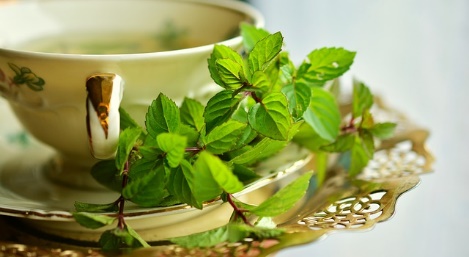
peppermint for XmasMy herb spiral is my mad scientist laboratory.  Just outside my kitchen door, it is the only part of my garden to experience full sun.  The soil is much-amended with compost.  And, that is where I plant essential kitchen herbs and the occasional experiment, like a new herb that bears close watching.

However, over the last few gardening seasons, it has devolved largely into a jungle of mint.  Mystery mint.  Muddle mint.  A promiscuous genetic mix of whatever mint I have ever planted, plus whatever mint blew in on its own. In my defense, that’s what mint does.  And sometimes, the result is something else.

Peppermint (Mentha x piperita) is a hybrid plant, a cross between water mint (Mentha aquatica) and spearmint (Mentha picata).  It was first mistakenly identified by Linnaeus in 1753 as a separate…

View original post 379 more words

HERBS That Will SHAKE the Blues and Make You HAPPY

Eleven Old-Fashioned Potpourri Mixes You Can Make {Lavender Potpouriis}

Crooked Bear Creek Organic Herbs's avatarGood Witches Homestead

Cottage Garden Potpourri

1 cup dried lavender flowers
2 cups dried pink rose petals {preferably from extremely fragrant old Damask, Alba, Centifolia and Moss roses like ‘Gloire de Guilan’, ‘Ispahan’,’Marie Louise’, ‘Petite Lisette’, ‘Quatre Saisons’, ‘The Rose of Kazanlik’, ‘Felicite Parmentier’, ‘Belle Amour’, ‘Fantin Latour’, ‘Old Cabbage Rose’, ‘Mme Louis Leveque’ and ‘Gloire des Mousseaux’}
2 cups dried lavender leaves
1 cup dried clove pink petals
1 cup dried rosemary leaves
2 cups dried rose geranium leaves {choose from ‘Dr. Livingstone’, ‘Dwarf Rose’, ‘Attar of Roses’, ‘Round Leaf Rose’, P. graveolens}
1 cup dried blue delphinium flowers
2 tablespoons orris root chips
1 cup dried mignonette flowers
1 cup dried Westmoreland thyme
1 cup dried wallflowers
1 cup dried violets
1 cup sweet myrtle leaves
1 cup dried jasmine flowers
2 cups dried double hollyhock flowers
20 drops essential oil of lavender
20 drops essential oil of rose geranium

View original post 2,361 more words

Making Potpourris for Yule Celebrations {DIY Recipes Included}

Crooked Bear Creek Organic Herbs's avatarGood Witches Homestead

Potpourris {‘fermented in a pot’.}

The term potpourri (pot-pour-ri) is basically a French expression. When literally translated into English, it denoted ‘fermented in a pot’. And this is what actually makes a damp potpourri – a moist, aromatic, herb-like substance that is fermented, normally with salt and in a pot. The dry potpourri, a companion of moist potpourri, is a blend of dried up aromatic herbs, spices, flowers, and additional bits and pieces. The majority of the dry potpourris do not contain any salt and the method of making them is easy in comparison to the process involved in making moist potpourris.

The ingredients of any potpourri – dry or moist, largely depend on the preference of the individual making it. In fact, one has a great scope of experimenting while making a potpourri. Since the aptitude to distinguish scent as well as the individual reaction to aroma is an…

View original post 3,709 more words