What FDA Dietary Supplement Regulations Mean For Herbalists — Good Witches Homestead

Learn how potential changes to FDA dietary supplement regulations surrounding the use and sale of herbs as dietary supplements may effect herbalists. Source: What FDA Dietary Supplement Regulations Mean For Herbalists

via What FDA Dietary Supplement Regulations Mean For Herbalists — Good Witches Homestead

The Business of Herbalism

Crooked Bear Creek Organic Herbs's avatarGood Witches Homestead

Botanical medicine, the art, and science of collecting, preparing, and utilizing plants for healing, is one of the oldest healing methods in human history. The World Health Organization estimates that 80 percent of the world’s population presently uses herbal medicine for some aspect of primary healthcare.

There is a wide range, however, in what is marketed as herbal medicine. The effectiveness of botanical medicine necessarily depends on the quality and vitality of the original plant material and on the care and attention brought to harvesting, processing, and storage. These issues are crucial to the quality of any product we consume; they are especially important when we use remedies as medicine for healing.

As the natural products industry has grown—it was measured to be $5 billion in the United States alone in 2009—compromises have been made along the chain of production that undermine the integrity and efficacy of the medicines produced…

View original post 1,758 more words

Happy Spring

Crooked Bear Creek Organic Herbs's avatarGood Witches Homestead

Plants are expressing their life force as they emerge from the soil to meet the light.

Aphrodisiac Honey – to give you Spring Fever!
Honey – 1 quart, local raw wildflower or buckwheat honey
Red Roses – 1/2 cup
Orange blossoms – 1/2 cup
Blood Orange peels – 1/4 cup
Tangerine peels – 1/4 cup
Vanilla bean – 1 bean cut open and scraped, include all parts
Dark Cacao powder – 2 tablespoons, sweetened or unsweetened
Cinnamon powder – 1 teaspoon
*Red Pepper flakes – a pinch
*optional
These amounts are approximate suggestions, adjust to suit your taste.
Put all (or some if you can’t get all) of the dried herbs into a quart jar and cover with the honey.
Stir and wait as long as you can! It will be good in a day, and get even better as it ages!
Six weeks? Six months? Your call! You can…
View original post 3,002 more words

Dandelion, A Common Spring Garden Herb

Crooked Bear Creek Organic Herbs's avatarGood Witches Homestead

Taraxacum officinale

Also, Known As:

  • Blow Ball
  • Cankerwort
  • Dandelion
  • Lion’s Tooth
  • Pissabed
  • Priest’s-crown
  • Puff Ball
  • Pu Gong Ying
  • Pu-kung-ying
  • Swine Snout
  • Telltime
  • White Endive
  • Wild Endive

The dandelion is a common garden herb, with easily recognized flowers. During the spring season, the leaves and the root of the dandelion begin to produce mannitol, which is a substance utilized in the treatment of conditions such as hypertension and a weakened heart in continental Europe – where it is often prescribed by herbalist for patients with these conditions. An herbal dandelion tea made using the roots and the leaves of the herb are good to take from about the mid of March to about mid-May in the treatment of such conditions. Prepare the herbal dandelion tea in this way, first, boil a quart of water in a pot, slowly reduce the heat and then add 2 tbsp. of cleaned and chopped fresh…

View original post 2,665 more words

Drinking in Spring: Red Flowering Currant Elixir — Gather Victoria

Right now in my back garden, a Red Flowering Currant Bush (Ribes sanguineum) is in full radiant bloom. Her drooping clusters of “soul-piercing pink flowers” are sending out an entrancing floral, fruity and spicy perfume. Which is probably one reason ethnobotanist and author Abe Lloyd describes the blossoms as “capable of transforming winter sodden pessimists…

via Drinking in Spring: Red Flowering Currant Elixir — Gather Victoria

2019 14th International Herb Symposium — Richo’s Blog

It seems that as one begins to study herbs, the plant’s essence infuses one’s entire life with joy. People become happier, healthier, more in balance and in tune with their inner dreams. The beauty of the herbs work their gentle magic on the heart of the user. — ROSEMARY GLADSTAR This coming June, the 14th…

via 2019 14th International Herb Symposium — Richo’s Blog

Benefits of Organic Blue Tea – Butterfly Pea or Asian Pigeonwing

Crooked Bear Creek Organic Herbs's avatarGood Witches Homestead

Native to South-East Asia and India is the butterfly blue pea, a beautiful cerulean floral creation, which has been an important ingredient of traditional medicine in this part of the world since the era of ancient civilizations. For a flower, to have endured through several centuries is indeed credible and what is more noteworthy is the fact that its importance remains undiminished and unaffected by the passage of time. There could only one explanation for this continued sustenance – the natural presence of curative and therapeutic attributes that easily transit into lukewarm water like its color and can be consumed as such.Blue tea in a white teacup and loose leaf tea surrounding the cup from top view

Amongst the several exotic beverages that are prepared with the butterfly blue pea flowers, one of the simplest as also the most appealing is organic blue tea. In the phrase ‘organic blue tea’, while the word ‘blue’ owes its presence to the color that is typical of the…

View original post 2,439 more words

Benefits of Moringa: A Nutritional Powerhouse

Crooked Bear Creek Organic Herbs's avatarCrooked Bear Creek Organic Herbs

Famously called “the miracle tree” thanks to its exceptional nutritional content and therapeutic potential, moringa more than lives up to its name. Moringa offers numerous health benefits, including protecting against free radicals and promoting a strong immune system in all stages of life. Among other things, moringa supports the heart, brain, and liver, and can even give your sex drive a boost.

You might see it sold as a “superfood” in grocery and health food stores, but moringa is no passing fad. For centuries, people have consumed various parts of the moringa tree for health, energy, and other therapeutic qualities.

Moringa contains an abundance of vitamins and minerals, but, according to scientists, many of moringa’s benefits come from its phytochemicals, which include isothiocyanates, chlorogenic acid, and flavonoids like quercetin.

What Is Moringa?

Did you know that moringa is sometimes called the “tree of life”?

More than a dozen different moringa…

View original post 1,627 more words

WILDCRAFTING: GETTING TO THE ROOT OF OUR ETHOS

Crooked Bear Creek Organic Herbs's avatarGood Witches Homestead

Botany & Wildcrafting Course by Herbal Academy

We use the terms “wildcrafted” and “wild-harvested” when describing products. Specifically, this term refers to the aromatics – the essential oil scent blends that transport you to another place, another time and bring the mountains into your home.

Wildcrafting is not some trendy thing. In fact, humans have been wildcrafting since we could walk. The term, however, is new to our industry and to the vocabulary of consumers. Let’s explore what wildcrafting means to us.

Wildcrafting is the practice of harvesting things in the wild for our use. Whether that comes in the form of decorative art (think bones, branches, grasses), wild foods (think mushrooms, berries, nuts), medicinal herbs, or aromatics, wildcrafting is done for pleasure, necessity and tradition by some peoples and to our great benefit.

In our case, we harvest aromatic ingredients to scent our bath, body and home products. Wildcrafting helps us absorb the beauty of nature…

View original post 663 more words

Spring Herb: Sweet Woodruff {Asperula odorata / Galium odoratum}

Crooked Bear Creek Organic Herbs's avatarGood Witches Homestead

Also, Known As:

  • Master of the Woods
  • Sweet Woodruff
  • Waldmeister
  • Woodruff
  • Woodward

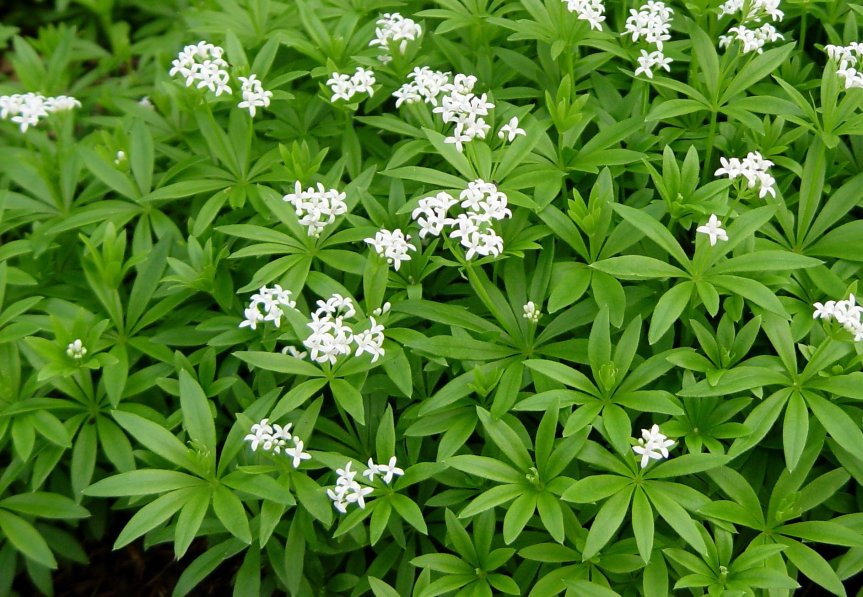
Sweet woodruff (botanical name Asperula odorata) is a perennially growing plant that spreads into clumps reaching a maximum height of 8 inches to 15 inches (20 cm to 38 cm). The flowers produced by sweet woodruff have a sweet hay aroma, which enhances as they dry out. Sweet woodruff is a much loved small plant that is found growing on its own in the forests and also on hedge banks in shaded areas. It is easy to recognize this plant by its little white flowers that bloom on soft stalks during the period between May and June. Sweet woodruff produces slender, vivid green leaves, which grow in whorls resembling stars in succession something similar to cleavers or goose-grass just beneath the flowers. Each whorl of sweet woodruff comprises approximately 8 leaves. However, dissimilar to goose-grass, the stems of…

View original post 1,268 more words