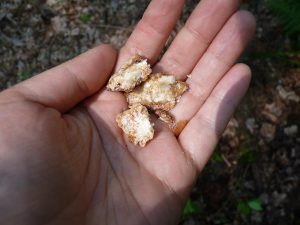
Norway spruce resin, harvested with honor and reciprocity from the land
When I was still quite young, my grandfather used to take me and my cousins into the deep forest behind our house and teach us many things about nature. One of the fun things he taught us, for example, was that you could use spruce gum or white pine resin not only as a chewing gum (something that gave us endless enjoyment) but also to cover over a cut to help heal it or draw out a splinter or stinger. I remember once day we were walking in the woods and I fell on the ground and scraped my knee quite badly on a rock. He went to a nearby spruce tree and got some of the sticky resin, then carefully spread it on my knee and covered it with a tulip poplar leaf. The resin stuck the leaf…
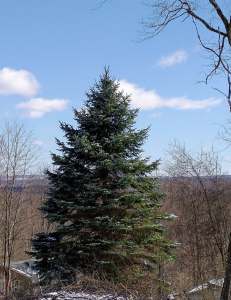
The beautiful blue spruce looking across the landscape on a mountain in Western PA
When I lived in a walkable small town, what drew me every day was a line of beautiful blue spruce trees. Right around the corner from my house, they were on my daily walking commute to work. We used to say hello and do an energy exchange each day. One day that following summer, I watched as the city landscaping people came through and ruthlessly cut them back away from the power lines (they were not growing even close to the lines) and I held space for the trees. Over the next few months, those trees began to heal, and they produced copious amounts of amazing tree resin as a first line of defense. In the years that followed, eventually, the resin grew hard and the trees invited me to harvest small amounts that could be…
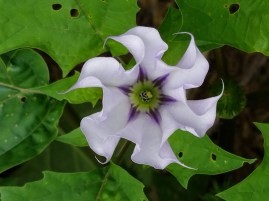
The nightshade family of plants sounds ominous – how could it not with the use of the words night and shade? The official name of this family is Solanaceae, and these plants are characterized by the shape of the flower, which in some cases feature near perfect pentagrams of petals, sepals, and stamens, and in others the petals are fused to form long tubes.
The Solanaceae features nearly 90 genera and 3,000 species, including some of humanity’s most important plants. You may be surprised to learn that many of our everyday foods fall in the nightshade family. These include hot and bell peppers, potatoes, eggplant, and tomatoes. To learn more, join HSA on April 13th at 1pm EDT when National Herb Garden gardener, Erin Holden, joins us for “Shedding Light on the Solanaceae: An Exploration of Our Relationship with Nightshades.”
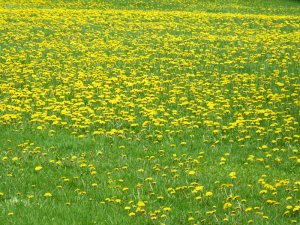
One of the hallmarks of spring is the blooming of the vibrant and colorful dandelion. Emerging as soon as the coldest of the temperatures ease, the blooming of the dandelions affirm that the long, dark winter is indeed over and summer is just around the corner. In today’s post, and in honor of the Spring Equinox and the incredible dandelion, I offer a spring tonic and meditative journey to celebrate the Spring Equinox and learn more about the mysteries of the dandelion. This is one of my monthly AODA-themed posts, so I hope you enjoy it and have a blessed spring equinox!
About the Dandelion
The blooming of the dandelions is a special time of year. For us here in Western PA, dandelions bloom just as the final frosts are easing, and are a sign that we can start planting some of our more tending crops in…
A common harbinger of spring is the showy dandelion with its bright yellow flower that pops against newly greening lawns. With dandelion sightings, so the debate begins between those who want the perfectly manicured lawn and environmentalists who see dandelions as an early food source for pollinators and beneficials. The dazzling dandelion outshines another harbinger of spring, and that is the less-assuming violet.
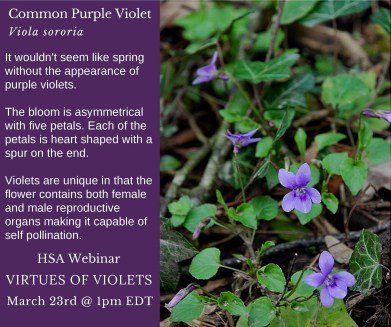
Join HSA onMarch 23rd at 1pm EDT for the “Virtues of Violets.” For guest speaker, Katherine Schlosser, the arrival of violets is one of the happiest times in her garden. While her neighbors are out spraying herbicides on their lawns, you can find her swooning over the tiny botanical treasures, harboring in the joy and knowledge that these plants chose to be present in her yard.
Little do many of us realize that violets have been sought…
Network with other lavender growers from around the world, learn from expert growers and business leaders in the industry, and access a wealth of resources for your business. New growers will appreciate our intensive, two-part “Start a Farm” series, while more experienced growers will benefit from a wide range of topics on production and business. Through the virtual platform, we will be able to provide networking in small groups, topical discussion opportunities, and a unique Exhibitor Hall experience that will allow you to truly assess the resources available to your farm and your business.
Lavender farms, shops, and festivals are popping up all over the country, and so are legions of lavender lovers. The United States Lavender Growers Association (USLGA) is offering enthusiasts the opportunity to indulge in an inspiring and fun day to discover all about lavender. You’ll be able to “tour” scenic lavender fields, gardens, and shops…
As an herbalist I’m interested in many aspects of plants – from their use in herbal and conventional medicine, to lore that informs us how those in the past viewed the plant. I knew that Taxol was a cancer drug made from the yew tree, but when a friend mentioned its poisonous aspects, I decided to dig a bit deeper.
Taxol, the well-known cancer treatment, was first isolated and studied in the early 1960s into the late 1970s, and approved as a cancer drug in the early 1990s. Paclitaxel, the common chemical name of Taxol, was initially extracted from the bark of the Pacific yew (Taxus brevifolia). It was quickly realized that extracting enough paclitaxel to meet demand would wipe out this species in short order, so scientists turned to its faster-growing cousin, the European yew (Taxus baccata), as an alternative. A precursor…
Organic Alcohol Company (OAC) was founded in 2001 to provide high-proof Organic Alcohol with herbalists in mind. Our founder, an herbalist himself, saw the need to provide an alternative to other conventional ethanols on the market. Focusing on high quality and healthful medicines is still something our whole team values. We regularly purchase products from our local herbalist customers, not only support their work, but to support the use of herbal medicines and remedies.
Many of us at OAC have taken to experimenting with OAC alcohol to make various herbal concoctions ourselves. As a novice, I am learning new information all the time. I only recently found out that traditional tinctures may be only called a tincture when alcohol is used as the solvent, or menstruum (another word for solvent).
Each time I learn something new I am more excited to dive deeper into herbal education, and glean knowledge from…
Though winter snows continue to fall here in the Northeast, we are daring to dream of Spring, flowers, and new gardens filled with beauty and fragrant, healing herbs! For more inspiration, exciting workshops, deepening your understanding of the green world, great music and marvelous fun connecting with herbalists around the world ~ head on over to the Florida Herbal Conferencesite! Emily Ruff and her amazing team are making this conference available to EVERYONE with the pay-what-you-are-able registration fee. I so hope you have the time to show up and be a part of this Herbal Celebration!! Enjoy!
Formerly classified as primitive plants in the taxonomic sense and as white vegetables in the culinary sense, fungi have since risen above their woefully outdated labels.
In the ecological context, we’ve learned that mushrooms are anything but primitive. In the nutritional context, we’ve learned that mushrooms are dietary superstars.
Subsequently, it seems that there are just as many reasons to appreciate mushrooms as there are to eat them. Human health, it turns out, is one overlapping reason.
Corroborating this motive is new research published in the journal Food, Science, & Nutrition. In a recent study, researchers concluded that eating a small serving of mushrooms can have measurable and positive effects on human health.
In a brand new video, I discuss four important findings revealed in this study. If you’re interested in learning the ways in which mushrooms can improve your health, check it out!
Like fungi, the American beaver has made considerable progress in recent years. Formerly classified as extirpated in many states, beavers can now be found in urban parks. To read about a morning encounter I had with North America’s largest rodent, check out the latest Instagram post!Click to view post
I was a recent guest on The Mushroom Hour podcast. In the interview, we discuss many topics related to nature connection, supporting land conservation trusts, foraging wild water, and more. You can listen to the interview through one of the following links:
You must be logged in to post a comment.