“The scent of rosemary, the smoke of sage, the whisper of bay — the old language of the earth still speaks if we pause long enough to listen.”
— Beth Schreibman Gehring, from Forage & Gather
Before Halloween, there was Samhain, the ancient Celtic turning of the year when the harvest ended and winter began to breathe at the edges of the fields. It was the time when fires were lit high on the hills to call the sun back, when families gathered to share what they’d grown, and to honor what they’d lost. They believed that on this night, the veil between worlds grew thin so that those who came before might wander close for just a moment, drawn by the scent of wood smoke and the warmth of the hearth.
The herbs of this season are the same ones that have long carried us through the threshold times, the in-between spaces when the light fades and the earth exhales. I think of them as old friends who know how to steady us when the days grow short.
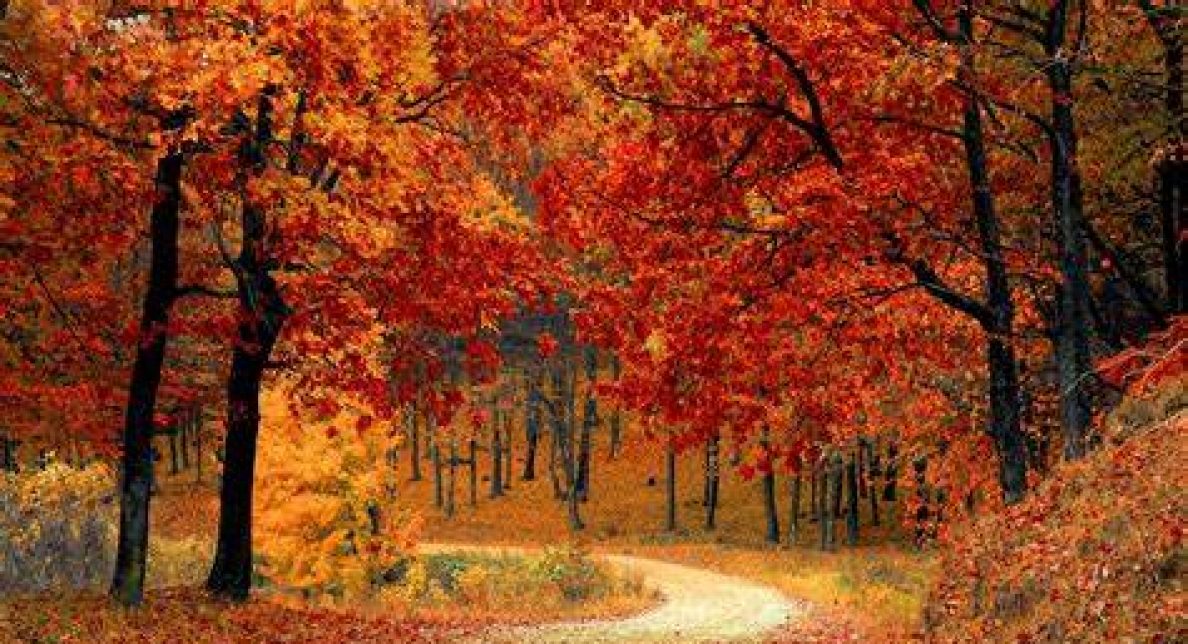
The autumnal equinox, which falls on September the 22nd, is a spoke in the wheel of the year — the brief pause when day and night are perfectly balanced, before the tipping into the darker half of the seasons. In the old calendars, it was a time of harvest and gratitude, a season of preparing pantries and hearts for the coming winter.
Across cultures, this threshold was marked with festivals. The Celts observed Mabon, a harvest rite of thanksgiving where fruits, nuts, squashes, and grains were gathered in and shared with kin and community. Herbs such as sage and thyme flavored the loaves and stews, while rosemary was woven into wreaths to bless the home. It was a season of pausing, giving thanks, and carrying the abundance of the fields inward. Continue Reading …
If you’d like to join us on August 30 or August 31 for an exciting day of ecology and geology, you can register here. These outings are great opportunities to explore beautiful ecosystems while learning tree identification, mushroom identification, forest history, geologic influences on plant communities, and much more.
I’d love to see you there!
And now on to the new video…
Are pawpaws neurotoxic?
It sounds like an absurd question to ask. After all, many people eat these wild fruits every year without experiencing any apparent negative effects.
But let’s consider the following pieces of information:
Studies have linked the consumption of fruits in the Annonaceae family to neurodegeneration in humans. Pawpaw, it turns out, is in the Annonaceae family.
A compound isolated from pawpaws is neurotoxic in laboratory studies.
And a case report from 2020 describes a man who developed a possible variant of a neurodegenerative disorder called progressive supranuclear palsy. The man was known to eat lots of pawpaws.
Of course, none of this information is conclusive, but it does make some people wonder. Are pawpaws neurotoxic? Should we avoid eating them? Or is this issue overhyped?
I’m sharing this recipe for Rose Sugar Navettes (little boats) in honor of the Feast of St. Mary Magdalene on July 22nd. Today these were eaten across Provence, as they have been for several centuries, to commemorate the arrival of the “Three Marys” at Saintes-Maries-de-la-Mer (after the crucifixion) in a divinely guided, rudderless boat. While they are traditionally scented with orange blossom water, I’ve substituted rose water in homage to the Magdalene’s secret flower, not to mention the crunchy sugar topping made with fresh rose petals! Positively redolent with a fragrance so divine, it’s no wonder the rose was the sacred flower of goddesses around the world. That’s the beauty of these simple, rustic cakes; they are suitable for any celebration honoring the divine feminine, whether Christian or pagan.
“Our relation to the natural world takes place in a place.”
The American poet Gary Snyder wrote those words. I don’t think he’s wrong.
Every time we harvest a wild mushroom, we do so in a place. Every time we add a new bird to our life list, we do so in a place. Every time we gather spring water and admire a wooded valley, we do so in a place.
Alvars, bogs, fens, forests, marshes, prairies, savannas, and swamps are all places where life abounds. When we refer to these places specifically as “ecosystems,” a few interesting things happen: We see important connections, we see intricate relationships, and we see where humans fit into the story.
If you want to strengthen your connection to nature by learning these fascinating ecosystems, consider enrolling in Exploring Wild Ecosystems. This is my newest online course designed to improve your ecological literacy.
First, I want to say thank you to everyone who registered for the upcoming Old-Growth Forest Ecology Outing on May 31 and June 1. Both programs are sold out. Stay tuned for more Learn Your Land events this year!
I also want to mention that Exploring Wild Ecosystems will be open for enrollment on Monday, May 12. Thisis my newest online course intentionally designed to improve your practical knowledge of ecology. If you’re looking to develop ecological literacy and become a better naturalist, consider enrolling on Monday, May 12.
And now on to the newest video…
If you’ve spent enough time in tick-prone areas, you’ve probably seen ticks sucking the blood of deer. Logically, it makes sense that deer would at least be carriers of the Lyme disease spirochete. After all, white-footed mice and other mammalian tick hosts can be reservoirs for the bacteria.
But white-tailed deer are different. Their blood isn’t like the blood of other animals.
Scientists have been studying the relationship between deer and Lyme disease for decades. The newest research is quite fascinating, and in a brand-new video, I address some of the misconceptions surrounding the role of deer in transmitting Lyme bacteria.
Do deer ever get Lyme disease? If they don’t, what is it about deer that makes them immune? If deer are immune, why do ecologists still advocate for a reduction in the deer herd as a way to reduce Lyme disease rates in humans?
I’m really excited to announce that I’ll be leading an Old-Growth Forest Ecology Outing in a few weeks, and I’d love for you to join me.
This outing offers a unique in-person opportunity to learn the rich ecology and distinctive features of older forests.
We’ll begin the day by walking through a mature upland hardwood forest and discussing forest ecology. In the afternoon, we will explore a magnificent old-growth conifer forest and discuss old-growth forest dynamics.
In addition to learning key characteristics of mature and old-growth forests, participants will learn tree identification techniques; mushroom ecology and identification; the influence of geology on forest development; ways to interpret forest history; the role of fire as an ecological agent; old-growth forest misconceptions; and much more.
This event will take place in Cook Forest State Park. Located in northwestern Pennsylvania, Cook Forest is home to one of the last remaining old-growth forests in the entire region, currently hosting 11 old-growth areas totaling over 2,300 acres. One of the areas within the park, the Forest Cathedral, contains arguably the finest concentration of old-growth trees in the northeastern United States. This remarkable area is home to dozens of old-growth eastern white pine and hemlock trees, many over 300 years old and towering above 140 feet in height.
This outing is the perfect opportunity to learn, explore, and connect with nature in a truly spectacular setting.
Interested? Here are the details:
When: Saturday May 31, 2025 or Sunday June 1, 2025 (Choose one date; both programs will cover the same material.) Where: Cook Forest State Park, Pennsylvania Time: 10:00 am — 4:00 pm
To maximize your learning experience, space is limited and registration with payment in advance is required to secure your spot.
Years ago, I didn’t know anything about morel mushrooms. I didn’t know what they looked like. I didn’t know how they tasted. I didn’t even know they existed.
Then one day I attended a mushroom program with a local club. Experts in the club introduced me to morels. “Here’s what morels look like,” they said. “You’ll find them all over this park.”
“Great,” I thought to myself. “I now know everything I need to know.”
Except I still hardly knew anything.
Sure, I quickly learned how to identify morels, and I heard a few things about looking in certain areas: “Look for elms, apples, and poplars. Morels really like sweet soil.”
But where would I find elms, apples, and poplars? What the heck is sweet soil?
It soon dawned on me that knowledge of mushrooms wasn’t enough. If I really wanted to improve my skills, I needed to learn tree identification. I needed to learn ecology. I needed to learn geology.
And so I learned as much as I could. Slowly but consistently, I developed a wider set of skills. Eventually, I became a better mushroom hunter.
Today, I interact with wild landscapes a bit differently than I did back then. I now look for connections. I look for relationships. I look at the bigger picture.
All this to say, if you want to find morels this year, I strongly encourage you to learn the connections that bind morels to their ecosystems. In a brand new video, I discuss how to approach morel mushroom hunting through a more holistic lens.
Speaking of learning, consider enrolling in Foraging Wild Mushrooms to improve your foraging skills.
I created this 4-season online course to help you become a successful mushroom hunter. Included in this course are instructional videos on mushroom ecology, mushroom biology, common edible mushrooms, medicinal mushrooms, poisonous mushrooms, cooking techniques, and medicine-making.


You must be logged in to post a comment.