Glimpse into Horse Slaughter – Eagle Pass, Texas (raw video)


“Quietly and behind the scenes the Equine Welfare Alliance and Wild Horse Freedom Federation have been watching, taking note and documenting more than just the unnecessary roundups of wild horses and burros by the BLM; but also paying attention to where tens of thousands of American horses and donkeys (domestic and wild) disappear to without even so much as a final wave goodbye. Horse Slaughter has not been banned in the USA instead it has only moved across our borders and both our beloved domestic equines and our protected wild horses and burros continue to end up on the dinner plates of foreigners across the globe. Below is simply raw video of what the horses go through as they cross the border from Texas to Mexico in the final hours of their precious lives. No commentary, no music, no opinions as the footage speaks for itself. We have simply released it to emphasis the need to act, of things to come and to remind those who participate in this predatory blood business that we are watching and taking names. Yes, we are paying attention as the victims cannot speak for themselves but we can. Let the kill buyer beware. Keep the faith, my friends. We are paying attention.” ~ R.T.

via Glimpse into Horse Slaughter – Eagle Pass, Texas (raw video) — Straight from the Horse’s Heart

Video supplied by investigators from EWA and WHFF

Astrorisa Moon Forecaster ~ The Virgo Full Moon

By Iya Olusoga ~Bisi Ade

Welcome to the full moon of Virgo, and its vibrations spanning 29 days, March 12th – April 10th.
Themes: Finances, actions, plans, business, burning the candle at both ends, treading water, feeling your way, attention to detail, and overworked vs.rest.
This Virgo moon time challenges our collective consciousness to determine how best to maneuver through our experiences and to know when to rest or to push forward. Whatever the case maybe, we’ll have to be careful of over taxing our resources (funds, health, time, etc.) With the sun in Pisces and moon in Virgo (water, mind, and earth), we can feel as though we’re dredging through a marsh. As we’re between solid ground and a large body of water. Which way should we go? To the left near solid ground or to the right near open water? Do we want to walk or swim? Which avenue and experience will get us there quicker? Which ever direction we take, will determine our experiences and impact our destiny.

Feel Good Sunday: Icy Roads Leave Semi Driver Stranded Overnight. But When He Looks out Window, He Spots Horse…

…warming hearts across the world.

Canadian winters can be harsh. Motorists can easily find themselves stranded on roadways, because of heavy snow and icy conditions. That’s exactly what happened to semi-truck driver Peter Douglas.

The Winnipeg driver was captured by highway cameras after getting stuck on highway 10 south of Brandon. Looking at the footage, it’s easy to see why; conditions were fierce.

He was forced to sleep in his cab overnight, hoping the weather would clear up by next morning. Instead, he woke up to find someone quite surprising knocking on his door.

Eighteen-year-old Eileen Eagle Bears was watching the traffic cams with her mother, when they spotted the stranded truck driver just over 3 miles from their home. She told herself if he was still there when she looked again in the morning, she wanted to help.

The next morning, Douglas was still stuck, so the teen got her horse, Mr. Smudge, and headed Douglas’ direction. The trip would be roughly one hour in the cold.

“There was a lot of ice on the road from the rain that we had got and drifts were bad in a few places,” Eagle Bears told CBC News.

Imagine Douglas’ surprise when he awoke to see a young woman, her horse, and a thermos filled with hot coffee outside his window. A gesture those same highway cameras caught on video.

“She had to walk that horse half a mile up that hill and half a mile down because it was so icy. Blew me away,” said Douglas to CTV News. “She said she saw me on the camera. Her and her family were watching.”

Douglas was so grateful for her kind gesture, and she promised him that if he were still stuck there later in the day, she would return with a hot meal. “He was just really glad that someone knew that he was there and that someone cared,” said Eagle Bears.

She did, in fact, return later that evening with another thermos. This time it was filled with stew and potatoes. She also brought him water.

“I thought he would be getting pretty hungry, and that’s not a good feeling, I just put on extra clothes and did what I promised I would,” Eagle Bears stated. What an amazing young woman!

Douglas was stuck there for a total of 28 hours before finally being towed and able to get safely back on the road to finish his work. He still has Eagle Bears thermoses and plans to return them on his next run through the area.

Since hearing about her heroic story, Eagle Bears has been inundated with support and appreciation from strangers. “It is overwhelming. I had gotten back and my mom had posted just a post on Facebook,” she said.

“And there was a few likes at the beginning, but we went back and there was just more and more, and it just totally blew up,” said the teen. That’s not hard to understand, because hers was an act of kindness in the cold that is warming hearts across the world.

Source: Icy Roads Leave Semi Driver Stranded Overnight. But When He Looks out Window, He Spots Horse…

Slowing Down the Druid Way, Part IV: Slow Movements and Slow Spirituality | The Druid’s Garden

When I lived in Michigan, each Christmas, a local church just down the road from me put on a drive-by nativity scene. Cars full of people would line up for over half a mile and drive around this circular loop surrounding the church, where church members dressed up and enacted various kinds of nativity scenes.  I’m sure from the perspective of the church (who, clearly, invested a lot of time and resources, taking weeks to build the sets in the bitter cold in the time leading up to the event), it was a way to reach people who might otherwise not come through the church doors.  This same church also offered “speedy sermons” and other “quick” ways of getting busy people in the door. The idea behind these different initiatives was reaching out to people who were otherwise too busy to come to church–a reasonable and rather creative thing to do, given the time crunch everyone seems to be in these days. But for all that was gained (new members, new donations, etc) what was lost in the process of converting religion into a drive-through experience? Of course, just like the burger at McDonald’s vs. the burger you grill at home with time and care, there are likely some big differences not only in taste but also in presentation, nutrition, and energy.


In my last three posts in “Slowing Down the Druid Way”, we explored the history of time and our relationship to our working hours, and how we might begin to honor our time more fully.  This directly leads me to the topic of my final post on time and work: looking at the slow movements as a way of slowing down, making slowing down a conscious choice, and embracing leisure time.


The “Slow” Movements

The term “slow” has been increasingly used to describe many of the movements connected to sustainable living: you might have heard of slow food (as opposed to fast food or industrialized food) or slow money (in terms of investing, saving, and spending and in opposition to current derivatives/investment market).  We now also have slow schools, slow books, and even (in my own field) discussion of slow writing! The slow movement has, in fact, been around since the 1980’s; it was started by Carlo Petrini, who protested the opening of the “fast” food joint, McDonalds, in Rome, Italy. Since then, the movement has spread and deepened, connecting now to all aspects of life: travel, food, parenting, education, working, gardening, and more. Of course, you won’t see any discussion of this movement in mainstream culture–mainstream culture, here in the US, is focused on the idea that more and faster is better, and that kind of thinking takes some time to overcome.


A good slowing down spot!

The slow movements suggest that we are all the victims of “time poverty” and the slow movements are deliberate attempts by people to live at a reasonable pace (rather than a frantic one).  But these movements are more than just about slowing down–they recognize inherently that the faster we move, the fewer connections we make: with ourselves, with each other, with our creative gifts, and with the world as a whole.  So let’s now explore some of these slow movements and what they provide.


Nature Spirituality and Slow Spirituality

I’m going to start by introducing my own kind of “slow” movement: slow spirituality.  Cultivating a deeper relationship with time is certainly a principle that seems inherent in the druid traditions and in related nature-spiritual traditions. Anyone following the wheel of the year is certainly concerned a tremendous amount with time: the eight holidays on the wheel of the year are all about timing and the sun and it’s slow movement across the sky.  The phases of the moon reflect this on a monthly cycle. We focus on the interplay of light and dark, the slow changing of the seasons, the minute changes from day to day of weather patterns.  All of this takes observation and interaction with nature and a lot of time dedicated to understanding this larger cycle of the seasons.  Sure, there are ways of going about these practices that are “fast”, but moving fast means you miss most of the important pieces. In the AODA, for example, we ask that all members spend weekly time in nature, daily time in meditation, and time just observing and interacting with the world. This time is critical–and it is through these activities that deepest understandings are often cultivated.


In fact, I think part of the reason that so many people are drawn to meditation, ritual and other druid practices is that it offers a way to slow down and change pace. The more time you spend with these practices, the deeper they will go and the richer the rewards will be.  There is much room for exploration in linking the slow movements to the druid tradition and key practices within it. […]

Rest of the story at its Source: Slowing Down the Druid Way, Part IV: Slow Movements and Slow Spirituality | The Druid’s Garden

BLM Set to Wage War on Wyoming’s Wild Horses, AGAIN! | Straight from the Horse’s Heart

Sources: Multiple

“Using poor science and bad numbers the BLM continues to ensure that the wild horses of Wyoming will have no families, freedom or future.  Unedited, propaganda article posted below. (Herds do not double in size every four years – Fake News)” ~ R.T.

Adobe Town ~ photo by Carol Walker

ROCK SPRINGS, Wyo.  — The Bureau of Land Management is proposing to remove about 1,000 wild horses from three herd management areas, including Adobe Town, in southwest Wyoming in order to meet population level objectives.

Kimberlee Foster, field manager for the Rock Springs BLM field office, said there are too many horses on the land, and rules require them to remove horses when they are above management levels.

Foster said the gathered horses will go to the Rock Springs Holding Facility where they will be put up for adoption.

The BLM plans to remove 210 horses from Adobe Town, 584 from Salt Wells Creek and 235 from Great Divide Basin.

There are many reasons the BLM must carefully maintain certain population ranges for wild horses in Wyoming. For one, there are no natural predators for horses in the state and equines can be prodigious breeders.

“Typically a herd management area can double in size every four or five years,” Foster told the Rawlins Daily Times (http://bit.ly/2mayVKA ).

If wild horse populations become too large, the natural forage on the land won’t be able to support them.

Herd management is based around the usage of the land, Foster said, as well as the amount of available forage for the animals. Additionally, the BLM has agreed to act to reduce herd sizes should population levels reach a certain point.

The BLM is accepting public comment until April 4 on its horse roundup plan.

Source: BLM Set to Wage War on Wyoming’s Wild Horses, AGAIN! | Straight from the Horse’s Heart

Yellowstone & Montana Can Stop the Bison Slaughter Today | The Buffalo Field Campaign

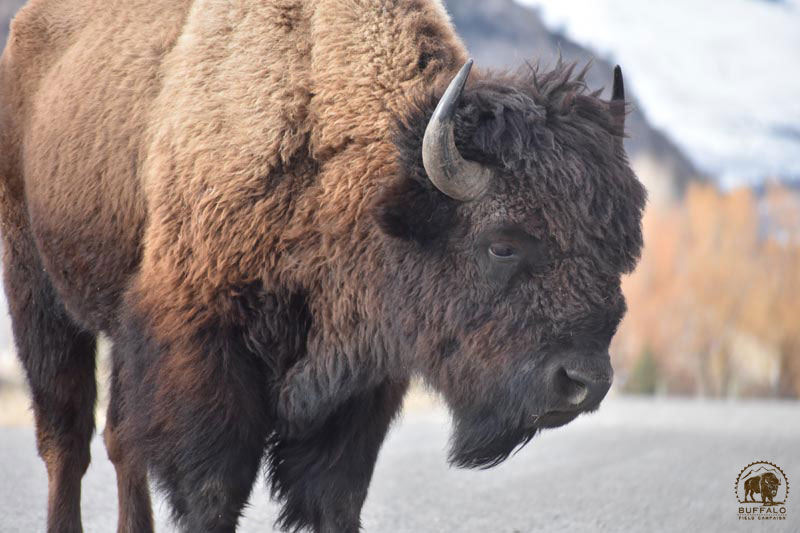
This winter’s Yellowstone buffalo death toll has breached one thousand, and continues to climb. Counting the few hundred still trapped inside Yellowstone’s Stephens Creek capture facility and the continued hunting pressures just outside the park, the government agencies will likely surpass their goal of killing 1,300 ecologically extinct wild, migratory buffalo. This does not even include the significant number of buffalo deaths due natural causes from the severe winter. Hundreds of thousands of people are seeing and sharing BFC’s stories and images of Yellowstone’s shameful crimes against wild buffalo. These actions are being conducted with your tax dollars on behalf of Montana’s livestock industry.

This morning BFC will be attending a second “media tour” inside the trap. The atrocious actions we’re witnessing and documenting continue despite thousands, if not tens of thousands, of calls, emails, and letters to Yellowstone Superintendent Dan Wenk and Montana Governor Steve Bullock. Most people who reach these decision-makers are meeting with frustration; being told lies in condescending tones by the governor’s office that Yellowstone is responsible for the slaughter while Yellowstone officials say that it’s all Montana’s fault and there is nothing they can do to stop it. As the number of slaughtered buffalo climbs due to their actions, these same decision-makers toss up their hands in mock helplessness. However, they are both responsible and they can both take immediate and necessary actions today to end this senseless war against wild buffalo. These decision-makers work collaboratively within the Interagency Bison Management Plan to devise and carry out agreed upon management schemes, and their deceptive, pass-the-buck strategy of shirking of responsibility is pushing the country’s last continuously wild buffalo herds towards the brink of extinction.

Please continue to make these calls! If you are outside of the U.S., send letters and emails. Be relentless and don’t accept their excuses.
Phone calls are the most effective because they cannot be ignored.

  • Yellowstone Superintendent Dan Wenk, #307-344-2002
  • Montana Governor Steve Bullock #406-444-3111

Here are some important points to consider – No agency’s hands are tied!

Read the article in its entirety at its Source: The Buffalo Field Campaign

Healing & Balancing Your Chakras – Good Witches Homestead

As a herbalist, I prescribe herbal potions and essential oils to my clients as a complement to our healing sessions and an alternative to medication. Over the years, I’ve watched herbs help treat everything from PTSD to depression, anxiety, chronic pain, migraines, obesity, rage, and more.

After about five years of experience with prescribing herbs, I started learning about medicinal-grade essential oils—what a game changer. I now use essential oils in every acupuncture session, and regularly prescribe them for home care. They’re like topical herbs—distilled from the same plants I’ve been studying and prescribing as herbal remedy tinctures for years. The skin is our largest organ, and our body literally ingests much of what we douse it with. Essential oils work with our fascia (which lies just beneath the skin), so the healing properties of the plants are transmitted throughout our entire body. It’s such a sensual, luxurious way to ingest medicine.

Essential oils are particularly great for treating common chakra imbalances—more below, along with the most effective oils that I frequently rely on:

FIRST CHAKRA: ROOT — “I AM” — RED

Our first chakra is our most primal energy vortex of psychic information. It’s the foundation of our chakra system. This red spinning disc resides at the base of our spine and manages our most basic needs: safety, security, trust, fear, pooping, survival, procreation. Located on our lower backs, it governs this area, the large intestine, urinary bladder, and kidneys. […]

Read about all your Chakras at the Source: Healing & Balancing Your Chakras – Good Witches Homestead

Ouroboros ~ secretsoftheserpent

serpent-eats-own-tail

The Ouroboros is an ancient symbol of a serpent or dragon eating it’s own tail. It is usually in a circle or lemniscate. I love this symbol. It is my favorite symbol. The Ouroboros can be found in just about every ancient civilization. The word ouroboros is greek and it means ‘tail eater’ or ‘tail devourer’. This symbol shows just how much knowledge has been lost about the ancients. This symbol is basically showing you the secret to your world.

There are several guesses as to the meaning of the Ouroboros, but there is only one meaning to this symbol. I’ve seen that it symbolizes death and rebirth, creation from destruction, life out of death, infinity, circle of life, the milky way, the sun and the alchemical symbol of mercury. I can understand why all these have been given for the meaning of the Ouroboros, but just like so many other things these are only a small piece of the truth.

To really understand the Ouroboros you have to know the true meaning of the serpent or dragon. Most people believe the serpent or snake is a symbol of evil. This may come as a surprise to some of you, but the serpent means wisdom or a wise person. If the serpent was wise, who was Eve talking to in the garden? For the answer to that see Lemurian Magic. In many cultures the snake was feminine. This was not the actual female. This was the feminine side of the mind or the subconscious. The subconscious is where the true wisdom comes from. The dragon symbolizes someone who has mastered all four elements of consciousness(see Dragon). So the first keys to solving this puzzle is that the Ouroboros has to do with wisdom and consciousness. […]

Read the entirety of “Ouroboros at the Source: secretsoftheserpent, Myths and Magic, Ouroboros

House Leadership Renews Push to Reinstate Horse Slaughter in US | Straight from the Horse’s Heart

Source: Equine Welfare Alliance PR

Chicago (EWA)– EWA has learned that Mr. Douglas A. Glenn, Director, Office of Financial Management, Department of the Interior, has notified his department in a letter dated 22 February, that the GAO (Government Accountability Office) has been tasked to study any changes in the state of equine welfare in the US from 2010 to the present.

The request to the GAO was made by the Chair of the House Agriculture Committee and the Chair of House Appropriations Committee, Subcommittee on Agriculture, Rural Development, Food and Drug Administration.

Attached to the letter was a statement of the scope of the work to be performed, including addressing four questions:

  1. What is known about changes and trends in the U.S. horse market since 2010?
  2. What impact, if any, has the prohibition on USDA funding for horse slaughter inspection had on horse welfare and on states, local governments and Indian tribes?
  3. What is known about the number of abandoned and unwanted horses in the U.S. and associated environmental impacts?
  4. What is the current capacity of animal welfare organizations and shelters to accept and care for unwanted and abandoned horses?

Source: House Leadership Renews Push to Reinstate Horse Slaughter in US | Straight from the Horse’s Heart

Animal Protection Groups Commend Bill to Ban Dog and Cat Meat in the United States | Straight from the Horse’s Heart

Source: International Humane Society PR

“This story walks hand-in-hand with our discussion on Wild Horse and Burro Radio last night” ~ R.T.

Bill also shines a light on brutal trade in China and South Korea

Little Ricky, a dog rescued from the Yulin dog meat festival in 2015, plays in U.S. Rep. Alcee Hastings’ office in Washington, DC. Kevin Wolf/AP Images for HSI

U.S. Representatives Alcee L. Hastings, D-Fla., Vern Buchanan, R-Fla., Dave Trott, R-Mich. and Brendan Boyle, D-Pa., have introduced legislation to ban the dog and cat meat trade in the United States, earning applause from Humane Society International, The Humane Society of the United States and the Humane Society Legislative Fund. The bill, the Dog and Cat Meat Prohibition Act of 2017, would amend the U.S Animal Welfare Act to prohibit the slaughter and trade of dogs and cats for human consumption, and would provide penalties for individuals involved in the dog or cat meat trade.

HSI is one of the leading organizations campaigning across Asia to end the dog meat trade that sees around 30 million dogs a year killed for human consumption. It’s a trade that subjects dogs to horrifying treatment and raises serious human health concerns for traders and consumers alike, all for a type of meat that relatively few people eat on a regular basis. Similar problems face an untold number of cats. In the United States, the dog and cat meat industry is limited. The new bill will prevent domestic trade and imports, and serve as an important symbol of unity with countries and regions such as Thailand, Hong Kong, the Philippines and Taiwan that have dog meat bans in place.  […]

The entire article at its Source: Animal Protection Groups Commend Bill to Ban Dog and Cat Meat in the United States | Straight from the Horse’s Heart