Crystal of the Week: Blue Kyanite – Holistic Experiment

Source: Crystal of the Week: Blue Kyanite – Holistic Experiment

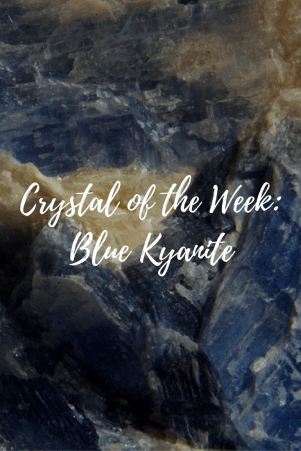
Blue Kyanite is the most well-known color of Kyanite and it’s often used for its ability to align and open all of the chakras. It’s an excellent choice for healers because it places a shield around the healer, conducts healing energy and grounds it.

It’s a high vibration stone with strong crystal energy that will open the throat chakra and promote better communication and self-expression as well as assist the user to speak their personal truth.

Since this stone is so powerful that it does not need to be cleansed. Someone with a lower vibration may feel horrible side-effects from Kyanite because of its ability to raise the vibrations of the wearer to reach a higher state of consciousness.

Physical, Emotional and Spiritual Purposes

On a physical level, Blue Kyanite can be used for people who suffer from speech impediments as well as issues with their bone marrow. It promotes mobility in the body and helps with any sort of tissue healing.

This stone can also be used for people who have suffered from strokes, issues with the nervous system, the brain, the thyroid, and any issue that has to do with the throat. It’s also a natural pain reliever and lowers blood pressure and aids in back problems.

Blue Kyanite is great for patients who have had accidents or surgery on any part of the body. It’s also great for people who are low in energy and can assist trauma and replenish one’s energy.

On an emotional level, this stone can be used to promote a healthy communication so it’s great for people who are afraid of public speaking. It also aids tension and promotes tranquility as well as clears and calms the user in preparation for meditation.

The best way to use this stone is during meditation because it allows one to make contact with spiritual beings and can help develop one’s intuition. Blue Kyanite also facilitates meditation and help release fear from both oneself and those the user works with.

On a spiritual level, Blue Kyanite helps clear the meridians and pathways and will restore the flow of energy to the chakras. It also helps with astral traveling, out-of-body experiences, promotes one’s psychic abilities, and makes visualizations stronger.

You can also put Blue Kyanite under the pillow to promote lucid dreams.

Disclaimer: Crystal of the Week are a spiritual support to healing and are not prescription or healthcare information.

Ozark Encyclopedia – C – Cocklebur – Mountain Man Traditional Healing

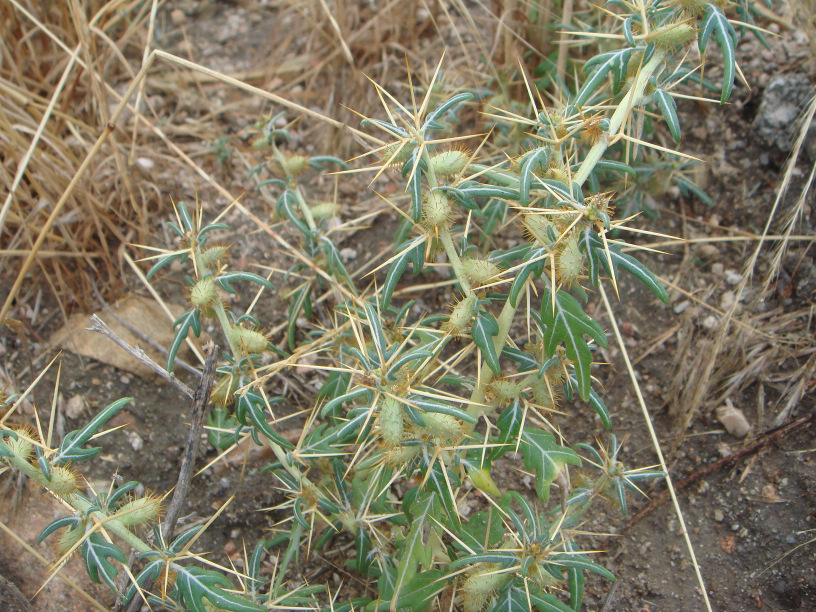
Cocklebur – Xanthium spinosum, X. strumarium

Parts used: burrs

Traditional uses: Infusion of root given to induce vomiting. Roots chewed for rattlesnake bite. Plant used for the kidneys. Decoction of seeds used for bladder ailments.

Tea used for rheumatism – “A tea made by boiling cockleburs in water is another remedy for rheumatism.” ~Randolph OMF 108

Used in love divinations – “Another girl picks a cocklebur, names it for her lover, and throws it against her skirt; if it sticks, she knows that her lover is true to her, if it doesn’t stick she thinks he is false.” ~Randolph OMF 172

Tea made for cold – “We always drank cocklebur tea for a cold. Dried burs, boil them in water, put a little sugar in it, strain them and drink it.” ~Carter and Krause HRIO

Used for coughs – “Boil ripe cuckleburrs. Make a tea out of the juice. Add enough sugar to make a syrup.” ~Parler FBA II 1970

For gall bladder – “Drink a quart of cockle-burr…tea each day for gall-bladder trouble.” ~Parler FBA II 2289

For kidney stones – “Take dry kickleburrs and place them in a stone jar. Then fill the jar with water (hot but not boiling) and set on stove next to fire. Let them simmer for 2 to 3 hours and then drain juice into jug. Take 1 tablespoon full 3 times per day for kidney stones.” ~Parler FBA III 2592

For kidney health – “Cucklebur…tea is good for kidneys.” ~Parler FBA III 2593

With alcohol and glycerin for tuberculosis – “To cure tuberculosis take dry cockleburrs, alcohol, and glycerin. Cook down and drink the water of it. You will spit up the T.B.” ~Parler FBA III 3474


Carter, Kay & Bonnie Krause Home Remedies of the Illinois Ozarks (HRIO)

Moerman, Daniel E. Native American Ethnobotany (NAE)

Parler, Mary Celestia Folk Beliefs from Arkansas (FBA)

Randolph, Vance Ozark Magic and Folklore (OMF)

Source: Ozark Encyclopedia – C – Cocklebur – Mountain Man Traditional Healing

A Mustang murder mystery in northern Nevada – Tuesday’s Horse

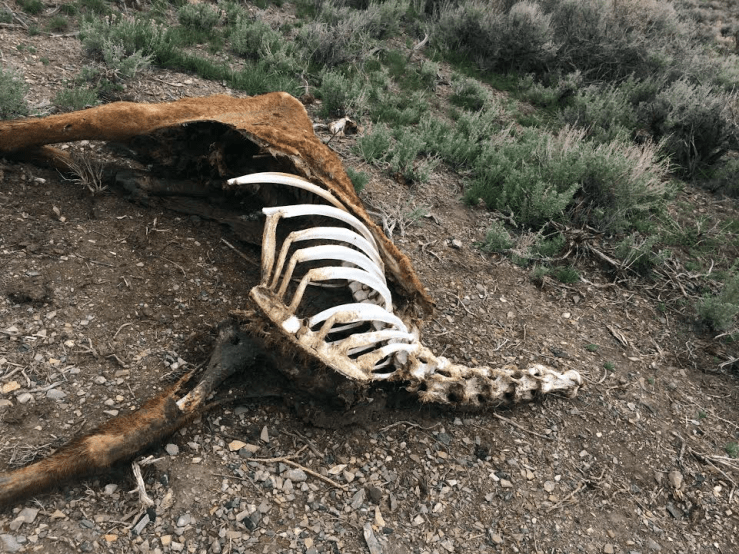
WILD HORSES NEVADA (Warning: Graphic Image) — On May 10, 2017, Tuesday’s Horse received an email from the Professor and Chair of the Geological and Environmental Sciences Department of a California University stating he was leading a student field trip in Northumberland Canyon south of Austin, Nevada the previous weekend and they discovered the following:

We came across six horse carcasses, all missing their heads. This was very disturbing to the students and I am trying to figure out what happened. Was there planned culling of wild horses? Why would the heads be removed?

The headless remains of a Mustang found in northern Nevada taken by a student while on a geological field trip in the Austin area. May 2017.

The Professor had not been able to reach the Bureau of Land Management (BLM) so reached out to us for assistance.

At long last I tracked down the right BLM office thanks to the coordinates the Professor provided.

After several email exchanges and a few phone calls with a BLM agent in that office, we made little progress figuring out what had happened to these Mustangs or why.

Here is a summary of those exchanges:

• It is highly likely these Mustangs were shot and killed. Although rare in the area, other wild horses have been shot and killed and left on the side of the road in much the same manner.

• The heads were either removed by trophy hunters or for use in local rituals. It is also possible someone discovered the carcasses and removed the skulls much later and cleaned them to use as relics. The heads are not missing because of scavengers.

• Due to the vastness and remoteness of the area it is close to impossible to find any witnesses. Investigators often have to rely on hearsay such as “someone bragging” about the kill.

My BLM contact agreed to talk with other field agents plus get in touch with the U.S. Forestry Service for their input.

A few days later my BLM contact reconnected to tell me that wild horses killed in suspicious circumstances do fall under the jurisdiction of the U.S. Forestry Service and they would determine whether or not to investigate.

An agent of the U.S. Forestry Service contacted me with the following:

• They had discovered carcasses like these the previous year, perhaps even as early as Spring 2016, and they were “probably the same ones”.

• Due to the condition of the carcasses and the amount of time elapsed they have little to nothing to go on and did not feel it warranted the time and expense of an investigation. No one offered an explanation why they took no action at the time they first found the dead horses other than “it’s too hard”.

• They have come across dead Mustangs before where they suspected foul play and occasionally seen heads removed like this.

• The missing heads were not the result of scavenging.

It was never quite clear to me when coming across something like this, how they determine when it is worth investigating and when it is not.

The BLM and USFS were not the only ones. I also contacted a noted investigative reporter who also declined.

So Now What?

The agents I dealt with were responsive. Perhaps it ended the way it did with me at the direction of higher ups.

Yet wait a minute. Any way you look at it, murdering a Mustang is a federal crime. Murdering six. Leaving the six dead horses at the side of the same road. Removing their heads. Surely that warrants at least some looking into.

Something must be done or these murders, even if only committed sporadically, will continue.

I offered a reward for the arrest and conviction of these Mustang Murderers. The response?

I appreciate knowing about the reward and I will see how that might be promoted.

End of story? I thought so until a few minutes ago. We’ll let you know. Stay tuned.

Source: A Mustang murder mystery in northern Nevada – Tuesday’s Horse

Bobinsana ~ Good Witches Homestead

Source: Bobinsana~ From Help Healing Grief, Heartbreak and Pain to Shamanic Lucid Dreaming

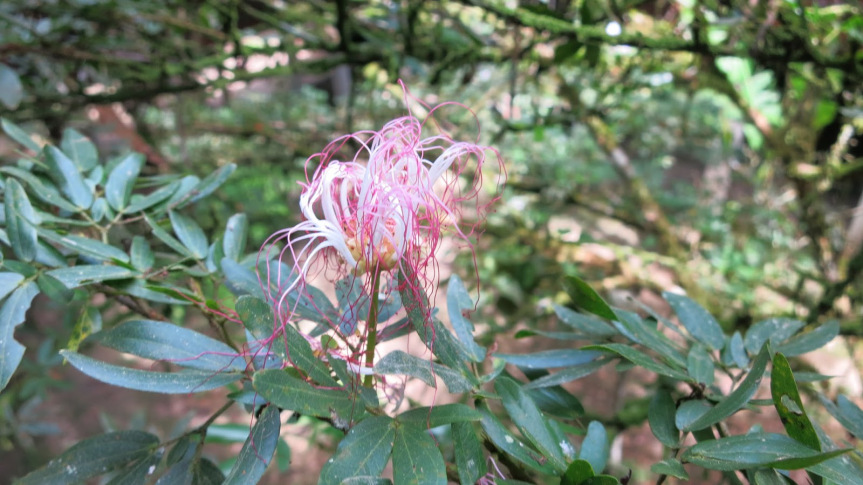
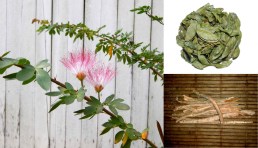
A relative of the mimosa tree, Bobinsana (Calliandra Angustifolia) is a water loving plant that belongs to the Pea family (Leguminosae). It grows around 4-6 meters high and is usually found alongside, rivers, streams, and bodies of water in the Amazon basin. It is found in regions of Ecuador, Colombia, Peru, Brazil and Bolivia. It produces an abundance of gorgeous pink to reddish powder puff-like flowers.

Traditionally bobinsana is taken by tincture in an alcohol made from cane sugar called aguardiente or a strong tea (decoction). All parts of the plant are used for healing. The roots, bark, leaves and flowers.

Bobinsana is a well-known “plant teacher” sometimes used in conjunction with a psychedelic amazonian brew called “Ayahuasca”. While bobinsana alone is not hallucinogenic, it is considered a plant teacher or master plant and is sometimes added to ayahuasca recipes to help the shaman connect to and learn from the plants. The plant is typically taken on a special diet or during these shamanic ceremonies for opening and healing the heart, to enhance empathy, to deepen one’s connection to nature and provide grounding. According to many Ayahuasca curenderos “doctorcita bobinsana” as they say, is a very gentle healing plant spirit increasing clarity, focus, compassion and for addressing heartbreak, grief, and loss.

“According to many Ayahuasca curenderos “doctorcita bobinsana” as they say, is a very gentle healing plant spirit increasing clarity, focus, compassion and for addressing heartbreak, grief, and loss.

Many times in our lives we have experienced forms of heartbreak, sadness, sudden loss, emotional struggles. It’s human nature to experience these feelings. And it’s good to know that you can have support during those troubling times. This plant is just one of many that can hold our hand along the way, while we process our feelings and life experiences. The plant is also becoming very well known for producing profound lucid dreaming experiences, colorful shamanic visionary type dreams in which new insights about one’s life are found and healing can occur.

“profound lucid dreaming experiences, colorful shamanic visionary type dreams in which new insights about one’s life are found and healing can occur.”

Among other uses, the Shipibo Conibo people of the Ucayali area in Peru and other Amazonian indigenous tribes use the sacred plant to treat arthritis, bone pain, rheumatism, uterine cancer, edema, nasal congestion, fevers, colds, inflammation, and to purify the blood. They also bathe in the freshly grated bark to improve dexterity, increase resistance to illnesses and protect against colds and chills.

Now that we see how useful this plant can be. It’s a good thing to share the information and see if it’s the right herb for you, your family or your friends. Whether you or someone you know is experiencing grief, loss, pain or intense sadness, this sacred plant can be a gentle ally during the healing process. AND If you’re interested in having enhanced lucid dreams then this special plant is right up your ally! People can also use this for deepening their shamanic, meditation, dreaming or yogic practices. Which makes this herb one of a kind!

“People can also use this for deepening their shamanic, meditation, dreaming or yogic practices.”

As always I love to share the joy of being a herbalist and since this plant is very useful and quite rare it’s hard to find a good place to get it. So I’ve made a very potent 1:2 liquid extract tincture of ethically wild-harvested bark and leaves made with organic alcohol, organic honey, and Colorado mountain spring water. You can find it here>>> Bobinsana Tincture

Disclaimer~ Bobinsana is traditionally used as a contraceptive in Peru. While there is no research to confirm this possible action, those seeking to get pregnant should avoid this plant. Should not be used during pregnancy or lactation. If you take pharmaceutical drugs or have a medical condition please consult your doctor before using. Make sure to always do your research and talk with your medical advisor before adding any herbs to your diet. This post’s information is not approved by the FDA to treat, diagnose, prevent or cure any diseases. The information presented in this post is provided for informational purposes only.

Spicebush – Good Witches Homestead

Source: Spicebush – Good Witches Homestead

Spicy, lemony shrub with its rich history needs a reintroduction into the kitchens and medicine cabinets of North America.

It can be found from Maine to Florida, as far west as Kansas, and in parts of Texas. It is happiest just inside the edge of the forest but can successfully be grown out in the open with strong attention to its watering. The bush has a long American history that is enjoying a bit of a renaissance.

When European settlers first arrived in the Americas, they would have had to struggle with many elements of homesickness — particularly the loss of familiarity with the plants around them. Seeds were surely transported, and some even thrived in the New World, but many of the plants that colonists depended on for food, medicine, dye, and textiles had to be left behind. This meant that settlers needed to quickly understand which plants could serve as substitutes for lost staples.

If you’re in a strange place and need to know the landscape, the logical thing to do is to ask the natives. One of the important plants the Cherokee people taught early settlers about was spicebush. Spices have moved humans from place to place, started civilizations, and founded empires. Here on the temperate shores of the U.S., the bright spices cinnamon and ginger don’t grow, but we’ve always had milder and cooler substitutes. Spicebush berries can be used as a replacement for allspice, and the powdered bark makes a serviceable cinnamon.

Spicebush is known as fever bush, Benjamin bush, snap-wood, wild allspice, Appalachian spice, spicewood, and “forsythia of the forest” to name a few. Beyond its culinary use, Native Americans taught the settlers about the ways they used spicebush as a medicine. This native population used the leaves, bark, berries, and sap in various ways. Internally, they prized the plant for its diaphoretic properties, or its ability to induce sweating. Native people used spicebush to ease colds, cough, fever, and measles. Externally, they used oil from the pressed berries to ease the pain of arthritis. They used all parts of the plant interchangeably as compresses (external applications of cloth soaked in tea) for rashes, itching, or bruises, and they also used it to remove internal parasites.

Soon, the colonies began to expand, and many itching to explore the West. As they walked, they deepened their relationship with spicebush. Paul Strauss, in his book The Big Herbs, tells us that chewing on the twigs will quench thirst and moisten the mouth. In this way, spicebush walked with the settlers, many of whom were traveling with their families as they moved toward a farm they’d bought, sight unseen. Spicebush was associated with rich soil and easy access to the water table. If the surveyor said that the shrub was on the land in question, it was a safe bet for a successful farm.

Over time, the Americas’ access to the hot and intense spices of the East became easier. Medical advancements yielded awareness of plants with healing properties, and then modern drugs left the need for many plants behind. Spicebush was left alone in the woods to quietly feed the insects and animals that depend on it for survival. Only now are we coming back to an awareness of its presence?

Cultivating Spicebush

Spicebush is now a featured member of Slow Food USA’s Ark of Taste. Many are stepping back into the dappled shade of the forest’s edge to become reacquainted with this shrub. Spicebush is fond of moist soils along streams or in rich woods. It grows between 6 and 12 feet high. At its base, one often finds some of the most endangered of our medicinal plants, such as black cohosh, ginseng, false unicorn, goldenseal, and wild yam. In March and April, just before the leaves emerge, it sports pale yellow blooms that are a great early source of nectar for bees. The male and female blooms arise on separate shrubs. When the leaves appear, they are opposite, simple, smooth, and oval to oblong with a spicy, aromatic smell when crushed. In fall, the leaves turn a beautiful yellow that contrasts sharply with the red spicebush fruit. This fruit is an oval-shaped drupe containing one large seed. It’s bright, glossy red, and spicy when ripe in August through September.

In winter, after all the fruit has been eaten, you can identify the spicebush based on the gray to an olive-green color of the stems, which have a spicy smell when broken. The leaf scars are crescent-shaped, and both young stems and old bark are dotted with pale lenticels (raised pores where oxygen and carbon dioxide are exchanged). Spicebush spreads as a colony, by its roots. If you have a friend with an expanding group of spicebush, late fall is a great time to dig up some of the colony and move it to your house.

Growing spicebush is relatively easy, provided you have a good spot. Plants can be grown in full sun if you water them often and provide a rich soil with plenty of leaf compost. After they get established, they require little in the way of pruning or animal-proofing (deer don’t like them). You can just sit and enjoy the constant visual interest and all the other wildlife your spicebush will attract. The real problem will be deciding exactly which recipe you’d like to use with the leaves, twigs, and fruit your shrub will provide.

Uses for Spicebush

As a supplement, almost all parts of spicebush can be used in food and medicinal preparations. Spicebush bark’s antifungal capacities were demonstrated in a 2008 study that showed its activities against both Candida albicans and the fungus that causes athlete’s foot. To use the bark in this way, either make a tincture or simmer (decoct) the root in water for 15 to 20 minutes.

The entire shrub is high in volatile oils, making all parts of the plant likely effective at settling the stomach when made into a tea. The leaves are especially good as a tea and should be picked while glossy and green. The twigs can be picked to add to a tasty medicinal brew at any time of the year. If you’re hoping to have a cleansing sweat or break a fever, brew your tea for 30 minutes (4 ounces twigs to 1-quart water) and serve hot.

If you wish to use the berries, the possibilities for food as medicine are endless. Berries are ripe around the same time as apples, so think of the potential combinations! Dry berries in a dehydrator, and store them on a shelf or immediately freeze them. Some people cut the seed out of the middle before freezing, but I think that’s unnecessary and potentially removes some of the flavors. You’ll need to run unblanched, frozen berries through the food processor before adding them to a dish. Dried spicebush berries can be ground with a spice-dedicated coffee grinder. Try adding the resulting powder or pulp to coffee, cookies, chai tea, cobblers, curries, and more.

Spicebush is a strong part of our country’s past — but why keep it there? With so much to offer our landscape and even more to bring to our pantry and apothecary shelves, it deserves another look by all who enjoy a little history in the garden.

Spicebush Seed and Plant Sources

Strictly Medicinal Seeds (listed as “spice bush”)
Gurney’s Seed & Nursery Co.
Fedco Seeds

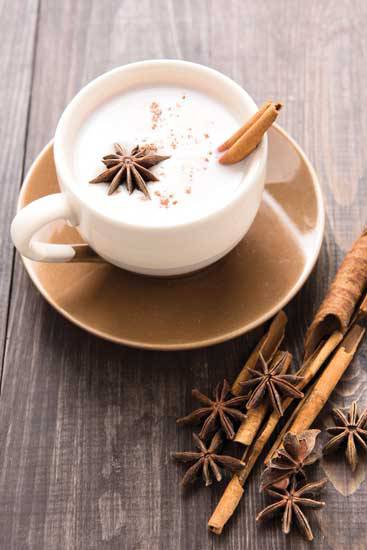
Fever Chai with Spicebush

spicebush teaRelieve typical fever symptoms, or make without milk to soothe fever caused by respiratory illnesses.

Total Hands-On Time: 1 hr

Cook Time: 1 hr

Yield: 5-7 cups

Fever Chai can bring some relief to fever symptoms, but you may make it without the milk for someone who’s experiencing a fever related to a respiratory illness, as milk can exacerbate symptoms of congestion.

Ingredients:

• 8 whole cloves
• 8 spicebush berries
• 7 twigs spicebush (broken to equal about 2 ounces)
• 2 sticks cinnamon (smashed)
• 1 cardamom pod
• 1 tablespoon fresh sliced ginger
• 1/2 star anise
• 2 cups water
• 4 to 6 cups milk (or almond milk)
• 2 tablespoons black tea
• Sugar or honey to taste

Instructions:

1. Crush all the spices lightly with a mortar and pestle and place them into a saucepan.

2. Cover the spices with water and bring to a boil.

3. Reduce heat and simmer for 30 minutes or until the water has reduced by half.

4. Add the milk to the saucepan and bring back almost to a boil.

5. Remove from heat. Add the black tea, cover, and steep for 5 minutes before straining.

6. While still warm, add sugar or honey to taste, and then use a milk frother to whip your chai.

7. Serve immediately.

Wild Allspice Java Rub with Spicebush

spicebush rubThis sweet and spicy rub is the perfect addition to steak, brisket, or pork.

Total Hands-On Time: 5 min

Preparation Time: 5 min

Yield: 1 cup

This rub is best on a grilled steak or brisket but also works well with pork.

Ingredients:

• 5 tablespoons ground coffee
• 2 tablespoons coarse salt
• 2 tablespoons brown sugar
• 2 tablespoons paprika
• 2 teaspoons freshly ground pink peppercorns
• 2 teaspoons garlic powder
• 2 teaspoons ground spicebush berries
• 1 teaspoon ground cumin
• 1 teaspoon unsweetened cocoa powder

Instructions:

1. Combine all ingredients and place in an airtight container.

2. This mix is shelf-stable but should be used within 6 months.
Continue reading “Spicebush – Good Witches Homestead”

Special Report: KPVI Investigates Cyanide traps and the USDA | Straight from the Horse’s Heart

story by as broadcast/published on KPVI.com

“This is not the first time the USDA had a run in with the Gate City…”

It’s almost been two months since a Pocatello family lost their dog and almost their son to a cyanide trap set 300 yards behind their house. Since then the USDA says they’ve taken all the traps out of the Gem state. But that hasn’t changed anything to investigators who say they were never notified of the deadly chemical, meant to kill predators, planted around Bannock County.

The incident began in the Buckskin area back in March. Canyon Mansfield says, “I panicked and sprinted down to get my mom.” The 14-year-old and his dog Kasey were 300 yards away from their house. He describes, “Suddenly there’s like a pop and then orange gas spews out.” The Mansfield family dog died and they almost lost their son as well. Theresa Mansfield, Canyon’s mother says, “We didn’t want to believe it was from Cyanide poisoning, but deep down it scared the crap out of us.”

The Cyanide trap was placed on BLM land with no warnings in sight. Investigators found a second trap not far from the first. Bannock County Sheriff Lorin Nielsen says, “We’re not Alaska. There are wilderness places where people go. I don’t care what the purpose is. If it’s endangering public it shouldn’t be there.”

Since the death of Kasey there’s been a worldwide outcry. The Bannock County’s Sheriff’s office has launched their investigation. The city has also stepped in. In March Pocatello’s Mayor Brian Blad wrote a letter to the USDA asking them to stop manufacturing Cyanide Traps, or M-44’s, in the city. Since then the agency reached out to the mayor. He says he toured the facility, learned about their safety precautions and products “They’re going to continue to do their practice until congress acts,” said Blad.

This is not the first time the USDA had a run in with the Gate City. Seven years ago the agency was responsible for illegally setting “Quick Kill” traps, meant for Rock chucks within city limits. Obtained by KPVI in an incident report by Pocatello’s animal control, an elderly woman called them after finding a cat trapped alive in a “quick kill” trap or Conibear trap in her backyard. She admitted to the city she requested the traps from the USDA. She says at least three cats had been killed before and they were removed by the local USDA representative Todd Sullivan. Sullivan is the same man involved in the Mansfield investigation. In 2010 the charges against Sullivan were dismissed by a federal judge.

The city and USDA came to an agreement that they would not place Conibear traps in Pocatello without notifying the city first. The USDA declined to speak to KPVI on camera, but gave us a written statement answering our questions. They told us, the incident involving the Mansfield Dog is still under investigation and can’t comment. But claimed they had “107 M-44’s set on 16 properties in the state and all have been removed.” Our request to tour the Pocatello manufacturing facility was denied, they say because of security concerns.

The agency tells us the Pocatello location has been manufacturing M-44 deceives since 1969. And also handles, “Gas cartridges for fumigating rodent burrows, rodent grain baits…, predator lures, and repackages other products such as order control products and animal immobilization drugs.”

The sheriff’s investigation is now left in the hands of county prosecutors to find if any state laws were violated. In the meantime, the sheriff says this to residents, “We now have to be aware of our surroundings. If there is something that is out there that is not part of… leave it alone, leave it alone,” Nielsen said.

Source: Special Report: KPVI Investigates Cyanide traps and the USDA | Straight from the Horse’s Heart

A Festival of Books – Natalie J Case

I have a confession to make.  I have never been to a book festival or convention or other celebration of books.  Not as a reader, certainly not as a writer.  Some of the reasons for this are fundamental issues of who I am, namely the agoraphobic part of who I am.  Large crowds, even mediocre crowds in small spaces make me sweat, palpitate, hyperventilate and ultimately need to leave quickly unless I do an awful lot of prep work first.

So, when I show up on Sunday, June 4th at Civic Center Park in Berkeley, California, I will be attending my first event.

babf_logo The Bay Area Book Festival is in it’s third year, and while I’d love to be able to attend some of the talks and such on Saturday, I have other obligations.  But come Sunday morning, I will load up my cart with books and a table cloth (reminder to self, get a tablecloth), my tablet and credit cart doohicky plus a bunch of water and snacks for the day, and I will BART myself into Berkeley and find my assigned place in the park for the day.

Of course, I hope to sell enough books to break even on the day, but beyond that, my hope is that I can keep my agoraphobic anxiety down and that I get to meet new folks, talk about my books and other books.  I’d love to meet readers who are passionate about what they read and love.  I’d also love to meet fellow authors who are passionate about what they write and love.

If it isn’t too much to hope for, I’m going to hope that some of my friends and family come out to see me too.  It isn’t every day an author gets to do their first event like this…and if I’m being truthful, maybe having someone watch my table for a bit while I look around would be awesome too.

So, if you’re somewhere in the San Francisco Bay area and fancy some book loving come Sunday, June 4th, you should hope on BART and take yourself to the Berkeley Civic Center station.  The park is just a short walk away.

I won’t be too hard to find.  I’ll be the author with green hair, probably wearing a fedora or other hat, and possibly a Star Wars shirt, depending on my mood.  Come Say HI!

Source: a festival of books – Natalie J Case

What Does A Broken Crystal Mean? – Holistic Experiment

Source: What Does A Broken Crystal Mean? – Holistic Experiment

It happens to every crystal lover; that gut wrenching feeling when you notice a crystal broke. Whether it’s just a small chip or split into a bunch of pieces, crystals experience shifts, transitions, and changes.

Crystals can be very fragile, especially if it’s a stone that can easily disintegrate in liquids like Selenite , Azurite or Desert Rose. Many crystals have natural flaws and fractures which can weaken the crystal. Crystals can break over a period of time from regular use and movement.

Sometimes a crystal can break because you dropped it, banged it or it wasn’t properly stored during traveling. If this happened to you, just make sure to be more careful with them. It’s said that if you often drop things or bump into things it could be a sign of being ungrounded so make sure to meditate with your crystal.

Another reason as to why a crystal could break is the constant exposure of heat and cold. This can cause a fracture so make sure to keep this in mind when you’re storing your crystals.

I think there is no such thing as coincidences, so whenever a crystal break it could be because it protected me from some harmful negative energy or helped me let go of a specific belief that no longer served me. There is no need to feel bad about this happening, just be grateful that it has helped you throughout your journey and honor your crystal.

There are other times when a crystal wishes to become more than one crystal. As long as the crystal isn’t shatter into a bunch of pieces you can find those part a new home. I sometimes like to store the pieces in bottles and keep them around in case someone I know needs them.


What To Do With Your Broken Crystals

The first thing I do when a crystal breaks is to cleanse it. I’ve talked about different methods of cleansing crystals but my favorite is to bury them for a little while until I feel it’s ready to take it out.

You can also bury them in your garden and never take it out because plants and trees LOVE crystals. Some people like to put them in pots or use them as drainage stones in the bottom of the plant pots.

Other people like to throw the broken pieces in the ocean because the saltwater can help cleanse the stone and can lead them to their next owner.

You can also use the broken crystal pieces as separate crystals like, say, for a crystal grid. If you feel like you should give it to a friend or family member. Always make sure to follow your intuition whenever a crystal breaks

Update: Status on Massive Former Wild Horse and Burro SD Rescue | Straight from the Horse’s Heart

Source: Wild Horse and Burro Sanctuary Alliance

It has been a long and difficult journey for the 907 horses that the State Attorneys in South Dakota found to be suffering from serious neglect last  October. From freezing temperatures and soupy mud, all of the unadopted horses healthy enough to make the journey have been relocated to a safe staging area in Colorado. (or to a new adoptive home.) We’ve come so far and we couldn’t have done it without you!

But we aren’t done yet! There are still 170 horses waiting to be adopted  and transported to their new adoptive homes, the Wild Horse and Burro Sanctuary Alliance members and partners continue to work hard to raise the $8,000.00 a week still needed to complete one of the largest horse rescues in U.S. history (bolded) as soon as possible.
Alliance members have been providing support to Fleet of Angels and its ground team by doing our part to raise funds for feed and care. With your help, and the support of the citizens and ranchers from Faith, S.D., 312 horses were relocated at the end of March to a well-equipped adoption hub in Ft. Collins Colorado.
Since last October, 712 of the 907 horses have been adopted minus some 24 horses that had to be euthanized due to medical reasons (like broken bones, cancer and other irreversible conditions). The numbers are staggering. It has been a challenge to get this far and it could not have been done without everyone’s help- every contribution and ‘share’ with friends has made a lifesaving impact.
The Wild Horse and Burro Sanctuary Alliance will continue to do what we can to raise funds to help cover feed and labor until all the horses reach new homes. Weekly costs for board, feed and laborare over $8,000.00. Thanks to contributions from the ASPCA, all Coggins costs have been covered and thanks to Shirly Puga/National Equine Resource Network and The Unwanted Horse Coalition, all gelding fees have now been covered! 
This is a team effort and without the support of The Griffin-Soffel Equine Rescue Foundation, The Humane Society of The United States, the ASPCA, the Wild Horse and Burro Sanctuary Alliance, Victoria McCullough, Best Friends, and every individual or group that has contributed, more than 600 horses would have been sold at auction last December, with most winding up hauled to Mexico or Canada for slaughter.
Since October, when a ruling of neglect was made against the International Society
for the Protection of Mustangs and Burros (ISPMB), an outpouring of generosity (has) made it possible to feed the horses and reimburse costs incurred by two South Dakota counties.
That allowed the counties to call off a planned public auction of the ISPMB horses at which many would have fallen into the hands of kill buyers, and feed the horses and ground crew. At the same time, adoptive homes were found for over 270 of the estimated 907 horses originally found on the ISPMB property, and the health of most of the others began improving. Since then, all but 170 horses have been placed with safe homes- but we need help. Every dollar helps make this possible.
Now, we need your financial contribution to cover the remaining cost of housing and care for the 170 horses who are still in need of adoptive homes. We need to cover costs for hay, facilities and labor this week.
We are grateful to EVERYONE who has chosen to be part of this effort and remain committed—with your help—to leave no horse behind.
On behalf of the Wild Horse and Burro Sanctuary Alliance, please help us in this final stretch of reaching that goal.
Thank you and please help today,

Source: Update: Status on Massive Former Wild Horse and Burro SD Rescue | Straight from the Horse’s Heart

What is Enlightenment? ~ Secrets of the Serpent

By gserperent


I’ve been asked What is Enlightenment? All the so-called gurus give little bits and pieces to keep the people coming back. Most of them make it into a spiritual thing, which is okay, as long as you realize nothing is outside of you. Enlightenment can be very spiritual, but it is an individual experience that must be your own. The ancient sages always put wisdom or knowledge and enlightenment together. You must bring out the fire-breathing dragon. If you don’t have the fire(intellect), you are just a baby dragon who will be led by their chains to do other people’s bidding.

Knowledge should be sought to energize life. Ancient history is very important. Exploring history is exploring the depths within yourself. The strength of a tree begins in the roots. You are a very complex being. The statues in Hinduism that show the deity with many arms is symbolizing that you are many persons within one. The deities are yourself. Most individuals fear the complex depth within. They remain on the superficial and surface layers of the psyche. This is why I always ask “Are you ready to meet yourself”? Very few will descend the depth of their mind. Those that do successfully will create wholeness. The modern individual has lost touch with the subconscious. Getting in touch with your subconscious is literally magic(See Magic).

The past of every culture and way of life flows in to us today. Just observing ourselves is not enough. The past flows on within us. We as a whole do not know history, so it keeps repeating itself. We have lost faith in history and have fallen into a restless, constant search for novelty after novelty. Just like our bodies have relics of early developmental stages, our minds have depths that reach back into the stages of our creation. If you are familiar with my work, you know that an alien race created the human race(see Lemurian Magic). They mixed their DNA with the hominid species that was already here. So our minds and bodies have both the alien and hominid stages built right into them. If you have ever tried to trace your family lineage, you know just how hard it can be to trace your lineage. Do you realize how complex it makes it by throwing in two separate species? Two whole new paths to trace your DNA.  On the alien side you may have to go back billions of years. That is how long this alien species had been around. This is why the ancients said we are thousands, if not hundreds of thousands, of personalities in one being. This is how complex you really are. This world herds us into thinking the same. They know what our minds are capable of and they shackle our minds.

Throughout history ancient philosophers have put people into two categories: the individual or higher human and the herd. Philosophers saw the individual as the most important thing a human can do for enlightenment. They are not talking about the individualism that is spoon fed to the masses. They were talking about real creative, stand alone genius. This is why they refer to them as higher humans. They have goals,are okay with being different, are good with solitude and can live independently. When I say independently, I don’t mean going out and living in the middle of nowhere or the fear based Preppers. I mean they have the freedom to live life to its fullest potential as they desire. When I say solitude, I mean they can be alone with themselves. When they are alone they actually do their greatest work or creating. Then there are the rest or the herd. Philosophers even see the people the herd look up to like sports stars, actors or business leaders as still being in the herd. The only power a herd person has is to band into groups. They saw true individuals as someone who does not want to pluck the fruit from the tree they plant in their own lifetime. No the true higher person will plant their tree of ideas for the fruit to be plucked long after they are gone.

Our morality turns us into a herd animal or someone eager to please and is mediocre. Our morality is anti-natural. People just blindly adopt the judgements of their society. You must understand that when it comes to the universal force there is no wrong or right. Is it wrong for the cheetah to kill the antelope to feed her cubs? Duality is built right into nature. Except it as a whole. The herd wages war on all that is strange, what they see as privileged, the higher human, the abundance of creative power and masterfulness. Herd morality, whether it is religion, political or any other idealism, gives people an escape from themselves. Comfort and contentment are their supreme values. They become judgmental of strangers and lose their love for mankind as a whole. Ideas and Ideals of the herd should rule the herd, but not reach beyond it. The enlightened person says yes to life and accepts life as a whole.

The saying “What does not kill me makes me stronger” has so much truth in it. When people figure out that suffering is a part of this life, they either become a Nihilist or they want to escape it and they make up things like other worlds such as heaven. In other words, they either say life sucks, has no purpose and ends in death or they make up a perfect world, utopia or heaven to work towards. This is why so many people hate when I say that you have to flow with life. I am not referring to flowing by accepting someones elses or some gods decisions, or that you have a predestined fate you have to follow. I am referring to the flowing of your own life. I am of the ancient school that reality, the cosmic energies or nature is alive. Dualism is built right in to our reality. What we consider destruction and chaos is built right into our reality. Which means pain and suffering is something that is natural. It creates life, just look at the birth of a child. Negative and destruction are good, but it requires strength. The Dionysus cult called it ‘Divine Madness’ because it refreshes and replenishes, it keeps you from stagnation. The ancients believed that growing stronger through tragedy is the highest state someone could attain. Knowing this gives you the strength of the cosmic river behind you, but you have a rudder to steer with the current. It is when you go against the current, like the human race does on a whole, you have problems. Flow with nature. Just by seeing the beauty in nature you become enlightened.

Continue reading “What is Enlightenment? ~ Secrets of the Serpent”

Keira Marcos

I believe in happy endings...

Storytime with Rachel F Hundred

Creating stories for pleasure

Sibyl Moon

Shh I'm Writing

Sylum Clan

Nothing is True. Everything is Connected.

Laura Bruno's Blog

Medical Intuition, Astrology, Soul Readings, Intuitive Coaching, Tarot, Reiki: Inspiring and Empowering Visionaries, Artists and Healers

Fire Family Conflagration

Weekly Challenge from the 118, 126, & 113

Kiayea's Corner

all things fanfic...

Crystal Dawn Books & Gifts

Crystals, and all things Magical

Starkindler's Realm

welcome to the inner workings of my mind...

The Herb Society of America Blog

Learn • Explore • Grow

Dr. Gary Samuelson

A Journey of Discovery

Kylia's World

Where Canon has No Meaning and Universes Collide

originaltempus

Just another WordPress.com site

Profilers For Christmas

The Crime Drama Advent Calendar

Entangled Wood

Just another WordPress.com site

brokenamethystwrites

Here there be Dragons

Toasterpop's Fiction

Fanfiction and original stories from Toasterpop

Breakaway Consciousness

Seeking Ideas Beyond Conventional Thought

gypsysue

Writting, Drafts, Ideas

Ellywinkle

All Things Wicked and Wonderful

Natalie J. Case

Author, Editor, Photographer, Artist

Your Stories. Your Wall.

Honoring their service and building their legacy. The official blog of the Vietnam Veterans Memorial Fund.

00Q Reverse Big Bang!

Art and Stories for all things 00Q, since 2014

The Wild Hare Project

Where the Writer Comes First.

Anthea Davis

FanFiction Author

Every Fandom Bangs

The home of the Every Fandom Bang and Reverse Bang!

Penumbria

n. pl. pe·num·brae (-br) or pe·num·bras 1. A partial shadow, as in an eclipse, between regions of complete shadow and complete illumination.

This Crooked Crown

Witchcraft for the Everyday and the Extraordinary

This is who I am...

... and this is what I like

Fanfiction Recommendations by Isabelle Disraeli

Fanfiction Recommendations ~ Slash, Femslash, & Het Fanfic Recs

Ellywinkle

EVIL AUTHOR DAY

Convivial Supper

Recipes from the Past

Kaethe Vaako's Fiction

what my demented mind comes up with

Sylum Archive

Nothing is True. Everything is Connected

Quantum Bang

The Multi-Fandom Fix-it Big Bang

by Geep 10

a place for me to share what I've written

Good Witches Homestead

Enchanted World of Magical Gardening ~ Crystals & Gemstones ~ Locally Grown Organic Herbs

tkbenjamin

m/m original fiction and fanfic for adults only

Chestnut NOLA

It's All About The Romance