What Is Elecampane?

By Crooked Bear Creek Organics

Crooked Bear Creek Organic Herbs's avatarCrooked Bear Creek Organic Herbs

Inula helenium

Also, Known As

  • Elecampane
  • Horseheal
  • Scabwort

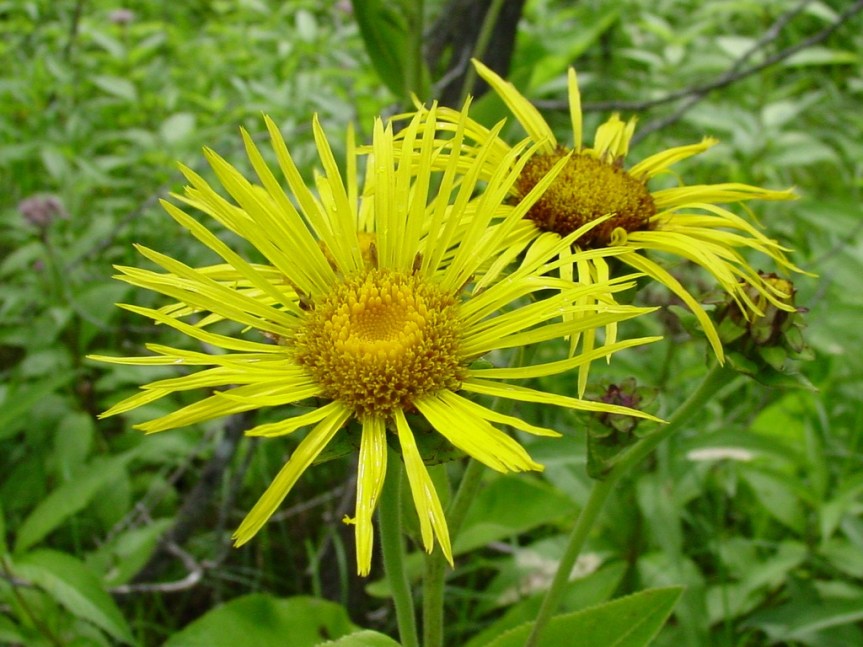
Elecampane (botanical name Inula helenium) is a tall, bristly perennial plant that is native to south-eastern Europe and western Asia. This herb, which bears yellow flowers resembling the daisy, has been naturalized in North America and is found growing in abundance in the moist meadows, fields and along the roads in the central and eastern regions of the United States and neighboring Canada. Elecampane belongs to the Asteraceae family and grows up to a height of four to six feet. The herb has a heavy branching stem that emerges from a basal rosette (a circular arrangement of leaves at the base) with leaves that are large, oval-shaped and pointed at the end. The herb bears vivid yellow flower heads during the period between the middle to the end of the summer. The flower heads of elecampane are generally four inches in diameter…

View original post 3,333 more words

What Is Eleuthero Root?

By Crooked Bear Creek Organics

Crooked Bear Creek Organic Herbs's avatarCrooked Bear Creek Organic Herbs

Latin Name

Eleutherococcus senticosus, Acanthopanax senticosus

Common Names

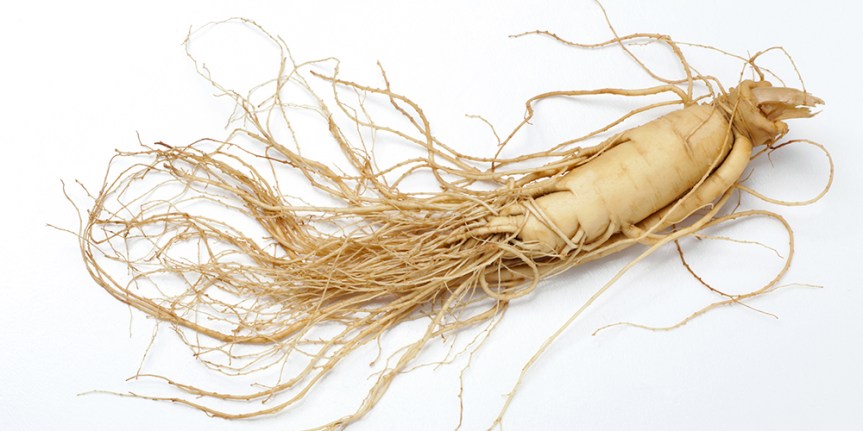
Ci Wu Jia, Devil’s Bush, Eleuthero, Eleutherococcus senticosus, Russian Ginseng, Siberian Ginseng, Russian Root, Shigoka, Taiga, Thorny Pepperbush, Touch-Me-Not, Wild Pepper

Properties

Adaptogenic, anti-aggregatory, anti-diabetic, anti-edema, anti-inflammatory, anti-proliferative effects on leukemia cells in vitro (Bradley, 1992; Hacker and Medon, 1984), anti-stress (Takasugi, 1985), endocrine, endurance-enhancing, hypoglycaemic, hypertensive, immunomodulator, immunoprotective, immunostimulant, platelet aggregation-inhibiting, radiation protection (Yonezawa, 1989), restorative, stimulant, tonic, vasodilator.

Indicated for

Addictions, Alzheimer’s disease, athletic support, bone cancer, boosting immune system, breast carcinoma, bronchitis, cardiovascular health, chemotherapy support, chronic fatigue syndrome, countering athletic fatigue, depression, diabetes mellitus, energy and vitality, enhancing vision,enhancing resilience, exhaustion and debility, fatigue, fibromyalgia, hantavirus, heart ailments, herpes, HIV support, Hodgkin’s disease, impotence, improving athletic working capacity, general health & mental resilience, increasing stamina, physical endurance under stress & mental alertness, infections, influenza, kidney cancer, lung ailments, maintaining well-being, malignant tumours, memory, myopia, neural diseases, oral cavity…

View original post 2,180 more words

What Is Ashwagandha {Withania somnifera}?

By Crooked Bear Creek Organics

Crooked Bear Creek Organic Herbs's avatarCrooked Bear Creek Organic Herbs

Also, Known As:

  • Ashwagandha
  • Indian Ginseng
  • Withania

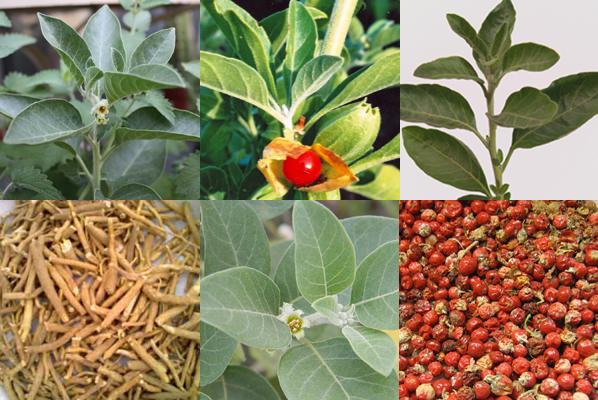
The herb known as the ashwagandha is a small plant in the same plant family as the common garden tomato. This plant is a stout shrub which can grow to a height of about five feet-170 centimeters when fully matured. The ashwagandha is similar to the tomato, in that it too bears yellow flowers and has a red colored fruit, the fruit is, however, berrylike in size and shape and the resemblance to the berry of tomato is not very easy to recognize. This herb is endemic to South Asia, and the ashwagandha grows abundantly in the wild in countries like India, Pakistan, and Sri Lanka-all of which are in South Asia and share a similar climate. Herbal remedies make use of all the parts of this particular herb and many different herbal medicines are prepared from this herb.

The meaning of the…

View original post 1,245 more words

The Wonders of Mugwort {Artemisia vulgaris}

By Crooked Bear Creek Organics

Crooked Bear Creek Organic Herbs's avatarGood Witches Homestead

Also, Known As:

  • Cingulum Sancti Johannis
  • Mugwort
  • St. John’s Plant

The mugwort is a shrubby perennial, with dark green deeply indented leaves and with several clusters of small reddish or yellow flower heads. The herb can grow up to three ft, or one m in height.

mugwort

This amazing shrub has been known since the ancient times, and reportedly, Roman centurions used mugwort inside their sandals so that their feet could remain in great shape. The shrub was also used by ancient Europeans and Asians in treating various ailments. The Greek physician Dioscorides of the 1st century AD supposedly stated that the Goddess Artemis, who gave inspiration to the plant’s genus name, used the herb to offer succor to women in the throes of labor and childbirth. The Physicians of Myddfai, a thirteenth-century Welsh herbal remedy collection, contains these important words, “”If a woman is unable to give birth to her child…

View original post 773 more words

Ashwagandha Root Extract Improves Symptoms of Obsessive-Compulsive Disorder in Patients Taking Selective Serotonin Re-uptake Inhibitors

By Crooked Bear Creek Organics

Crooked Bear Creek Organic Herbs's avatarCrooked Bear Creek Organic Herbs

  • Ashwagandha (Withania somnifera, Solanaceae)

  • Obsessive-Compulsive Disorder

Obsessive-compulsive disorder (OCD), characterized by stressful, repetitive, and intrusive thoughts or obsessions followed by actions or compulsions, is thought to be linked to a defect in the serotonergic system. A common treatment is the use of selective serotonin reuptake inhibitors (SSRIs), but they are considered only mildly effective, with 40-60% of patients failing to respond. In Ayurvedic herbal medicine, ashwagandha (Withania somnifera, Solanaceae) is considered to be a rejuvenating and revitalizing herb. Its roots, which are used to enhance mental and physical health, have anxiolytic and antidepressant properties due to the presence of bioactive glycowithanolides, and the alkaloids withanine and somniferine are used for nervous disorders. Animal studies also have shown it to enhance serotonergic transmission. The goal of this randomized, double-blind, placebo-controlled trial was to verify the efficacy of ashwagandha root extract as an adjunct therapy to treat the…

View original post 511 more words

Indigenous Mind: Remembering Who We Are

by Ancestral Apothecary

Ancestral Arts's avatarAncestral Apothecary

Much of the vision of Ancestral Apothecary is inspired and informed by my experience in the Indigenous Mind Program.  As the founder of Ancestral Apothecary, I, Atava Garcia Swiecicki, received a graduate degree from  from Naropa University in the Indigenous Mind Program in 2003.  The Indigenous Mind Program focuses on reconnecting to one’s indigenous ancestors, no matter what their cultural or ethnic background.  The program was founded by Dr. Apela Colorado, who also is the founder of the Worldwide Indigenous Science Network.

Heidi Corning, of White Tigress Ancestry, was also a student in the Indigenous Mind Program and created a short film to document the process of the Indigenous Mind students and they reconnected to their ancestral ways of knowing.

View original post

Lunar Tinctures

By Crooked Bear Creek Organics

Crooked Bear Creek Organic Herbs's avatarGood Witches Homestead

Making your tinctures following the phases of the moon allows the powerful gravitational pull of the moon to draw out the properties in the plant and also adds a bit of ancient wisdom to your mixture. Just as the gravitational pull of the moon affects many things in nature and our lives, it’s thought that this very same phenomenon affects the strength of our tinctures. Although there is no scientific proof that the moon gives our tinctures a little something extra, herbal traditionalists have long believed in the power of the moon in regards to making plant medicine.

Herbalists of old knew how to plant, harvest, and preserve food and herbs, among other things, following the phases of the moon. For instance, seeds for above ground plants were planted with the new moon, as the lunar gravity pulls water up from the ground creating perfect conditions for a seed to…

View original post 396 more words

Your Apothecary Cabinet: Calendula Oil

By Crooked Bear Creek Organics

Crooked Bear Creek Organic Herbs's avatarCrooked Bear Creek Organic Herbs

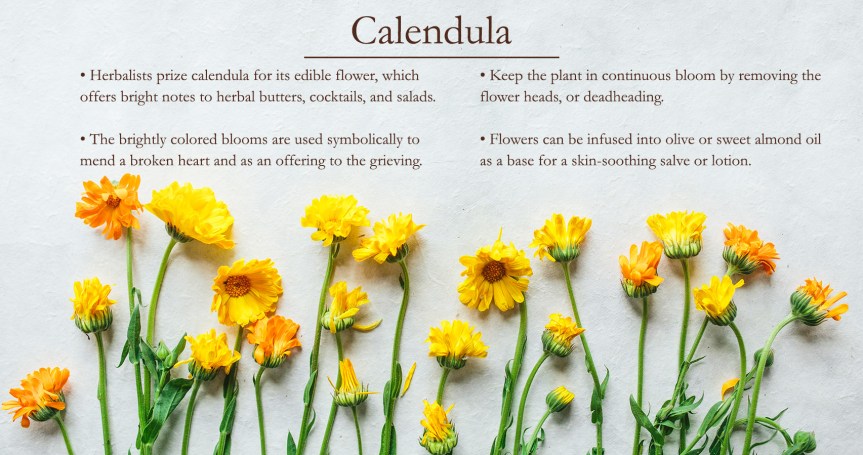
Marigold has much value today and in traditional cultures as a homeopathic remedy, but the oil extracted from the flowers, called calendula oil, is not far behind in providing benefits. Learn more about this oil distilled from the petals of the pot marigold or Calendula officinalis, and how you can harness its health and practical everyday uses.

What Is Calendula Oil?

Marigold is a genus of about 15 to 20 species of plants in the Asteraceae family. This flower is native to Southwestern Asia, as well as Western Europe and the Mediterranean. The common name “marigold” refers to the Virgin Mary, to which it is associated in the 17th century.

Apart from being used to honor the Virgin Mary during Catholic events, marigold was also considered by ancient Egyptians to have rejuvenating properties. Hindus used the flowers to adorn statues of gods in their temples, as well as to color their…

View original post 1,254 more words

Your Apothecary Cabinet: Common Base Oils

By Crooked Bear Creek Organics

Crooked Bear Creek Organic Herbs's avatarCrooked Bear Creek Organic Herbs

Vegetable and herbal oil are used in creams, lotions, massage, facial and body oils, gels, and salves.

Sweet Almond (Prunus amygdalis var. dulcis) and Apricot Kernel (Prunus armeniaca): emollients, can relieve itchiness and dryness.


Arnica (Arnica montana): indicated for bruises, varicose veins, burns, strains and sprains, arthritis, and myalgia.


Avocado (Persea Americana): wonderful oil for regenerative skin care, indicated for dry, itchy, or mature skin, antioxidant, nourishes the skin.


Baobab (Adansonia digitata) and Marula (Scelerocara birrea): emollient, soothes inflamed skin, dry skin, sunburn.


Borage (Borago officinalis) and Evening Primrose (Oenothera biennis): excellent regenerative skin care oils, nourishing, indicated for psoriasis, eczema, inflamed and dry skin conditions.


Calendula (Calendula officinalis): anti-inflammatory, wound healing, soothes dry irritated skin, insect bites, cell regenerative.


Coconut (Cocos nucifera): emollient, slightly occlusive to the skin, blend…

View original post 1,233 more words

Your Apothecary Cabinet: Herbal Oils

By Crooked Bear Creek Organics

Crooked Bear Creek Organic Herbs's avatarCrooked Bear Creek Organic Herbs

Herbal oils are simply oils infused with herbs, much as you would steep rosemary in olive oil for culinary purposes. Healing herbal oils can be taken internally for a variety of ailments, can be used externally for therapeutic or daily beauty routines, and can be incorporated into herbal salve recipes. Dried herbs are preferred since fresh herbs will sometimes ferment.

Basic Herbal Oil:

1 cup finely ground dried herbs {flowers, leaves, roots, barks, and/or seeds}

1 1/4 cups almond, jojoba, or olive oil

In a blender or food processor, combine the herbs and oil. Blend or process until puree for greater extractability. Pour the mixture into a clean glass jar with a lid, making sure the plant material is completely submerged in the oil. If it’s not, add more oil until the herbs are covered by about 1 inch of liquid. Cover the jar and store it in a dark…

View original post 775 more words