Locating Wild Deer Truffles ~ And Other Fascinating Fungi!

Greetings!

First, I’d like to say “thank you!” to everyone who attended a Learn Your Land event over the past few months.  It’s always a wonderful experience meeting nature enthusiasts around the country!  I still have plenty of events scheduled throughout the upcoming months.  If you’re local to any of these areas, I’d love to meet you!

September 8, Muskegon, MI: Michigan Mushroom Hunters Club — Fungus Fest
September 9, Owosso, MI: Wild Edibles Walk & Mushroom Outing
September 21-23, Prairie du Chien, WI: Midwest Wild Harvest Festival
October 8, Pittsburgh, PA: Botanical Society of Western PA evening presentation
November 5, Clemson, SC: South Carolina Upstate Mycological Society evening presentation
November 7, Atlanta, GA: Mushroom Club of Georgia evening presentation

For more information on these events, check out the Learn Your Land event calendar.

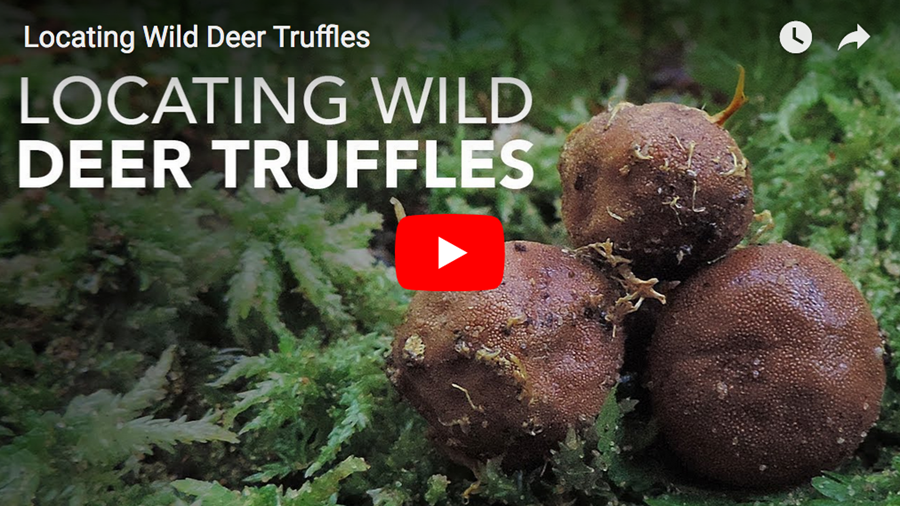
Moving forward, let’s talk about deer truffles.

These fungi exist a few inches below the surface of the earth in a mutualistic association with various trees.  What’s more, deer truffles are valued food sources for a variety of forest-dwelling animals.

Because they grow underground, deer truffles are among the most elusive fungi in the world.  However, there is a simple trick to finding them, and if you’re interested in finding your very own deer truffles this season, check out the brand new video!

Stinkhorns aren’t your typical mushrooms.  One look at them (and a quick whiff of them!) should hint at their uniqueness.  Pictured here are a few interesting stinkhorns I recently found in a local forest.  Check out this recent Instagram post to learn more!

Thanks for reading and watching, and as always, thank you for your support!

-Adam Haritan

Herbal Healthwatch, September 2018

Crooked Bear Creek Organic Herbs's avatarCrooked Bear Creek Organic Herbs

Rhodiola Relieves Stress

Rhodiola {Rhodiola rosea} is a perennial groundcover that grows in some of the harshest conditions on Earth; the Arctic regions, from Scandinavia to Siberia. For centuries in Russia, Rhodiola enjoyed a folk reputation as a while-body strengthener or tonic. After World War II, Russian researchers added it to the short list of “adaptogens,” plants such as ginseng that strengthen the entire body. But during the Cold War, the Russian military seized Rhodiola supplies and suppressed information about the herb, convinced that it could give Soviet troops an edge in potential battle. After the fall of the Soviet Union, Russian Rhodiola research was published in the West and the herb became available in the U.S. and Europe.

More recent research shows it has several health benefits, particularly in the realm of coping with physical and emotional stress, and a new study shows that it helps prevent…

View original post 1,345 more words

Plant Spirit Communication, Part II: Communication in Many Forms

Dana's avatarThe Druid's Garden

I remember taking a drive with some friends and friends-of-friends some years ago. As we were driving through a really nice forest preserve with some old trees, one of my friends in the car said, “There’s so much money there in the trees, some of them would be worth more than $1500.” He went on to talk about how his family had recently logged their property and earned over $25,000. Other people in the car jumped in and talked about the forest’s beauty and argued against him; and I just listened. Finally, I responded and said, “Every living being has a spirit. I hope that forest stands forever. They deserve to live as much as you or I.” Before this conversation had started, I was listening to the singing of that forest, so happy, so safe to be preserved. This experience stayed with me, and was a good reminder about…

View original post 2,288 more words

Our Pantry Profile: Rosemary

Crooked Bear Creek Organic Herbs's avatarCrooked Bear Creek Organic Herbs

Rosemary {Rosmarinus officinalis}

The name Rosmarinus loosely translates to “dew of the sea,” given to rosemary because of its affinity for the wind-swept cliffs of the Mediterranean coast, where it originates. Beloved for centuries for its aroma and health benefits, this strongly aromatic member of the mint family is now cultivated worldwide.

Greek scholars wore garlands of rosemary to improve their memory and concentration, and many ancient herbalists recommended rosemary for failing mental acuity. During the Middle Ages, some would wear it around the neck to protect from the plague. Thirteenth-century Queen Elisabeth of Hungary claimed at 72 years of age, crippled with gout and rheumatism, that she had regained her beauty and strength by using “Hungary Water” {largely rosemary-infused}, compelling the King of Poland to propose marriage to her. Along with juniper, rosemary was frequently burned by the tub-full to disinfect the air from disease, from ancient times through…

View original post 827 more words

The Rule of Elements in Talismans & Amulets

Our Pantry Profile: Thyme

Crooked Bear Creek Organic Herbs's avatarCrooked Bear Creek Organic Herbs

Thyme {Thymus vulgaris}

Common garden thyme has been used for protection, courage, food, and medicine since the beginning of recorded history. A low-growing, aromatic shrub native to the rocky hills of the Mediterranean and Southern Europe, it’s now a staple of herb gardens around the world.

Roman soldiers bathed in thyme to maintain their courage and strength before a battle, and in medieval times, departing knights received thyme-embroidered scarves from their lady loves to keep up spirits and inspire courage. A popular belief was that thyme tea prevented nightmares and even encouraged dreams of fairies. Carrying thyme warded off evil spells and witchcraft, while sewing thyme and fern into the hem of a dress kept the Devil from taking a woman as his bride. Placing a sprig of thyme in one shoe and a sprig of rosemary in the other on the Eve of St. Agnes {January 20} was said…

View original post 827 more words

Food as Medicine: West Indian Lemongrass (Cymbopogon citratus, Poaceae)

Crooked Bear Creek Organic Herbs's avatarCrooked Bear Creek Organic Herbs

West Indian lemongrass (Cymbopogon citratus, Poaceae) is an aromatic tropical perennial with long, slender, light green leaves that grow in groups with bulbous and fibrous stems at the base of the plant.1-3The grass can grow from two to six feet tall, and its leaves are approximately one inch wide with slightly toothed, saw-like margins.2 West Indian lemongrass likely originated from India, Malaysia, or Sri Lanka.1,2,4,5 It is now cultivated in tropical and subtropical countries.4 The largest exporter of lemongrass leaves and stalks is Guatemala,5 while India is the largest producer of lemongrass essential oil, 80% of which is exported annually.6Lemongrass grows well in warm and humid areas with plenty of sunshine and moisture.4 The leaves and fleshy part of the stem are used for flavoring teas and broths in many Asian cuisines, and its essential oil is used in…

View original post 2,696 more words

Activity of Lemon Balm and Moldavian Dragonhead Essential Oils against Foodborne Microorganisms

Crooked Bear Creek Organic Herbs's avatarCrooked Bear Creek Organic Herbs

It has been postulated that plant essential oils can be used as natural preservatives to delay food spoilage, inhibit pathogen growth, and improve food quality. Lemon balm (Melissa officinalis, Lamiaceae) aerial parts and Moldavian dragonhead (Dracocephalum moldavica, Lamiaceae) aerial parts have antibacterial and antifungal activity. The purpose of this study was to evaluate the chemical composition, antimicrobial activity, and antioxidant capacity of lemon balm and Moldavian dragonhead essential oils with the goal of finding natural agents to protect against oxidation changes and pathogenic bacteria of food.

Lemon balm and Moldavian dragonhead aerial parts were collected at blossoming in the summer of 2013 in Urmia, Iran. The plants were confirmed by the Herbarium Department of Jahad Agriculture and Natural Resources Center of West Azerbaijan, Iran. Essential oils were extracted via hydro-distillation, and gas chromatography-mass spectrometry (GC-MS) was used to analyze the compounds in the essential oil. Antibacterial…

View original post 327 more words

Witch Rules

Oro Expeditions After Dark ~ August 19

By Paula Cas

Join Oro and Paula Cas at 9:00pm EDT for And Then Some Again Productions next episode of Oro Expeditions After Dark.

The switchboard is open at 845-277-9146 for you to join Oro and Paula Cas to discuss news and commentary on subjects from gold mining to current events.. Call in and give us a clule about your favorite place to prospect, metal detecting, suction dredge, and any other mining activity we missed. We’ll check in on the LDMA and GPAA to see what events they have scheduled for the summer.

We’re sure to get into news about the Expedition, and our first adventure with The Big Nugget Buggy. Things that have happened or just struck that certain chord to make you want to share. It’s been a long week and it ain’t over yet.

Find us on Oro Expeditions Facebook

Contact us at: Oro Expeditions and Oro Cas CryptoWorld