|

|
|

|
|

|
Have beautiful holidays! May all kinds of blessings come your way!
Brana Mijatovic, Ph.D.
|
|
|
|
|
|
|
Have beautiful holidays! May all kinds of blessings come your way!
Brana Mijatovic, Ph.D.
|

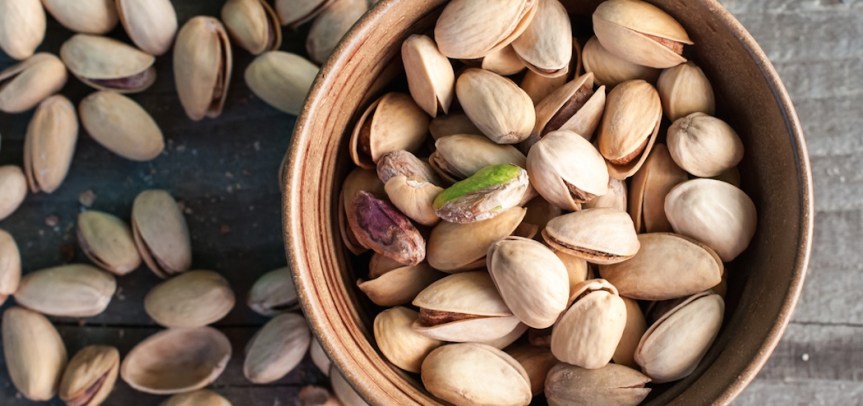
The pistachio (Pistacia vera) is the only commercially grown species in its genus, which belongs to the Anacardiaceae family. Members of the genus Pistacia are among the oldest flowering nut trees and are small to medium in size, and characterized by their ability to exude mastic (plant resin).1,2 Other economically important plants in Anacardiaceae include cashew (Anacardium occidentale) and mango (Mangifera indica).
Pistachio trees are temperate, deciduous trees adapted to the dry, hot, drought-prone climates of the Middle East.1,2,3 The pistachio tree can grow to a height of 10 meters (about 33 feet) and has pinnately compound leaves containing three to seven leaflets.3,4 The trees are dioecious; both male and female pistachio trees produce their own flowers.4 Female trees are wind-pollinated and produce green and brown flowers with no petals during the early summer.1,5 Female pistachio trees produce clusters of nuts…
View original post 3,075 more words

By Kathleen M Hale, Western Reserve Herb Society
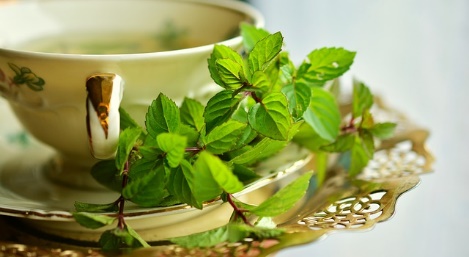 My herb spiral is my mad scientist laboratory. Just outside my kitchen door, it is the only part of my garden to experience full sun. The soil is much-amended with compost. And, that is where I plant essential kitchen herbs and the occasional experiment, like a new herb that bears close watching.
However, over the last few gardening seasons, it has devolved largely into a jungle of mint. Mystery mint. Muddle mint. A promiscuous genetic mix of whatever mint I have ever planted, plus whatever mint blew in on its own. In my defense, that’s what mint does. And sometimes, the result is something else.
Peppermint (Mentha x piperita) is a hybrid plant, a cross between water mint (Mentha aquatica) and spearmint (Mentha picata). It was first mistakenly identified by Linnaeus in 1753 as a separate…
View original post 379 more words

According to Italian anthropologists and authors Claudia and Luigi Manciocco, Befana’s origins back to Neolithic beliefs in a great goddess associated with fertility and agriculture. Author Judika Illes writes, “Befana may predate Christianity and may originally be a goddess of ancestral spirits, forest, and the passage of time.” In the book Vestiges of Ancient Manners […]
via La Befana Cake: Honouring The Old Witch of Winter – Gather Victoria — Good Witches Homestead
View original post 2,361 more words
The term potpourri (pot-pour-ri) is basically a French expression. When literally translated into English, it denoted ‘fermented in a pot’. And this is what actually makes a damp potpourri – a moist, aromatic, herb-like substance that is fermented, normally with salt and in a pot. The dry potpourri, a companion of moist potpourri, is a blend of dried up aromatic herbs, spices, flowers, and additional bits and pieces. The majority of the dry potpourris do not contain any salt and the method of making them is easy in comparison to the process involved in making moist potpourris.
The ingredients of any potpourri – dry or moist, largely depend on the preference of the individual making it. In fact, one has a great scope of experimenting while making a potpourri. Since the aptitude to distinguish scent as well as the individual reaction to aroma is an…
View original post 3,709 more words
In the fall, I always feel like I’m fighting against the coming dark at the time of the winter solstice, and each year, I have to learn the lesson anew. This year proved particularly challenging for a few reasons. After the time changes at Daylight Savings time, and the sun starts setting at 3:30pm. It is down by 4:30 and completely dark by 5:15pm. As a homesteader, in preparation for spring planting and the winter to come, there always seems to be so much to do. Bringing in the harveset, preparing the greenhouse, preparing and clearing garden beds, stacking wood, cleaning gutters, shoring up the hen house, and doing all of the necessary multitude of other preparations for the coming winter. As the fall deepens, each day, the light continues to wane, and there is less light each day to work with. On many days when I go to work…
View original post 1,604 more words
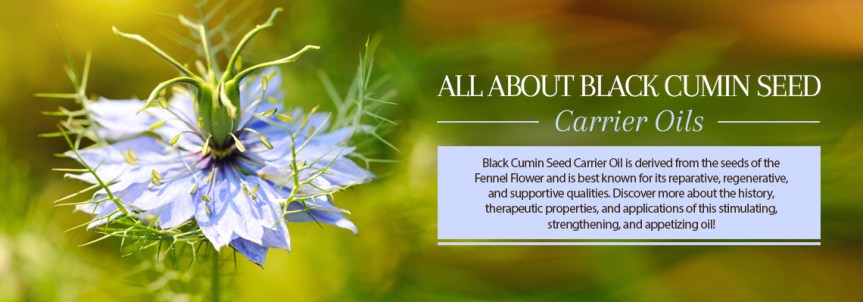
Gaining popularity these days as a weight loss aid and natural healing agent, black cumin seed oil comes with a centuries-old wellness pedigree. Black cumin seeds were popular among the Egyptian pharaohs and were even found in King Tutankhamun’s tomb. Black cumin seed oil — sometimes called black seed oil — boosts the immune system, promotes balanced blood sugar and cholesterol levels, and wards off harmful organisms. The book of Isaiah in the Bible mentions cumin (caraway) seed, and reportedly, the Prophet Mohammed said, “Hold on to the use of the black seed for indeed it has a remedy for every disease except death.”
Black cumin seeds come from the plant Nigella sativa, which is part of the buttercup family and native to countries throughout southern Europe and southern Asia. Some people call it black seed, caraway, or kalonji.
Black cumin seed oil…
View original post 1,791 more words
Sore throats are one of the most common reasons people go to the doctor and they tend to affect children the most. A sore throat is usually considered a minor complaint until you have one and every swallow induces pain — pain that may seem unbearable. Unfortunately, the only option is to treat the symptoms and rest until you recover. Fortunately, there are many natural remedies that can soothe a sore throat and there’s a good chance you already have many of them in your home.
There are many potential causes of a sore throat, viruses are the most common. In fact, viruses account for about 95% of sore throats in both adults and children under the age of 5. Other common causes of a sore throat include:
View original post 1,118 more words
I believe in happy endings...
Creating stories for pleasure
Shh I'm Writing
Nothing is True. Everything is Connected.
Medical Intuition, Astrology, Soul Readings, Intuitive Coaching, Tarot, Reiki: Inspiring and Empowering Visionaries, Artists and Healers
30th Anniversary Edition
Weekly Challenge from the 118, 126, & 113
all things fanfic...
Crystals, and all things Magical
welcome to the inner workings of my mind...
Learn • Explore • Grow
A Journey of Discovery
Where Canon has No Meaning and Universes Collide
Just another WordPress.com site
The Crime Drama Advent Calendar
Just another WordPress.com site
Here there be Dragons
Fanfiction and original stories from Toasterpop
Seeking Ideas Beyond Conventional Thought
Writting, Drafts, Ideas
All Things Wicked and Wonderful
Author, Editor, Photographer, Artist
Honoring their service and building their legacy. The official blog of the Vietnam Veterans Memorial Fund.
Art and Stories for all things 00Q, since 2014
Where the Writer Comes First.
FanFiction Author
The home of the Every Fandom Bang and Reverse Bang!
n. pl. pe·num·brae (-br) or pe·num·bras 1. A partial shadow, as in an eclipse, between regions of complete shadow and complete illumination.
Witchcraft for the Everyday and the Extraordinary
... and this is what I like
Fanfiction Recommendations ~ Slash, Femslash, & Het Fanfic Recs
EVIL AUTHOR DAY
Recipes from the Past
what my demented mind comes up with
Nothing is True. Everything is Connected
The Multi-Fandom Fix-it Big Bang
a place for me to share what I've written
Enchanted World of Magical Gardening ~ Crystals & Gemstones ~ Locally Grown Organic Herbs
m/m original fiction and fanfic for adults only
It's All About The Romance







 Paths I Walk
You must be logged in to post a comment.