~ Ostara ~ Spring Equinox ~ Ye Olde Dark Arts

By Dark Witch

Source: ~ Ostara – Spring Equinox ~ – Ye Olde Dark Arts
 ostara

Vernal or Spring Equinox, the Rites of Spring, Lady Day, Alban Eiber and Bacchanalia.The Spring Equinox occurs between March 19th and 22 in the Northern Hemisphere and between September 19 and the 22 in the Southern Hemisphere. Ostara marks the day when night and day are equal and balanced.

Altar decorations: Colored eggs, seeds, earth, flowers and herbs appropriate

Animal: Hares, Lambs, Rabbits, Snakes

Colors: All pastels, yellow, pink, green, blue

Drinks: wines, dandelion, lindon teas, hyssop

Flowers And Herbs: all spring flowers. Irish moss, crocus flowers, daffodils, Easter lilies, honeysuckle, iris, jasmine, roses, strawberry, tansy and violets. Acorn, Celandine, Cinquefoil, Dandelion, Dogwood, Honeysuckle, Iris, Jasmine, Rose, Tansy, Violet

Foods: Eggs, honey, bread, seeds, sprouts and green leafy vegetables

Incense: Jasmine, African violet, rose, sage, strawberry, violet flowers, orange peel, rose petals, lotus, magnolia, ginger

Oils: Magnolia, ginger, lotus

Spells: Healing, purification, psychic awareness, fertility and Air Magic

Stones: Amethyst,  aquamarine, jasper, moonstone and rose quartz.

Traditions:  Decorating Eggs,  getting rid of old and unwanted items that are no longer used, planning and preparing land for herbal, floral and vegetable gardens.

Copyright © 2002 – Present Ye Olde Dark Arts
LISTEN UP WITCHES, THIS IS A CRYSTAL PSA ~ The Helpful Ghost

Late Spring Flower ~ Wallflower – Good Witches Homestead

Source: Late Spring Flower ~ Wallflower – Good Witches Homestead

COMMON NAME:  wallflower
GENUS:  Cheiranthus
SPECIES:  C. allioni, C. cheiri
FAMILY:  Cruciferae
BLOOMS:  late spring-summer
TYPE:  perennial
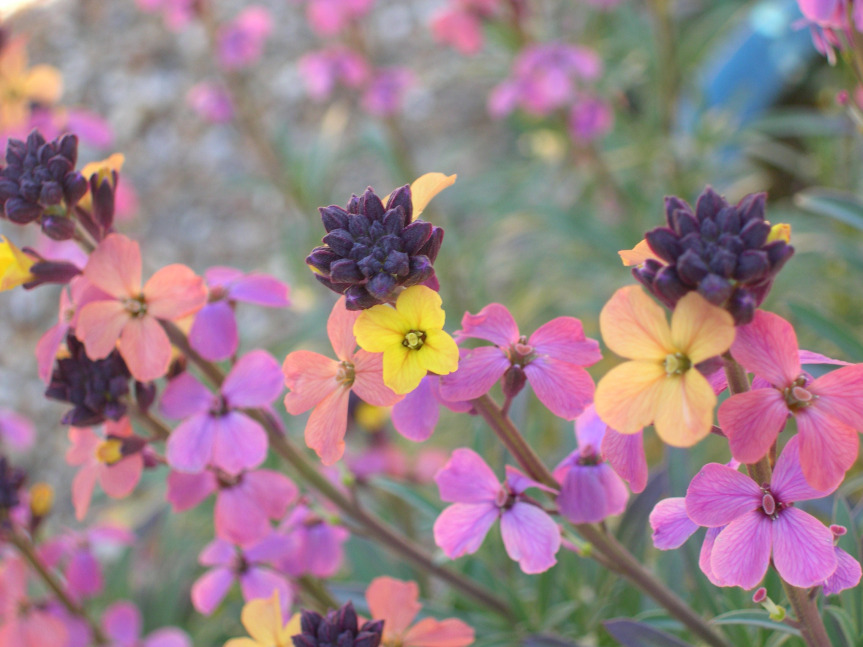
DESCRIPTION:  Wallflowers come in lovely shades of orange, apricot, and yellow. Plants grow to a height of 14 to 18 inches. Numerous flowers occur at the ends of spikes. Leaves are long and narrow.
CULTIVATION:  Wallflower plants cannot tolerate extreme heat and humidity. Given a sunny, airy spot in a mild climate, though, wallflower produce bright blossoms over a long period, if it is watered regularly. The plants grow easily from seed, which should be sown directly in the flowering site in spring. Blossoms often come the first year from seed.

The following legend tells us of the origin of wallflower: The daughter of a Scottish lord fell in love with the son of an enemy border chieftain  The fathers, of course, took offense at the match, and the lord betrothed his daughter to a prince of his choosing and locked her up in a tower until the wedding was to take place. The chieftain’s son, posing as a minstrel, sang at the foot of the tower, suggesting that she throw down a rope ladder and run away with him. The girl threw him a blossom of a wallflower to indicate she understood and then began to climb down to her lover. Tragically, she slipped and fell to her death. The heartbroken young man adopted the wallflower as his emblem and wandered over the countryside singing of his beloved.
Because of this legend, the wallflower is a symbol of faithfulness in adversity, according to the Victorian language of flowers. During the Middle Ages, troubadours and minstrels wore bunches of wallflower blossoms as a sign of good luck.
The genus name is from two Greek words meaning “hand” and “flower” and refers to the custom of carrying these sweet-scented flowers as a bouquet to ward off the evil odors resulting from poor sanitation practices of the past. They were especially popular during spring festivals.
The French call it giroflee violier because it has the same sweet scent as does the carnation, often called gilloflower.
The common name comes from the growth habit of some species, which prefer to climb stone walls or fences.
Wallflower has also been called blood drops of Christ, for the deep red wallflower was supposed to have grown under the cross. Also known as the bloody warrior, wallflower was planted outside the cottage gate as protection against invaders.
Wallflower has always been valued as a medicine. The water of the distilled flowers, drunk twice a day for three to four weeks, was thought to make a woman fruitful. It has been used for uterine and liver disorders, to treat enlarged glands, and to purify the blood. Other remedies made from wallflowers have been used to ease pain during childbirth, treat palsy, and clear up cataracts. According to the doctrine of signatures, the yellow wallflower was used to treat jaundice. Scientists have discovered substances within the seeds, roots, and leaves that affect the heart, and for this reason, it is not recommended for a home remedy.

The plant was originally found growing in the Aegean Islands.

Feel Good Sunday: Video-Mini Horses Say Goodbye to Winter | Straight from the Horse’s Heart

“Recently we ran a Mini Video on Feel Good Sunday and received many notes calling for another, so here you go folks.  Old Man Winter is only hours away from succumbing to Spring so it is only fit that the little equines who capture everyone’s heart have a final romp in the snow before the arrival of fresh green grass, flowers and foals.  Have a great and wonderful day where ever you are and never give up on the good fight.  Keep the faith my friends.” ~ R.T. Fitch

Source: Feel Good Sunday: Video-Mini Horses Say Goodbye to Winter | Straight from the Horse’s Heart

GRAPE HYACINTH – Good Witches Homestead

Source: GRAPE HYACINTH – Good Witches Homestead

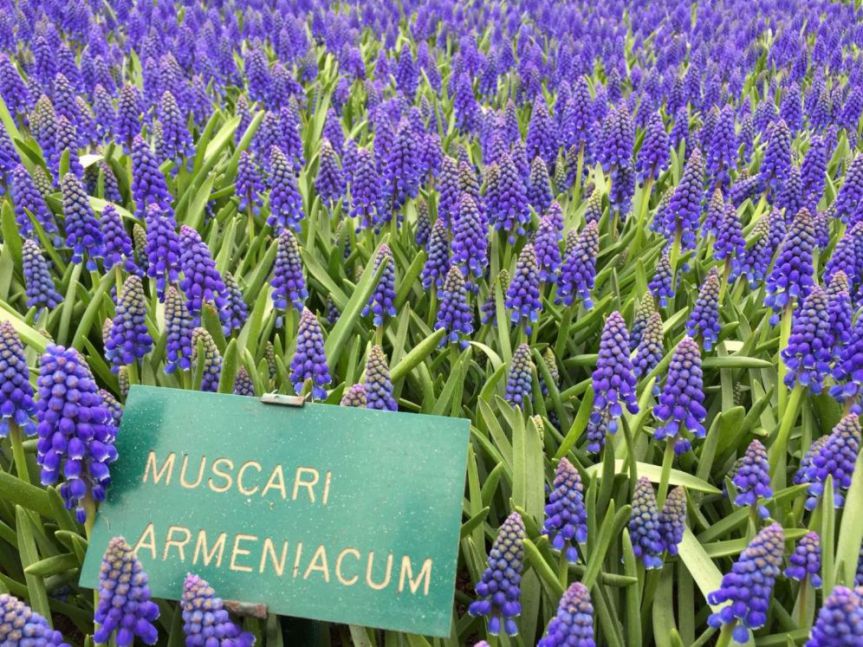
COMMON NAME:  grape hyacinth
GENUS:  Muscari
SPECIES, HYBRIDS, CULTIVARS,
M. armeniacum ‘Early Giant’-blue
M.a. ‘Blue Spike’-up to 12-inch blossoms.
M. a. ‘White Beauty’-white.
M. botryoides-pure white.
FAMILY:  Liliaceae
BLOOMS:  early spring
TYPE:  perennial
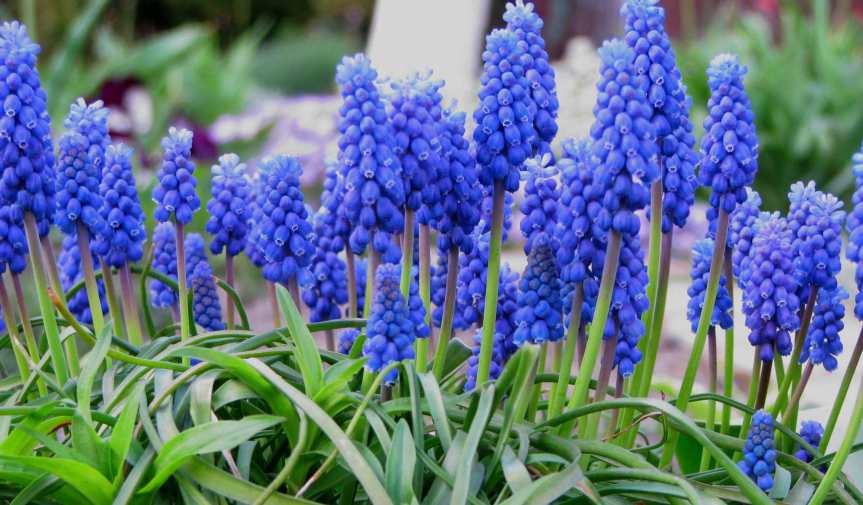
DESCRIPTION:  Most grape hyacinths grow 6 to 8 inches tall and produce spikes full of round, almost closed blossoms. They spread about 3 inches and have foliage that is long, narrow and grasslike.
CULTIVATION:  Grape hyacinths come from small bulbs, which should be planted 3 inches deep and 3 inches apart. For best effect, the bulbs should be planted in quantities. They are particularly effective under trees or shrubs. Grape hyacinth does equally well in full sun or partial shade. The leaves should be left to die back naturally after the flowers bloom.

Some species of the genus Muscari have a sweet, musky scent, and this is the reason for the name, for Muscari is from the Greek word moschos, or “musk.” Many gardeners originally grew the plant for its scent and not its beauty. The species name botryoides is also from Greek and means “a bunch of grapes.” This, along with the plant’s physical resemblance to the hyacinth, gives us the common name, grape hyacinth.
M. botryoides is also called the starch hyacinth, for it smells like starch.

Muscari_armeniacum2

Grape hyacinths are native to southern Europe, Northern Africa, and western Asia. The small bulbs have been used extensively in cooking. It has been suggested that boiled in vinegar {to reduce the bitterness}, the bulbs of M. comosa and M. atlanticum can be made into very tasty pickles. Other species are so bitter that they have earned the name Bulbus vomitorium. The first-century Greek physician Discorides wrote, “of this wort it is said that it was produced out of dragon’s blood, on top of mountains, in thick forests.”


Crystal of the Week: Rutilated Quartz – Holistic Experiment

Rutilated Quartz, also known as Angel’s Hair, is a type of quartz with needle-like rutile in it; they can be reddish, golden, silver, or greenish.  It’s known to be a powerful protector against psychic attacks and helps soothe dark moods and acts as a natural antidepressant.

This stone can be used to break down the barriers to spiritual progress, and to help let go of the past and to forgive on all levels. It’s an energizing stone that helps get energy moving on all levels and can attract love and stabilize relationships.

Rutilated Quartz can help slowed chakras return to normal spin and balanced. It’s often used for meditation, spiritual communications, and dream work. It’s good for seeking higher spiritual experiences and meditation on feminine ideas.

Physical, Emotional, and Spiritual Purposes […]

Read the entire post at its Source: Crystal of the Week: Rutilated Quartz – Holistic Experiment

HYACINTH – Good Witches Homestead

Source: HYACINTH – Good Witches Homestead

COMMON NAME:  hyacinth
GENUS:  Hyacinthus
SPECIES, HYBRIDS, CULTIVARS,
H. Orientalis ‘Amsterdam’-bright red to pink.
H. o. ‘Anne Marie’-light pink.
H. o. ‘Carnegie’-creamy white.
H. o. ‘Delft Blue’-blue
FAMILY:  Liliaceae
BLOOMS:  early spring
TYPE:  perennial
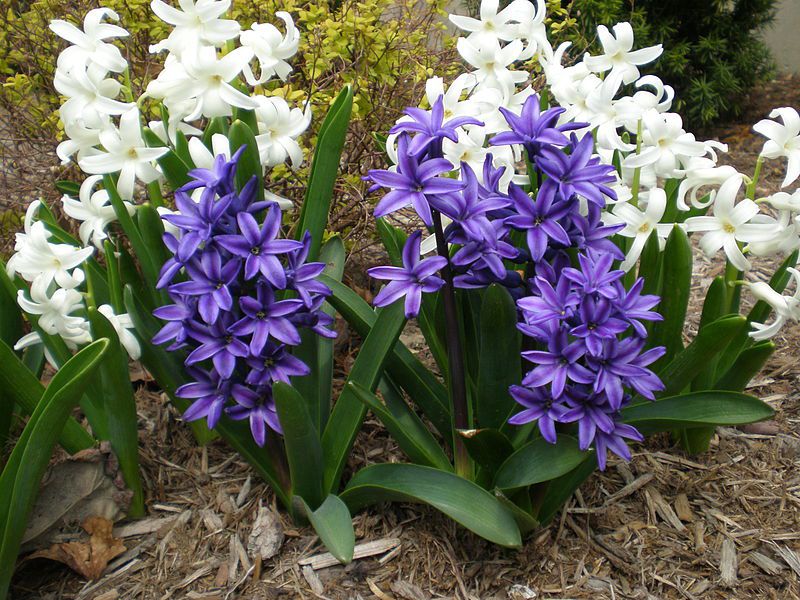
DESCRIPTION:  Hyacinths are widely used as a spring bulb. The top flower size is 7 to 7 1/2 inches in circumference. The flower spike is composed of neatly rounded mounds of small blossoms. Flowers are available in pink, white, cream, reddish pink, blue, yellow, and violet blue.
CULTIVATION:  Good drainage is a must for this plant because the bulbs rot easily if water stands on them. Bulbs should be planted in the fall, 6 inches deep, 6 to 8 inches apart. Mulch them in the fall to protect the tender spring growth from frost damage. Bulbs should be planted in an area that bets full sun or partial shade.

According to mythology, hyacinths originated because of the wrath of Zephyr, a god of the wind. Apollo, king of all the gods, fell in love with Hyacinthus, son of the king of Sparta. One day as Apollo and Hyacinthus were playing quoits {a game similar to today’s horseshoes}, Apollo threw the metal ring and Zephyr, jealous and enraged, caused the wind to make the metal ring hit Hyacinthus and kill him. Broken hearted, Apollo created the hyacinth flower out of the blood of his friend. Some even say that the petals look like the Greek syllables ai ai, meaning “woe.”
The Victorian language of flowers hyacinth means sport or play, and the blue hyacinth is a symbol of sincerity.
The Greeks dedicated this plant to Ceres, the goddess of agriculture. In ancient Sparta, annual Hyacinthian feasts were held. A Greek girl wore a crown made from hyacinth blossoms when she assisted at her brother’s wedding.
Greeks used concoctions made from the plants to treat dysentery and the bite of poisonous spiders. Such a concoction was also reputed to have the power to prevent a young boy’s voice from changing during puberty, making it very popular with singing masters of the time.
Hyacinths were first found growing in Asia Minor, as is suggested by the species name orientalis. Cultivated in Turkey and Persia, hyacinths were brought to England from Persia in 1561.

hycinths

The following story is told of how hyacinths got to Holland: Trading ships carrying crates of these exotic and expensive bulbs wrecked off the coast of Holland. The crates broke open, and the waves washed the bulbs ashore, where they rooted and produces beautiful flowers. However hyacinths got to them, the Dutch lent their magical hands to the plant, and by 1724 more than 2,000 varieties of hyacinth were found in Europe. Though interest in the bulbs never quite reached the level that tulips created, the price of hyacinth bulbs was quite high and competition for new varieties fierce.


Scilla – Good Witches Homestead

Source: Scilla – Good Witches Homestead

COMMON NAME:  scilla
GENUS:  Scilla
SPECIES:  S. sibirica
FAMILY:  Liliaceae
BLOOMS:  early spring
TYPE:  perennial
DESCRIPTION: Scilla has short {4 to 6 inches} spikes of bright blue or white flowers. The foliage is attractive and the growing habit neat, making it an excellent plant to use as a border or edging plant. It also lends itself well to an informal setting and looks very good naturalized under trees or shrubs.
CULTIVATION:  The small bulbs should be planted 4 inches deep in the early fall. Give them an open, sunny spot, and they will multiply rapidly.

Ten species of Scilla are native to Europe, and several of these have been cultivated for many centuries. Some records indicate that at least five species of Scilla were being cultivated as early as 1597.
The genus name means “I injure” and refers to the poisonous properties of the plant. Red scilla was even used as rat poison.
Scilla is often called squill. The bulbs of both the red and white squills were made into a concoction called a “syrup of squills.” This supposedly had medicinal properties, and a drug found in the bulbs was used as a component in heart tonics. The physiological effects of eating this bulb were thought to be similar to those of inhaling tobacco, for both acts on the nervous system. Roman statesmen suggested Scilla was a diuretic. It was also used to treat asthma and dropsy.
The Welsh name for this plant is cuckoo’s boot. S. bifolia was described by John Gerard, author of a sixteenth-century herbal, as “small blew flowers consisting of sixe little leaves spread abrode like a star. The seed is contained in small round bullets.”

During Elizabethian times, the starch used for stiffening collars was made from the bulbs of this plant.


Goddess Maat – secretsoftheserpent

By gserpent

Source: Goddess Maat – secretoftheserpent

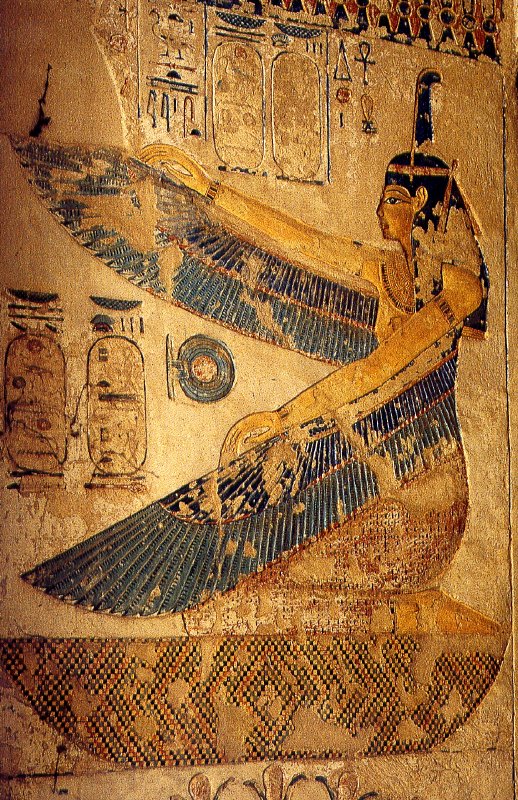
c30c794c5961426e73f84e295903a5f4

Mainstream references will tell you that Maat was the ancient Egyptian concept of truth, balance, order, harmony, law, morality, and justice. Maat is a perfect example of how much knowledge we have lost about the ancients. Just like Osiris, Maat had nothing to do with death. She had to do with the underworld. Everything we know about Maat has come from the patriarch minds of Lower Egypt. Her true symbolism is way more interesting.

First off you need to know that all the Princesses and Queens in Egypt  held the title of Maakare. Even Hatshepsut held this title. When you break this down it becomes Maat, Ka, Ra. These women were very important priestess. The role of the priestess is said to be the Divine Adoratrice. Patriarchs will tell you that her role was to worship or adore the deity. They are simply being selective with the truth. The word they are using is ‘djuat’ and it can mean worship, adore or star. The truth is that she was the Star of the Gods. Out goes the image of a groveling woman on her knees and incomes the image of a woman who is so important to the gods that she is the star! Maakare literally means “Maat is the soul of Ra”. They try to cover this up by saying “Truth and Justice is the soul of Ra”. The truth and justice they are referring to are man-made laws. As you will see, they don’t know the true meaning of Maat.

Maat is sometimes portrayed with wings. In Egypt winged gods and goddess always represent non physical, abstract dynamics – Intellect, spiritual, imagination, psychic. You can’t mention Maat without the feather. The feather was actually the symbol for Maat. She was supposed to measure the feather of knowledge against the heart. What is going on here? What is actually being weighed? Maat is the goddess of truth, justice, balance and harmony, but not in the way you think. Maat is a goddess and goddesses could care less about man-made laws and order. Maat is about nature or the Laws of Nature. So the feather represents the laws of nature. Imagination is the knowledge of the heart. Weighing the feather against the heart is measuring purity, innocents, and harmony of Universe. Thoth weighing the soul is the knowledge of nature. The scales are weighing mind, body and spirit, matter.

This weighing did not happen after someone died. It happens when you enter the underworld or subconscious. In other words, she is there during the wake up process. Most people, if not all, fear the sacred feminine. They don’t understand it. All humans are in the masculine, but females are closer to the sacred feminine. They are the sacred feminine expressed in physical form, so of course they are closer to the sacred feminine. Our minds are 10% conscious and 90% unconscious. We are in the conscious mind all the time. This is what is meant by we only use 10% of our brains.

The patriarch Hyksos hijacked Maat and either out of ignorance or greed they said she measured your soul to get into paradise. It is written in the Papyrus of Ani that when people died they had to recite 42 negative confessions. The Papyrus of Ani was written by the scribe Ani, a Hyksos sympathizer. He wrote these about the time they were kicked out of Egypt for the first time. They got the 10 commandments from these negative confessions, but instead of saying “I have not” they combined them and put “Thou shalt not”. In another text by Ani, called the Maxims of Ani, they got Jesus’ Sermon on the Mount and the Lord’s Prayer. To all you mainstream historians, theologians and researchers, your silence is deafening on this!

In truth Maat herself is the scales. She is bringing the ego to atonement. She is not crushing the ego. Once you find the goddess, the ego becomes an agent for her. Other cultures used the tip toeing goddess to symbolize walking the line of balance. This was not to make sure chaos never happened. The Upper Egyptians saw chaos as necessary because it started the wake up process. Chaos keeps you from becoming static. They did not see chaos as evil. Pain and struggle creates life. All you have to do is look at the birth of a child. Nature gives us the answers. The Lower Egyptians are the ones that made chaos evil. They are also the ones that created all the patriarch religions of today. Religions were created to keep you from meeting your higher self. Maat shows up at the beginning of the wake up process to see if a person is balanced enough to truly “wake up”. The goddess(sacred feminine) and self-love is the key to making it through the underworld. Maat is showing there is a need for order and balance, but everyone is different and needs to find their own individual balance. There is a need for moral law, but moral law should help people see the universal will and prevent people from dominating others. The moral laws we have today ensure that people are dominated and controlled.

602px-ammit_bd

I know there will be questions about Ammit. Ammit is supposed to be a female demon. She had a body that was part lion, hippopotamus and crocodile. Ammit lived near Maat’s scales. Supposedly if someone’s heart wasn’t pure, Ammit would devour it and the person could not go forward on their voyage. Once she swallowed the heart the person became restless forever. They were said to die a second death. I have shown before that the ancient Egyptians said the soul died when it entered a body or fleshy existence. Your soul died when you were born. This was considered the first death. When a person enters the wake up process, Maat weighs their heart with the feather of knowledge. If they have the sacred feminine or nature in their heart they could proceed. If the sacred feminine did not balance with the masculine, they don’t wake up and are restless. Because the person does not wake up they were considered to have died a second death. It is said that sometimes Ammit would stand by the lake of fire and she would cast the unworthy hearts in and destroy them. This has to be a later interpolation by christians because it is being compared to hell. In truth, fire is one of the four elements of consciousness. Fire is intellect. If Ammit is casting hearts in to the lake of fire, it is to get intellect or knowledge. The ancients thought ignorance was the greatest evil and there was nothing more precious than knowledge.

I’m not saying that people who don’t wake up are restless, but just look at the world. We live in a restless world by design. A racing mind is because our world is traumatic. If your mind is restless you can’t hear your higher self. I know my mind was pretty damn restless before I woke up. If you have truly ‘woken up’, for the most part your mind is at ease. It is what happens when you find your power. We all fall off the horse sometimes, but knowing your true power makes it easier to get back on. You have to conquer the masculine for the feminine to rise. Once you do, find your own balance. Get out in nature. She will help you find that balance. Nature is the living subconscious and nature is balanced. Maat is showing you to find the feminine principal in yourself. The sacred feminine is the forbidden fruit. Balance the scales by eating the forbidden fruit.  Balance is the key to everything.

The Victorian Language of Flowers – Good Witches Homestead

The language of flowers was quite suited to Victorian England, for it allowed for communication between lovers without the knowledge of ever-present chaperones and parents. Messages that would be a social impossibility if spoken could be conveyed by sending certain types of flowers. How these flowers were sent was of great importance as well, for this was also part of the message. If the blossom was presented upright, it carried a positive thought. If the flower came upside down, it might mean quite the opposite. If the giver intended the message to refer to himself, he would incline the flower to the left. If the message referred to the recipient, it would be inclined toward the right. If flowers were used to answer a question and were handed over with the right hand it meant “yes’;  with the left hand, the answer was “no.” Other conditions of the plant were important as well. For example, if a boy sent a girl a rosebud with the leaves and thorns still on it, it meant ” I fear, but I hope.” If the rosebud was returned upside down, it meant, “you must neither fear nor hope.” If the rosebud was returned with the thorns removed, the message was “you have everything to hope for.” If the thorns were left but the leaves removed, the message was “you have everything to fear.” If the young lady kept the rosebud and placed it in her hair, it meant “caution.” If she placed it over her heart, the message was clearly “love.” The Victorians took the language of flowers a bit further and actually began attributing personalities to various flowers, as Thomas Hood exemplified:
The cowslip is a country wench,
The violet is a nun;-
But I will woo the dainty rose
The queen of everyone.

During the last part of the nineteenth century, several floral dictionaries were published. Among these was The Poetical Language of Flowers {1847}, The Language and Sentiments of Flowers {1857}, The Floral Telegraph {1874}, and Kate Greenway’s The Language of Flowers, first published in 1884 and republished in 1978. Because more than one dictionary existed, the possibility of error was great. One of these floral misinterpretations was famous by Louisa Anne Twamley in her poem “Carnations and Cavaliers.” The poem describes how a knight gave his lady a pink rose, meaning our love is perfect happiness. His lady either did not know about the language of flowers or did not care, for she sent back to him a carnation, which means refusal. The result was the tragedy: the lovers died for each other’s love.

It was during the Victorian period that tussie-mussies became popular. A  tussie-mussie is a small bouquet of fresh or dried flowers, usually surrounded by lacy doilies and satin ribbons. Tussie-mussies were popular, in part, for the very practical purpose of warding off bad smells and disease. Some of the most useful flowers for this purpose included lavender, rosemary, and thyme. Tussie-mussies made marvelous gifts then, and they still do. They are easy to make, and, accompanied by a card explaining the meanings of the flowers used, make a uniquely personal present. Tussie-mussies can be made from either fresh or dried flower. Choose a relatively large, perfect blossom for the center flower. A perfectly formed rose blossom is wonderful for this. Surround this with smaller blossoms and ferns and put the stems through a doily or starched lace. If using fresh flowers, wrap the stems with damp paper towels and then cover them with plastic wrap or foil held in place with florist tape. If using dried flowers, simply wrap the stems with florist tape. Fresh flowers that are good to use in tussie-mussies include rose, baby’s breath, cornflower, phlox, aster, and carnation. Suitable dried flowers include strawflower, statice, honesty, ageratum, and sedum.

Flowers and Their Meaning … […]


Read the entire article at its Source: The Victorian Language of Flowers – Good Witches Homestead