
The Fall Equinox is traditionally about harvest, harvesting the fruits of your labor and the fruits of the land in preparation for the coming of winter. This model of the wheel of the year focuses on earned outcomes: you’ve planted your crops, you’ve tended them all season, you’ve invested the time, and now, you are able to receive the rewards of your efforts. And a lot of our own understanding of the celebration of these seasons works on that narrative: planning, planting, tending, harvesting, and the cycle of the seasons. This same cycle is expected, perhaps, anticipated, in our everyday lives. For example, if you put the effort into getting degrees and starting a career, or if you put in a ton of hard effort at your workplace, you will eventually be rewarded with a harvest, a payoff, and a sense of stability. There’s this large sense that…
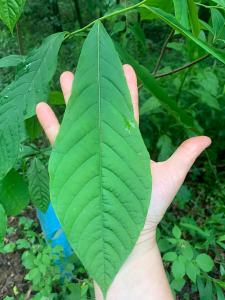
The PawPaw is a tree that is so wild and unique and wonderful, and yet, is often quite unknown–it is the only native citrus tree we have in the upper east East Coast and midwest areas. Like some of the other trees I have recently shared in this series, Paw Paw is an underappreciated and under-recognized tree. Within the bushcraft and permaculture circles, it is quite well known as an amazing tree to find, plant, and tend. One of the reasons that PawPaw is probably not more well known has, unsurprisingly, everything to do with the commercial viability of the fruits. PawPaw fruit is absolutely delicious but it only stays good for a few days after picking–so it would never survive the rigors of modern industrial agriculture. You can occasionally find it at a good farmer’s market, and it is well worth…
Harvested dock seed with a ready-to-harvest yellow dock plant
This past month, I had a chance to visit Silver Acres, my friend’s 5 acre farm in the thumb of Michigan, where she is practicing rewilding, restoration agriculture, and permaculture. We were walking through her field and found a good deal of yellow dock that was in seed form–which for the Midwest US, usually happens around Lughnasadh (August 1st) and continues to the Fall Equinox. While I’ve eaten the young leaves and used the roots as medicine, I haven’t had a chance to try making any seed flour yet–so we set about our task joyfully. I’m quite impressed by how easy this flour is to make (compared to say, acorn flour) and it cuts nicely with other flours.
Foraging for wild foods is not only a fantastic way to connect deeply with the land but also allow us to reconnect…
A common sentiment among non-foragers is that harvesting wild mushrooms for consumption is dangerous.
“I’ll stick to the mushrooms sold in grocery stores,” the non-foragers say. “They’re much safer.”
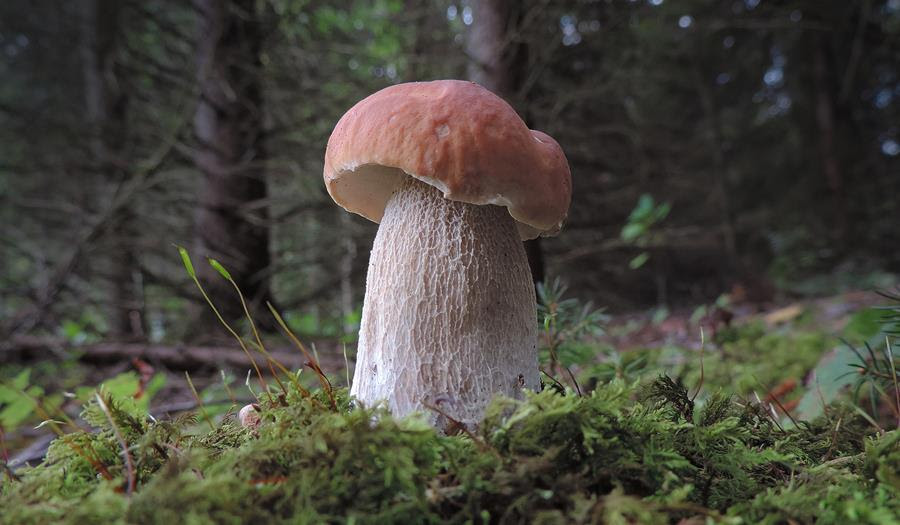
Turns out, that’s not always the case. Commercially sold mushroom products are often mislabeled. In some instances, the mislabeled products sicken consumers.
A brand new study exposed the widespread inaccuracies associated with commercially sold mushroom products. Here are 3 major findings from the study:
Many commercially sold “wild” mushrooms are actually cultivated mushrooms.
Of the mushrooms that are actually wild, many of them are not the same species that are listed on the labels.
Some products contain species whose edibility is at best dubious, and at worst potentially toxic.
To shed additional light on the topic of fraudulent mushroom products, I filmed a brief video in which I dig a bit deeper into the study’s discoveries.
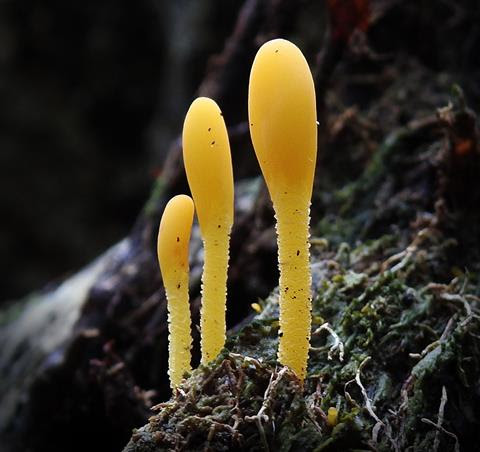
You’ll never see this fungus sold in products intended for consumption (unless the product is mislabeled, of course), but you will find it growing in coniferous forests this time of year. Have you seen anything like it? To learn more about this club-shaped species, check out the latest Instagram post!Click to view post
Thanks for reading and watching, and thanks for your continued support!
Foraging for wild foods, mushrooms, and wild medicines is something that is growing as a pastime for many people. The joy of foraging from the land connects us to our ancient and primal roots and allows us a chance to build a more direct connection with nature. But with any practice rooted in nature comes the need for balance and responsibility. Thus, the following principles can help wild food foragers and wild food instructors harvest ethically, sustainably, and in a way that builds wild food populations rather than reduces them. I share both the principles in text below as well as graphics. The graphics are (full size and web-sharable versions, see links) and they are licensed under a Creative Commons license. Anyone who teaches plant walks or wants to use them in foraging, wild foods, and herbalism practice is free to download them, print them, and share them! The…
From place to place, season to season, and year to year,
the colorful mixtures and combinations of flowering herbs
are influenced by permutations of weather, grazing,
competition with grasses, and seed abundance.
~David S. Costello
Since childhood the words “For amber waves of grain, For purple mountain majesties, Above the fruited plain” colored my impression of the landscape of the western part of our country. Visits to grandparents, aunts and uncles, and masses of cousins didn’t disappoint my vision. It wasn’t until adulthood that I fully understood that those words were essentially a drone fly-over.
For some of us, it takes paying attention not only to the larger landscape, but to the details as well to appreciate the enormous botanical diversity of our country. From the tallest coast redwood (Sequoia sempervirens) to the tiny littleleaf pyxie moss (Pyxidanthera brevifolia)and its 1/4-inch flowers peering…
At the heart of the challenges, we face in transitioning from a life-destroying culture to a life-honoring one is to disentangle the many underlying myths and narratives that subconsciously or consciously drive our behaviors. These myths include the myth of progress, the myth of infinite growth, the lure of materialism, and the assumption that nature is there only to serve our needs. These myths have, in part, been the underlying forces that have driven us to the present challenges of our age. I believe many of these myths are rooted in colonialism, and if we are ever to end this awful practice and its centuries-old impacts, we must address them. They drive both larger systems at play as well as each of us. And while we can look to broader
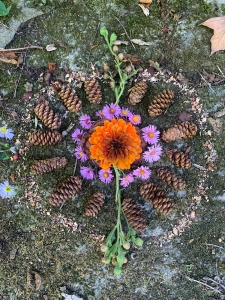
A nature mandala offered in thanks for our land that provides so much to us.
Poison hemlock gets an incredibly bad rap these days.
It’s weedy. It’s aggressive. And it’s lethally toxic.
Here in the United States, poison hemlock grows in almost every single state. Because many of us will inevitably encounter a naturalized population of poison hemlock, it’s important that we learn its key features and its effects on the human body.
The trend these days is to write scathing articles about poison hemlock where personal feelings eclipse objective information. Today, however, I’ll offer something different.
In a new video, I don’t get too angry talking about poison hemlock, but I instead try to remain fairly neutral when discussing its attributes.
Last year, I stumbled upon a pileated woodpecker nest for the first time. Exactly one year later, I encountered a second site in a different location. To read about my recent experience, and to view more photographs of the nest, check out the latest Instagram post!Click to view post
Thanks for reading and watching, and thanks for your continued support!
Juneberry Tree in Abundance We are now at the time when it is at peak throughout the Eastern US and thus,it is a great time to learn about this wonderful tree. Juneberry, also known as Amelanchier, Serviceberry, Saskatoon, or Shadbush is a grouping of 20 deciduous small trees or large shrubs. Juneberry is a delightful understory […]
Harvesting edible mushrooms that are contaminated with impurities is disappointing and potentially dangerous.
One of the most common questions I receive from concerned foragers is this:
“I hear that mushrooms bioaccumulate all kinds of substances. How do I know that the edible mushrooms I’ve harvested are safe for consumption?”
This is an issue that requires a lot of attention. Fungi, like many living organisms, can harbor all kinds of contaminants, including synthetic chemicals (e.g., pesticides and herbicides), radionuclides, and heavy metals.
While many factors remain outside the personal control of foragers, several actions can be taken to mitigate harm caused by these contaminants.
To shed light on heavy metal contamination, I created a video in which I answer 6 important questions. Information in the video includes:
The most problematic heavy metals.
Habitats that are known to be contaminated.
Edible mushrooms that hyper-accumulate heavy metals.
Specific parts of mushrooms that are most likely to concentrate heavy metals.
Cooking techniques we can implement in the kitchen to reduce contamination.
…and lots more.
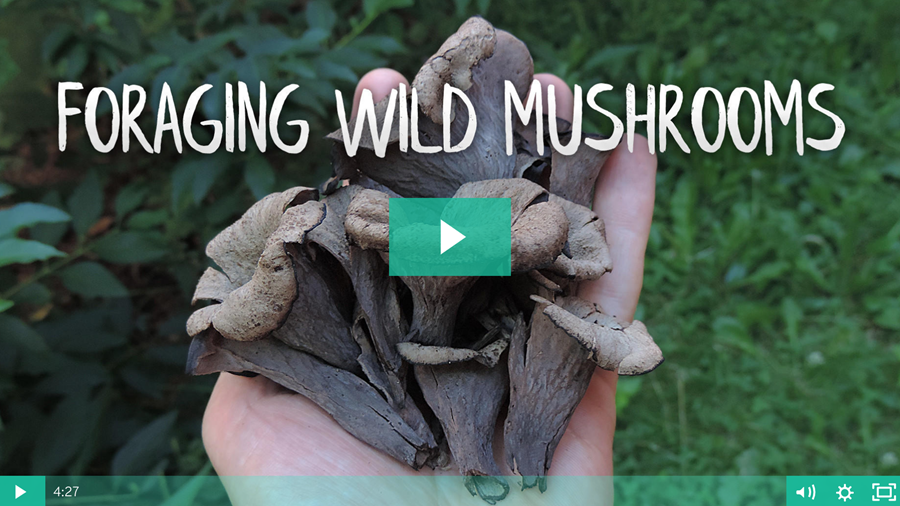
The following video is one of over 80 exclusive videos featured in Foraging Wild Mushrooms — a four-season online course designed to help you confidently and successfully forage wild mushrooms.
Registration for Foraging Wild Mushrooms is open until Monday, May 24th at midnight. After May 24th, registration will be closed.
If you’ve ever considered harvesting wild mushrooms but didn’t know where to start, or where to go, or how to discern between edible and poisonous species, Foraging Wild Mushrooms will equip you with the skills necessary to ensure that your harvests are safe and successful.
To get a sneak peek into the kinds of content found within the course, check out this video.
Please note that this video is available until Monday, May 24th, and will only be available to registered students afterwards.
Thanks for reading and watching, and thanks for your continued support.
You must be logged in to post a comment.