Sacred Trees in the Americas: Spicebush (Lindera Benzoin) Magic, Ecology, and Sacred Uses

Dana's avatarThe Druid's Garden

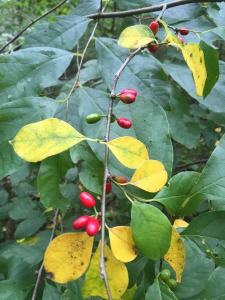
Spicebush leaf and berry in August in Western Pennsylvania

As I continue to explore some of the most important understory trees in the US East Coast and Midwest region, we turn our attention today to the amazing Spicebush (Lindera Benzoin).  Historically, Spicebush was an incredibly important plant, medicine, and spice both to Native Americans and early white settlers in the US and yet today has largely been forgotten in history. Spicebush is a native understory tree with a large range in North America, spanning from Maine to Florida and all the way across the south and Midwest to Texas and up to Ontario. While I’ve taught this plant routinely on my plant walks, and what amazes me is that nobody can even identify it, much less recognize how it might be used. Spicebush has an incredible flavor, medicinal value, and offers much in the way of magic and mystery. It…

View original post 1,877 more words

Sacred Trees in the Americas: American Hazel (Corylus americana) Magic, Ecology, and Sacred Uses

Dana's avatarThe Druid's Garden

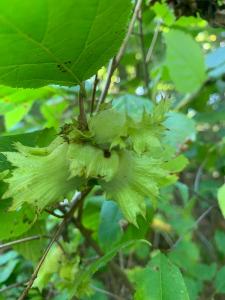
American Hazelnuts in a cluster getting ready to ripen

For three years, I have had my eye on our American hazel bushes here at the homestead. When we first moved to the property, much of the understory was damaged with the logging the previous owners did and it took time for the hazels to recover.  Thus, for the last few years, I’ve watched the hazels grow taller and larger each year and kept looking excitedly for any signs of nuts setting. This past fall, I was delighted to find handfuls of delicious wild American hazelnuts and connect with the incredible wisdom that they offer.

While Hazel is a critically important tree in the mythology and magical tradition of Druidry and in Europe more broadly, The Hazel is one of the sacred trees identified by the druids as a tree tied to wisdom and the flow of Awen, and it is…

View original post 2,415 more words

Wildcrafted Druidry: Using the Doctrine of Signatures, Ecology and Mythology to Cultivate Sacred Relationships with Trees

Dana's avatarThe Druid's Garden

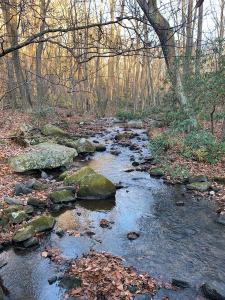
A stream in winter

Nature spirituality is most obviously tied to one’s local nature–the trees, plants, animals, landforms, and other features of what makes your own landscape unique. One of the formidable challenges before those of us practicing nature-based spiritualities in the United States and other “colonized” regions is that not only do we not have the right/access to native traditions on local uses of plants, we also have systems that are inherited from other places and may not properly fit. Ogham is a good example of this: if you use the traditional ogham in the US, it is kind of like wearing a pair of ill-fitting shoes: you can get by, but the system isn’t working with what is outside your door.

With that said, I have always been fascinated by the idea of a language of trees, a system that we can use for magical and divination purposes…

View original post 3,672 more words

The Magic of the Understory

Dana's avatarThe Druid's Garden

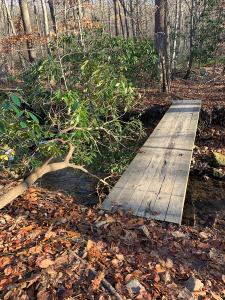
A path of evergreen mountain laurel at Laurel Hill State Park. Amazing to hike through in the winter, when the understory sings!

As you may have noticed, in the last month or so I’ve been working diligently on my “Sacred Trees in the Americas” series.  The truth is, I’ve worked through most of the trees that are well known and form the overstory of most of the forests in the US East Coast.  Trees like White Pine, Oak, Hickory, Sugar Maple, Ash, Beech, and Birch are dominant trees.  And when you do research on these trees, you find a rich tradition and lore from both the Americas and the Old World.  Recently, I’ve moved my attention to lesser-known trees like Ironwood and Devil’s Walking Stick, and have covered others like Witch Hazel (distinct and different from American Hazel) and Spicebush. There is a striking difference between the first group and…

View original post 1,244 more words

Sacred Trees in the Americas: Rhododendron (Rhododenron maximum)

Dana's avatarThe Druid's Garden

A Rhododendron overlooking a foot path at Laurel Hill State Park

I remember the first time I saw the largest Rhododendron Maximum tree. I had recently moved back to Pennsylvania, and I was driving on 422 towards my parents’ house when I looked to the left and did a double-take!  An enormous Rhododendron, in bloom, at least 40 feet across and 20 feet high was in full bloom.  And, it was dwarfing the house it was growing next to.  After doing a little local research, I learned about how famous this rhododendron has been in our region. Ever since then, each time I pass, the Rhododendron and I exchange a little greeting.

As someone who lives in the Allegheny Mountains, Rhododendron has a special place in my heart.  It is one of the dominant understory trees (and yes, it often is the size of trees here!), growing both in…

View original post 1,567 more words

Sacred Trees in the Americas: Ironwood or Hornbeam (Ostrya virginiana, Carpinus caroliniana)

Dana's avatarThe Druid's Garden

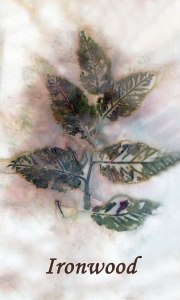
Ironwood tree ecoprint from my upcoming Tree Alchemy Oracle!

There are actually two tree species that are known as both “hornbeam” and “Ironwood” along the US East Coast and into the midwest: The American Hop Hornbeam (Ostrya virginiana) and the American Hornbeam (Carpinus caroliniana).  After doing a lot of research and interaction with both of these trees, I see them as interchangeable.  First, they are both in the Beech family (Order: Fagales, Family: Betulaceae). They actually have a very similar growth habit and look to their bark (like muscles), their wood is quite similar, and the hop-looking fruits are similar on both trees.  Thus, if you can find either of these trees, you can apply the information I’m sharing.  I have primarily focused on Ostrya Virginiana (Ironwood/Hop Hornbeam) in my comments here as it is the more dominant tree in my specific ecosystem.

This post is part of my Sacred…

View original post 1,348 more words

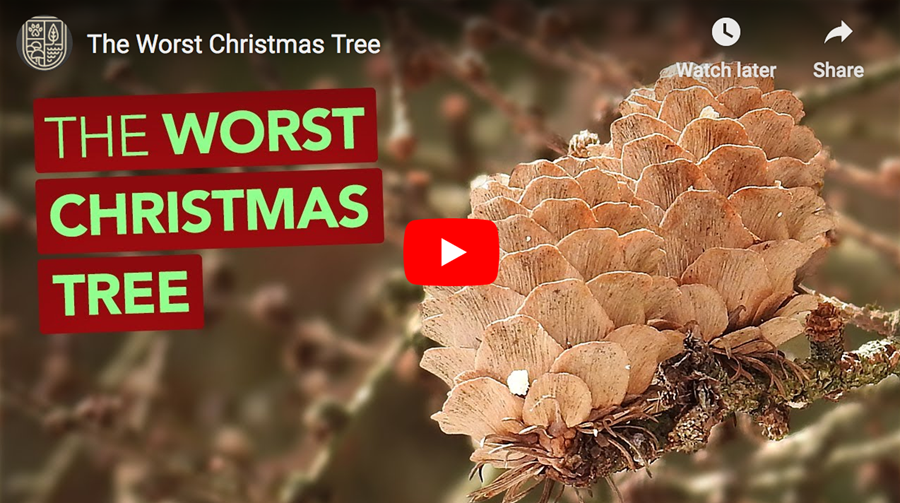
This Tree Wins The Award For “Worst Christmas Tree”

Greetings,

Before I share a brand new video with you, I want to provide a reminder that today — Monday, December 21st—  is the last day to register for Foraging Wild Mushrooms.  After today, registration will be closed for the season.

If you want to learn the skills involved in safely and successfully harvesting wild mushrooms with confidence, Foraging Wild Mushrooms can help you achieve that goal.

Click here to register before midnight.

And now onto this week’s brand new video.

The declining temperatures, sunlight, and vitamin D levels have all ushered in the official arrival of winter — a season in which humans enjoy bringing trees indoors.

But not just any tree, of course.  Conifer trees — and more specifically pines, spruces, and firs — are among the most harvested and celebrated trees during the holiday season.

Some of these trees are soft and flexible (e.g., white pine).  Others are lush and aromatic (e.g., balsam fir).  All of them, it goes without saying, are perpetually green.

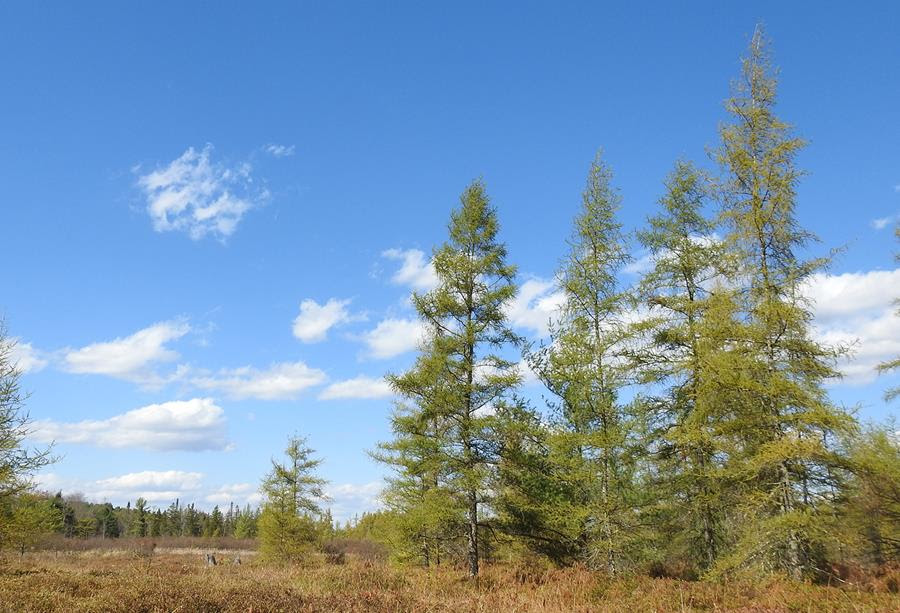
But there is one conifer tree that has never made the cut, and chances are good that, if you do consider yourself an arboreal celebrant of the holiday season, you’ve never invited this particular tree into your home.

In fact, out of all the trees discussed so far, this one would certainly be labeled “The Worst Christmas Tree.”

During a recent walk through a conifer landscape, I encountered this special tree and decided to film a video in which I attempted to answer several pertinent questions.

If you’re interested in learning more, check out the brand new video!

Thanks for reading and watching, and thanks for your continued support!

-Adam Haritan

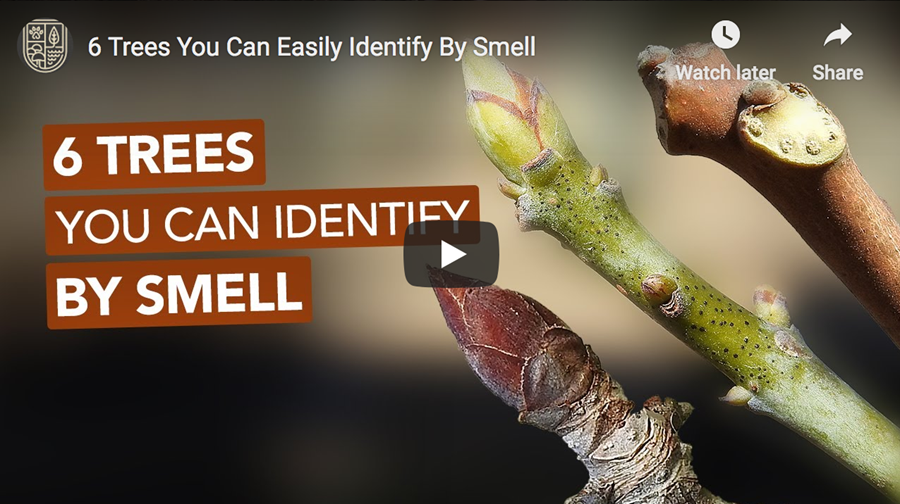
6 Trees You Can Easily Identify By Smell

As winter approaches, tree identification can pose many problems to those of us who typically rely on flowers, fruits, and foliage for clues.

Fortunately, trees don’t completely disappear during the coldest months, and although their winter outfits may conceal several diagnostic features, dormant trees still offer us a few critical pieces of information.

Take smell, for instance.

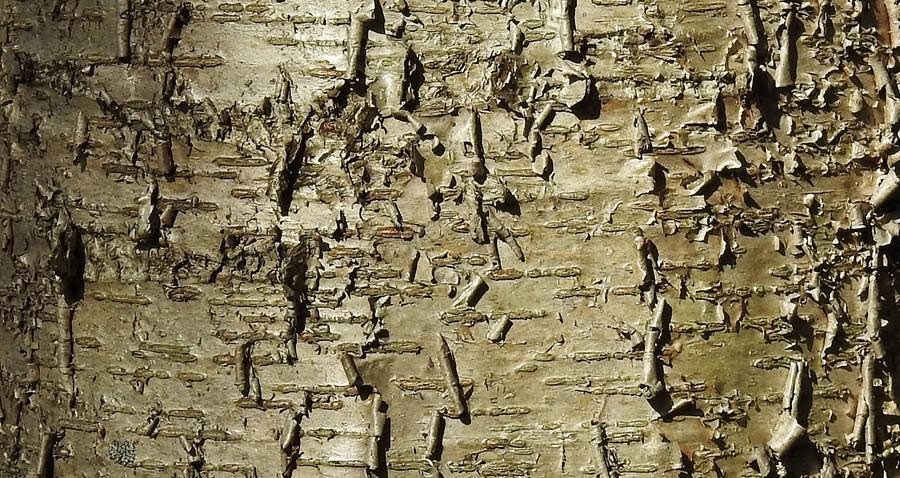
Many trees produce unique aromas and odors that can be detected when we scratch their fresh twigs.  These aromas will oftentimes lead us to a positive identification when other features fail to do so. 

In a brand new video, I discuss six trees that you can easily identify by smell.  If you’re interested in improving your winter tree identification skills, check it out!

Unlike deciduous trees in my neck of the woods, many creatures do not go dormant during the winter season.  I recently encountered this semi-aquatic animal while I was exploring the bank of a swift stream.  Are you familiar with this carnivore?  Check out the most recent Instagram post to learn more.Click to view post

Thanks for reading and watching, and thanks for your continued support!

-Adam Haritan