
Druid Tree Workings: Witnessing the Death of an Old Tree

Dana's avatarThe Druid's Garden

Oak friend - one of my first interactions with this incredible friend Oak friend – one of my first interactions with this incredible friend and mentor

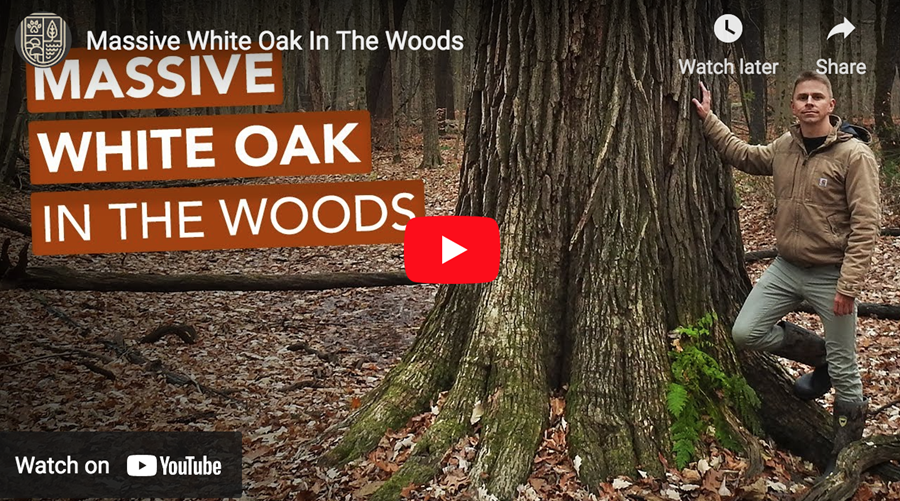
Many of us on the path of nature spirituality grow close to trees–so very close.  What happens when a tree that you love dearly, who is a good friend and mentor–tells you that it is time to go?  In this post, I share the story and passing of one of my dear tree friends, a White Oak with a giant burl. After I share the story, I offer some general thoughts about how we, as humans, can support and honor the natural lifespan of our tree friends. This post is meant to be a compliment to my earlier post: Holding Space and Helping Tree Spirits Pass.  My earlier post talked about trees who were cut before their time–while this post honors those who have the privilege of living a full life and dying naturally.

The…

View original post 1,652 more words

The Other Quince

The Herb Society of America's avatarThe Herb Society of America Blog

by Matt Millage

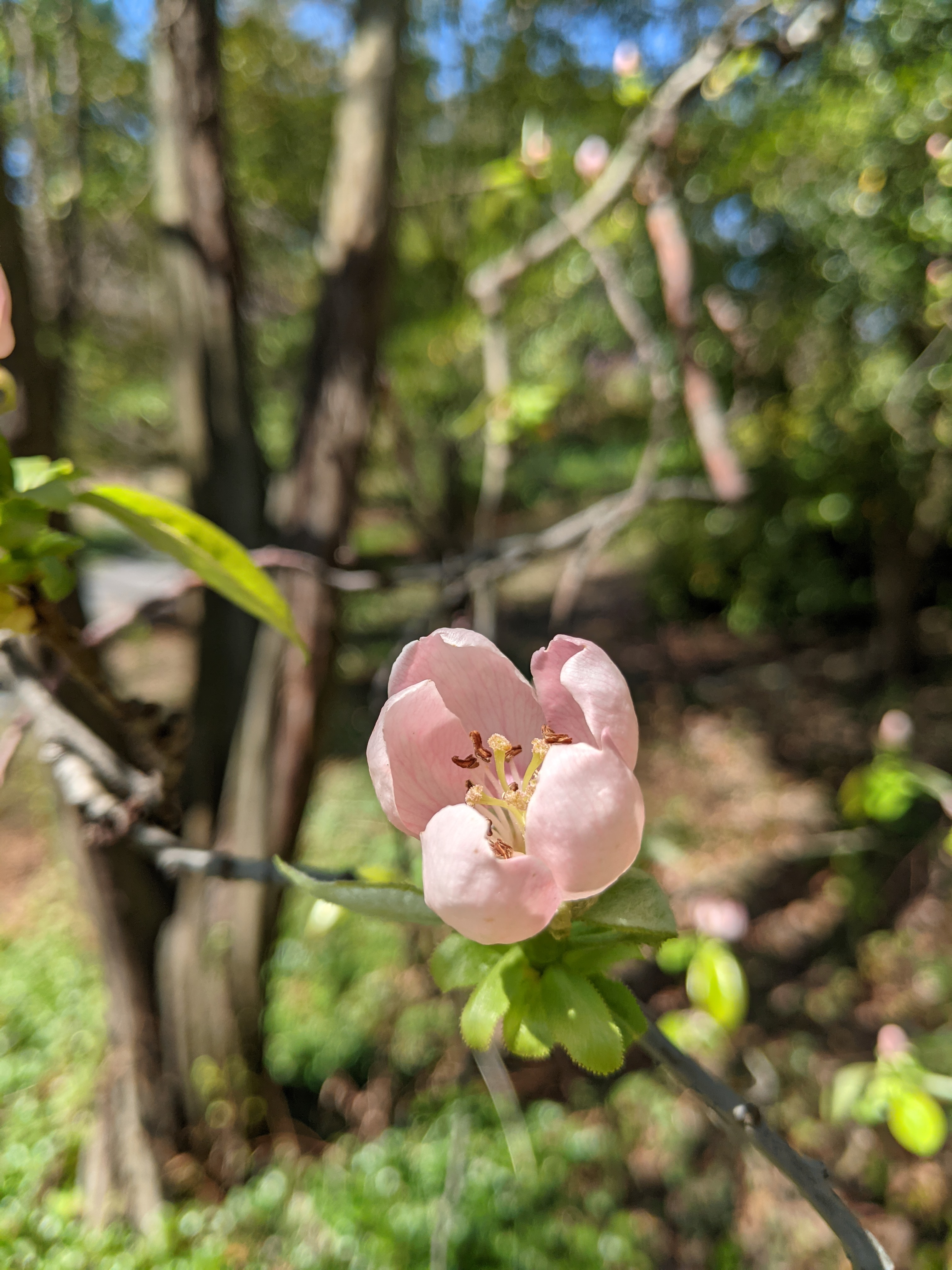
PXL_20210402_173312198After a brief email exchange with a colleague last fall around this same time, I set off to collect some fallen treasures from the forest floor from a tree I had never collected from before. The fruit was large and aromatic, but I was unfamiliar with its culinary use. Suddenly the sweet scent of ripening flesh let me know that the bounty was close, and true to smell, the six-inch long, bright yellow fruits of the Chinese quince (Pseudocydonia sinensis) were scattered beneath a tree. Much larger than its cousin, the common quince (Cydonia oblonga),which is used often in fruit production and tree grafting, the Chinese quince has a reputation for being rather astringent, and I had never thought of cooking with it. 

After informing my colleague that the harvest was complete, I inquired as to how he planned on using the crop. He explained…

View original post 1,192 more words

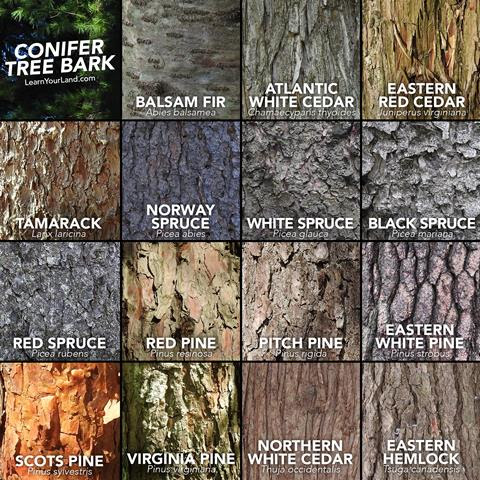
Old Growth Red Pine — An Uncommon Sight

Among the common, the uncommon exists.  Learning the uncommon among the common helps us see in new ways what has been in front of us all along.

Take red pine, for instance. 

Where I live in western Pennsylvania, red pine (Pinus resinosa) is a common sight.  Many county and state parks contain large tracts of land that host nothing but red pine plantations.  These plantations, believe it or not, are considered by fundamentalists to be “ecological deserts” — a category that also includes parking lots and golf courses.

Red pine, it seems, can’t catch a break.  Because of the bias against its ubiquity and against its purported ecological disservice, it’s no wonder that people rarely take any time to marvel underneath a red pine tree.

But there is something that we should know about red pine.  Among the common, the uncommon exists.

Red pine is not common in every context.  To provide two examples — “natural” stands of red pine are quite uncommon in my home state of Pennsylvania, and across the entire range of red pine, old growth red pine forests occupy less than 1% of their original range. 

What’s more, old growth red pine forests are far from ecological deserts.  Researchers consider these forests to be critical for maintaining biodiversity at stand and landscape levels.

To gain some insight on the matter, I decided to visit a “natural” stand of red pine.  Not too surprisingly, I did not discover an ecological desert.  Instead, I encountered a diverse ecosystem containing red pines that were approximately 250 years old and approaching old growth status.

If you are interested in learning the uncommon among the commoncheck out the brand new video!

Speaking of uncommon (or very common, depending on where you live), I recently encountered this melanistic eastern gray squirrel foraging for acorns.  The presence of melanism across the range of gray squirrels is really low (less than 1%).  In some areas, though, it can be higher than 50%.  To learn more about black squirrels, check out the latest Instagram post!Click to view post

Thanks for reading and watching, and thanks for your continued support!

-Adam Haritan

Druid Tree Workings: Intuitive Tree Sigils and Tree Sigil Magic

Dana's avatarThe Druid's Garden

Nature provides incredible opportunities for us to work with her magic, through symbolism, sacred geometry, and meditation.  Today, I wanted to share a technique I’ve been developing for land healing purposes–tree sigil work.

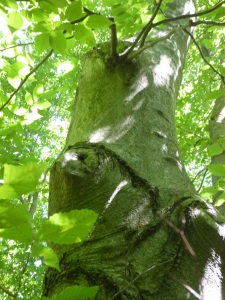
beech tree rising up with interesting patterns A potential tree to work with for tree sigils

Sigils have many different purposes.  In classic Western Occultism, some of the most well-known sigils are found in the Lesser Key of Solomon and are used to identify and evoke a particular spirit or entity. Another more recent use of sigils is through the practice of Chaos magic, where sigils are often used to set an intention and use the image to focus on that intention.  I covered bardic intuitive sigils some time ago on this blog; this use is in line more with the second intention. Sigils can be meditated upon, carved into wood or stone, energized and blessed, burned or buried, or placed in key areas…

View original post 1,301 more words

Healing from the Trees: Spruce Resin Salve Recipe

Dana's avatarThe Druid's Garden

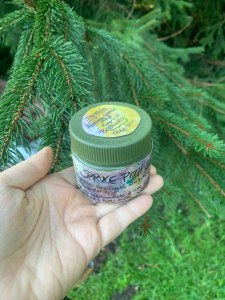
The completed salve! The completed salve!

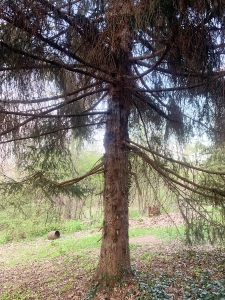
Since moving to our new homestead a few years ago, I’ve been working to build a local material medica–that is, learning about all of the medicinal plants, herbs, and trees here on our 5-acre property.  This also, of course, means growing a lot of my own herbs but also learning everything I can about the uses of the plants/trees already present on the land.  This post is a follow-up to my Spruce post from a little while ago to share some primary ways of working with spruce: A Spruce Resin Salve (also known as a Spruce Gum and Spruce Resin salve) with bonus fire-starters from the process!

Many conifers produce a tarry, sticky resin or sap that has a range of uses: as a binding agent or glue, as a medicine, as gum you can chew, as incense, as a fire-starting tool, as a waterproofing agent…

View original post 1,880 more words

Sacred Trees in the Americas: Paw Paw (Asimina triloba) Medicine, Myths, and Meaning

Dana's avatarThe Druid's Garden

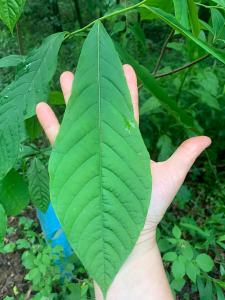
PawPaw leaf - as big as your hand! PawPaw leaf – as big as your hand!

The PawPaw is a tree that is so wild and unique and wonderful, and yet, is often quite unknown–it is the only native citrus tree we have in the upper east East Coast and midwest areas. Like some of the other trees I have recently shared in this series, Paw Paw is an underappreciated and under-recognized tree. Within the bushcraft and permaculture circles, it is quite well known as an amazing tree to find, plant, and tend. One of the reasons that PawPaw is probably not more well known has, unsurprisingly, everything to do with the commercial viability of the fruits. PawPaw fruit is absolutely delicious but it only stays good for a few days after picking–so it would never survive the rigors of modern industrial agriculture.  You can occasionally find it at a good farmer’s market, and it is well worth…

View original post 2,240 more words

Sacred Trees in the Americas – Black Willow (Salix nigra) – Magic, Mythology, Medicine and Uses

Dana's avatarThe Druid's Garden

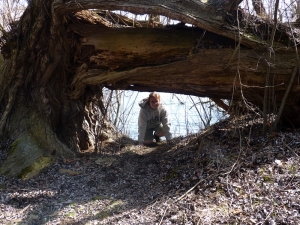
Me under a giant fallen, but yet living, willow tree! Me under a giant fallen, but yet living, willow tree!

One of my earliest memories was of three ancient black willow trees that were down by a little creek where I lived.  Although we lived on a busy crossroads in town, the stream and willows in the backyard were a quiet place, guarded by those three old willows. They looked like gnarled old women, sitting by the edge of the stream, their long branches swaying gently in the wind.  When the stream waters would rise, sometimes they would look like they were wading there, branches swaying in the current.  The Black Willow is an incredible tree, the largest Willow native to North America, and a great tree to get to know.

The Black Willow is also known as the Swamp Willow, Sauz, Dudley Willow, or the Gulf Black Willow.  It is native to all of Eastern North America, from the…

View original post 2,181 more words

These Male Trees Turn Female Even If It Kills Them

What goes on in a forest might be none of our business.  Curious minds, however, always want to know.

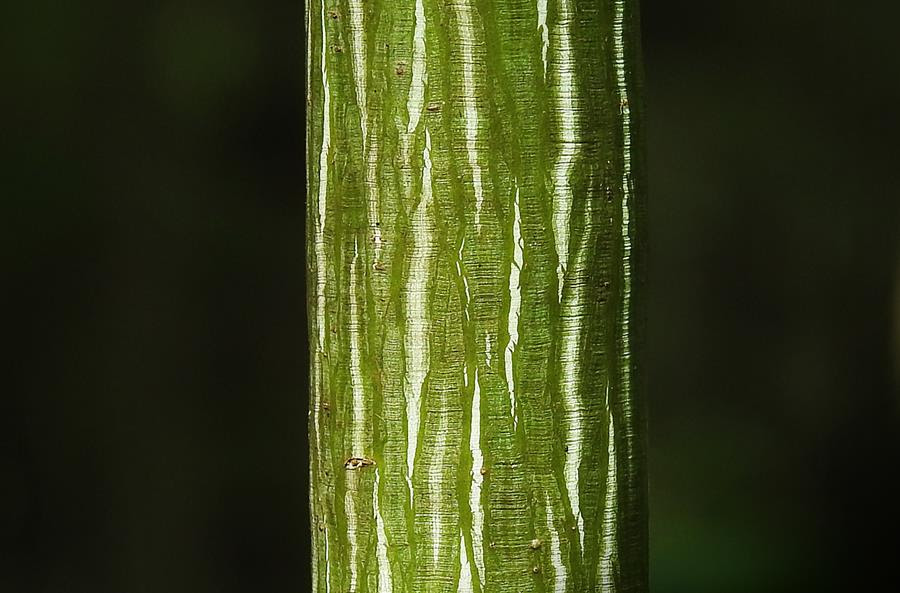
In the lower canopy layers of Appalachian forests, a particular tree known as striped maple (Acer pensylvanicum) does something that very few trees do.

It changes sex.

Males become females.  Females become males.

In academic circles, this phenomenon is known as sequential hermaphroditism.  Some plants do it when stakes are high.  In the case of striped maple, males become females even if it kills them.

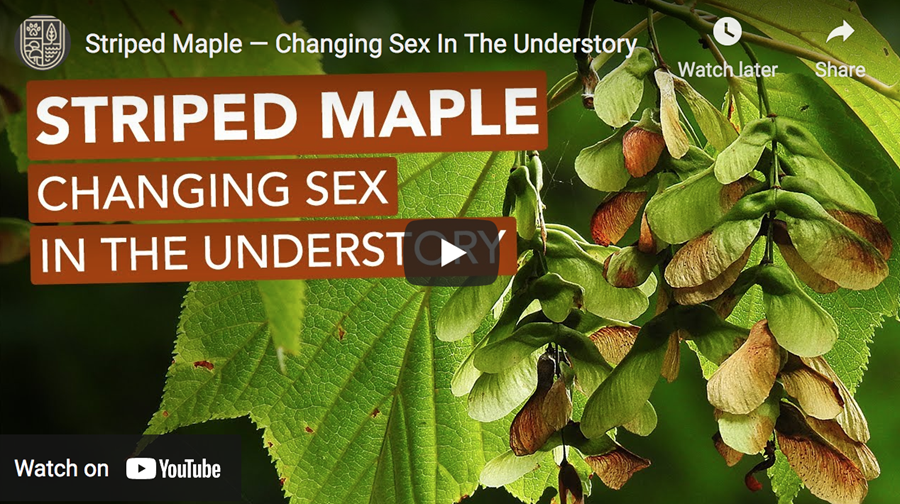
Why does this happen, and what else is known about sex changes in plants?  In a brand new video, I introduce some important questions and wonder about them aloud.

If you’re interested in learning more, check out the brand new video!

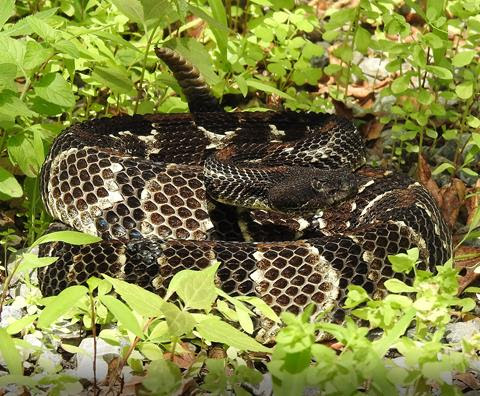
This animal does not change sex but it does change the way people maneuver through the woods.  I recently spotted a few timber rattlesnakes in a Pennsylvania forest.  To see photographs and to read more about my encounters, check out the latest Instagram post!Click to view post

Thanks for reading and watching, and thanks for your continued support!

-Adam Haritan
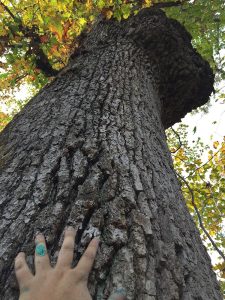
Sacred Trees in the Americas – Eastern Sycamore (Plantaus Occidentalis) – Magic, Medicine, Ecology and Uses

Dana's avatarThe Druid's Garden

The glorious sycamore tree! The glorious sycamore tree!

Here in Western Pennsylvania, we have a wonderful set of scenic rivers that lend themselves to kayaking, whitewater rafting, and overnight kayak camping trips. This is one of my favorite pastimes, especially as climate change has had the tick population skyrocket in the last 10 or so years and pushed us into more heatwaves. One of the quintessential features of our waterways here are the Sycamore trees. Sycamores are easy to spot even at a distance: the mottled bark, dark on the bottom and giving way in patches to light white tips; the craggy and interesting growth formation, making the trees appear whimsical and distinct. As you kayak through many parts of Western PA on our larger rivers, you will encounter these little islands that are held there by many old, weathered and small sycamores.  As you drive through the countryside, you will find many river…

View original post 1,709 more words

Herbal Trees and Shrubs of the Plains and Prairies

The Herb Society of America's avatarThe Herb Society of America Blog

By Katherine Schlosser

From place to place, season to season, and year to year,

the colorful mixtures and combinations of flowering herbs

are influenced by permutations of weather, grazing,

competition with grasses, and seed abundance.

~David S. Costello

Since childhood the words “For amber waves of grain, For purple mountain majesties, Above the fruited plain” colored my impression of the landscape of the western part of our country. Visits to grandparents, aunts and uncles, and masses of cousins didn’t disappoint my vision. It wasn’t until adulthood that I fully understood that those words were essentially a drone fly-over.

For some of us, it takes paying attention not only to the larger landscape, but to the details as well to appreciate the enormous botanical diversity of our country. From the tallest coast redwood (Sequoia sempervirens) to the tiny littleleaf pyxie moss (Pyxidanthera brevifolia)and its 1/4-inch flowers peering…

View original post 1,665 more words